
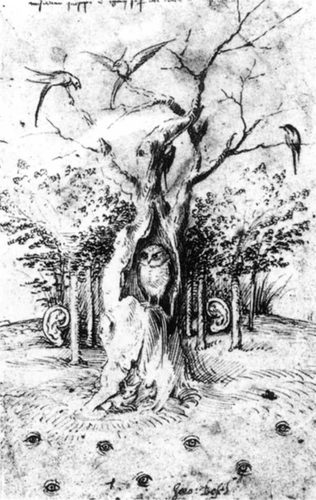
Drawing is the act of making marks—lines, dots, hatching, tone—on a surface, usually paper, using a dry or fluid tool held directly in the hand. It is the most immediate visual medium: no mixing, no drying time, just tool meeting surface. Pencil and graphite offer a full range of value from pale gray to near-black and can be blended or erased. Charcoal goes darker and smudges easily, good for bold gesture and dramatic shadow. Ink, applied with a pen or brush, is permanent and forces confident, committed marks since mistakes cannot be lifted. Colored pencil, pastel, and chalk add hue while keeping drawing's characteristic linear, hand-drawn quality. Drawing splits broadly into observational work, studying a real subject's proportion and light, and constructive or imaginative drawing built from memory, invention, or reference. Every trained artist, regardless of eventual medium, learns to draw first, because the skills it demands—seeing proportion, value, and structure accurately—underpin painting, sculpture, illustration, and design alike. A drawing can stand alone as a finished work or serve as a study for something larger.
What defines the medium
Line quality
A drawn line can be thin and precise, thick and confident, broken, or continuous, and its weight alone can suggest form, distance, and speed. Varying line pressure and width gives a drawing depth without any shading at all.
Value and shading
Hatching, cross-hatching, and blended tone build a range from white paper to solid black, describing how light falls across a form. Controlling this value range is what makes a flat drawing read as three-dimensional volume.
Gesture and proportion
Quick gesture drawing captures a pose's energy and balance in seconds, while careful measurement establishes accurate proportion over a longer study. Most trained drawing practice moves between these two speeds, loose gesture first, refined structure after.
Negative space
Skilled drawing pays as much attention to the empty shapes around a subject as to the subject itself, since negative space often reveals proportion errors that are invisible when focusing on the object alone rather than its surroundings.
Tool and surface pairing
Graphite favors smooth paper for fine detail, charcoal needs tooth to hold its powder, and ink demands a surface that will not feather or bleed. Choosing the right paper for the tool is part of basic drawing craft.
Erasing and correction
An eraser is a drawing tool in its own right, used to lift graphite for highlights, correct proportion, or soften a line rather than only to fix mistakes, which keeps a drawing's surface active and reworked throughout.
Materials decoder
The toolkit of drawing
- graphite pencil
- → the default drawing tool, graded from hard and pale (H) to soft and dark (B)
- charcoal stick
- → compressed or vine charcoal for bold, smudgeable dark tones and fast gesture work
- kneaded eraser
- → a moldable eraser that lifts graphite or charcoal for highlights without smearing
- dip pen and ink
- → a nib dipped in ink for crisp, permanent line work with no erasing
- blending stump
- → a tightly rolled paper tool used to smooth and soften graphite or charcoal tone
- toned paper
- → mid-gray paper that lets an artist work from both dark and light, adding highlights in white
- fixative spray
- → a fine mist that locks loose charcoal or pastel to the paper so it stops smudging
The story
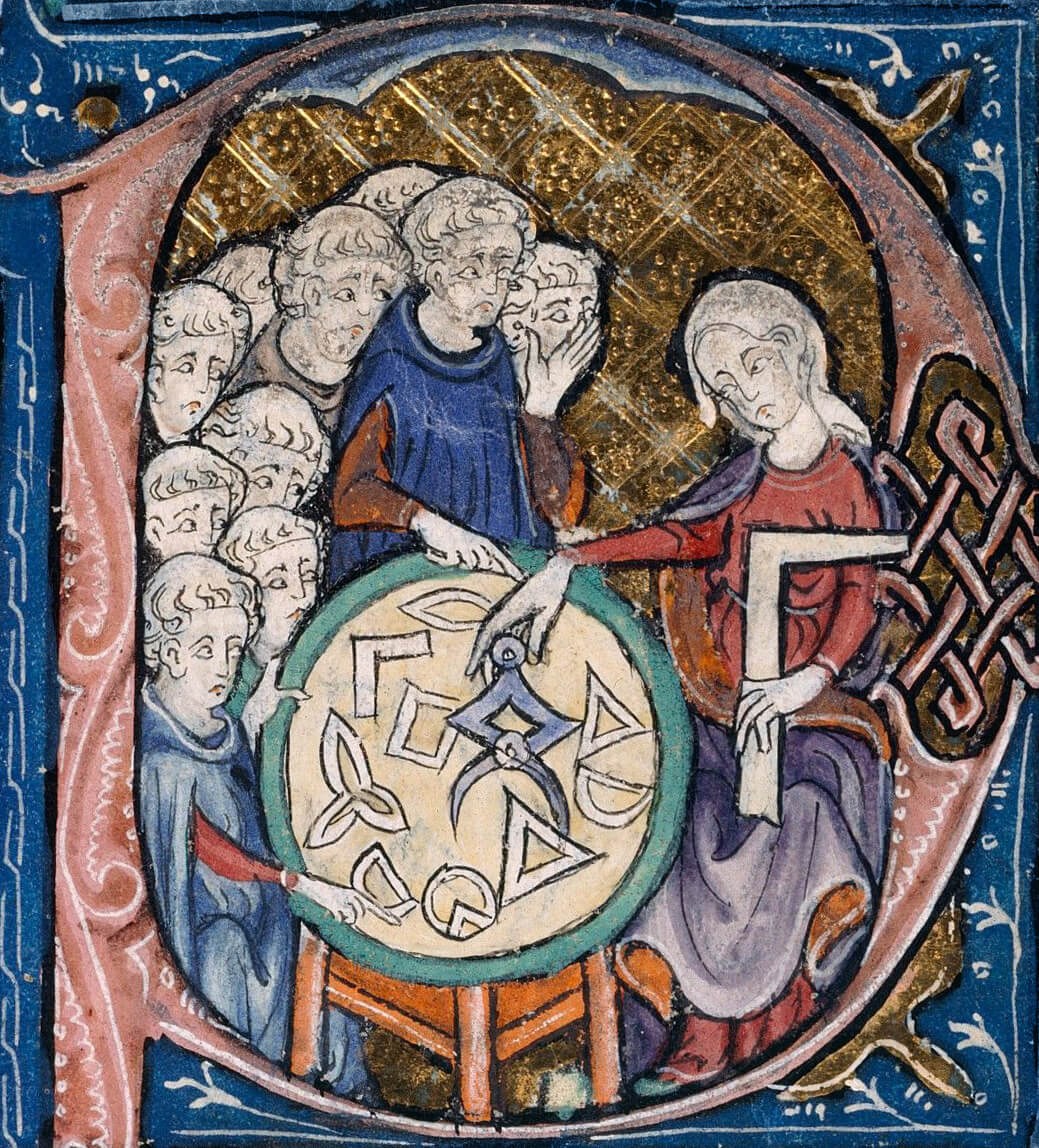
Drawing predates every other visual medium—charcoal and ochre marks on cave walls are among the oldest human images known. Ancient civilizations drew on papyrus, wax tablets, and pottery long before paper became widely available. Renaissance workshops formalized drawing as the foundation of artistic training, using silverpoint and chalk for careful figure studies that underpinned paintings and sculptures. Old master drawings survive today largely as preparatory studies rather than finished works, though some, especially in ink and wash, were always meant to stand alone. The graphite pencil, developed after a large deposit was found in England in the sixteenth century, became the everyday drawing tool by the nineteenth century. Academic art schools built entire curricula around figure and still-life drawing well into the twentieth century. Comics, animation, and technical illustration all grew directly out of drawing traditions, and today digital tablets extend the same hand-eye skill onto a screen instead of paper.
Masterpieces of the medium
| Work | Artist | Date | Why it matters |
|---|---|---|---|
| Vitruvian Man | Leonardo da Vinci | c. 1490 | pen and ink study of ideal human proportion |
| Praying Hands | Albrecht Durer | 1508 | brush and ink study heightened with white on blue paper |
| Self-Portrait drawings | Rembrandt | 1630s-1660s | a lifelong series in chalk and ink exploring his own likeness |
| The Scream study | Edvard Munch | 1893 | crayon and pastel study related to the famous painting |
| Untitled figure studies | Unknown | various | countless anonymous academic life drawings that trained generations of artists |
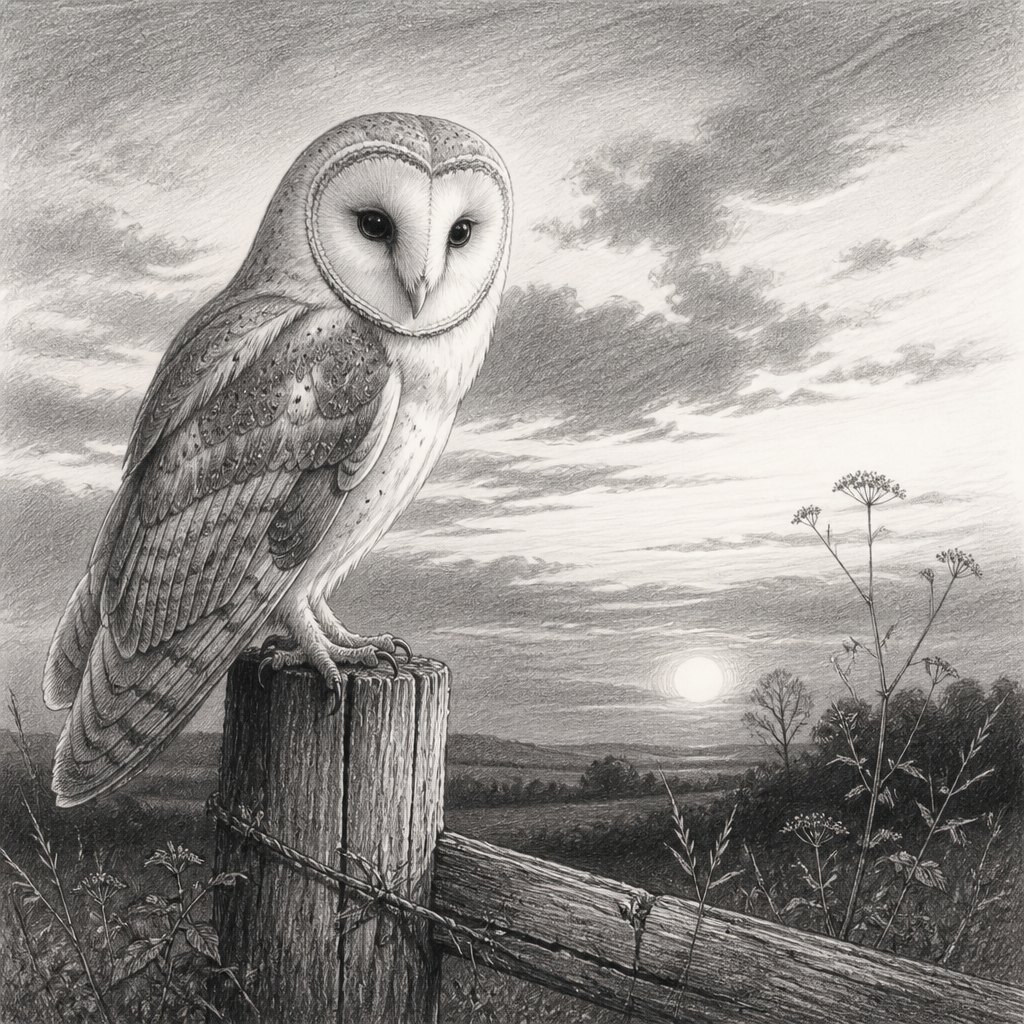 AI-generated
Try the medium
Try drawing with AI
This example was generated from a prompt like: “A barn owl perched on a weathered fence post at dusk, rendered in graphite pencil with fine cross-hatching for feather texture, soft blended shadows, sharp linework on the eyes, white paper left untouched for highlights.”
Open the Pen and Ink Drawing Style generator →The medium today
Drawing today happens as much on tablets as on paper, with digital pens simulating pencil, ink, and charcoal textures through pressure-sensitive styluses. Sketchbook culture thrives online, with artists posting daily studies and timed gesture drawings to build visible practice records. Animation, concept art, comics, and product design all still start as drawings before any color or rendering is added. Traditional materials remain popular precisely because drawing needs so little equipment—paper and a pencil are enough to start.
Compose your own
To get convincing drawing results from an image generator, name the tool and its marks directly: graphite with visible hatching and blended shading, charcoal with smudged, soft-edged tone, or ink with confident, unbroken line work. Specify value range—high contrast with deep blacks, or a soft, mid-gray study—and whether the piece is finished or left as loose gesture with visible construction lines. Mention the paper: toned gray paper with white highlights, rough-tooth paper for charcoal, or smooth bristol for fine pen detail. Avoid asking for realistic drawing alone; describe cross-hatching direction, line weight variation, and how much white paper is left untouched.
Frequently asked questions
What's the difference between drawing and sketching?
A sketch is quick, loose, and exploratory, often just a few minutes of gesture or a rough idea capture. A drawing usually implies more time and finish, with developed value, line, and detail, though the line between the two is informal.
Which pencil grade should a beginner start with?
An HB or 2B pencil is a solid all-purpose start—dark enough for clear line work, light enough to erase cleanly. Adding a 4B or 6B later gives access to deeper darks, while a 2H stays useful for faint construction lines.
Why do artists draw from life instead of photos?
Drawing from life trains the eye to judge real proportion, depth, and light directly, since a photo already flattens those cues into two dimensions. Life drawing also builds speed and observational confidence that carries over to reference work.
Can charcoal drawings be preserved long-term?
Yes, with care—a spray fixative locks the loose pigment to the paper so it stops smudging, and framing under glass with a mat spacer keeps the surface from touching anything. Unfixed charcoal remains fragile and can smear if handled directly.