
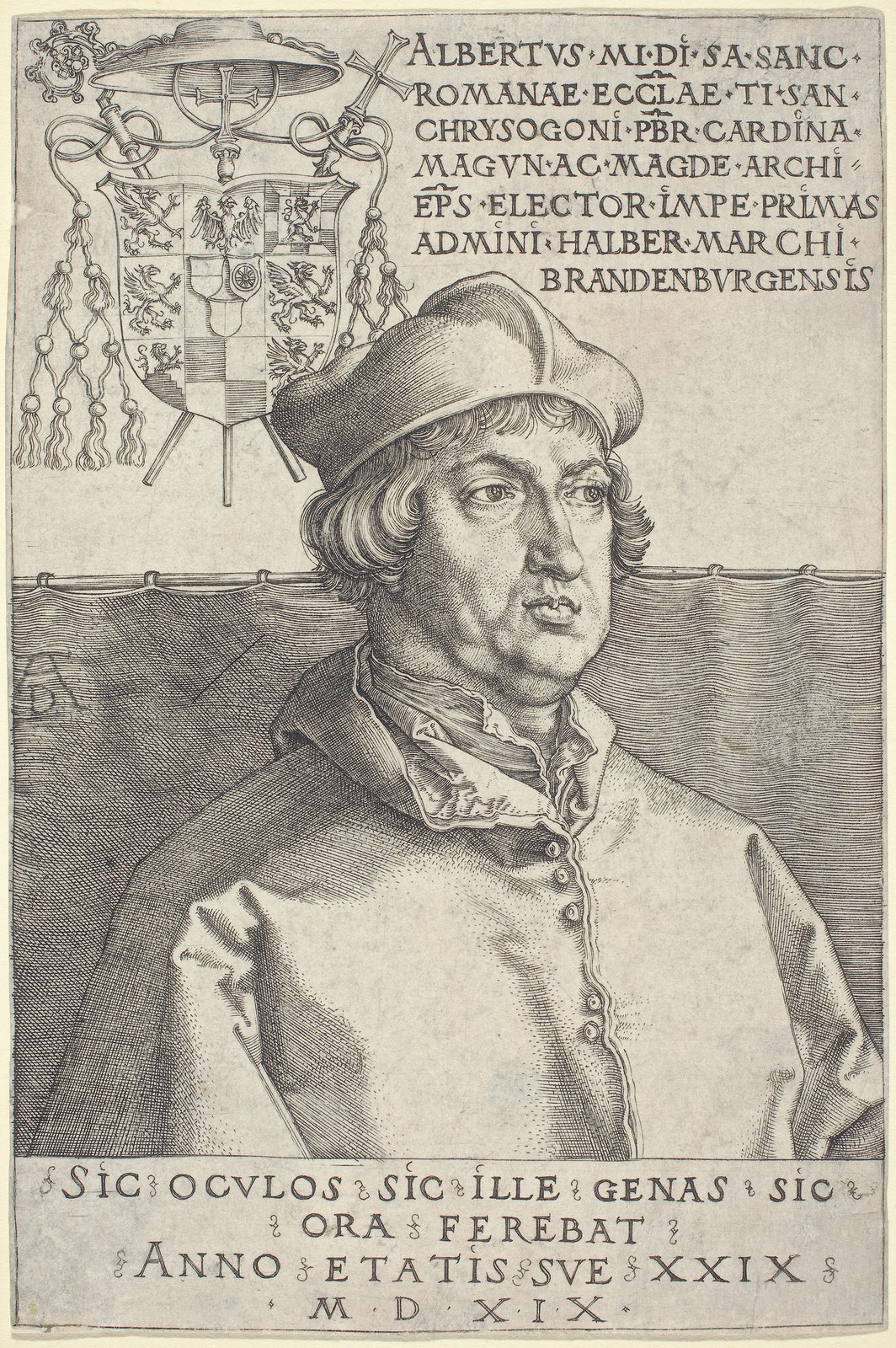
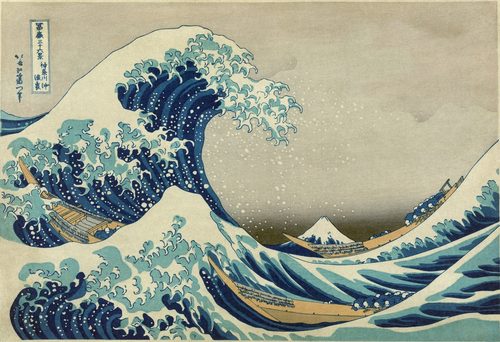
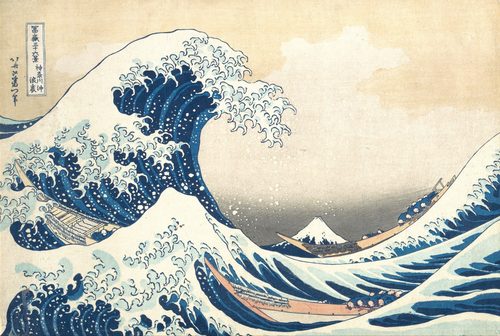
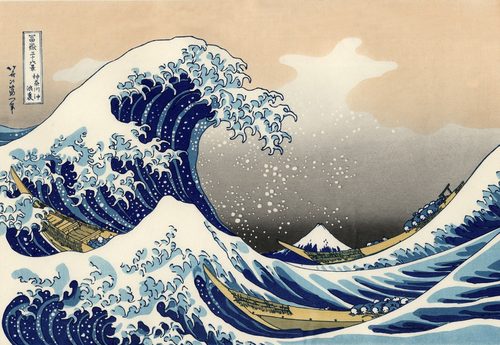
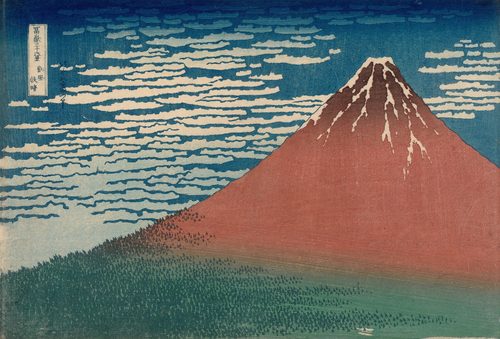
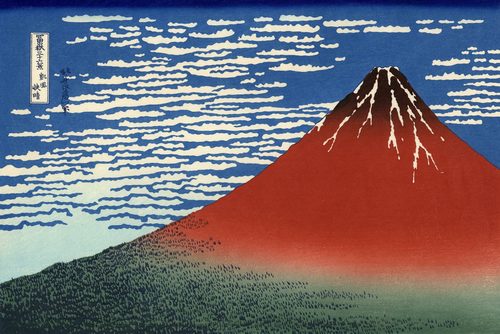
Printmaking is the process of creating an image on a matrix—a wood block, metal plate, stone, or screen—and transferring it to paper or fabric, usually many times over, so that a single design yields an edition of prints. Relief printing, such as woodcut and linocut, carves away everything except the raised lines that hold ink. Intaglio, such as etching and engraving, cuts or bites lines below the surface, where ink collects and gets forced onto paper under heavy press pressure. Planographic printing, or lithography, works from a flat stone or plate using the chemical resistance of grease and water. Screen printing forces ink through a stencil stretched on fine mesh. Each method leaves its own physical signature—the raised, chunky line of a woodcut, the fine crosshatched shading of an engraving, the soft tonal wash of a lithograph. Prints are typically numbered within a limited edition and signed by hand, distinguishing an original print from a mechanical reproduction of a painting or drawing.
What defines the medium
Relief printing
Wood or linoleum is carved so the design stands raised above the cut-away background; ink rolled onto the raised surface transfers only those lines to paper, producing bold, high-contrast marks with visible tool texture.
Intaglio printing
Lines are cut or etched into a metal plate below its surface, then packed with ink that the flat areas are wiped clean of. Heavy press pressure forces damp paper into the grooves, pulling out fine, precise detail.
Editions and numbering
Prints from the same matrix are typically pulled as a limited edition, each impression numbered as a fraction of the total, such as 12/50, and signed by hand, distinguishing an original print from an open-ended reproduction.
Registration
Multi-color prints require each color's plate or block to align exactly with the others across every pull; registration marks and a fixed paper position keep the layers lined up so the final image does not blur or shift.
The press
Intaglio and lithography rely on a heavy roller press to force ink-loaded paper against the plate or stone with even, controlled pressure, something hand-rubbing alone cannot achieve for fine detail or deep, textured lines.
Mirror image
Because the matrix transfers in reverse, printmakers must carve, etch, or draw their design backward, planning any text or asymmetrical composition with that flip in mind before a single line is cut or drawn.
Materials decoder
The toolkit of printmaking
- carving gouge
- → a curved steel blade for cutting lines and clearing background from a woodblock or linoleum
- etching needle
- → a fine steel point for drawing through acid-resistant wax ground on a copper plate
- brayer
- → a rubber roller used to spread an even film of ink across a block or plate
- etching press
- → a heavy roller press that forces damp paper into an inked plate's grooves
- baren
- → a flat hand tool for rubbing paper against an inked block by hand, no press needed
- copper plate
- → the traditional metal surface etched or engraved for intaglio printmaking
- printmaking ink
- → thick, tacky ink formulated to sit on a matrix surface without spreading or bleeding
- registration marks
- → small guide marks that keep multiple color layers aligned across the same sheet
The story
Printmaking began with woodblock relief printing in East Asia over a thousand years ago, used for both text and image long before movable type reached Europe. European woodcut prints spread religious imagery cheaply across the fifteenth century, and engraving soon followed as a finer, metal-based alternative capable of much greater detail. Etching, which uses acid rather than hand-cut lines, made intricate printmaking faster and more accessible by the seventeenth century. Lithography, invented at the end of the eighteenth century, introduced a completely different chemical process based on the resistance between grease and water, enabling painterly tonal prints. The nineteenth century saw prints used heavily for illustration, satire, and mass communication before photography and offset printing took over that role. Twentieth-century artists embraced printmaking's editioned, multiple nature as a way to make original art more affordable, and screen printing became closely associated with pop art's bold, flat color fields.
Masterpieces of the medium
| Work | Artist | Date | Why it matters |
|---|---|---|---|
| The Great Wave off Kanagawa | Katsushika Hokusai | c. 1831 | woodblock print, among the most reproduced images in printmaking history |
| Melencolia I | Albrecht Durer | 1514 | engraving renowned for its dense symbolic detail |
| Los Caprichos | Francisco Goya | 1799 | a series of etchings satirizing Spanish society |
| Marilyn Diptych | Andy Warhol | 1962 | screen print built from repeated, slightly shifted color panels |
| Moulin Rouge: La Goulue | Henri de Toulouse-Lautrec | 1891 | a color lithograph poster from the golden age of French poster art |
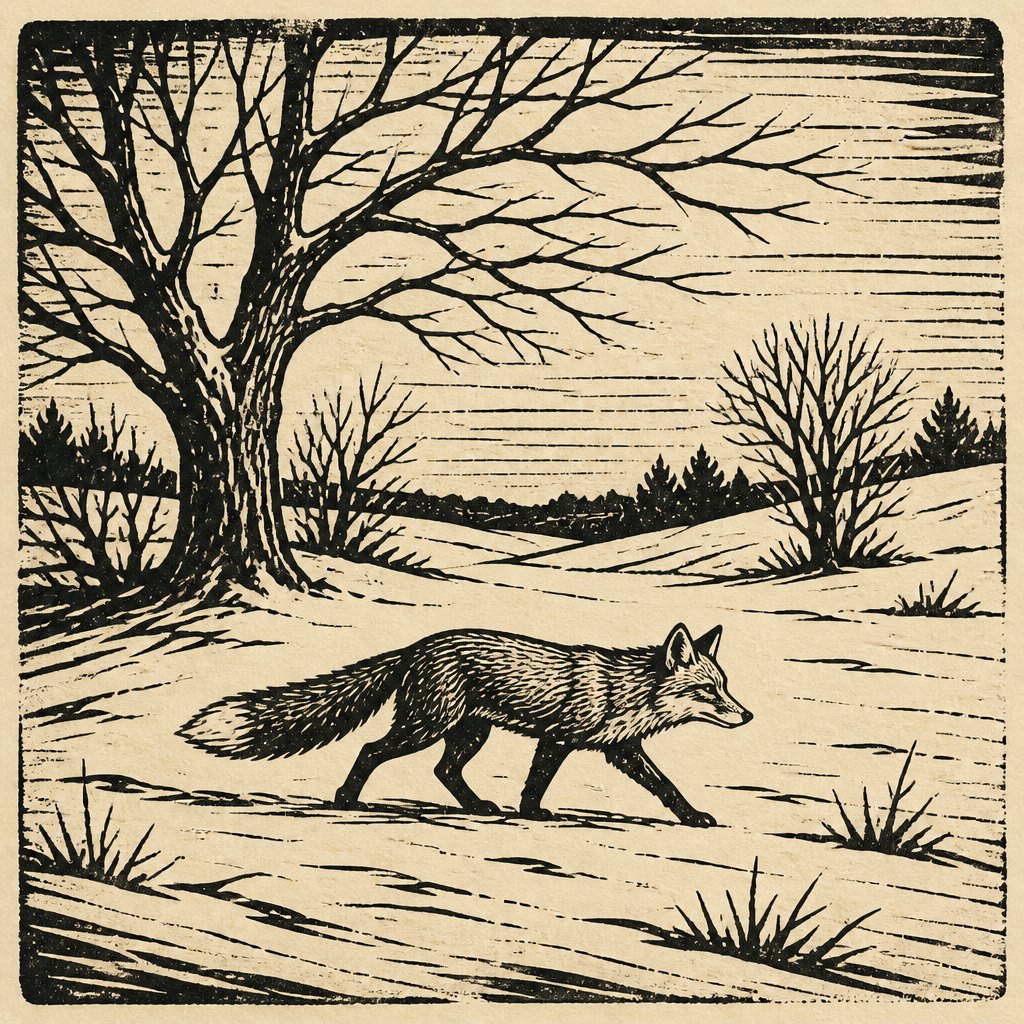 AI-generated
Try the medium
Try printmaking with AI
This example was generated from a prompt like: “A fox crossing a snowy field under bare winter trees, rendered as a woodcut relief print with bold black linework, visible wood grain texture, flat cream paper background, slight hand-inked unevenness at the edges.”
Open the Woodcut Print Style generator →The medium today
Printmaking survives today in fine-art editions, letterpress stationery, and a strong DIY revival built around linocut and screen printing. Studios and community print shops make presses accessible without requiring a personal etching press or lithography stone. Risograph printing, a stencil-based digital-analog hybrid, has become popular with independent publishers for its distinctive grainy color layers. Printmaking retains its appeal precisely because it resists total digital replication—each pull carries small handmade variation a digital file cannot reproduce.
Compose your own
To evoke printmaking in an image generator, name the specific method: woodcut with bold black lines and visible wood grain texture, linocut with sharp carved edges and flat ink, etching with fine crosshatched linework on cream paper, or screen print with flat, slightly offset color layers. Mention characteristic imperfections—slight ink bleed at edges, visible registration misalignment between colors, or toothy texture where ink sits unevenly on paper. Limiting the palette to two or three flat colors reads as more authentic than smooth gradients, which printmaking rarely produces. Specifying a visible plate mark or deckled paper edge adds to the effect.
Frequently asked questions
What makes a print an original rather than a copy?
An original print is pulled directly from a matrix the artist made or directed, in a limited, numbered edition, whereas a reproduction is a mechanical photograph or scan of an existing artwork with no matrix involved in its own making.
What's the difference between relief and intaglio printing?
Relief printing inks the raised surface of a carved block, like a rubber stamp. Intaglio does the opposite—ink sits in lines cut below the surface, and a press forces paper into those grooves, pulling ink out from beneath.
Why are prints numbered like 12/50?
The numbers record an impression's position within a fixed, limited edition—12/50 means the twelfth print pulled from an edition capped at fifty total. Once that number is reached, the plate is typically defaced so no more can be made.
Is linocut a good starting point for printmaking?
Yes—linoleum cuts more easily than wood or metal, needs no acid or press, and a simple hand-rubbed baren can pull a decent print. It is the most accessible entry point into relief printmaking without a dedicated studio.