
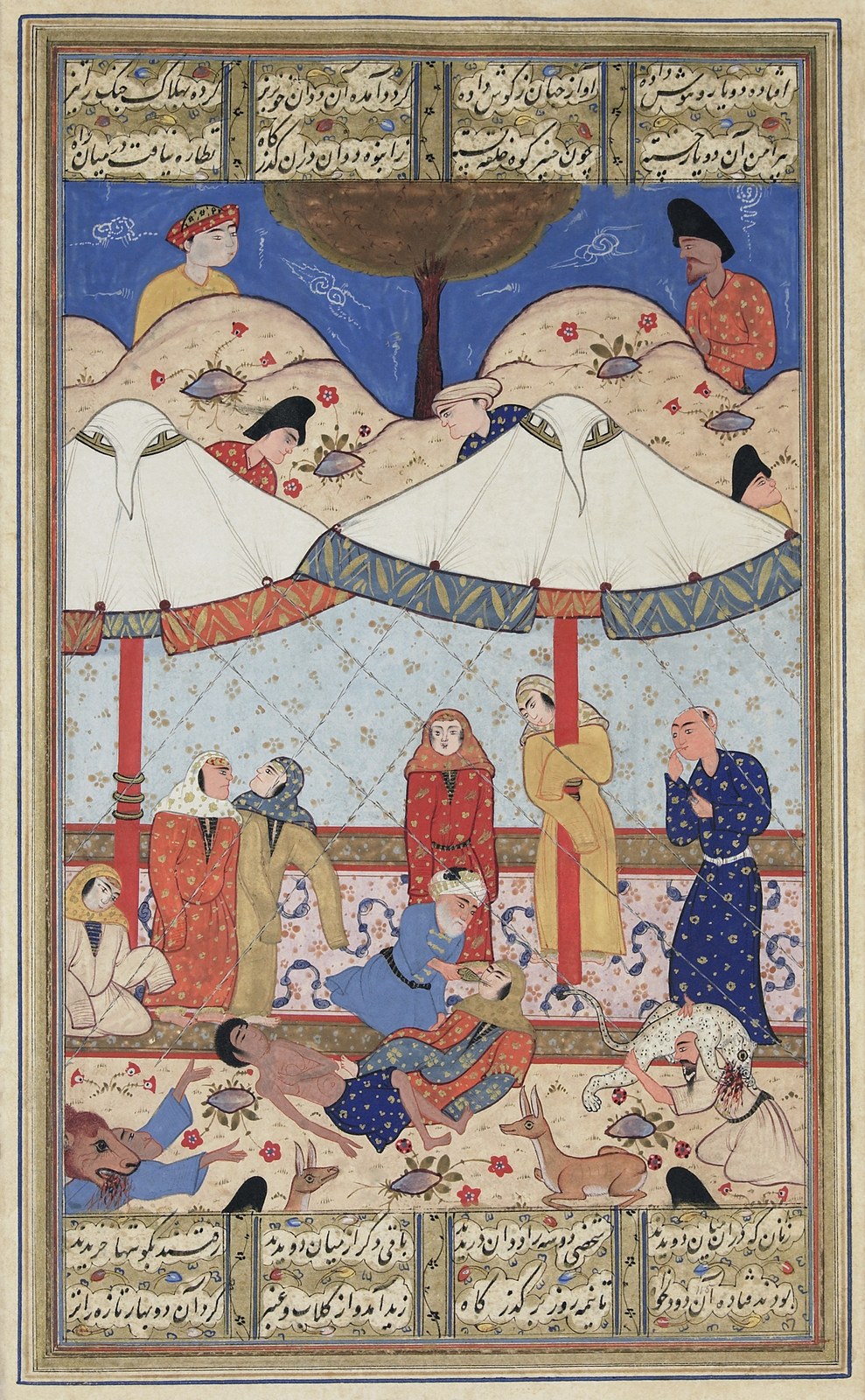
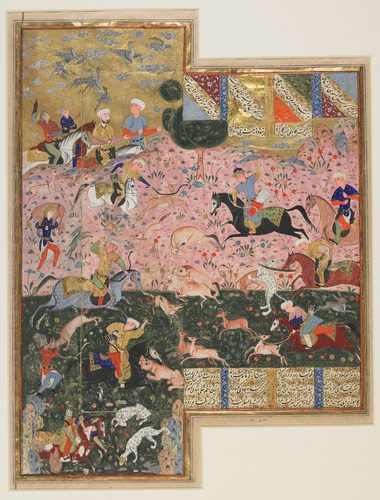
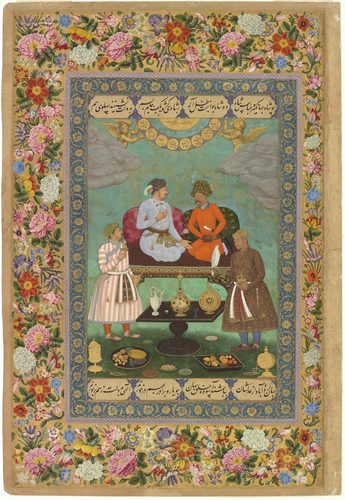
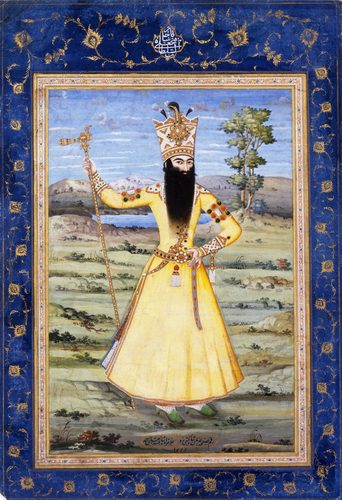
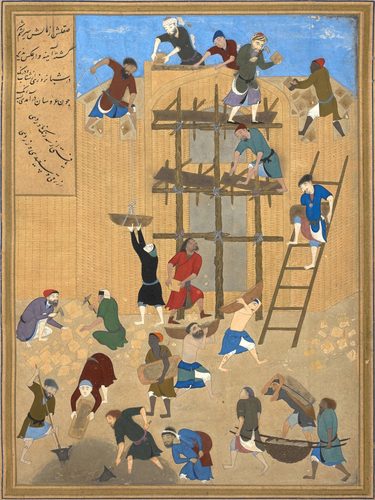
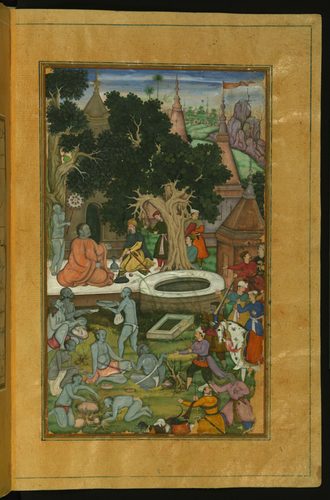
Miniature painting is small-scale, highly detailed work made for close viewing—held in the hand, bound into a manuscript, or set into a locket rather than hung on a wall. The term covers illuminated manuscript pages, Persian, Mughal, and Rajput court paintings, and Western portrait miniatures painted on ivory or vellum. Painters use opaque watercolor or gouache mixed with fine natural pigments—lapis lazuli blue, malachite green, vermilion red—applied with brushes made from squirrel or kitten hair fine enough to render a single eyelash. Surfaces include burnished handmade paper, prepared vellum, thin ivory sheets, or wasli paper built from layered pulp polished with an agate stone. Gold and silver leaf or shell gold add highlights and borders. Because the scale is so small, work proceeds under magnification with steady, controlled strokes, and a single page can take weeks. The result is dense, jewel-like color and fine linear detail impossible to achieve at larger scale.
What defines the medium
Preparing the burnished surface
Paper (wasli) is built from several layers of pulp glued together, then rubbed smooth with an agate or shell burnisher until it takes fine detail without absorbing pigment unevenly. Ivory and vellum receive similar polishing before painting begins.
Opaque layered pigment
Color is built in thin, opaque layers of gouache or watercolor mixed with gum, each coat burnished lightly before the next is added. Layering this way produces flat, saturated color fields rather than blended washes.
Fine-line outlining
Forms are first drawn in faint red or black outline, then filled with flat color, and finally redefined with a crisp final outline using a squirrel-hair brush reduced to only a few hairs for hairline precision.
Hierarchical scale and composition
Figures and objects are often sized by importance rather than realistic perspective—a ruler or central figure appears larger than surrounding courtiers, and multiple viewpoints combine within a single flat picture plane.
Gold leaf and decorative borders
Manuscript pages and court miniatures often carry gold or silver leaf applied with a binder and burnished to a shine, used for haloes, jewelry, sky, or elaborate framing borders that separate the image from the text.
Working at magnified scale
Painters work close to the surface, sometimes with a magnifying lens, using a steady hand and a very fine brush point to render facial features, textile patterns, and foliage at a scale meant for close, private viewing.
Materials decoder
The toolkit of miniature painting
- squirrel-hair brush
- → an extremely fine brush, sometimes down to a single hair, used for eyelashes, jewelry, and textile patterns
- wasli paper
- → layered, burnished handmade paper polished with an agate stone to take fine detail without bleeding
- gold leaf
- → thin sheets of gold applied and burnished for haloes, skies, or borders, catching light differently from painted yellow
- lapis lazuli pigment
- → a rare ground blue mineral pigment giving miniature skies and garments a deep, saturated ultramarine
- ivory support
- → thin polished sheets of ivory used as the ground for Western portrait miniatures, giving a smooth luminous base
- agate burnisher
- → a smooth stone tool rubbed over paint and gold to compress and polish the surface to a glassy finish
The story
Miniature painting developed wherever manuscripts needed illustration. Illuminated pages appeared in medieval European gospel books and psalters from the 8th century onward, with books of hours following from the 13th century, painted in tempera and gold leaf by monastic and later court workshops. In Persia, miniature painting flourished under the Timurid and Safavid courts from the 14th to 17th centuries, illustrating epics like the Shahnameh with dense color and pattern. The Mughal court in India, from the 16th century, blended Persian technique with Indian subject matter in workshops producing the Akbarnama and Hamzanama. Rajput courts developed their own regional schools with bolder color and folk-inflected figures. In Europe, portrait miniatures painted on vellum and later ivory became popular from the 16th century as personal, wearable likenesses, with Nicholas Hilliard among the earliest named English practitioners. The tradition declined with the arrival of photography in the 19th century but survives as a specialized painting practice today.
Masterpieces of the medium
| Work | Artist | Date | Why it matters |
|---|---|---|---|
| Akbarnama illustrations | Unknown | c. 1590s | Mughal court workshop paintings chronicling the emperor Akbar's reign |
| Young Man Among Roses | Nicholas Hilliard | 1587 | a watercolor-on-vellum portrait miniature of the English court style |
| Shahnameh manuscript illustrations | Unknown | 16th century | Safavid court miniatures illustrating Persia's national epic |
| Book of Hours of Jeanne d'Evreux | Jean Pucelle | c. 1324-1328 | grisaille manuscript illumination on vellum for private devotion |
| Hamzanama pages | Unknown | c. 1562-1577 | large-format Mughal manuscript paintings from a vast illustrated epic |
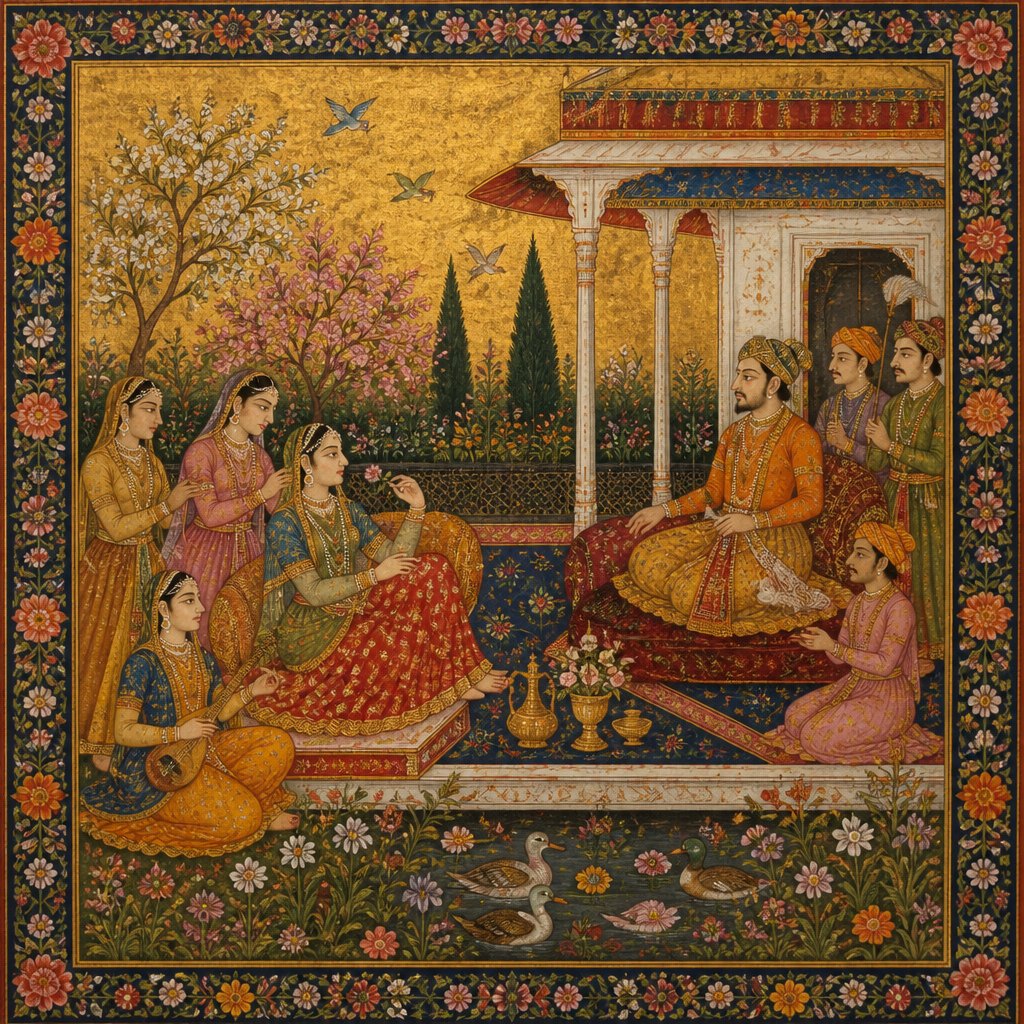 AI-generated
Try the medium
Try miniature painting with AI
This example was generated from a prompt like: “A Mughal-style court scene painted at miniature scale, richly dressed figures in a garden pavilion, dense floral border, gold leaf sky, flat jewel-toned color in ochre, crimson, and lapis blue, fine brush detail on burnished paper.”
Open the Miniature Painting Style generator →The medium today
Miniature painting survives as a specialized craft practiced by trained painters in traditional ateliers in India, Pakistan, and Iran, alongside miniature societies in Europe and North America that keep portrait miniature techniques alive. Museums with strong manuscript and court painting collections continue to draw contemporary miniaturists studying historical technique firsthand. The dense detail and jewel-like color of miniature painting has also become a visual reference point in digital illustration and game art, where artists borrow its flattened perspective and ornamental patterning without the physical scale constraints of the original medium.
Compose your own
Beginners start with the smallest brush they can control—often a size 0000 round—and a limited palette of two or three colors to practice flat, even fills without visible brush marks. Working on hot-press watercolor paper or bristol board rather than raw canvas keeps the surface smooth enough for fine detail. A good first exercise is copying a single motif, like a flower or a small animal, at postcard scale, building color in thin layers and reserving the finest brush for outlining at the very end. A magnifying lamp or loupe helps catch errors invisible at normal viewing distance. Patience matters more than speed—short daily sessions beat long rushed ones.
Frequently asked questions
What makes a painting a miniature?
Miniature painting is defined by small scale and extremely fine detail meant for close, often handheld viewing, not size alone—some manuscript pages are a foot wide but still count because of their dense, small-scale detail.
What paint is used in traditional miniatures?
Opaque watercolor or gouache mixed with natural mineral and plant pigments, bound with gum arabic, applied in thin layers on burnished paper, vellum, or ivory rather than canvas.
How long does a miniature painting take?
A detailed page can take anywhere from several days to several weeks, since color is built in many thin layers and fine details like jewelry or textile patterns are painted with a brush reduced to only a few hairs.
Is miniature painting still practiced today?
Yes, particularly in India, Pakistan, and Iran, where trained artists continue Mughal, Persian, and Rajput techniques, and in portrait miniature societies elsewhere that preserve the Western ivory and vellum tradition.