
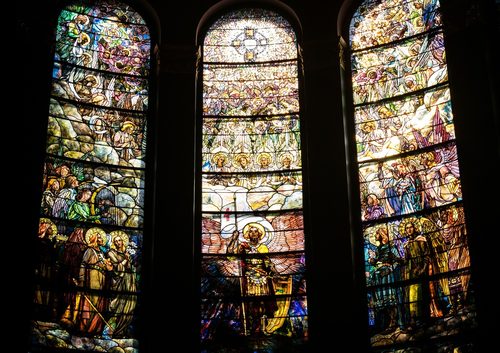
Glass art is the craft of shaping glass — molten, cooling, or cold and solid — into vessels, sculpture, or architectural panels, valued above all for a translucency and color no other material achieves. Because glass moves from a liquid to a solid state within a working session, most techniques are a race against temperature: glassblowing gathers molten glass on a blowpipe and shapes it while it stays workable, and it must return to a heated furnace repeatedly as it cools and stiffens. Other approaches work the material cold or through slower heat: kiln-formed glass fuses or slumps sheets in a controlled firing, cast glass is poured or melted into a mold, and stained glass cuts colored sheet glass into pieces joined with lead or copper foil. What unites the medium is glass's unusual relationship to light — it can be transparent, translucent, or opaque, and color is often achieved by adding metal oxides directly into the molten batch rather than painted onto a finished surface.
What defines the medium
Glassblowing
Molten glass is gathered on the end of a hollow blowpipe and inflated with breath while being shaped with tools and gravity, requiring constant reheating in a furnace called a glory hole to stay workable.
Kiln-Forming
Sheet or crushed glass is heated slowly in a kiln to fuse layers together, slump over a mold, or cast into a shape, a cooler and more controlled process than blowing at the furnace.
Cold Working
After a piece has cooled, glass can be cut, ground, polished, sandblasted, or engraved using abrasive tools, refining a form's final surface and clarity without any further heat applied.
Color from Metal Oxides
Glass color usually comes from metal oxides mixed directly into the molten batch — cobalt for blue, gold for red, copper for green — rather than surface paint, so color runs through the material itself.
Annealing
A finished piece must cool extremely slowly in an annealing oven over hours or days, since rapid cooling locks in internal stress that can cause the glass to crack or shatter later.
Leaded and Stained Glass
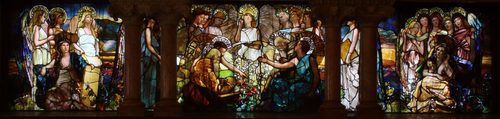
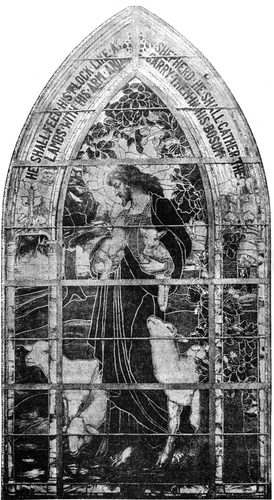
Flat colored glass is cut to pattern and joined with strips of lead came or copper foil, a technique historically used for windows that lets an image be built from light passing through separate colored panes.
Materials decoder
The toolkit of glass art
- blowpipe
- → a long hollow metal tube used to gather molten glass from the furnace and shape it by blowing and turning
- glory hole
- → a small furnace opening used to reheat a piece mid-process so the glass stays soft enough to keep working
- punty rod
- → a solid metal rod attached to a piece's base so the blowpipe end can be removed and finished
- annealing oven
- → a slow-cooling kiln that relieves internal stress in finished glass over many hours, preventing later cracking
- lead came
- → H-shaped strips of soft lead that hold individual pieces of colored glass together in a stained glass window
- marver
- → a flat steel or graphite table used to roll and shape molten glass while it is still on the blowpipe
- frit
- → crushed or powdered colored glass sprinkled or layered onto a piece to add pattern and color before further heating
The story
Glassmaking dates back roughly four thousand years to core-formed vessels in the ancient Near East, but the invention of glassblowing in the first century BCE in the Roman world transformed glass from a rare luxury into something producible at real scale. Roman glass spread across the empire's trade routes, and later centers of excellence emerged independently — Venetian glassmakers on the island of Murano developed closely guarded techniques for exceptionally clear and colored glass, while medieval European cathedrals turned colored glass into monumental stained-glass windows telling biblical stories in light. Islamic glassmakers advanced enameled and gilded decoration, and glass trade linked Europe, the Middle East, and Asia for centuries. The Studio Glass Movement of the 1960s, sparked by the development of smaller furnaces suitable for individual artist studios rather than industrial factories, moved glass decisively from craft workshop and factory production into fine art, and that movement remains the direct ancestor of most contemporary independent glass artists today.
Masterpieces of the medium
| Work | Artist | Date | Why it matters |
|---|---|---|---|
| Chartres Cathedral Windows | Unknown | 12th-13th century | medieval stained glass renowned for a deep cobalt blue that later glassmakers have never fully replicated |
| Portland Vase | Unknown | 1st century CE | a Roman cameo-cut glass vessel whose layered white-on-blue carving influenced centuries of later glass and ceramic design |
| Chihuly Chandeliers | Dale Chihuly | 1990s-ongoing | monumental blown-glass installations of massed, twisting forms that brought studio glass into mainstream public spaces |
| Lycurgus Cup | Unknown | 4th century CE | a Roman glass vessel that changes color from green to red depending on how light passes through it |
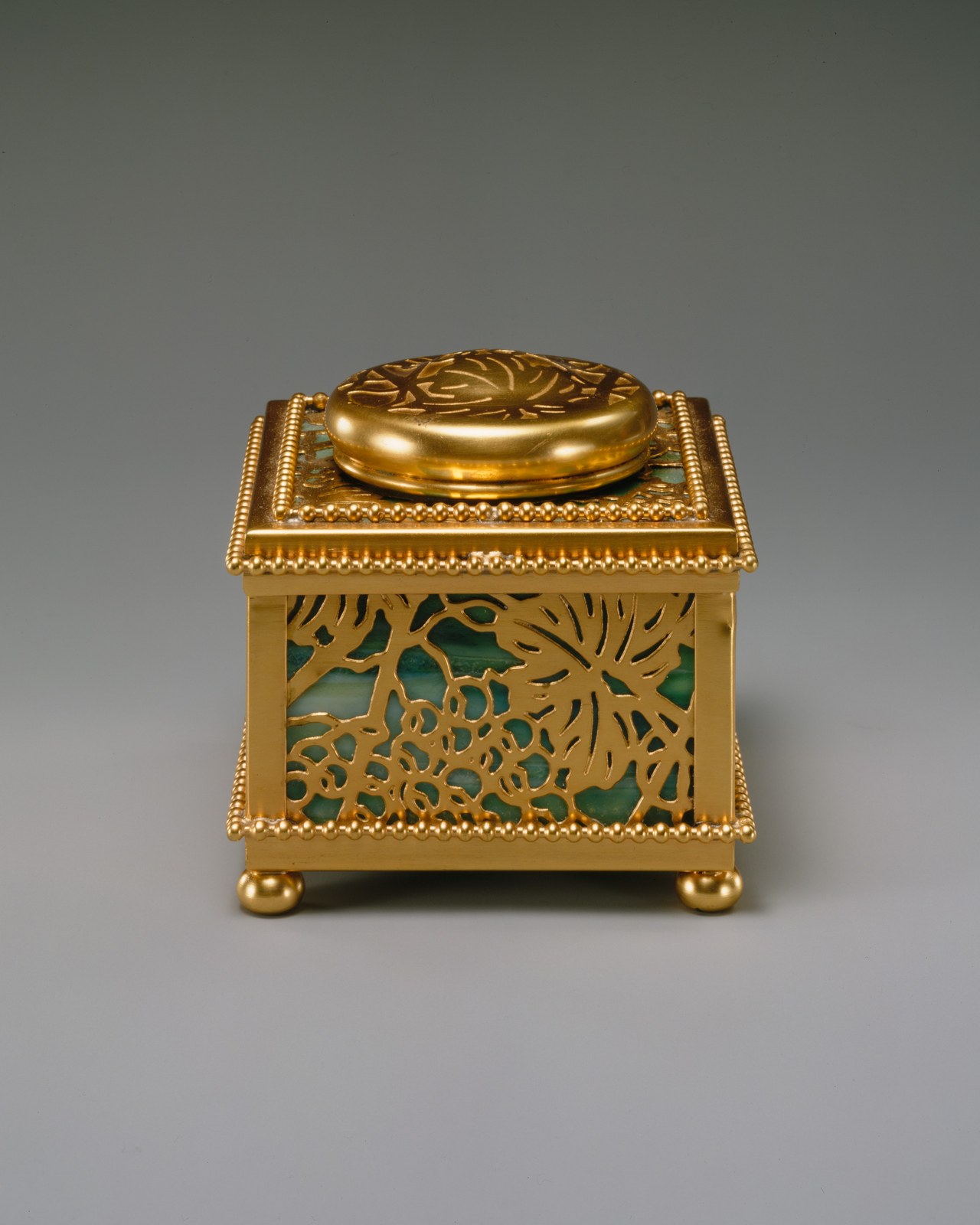
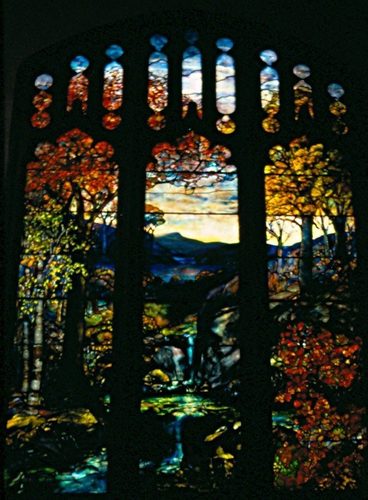
| Tiffany Favrile Glass | Louis Comfort Tiffany | 1890s-1900s | iridescent art glass lamps and windows that defined American Art Nouveau decorative glasswork |
 AI-generated
Try the medium
Try glass art with AI
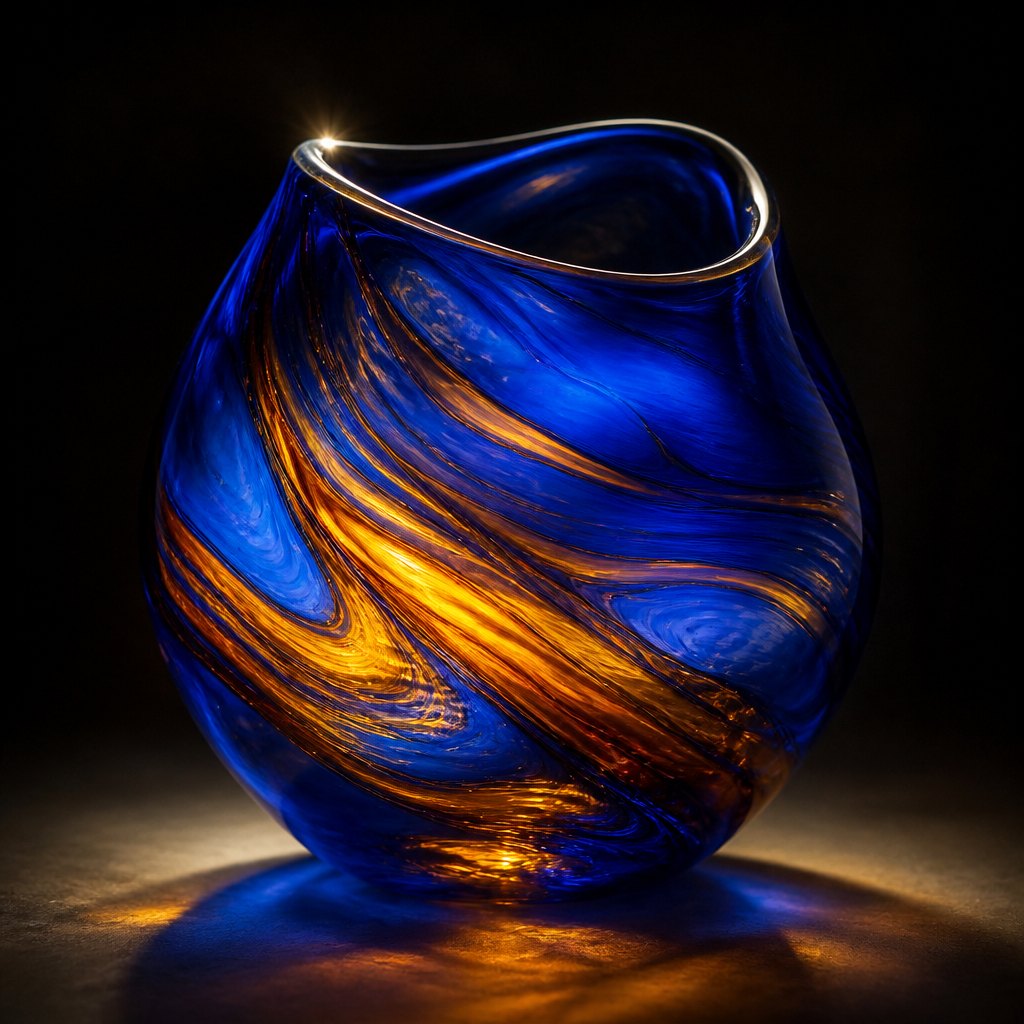
This example was generated from a prompt like: “A hand-blown glass vessel in deep cobalt blue swirled with streaks of amber, backlit against a dark studio background so light glows through its curved translucent walls, a smooth polished rim catching a single bright highlight.”
Open the Stained Glass Art Style generator →The medium today
Contemporary glass art spans museum-scale blown-glass installations, studio functional ware, and architectural glass integrating LED lighting and digital fabrication for cutting glass panels precisely. The Studio Glass Movement's legacy continues in university programs and independent hot shops worldwide, while collaborative team-based blowing has become a recognizable public spectacle at museums and public demonstrations. Kiln-forming and flame-worked glass have also grown as accessible entry points requiring smaller, less expensive equipment than a full glassblowing furnace setup.
Compose your own
To describe glass art for image generation, specify the technique and its visual signature — blown glass often shows swirling internal color and asymmetric organic form, cast glass reads thicker and more sculptural, and stained glass shows flat colored panes divided by dark lead lines. Describe how light passes through the piece, since translucency and color saturation are glass's defining visual trait, and note whether it is backlit, side-lit, or displayed against a dark background to maximize glow. Mention surface qualities like smooth and glossy, frosted and matte, or bubbled and textured, plus any metallic or iridescent surface finish.
Frequently asked questions
How does glassblowing actually work?
A glassblower gathers molten glass from a furnace onto a hollow blowpipe, then shapes it by blowing air through the pipe and turning it constantly, reheating in a smaller furnace as needed until the form is complete.
Why does glass need to cool so slowly?
Glass that cools too fast traps internal stress that can cause it to crack or shatter later, sometimes without warning, so finished pieces are cooled gradually over hours in an annealing oven.
What's the difference between stained glass and blown glass?
Stained glass cuts flat colored sheet glass into pattern pieces joined with lead, typically for windows, while blown glass is shaped in three dimensions from molten material gathered on a blowpipe.
What gives glass its color?
Color usually comes from metal oxides added to the molten glass batch — different metals produce different colors — so the color exists throughout the material rather than sitting on its surface.