
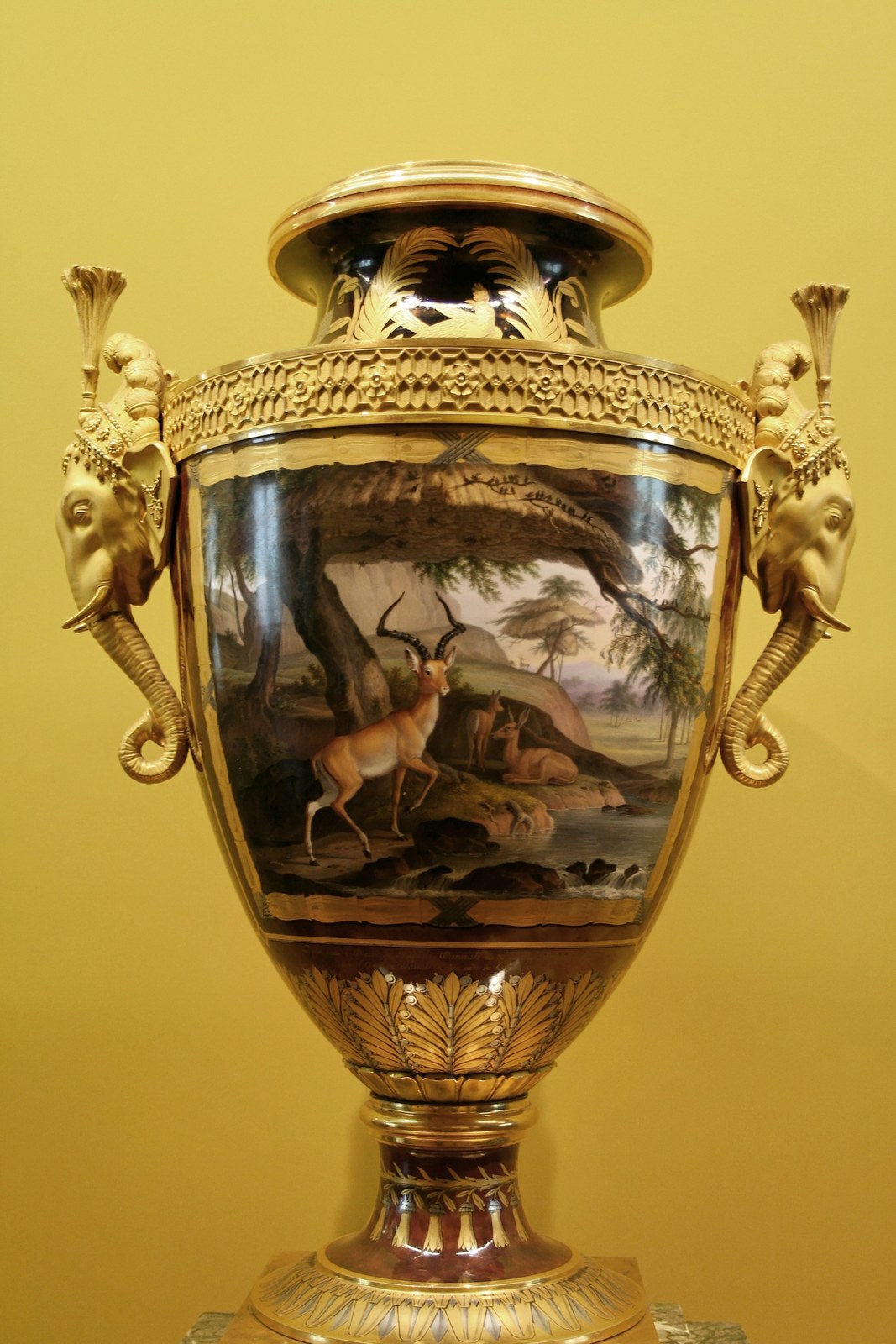
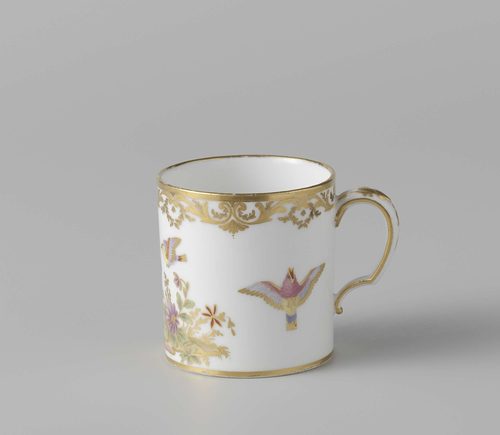
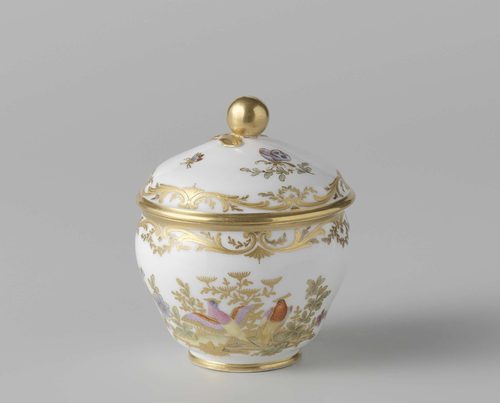
Decorative arts is the umbrella term for the design and embellishment of objects meant for use — furniture, ceramics, glass, textiles, wallpaper, silverware, and more — as distinct from the fine arts of painting and sculpture, which historically existed to be looked at rather than used. The distinction has always been porous and somewhat political: a hand-carved chair leg or a hand-painted porcelain vase demonstrates exactly the same level of skill as a painting, but Western art history long ranked it lower because it served a function. Decorative arts encompass an enormous range of techniques borrowed from other mediums — carving, casting, glazing, weaving, gilding, inlay — unified less by process than by purpose: making the objects people live with beautiful as well as functional. Period styles like Rococo, Art Nouveau, and Art Deco are often defined more by their decorative arts — furniture silhouettes, wallpaper patterns, glasswork — than by their painting. The field sits at the intersection of design history, craft, and fine art.
What defines the medium
Function first
Every decorative-arts object is designed to be used — sat in, poured from, worn, or hung on a wall for warmth — so form always answers to purpose even as ornament pushes toward pure visual pleasure.
Applied ornament
Surface decoration — carving, painting, gilding, inlay, or printed pattern — is layered onto a functional form rather than defining it, letting the same basic chair or vase carry wildly different decorative treatments across periods and cultures.
Material mastery across mediums
Decorative arts borrow techniques from ceramics, glass, metal, wood, and textile production alike, so practitioners often specialize deeply in one material's specific demands — glaze chemistry, wood joinery, or weave structure — rather than working broadly.
Period style
Decorative arts track closely with named historical styles — Rococo, Neoclassical, Art Nouveau, Art Deco, Mid-Century Modern — because furniture, wallpaper, and tableware update far more frequently than painting, making them a fast-moving record of taste.
Sets and suites
Decorative objects are frequently designed and produced as matched sets — dinner services, bedroom suites, wallpaper-and-textile pairings — with a coordinated visual language that a single sculpture or painting rarely needs to maintain.
Production and craft guilds
Historically made within guild systems, workshops, or manufactories rather than by a single named genius-artist, decorative arts often carry anonymous or collective authorship, complicating the artist-centered narrative that dominates fine-art history.
Materials decoder
The toolkit of decorative arts
- gilding
- → thin gold leaf applied to furniture, frames, or ceramics to catch light and signal luxury without adding weight
- marquetry veneer
- → thin sheets of contrasting wood fitted into pictorial or geometric patterns across furniture surfaces
- porcelain glaze
- → a glassy ceramic coating fired onto clay that can carry painted decoration, color, and a durable sheen
- damask and brocade weave
- → woven textile patterns built into the fabric's structure itself rather than printed on top of it
- cabriole leg
- → a curved furniture leg silhouette, borrowed across many decorative styles, that signals a period's taste through profile alone
- cameo glass
- → layered colored glass carved in relief so a lighter design stands out from a darker background
- wallpaper block print
- → carved wood or metal blocks used to repeat a pattern across rolls of paper for interior decoration
The story
The category of decorative arts as separate from fine art is largely a Western academic invention, formalized as European art academies elevated painting and sculpture above craft-based mediums starting in the Renaissance. Yet the objects themselves are ancient and universal: Egyptian furniture inlaid with ivory, Chinese lacquerware and porcelain traded across the Silk Road, Islamic ceramics and metalwork prized for geometric and calligraphic pattern, and European tapestry workshops producing room-sized narrative textiles for royal courts. The 18th century saw decorative arts reach a peak of technical refinement in French royal furniture, Meissen and Sèvres porcelain, and English silver. The Arts and Crafts movement of the late 19th century reacted against industrial mass production by championing hand craftsmanship in furniture, textiles, and metalwork as a moral as well as aesthetic stance. Art Nouveau and later Art Deco treated decorative arts as a unified design language spanning architecture, furniture, glass, and jewelry, and museums eventually established dedicated decorative-arts collections and departments to preserve and study the field on its own terms.
Masterpieces of the medium
| Work | Artist | Date | Why it matters |
|---|---|---|---|
| Sèvres Porcelain Services | Sèvres Manufactory | 18th century | elaborately painted and gilded French royal porcelain that became a benchmark for ceramic decorative art |
| Bayeux Tapestry | Unknown | c. 1070s | an embroidered narrative textile nearly 70 meters long depicting the Norman Conquest |
| Peacock Room | Thomas Jeckyll and James McNeill Whistler | 1876-1877 | a gilded and painted dining room interior treating architecture and furnishing as a single decorative scheme |
| Portland Vase-style Cameo Glass | Unknown | Roman, 1st century CE | layered blue-and-white glass carved in relief, a technical benchmark later revived by 19th-century glassmakers |
| Arts and Crafts Wallpaper Patterns | William Morris | late 19th century | hand-block-printed botanical wallpaper and textile designs central to the Arts and Crafts movement |
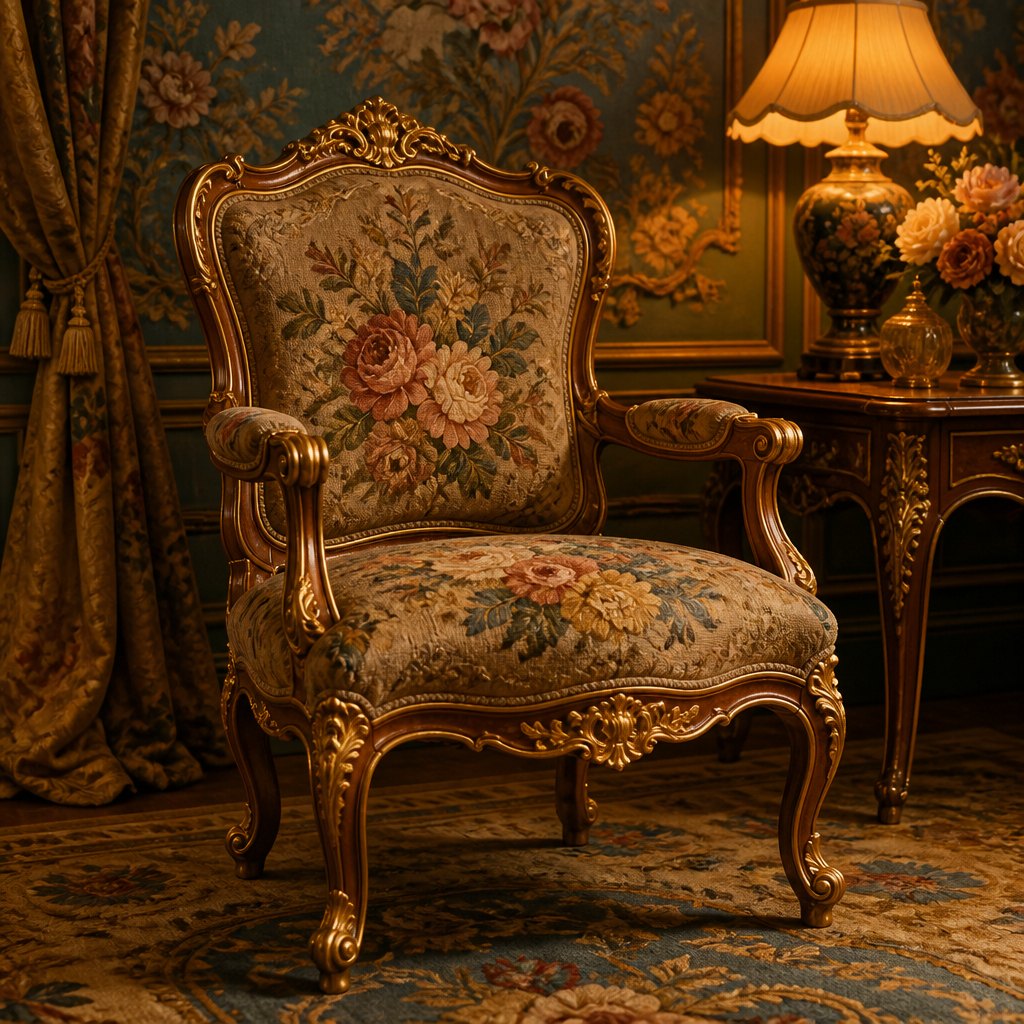 AI-generated
Try the medium
Try decorative arts with AI
This example was generated from a prompt like: “An ornately carved wooden armchair with gilded trim and a woven floral upholstery pattern, cabriole legs ending in scrolled feet, soft warm lamplight catching the gold leaf edges, set in a richly patterned interior with matching wallpaper.”
Open the Decorative Arts Style generator →The medium today
Contemporary decorative arts span studio ceramics, art glass, custom furniture-making, and textile design sold through galleries, craft fairs, and high-end interior design alike. The line between decorative arts and fine art craft has continued to blur, with museums increasingly exhibiting functional objects alongside painting and sculpture. Sustainable and locally sourced materials have become a major concern in furniture and textile production, while digital fabrication tools like CNC routers and 3D-printed molds now sit alongside traditional hand techniques in ceramics and woodworking studios.
Compose your own
To render decorative arts convincingly, keep the underlying object clearly functional — a chair must look sittable, a vase must look pourable — before layering ornament on top of that honest structure. Show pattern following the object's form: wallpaper motifs curving slightly where they wrap a wall, painted porcelain decoration following the vessel's curve rather than sitting flat. Gilded details should catch light as thin, bright highlights rather than solid blocks of yellow. Match materials to period cues: turned wood and brocade suggest an earlier era, chrome and glass suggest a modern one. Keep the overall composition coordinated, since decorative objects are usually designed and displayed as matched sets rather than single standalone pieces.
Frequently asked questions
What's the difference between decorative arts and fine art?
The distinction is mostly historical rather than a real quality gap: fine art traditionally meant painting and sculpture made purely to be viewed, while decorative arts meant designed objects meant for use, like furniture or ceramics. Many scholars today reject the hierarchy this implied.
Is decorative art the same as craft?
The terms overlap heavily and are often used interchangeably. Decorative arts usually refers to the broader historical category covering furniture, ceramics, glass, and textiles, while craft can also describe contemporary studio practice in the same materials, functional or not.
Why were decorative arts historically ranked below painting?
European art academies, starting in the Renaissance, prized work that showed pure intellectual invention over objects tied to function or made within guild workshops. That hierarchy sidelined ceramics, textiles, and furniture despite comparable skill, a ranking most historians now consider outdated.
What materials count as decorative arts?
Furniture, ceramics, glass, metalwork, textiles, wallpaper, and jewelry are the core categories, though the term can extend to any well-crafted functional or semi-functional object where ornament and design quality matter as much as use.