
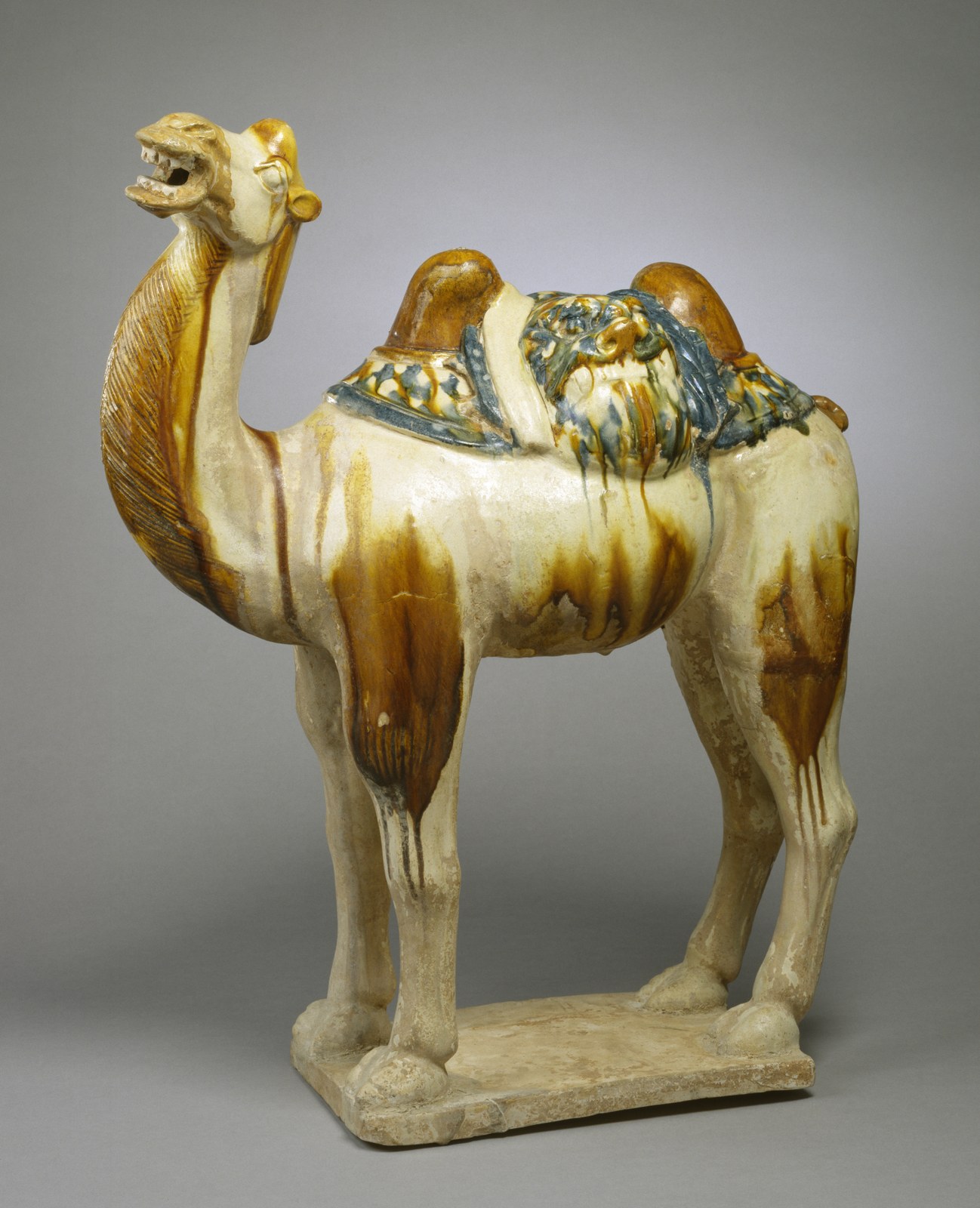
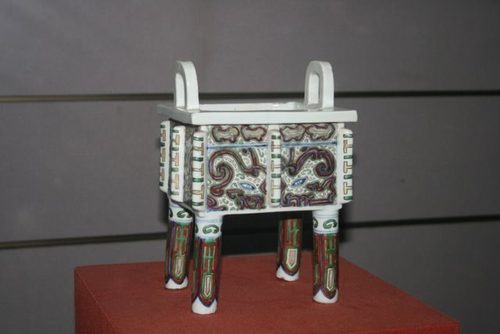
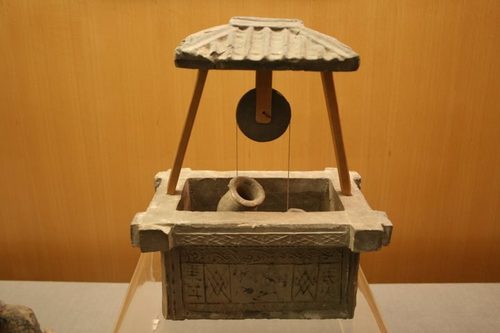
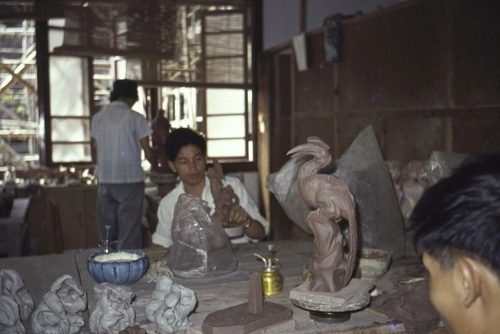
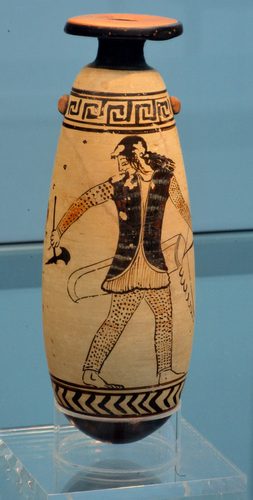
Ceramics is the craft of shaping clay into lasting form by firing it at high heat until its particles fuse into a hard, often waterproof material. The process starts soft and reversible — clay can be pinched, coiled, thrown on a wheel, or pressed into a mold — but firing in a kiln is a one-way transformation that no amount of water can undo again. Most ceramic work passes through two firings: a bisque fire that hardens raw clay into a stable, porous body, and a glaze fire that melts a glassy surface coating onto it, fusing color and shine permanently into the piece. The tradition spans functional pottery — bowls, jars, tiles — and purely sculptural or architectural ceramic work, and every culture that had access to clay developed its own forming methods, kiln technology, and glaze chemistry independently. Because the material transforms so dramatically under heat, much of a ceramicist's skill lies in predicting how a soft, wet form will behave once it has been fired.
What defines the medium
Forming Methods
Clay is shaped by pinching, coiling ropes of clay into walls, slab-building flat sheets, or throwing on a spinning wheel, and each method leaves its own characteristic marks and favors different final forms.
Bisque and Glaze Firing
Most ceramic pieces are fired twice — a bisque firing hardens raw clay into a stable, porous state, then a glaze firing melts a glass coating onto the surface, fusing color and texture permanently.
Clay Body
Different clays — earthenware, stoneware, porcelain — fire at different temperatures and produce different colors, textures, and strengths, so a ceramicist chooses the clay body before deciding on form or glaze.
Glaze Chemistry
Glazes are essentially powdered glass and minerals suspended in water, painted or dipped onto bisqueware, that melt in the kiln into a permanent glassy skin whose color and texture depend on exact mineral content and firing temperature.
Functional and Sculptural Divide
Ceramics spans a spectrum from purely utilitarian vessels meant for daily use to purely sculptural work with no functional intent, and many pieces sit deliberately in between, functional but not meant for hard use.
Kiln Atmosphere
Whether a kiln fires in an oxygen-rich or oxygen-starved atmosphere changes glaze and clay color dramatically, which is why the same glaze recipe can look completely different depending on the firing method used.
Materials decoder
The toolkit of ceramics
- potter's wheel
- → a spinning platform used to center and throw clay into symmetrical, round forms by hand
- kiln
- → the furnace that fires clay to a permanent, hardened state, ranging from small electric kilns to large wood-fired chambers
- glaze
- → a powdered glass-and-mineral coating that melts in the kiln into a glossy, matte, or textured permanent surface
- coil and slab
- → hand-building techniques that stack ropes of clay or join flat sheets, used for forms too large or irregular to throw
- bisqueware
- → clay that has been fired once but not yet glazed — hard and porous, ready to accept glaze
- kiln shelf and stilts
- → the flat platforms and small supports that hold glazed pieces apart inside the kiln so melting glaze doesn't fuse them together
- wax resist
- → melted wax painted onto bisqueware to block glaze from adhering to specific areas, preserving raw clay in a pattern
The story
Fired clay is among the oldest human technologies, with ceramic figurines and vessels appearing tens of thousands of years ago across multiple continents, long before agriculture or metalworking. Once farming created a need to store grain and liquids, pottery became essential infrastructure in nearly every settled culture, and each region developed independent traditions — Chinese porcelain reaching extraordinary translucency and hardness by medieval times, Japanese stoneware prizing rustic irregularity, Islamic and Mediterranean traditions developing brilliant tin-glazed color, and Indigenous American potters building large coiled vessels without a wheel at all. Trade in fine ceramics, especially Chinese porcelain, shaped centuries of global commerce and inspired countless regional imitations. Industrialization mechanized much everyday tableware production in the nineteenth century, even as studio pottery emerged in the twentieth century as a deliberately handmade counter-tradition, elevating the potter from anonymous craftsperson to recognized individual artist working in clay.
Masterpieces of the medium
| Work | Artist | Date | Why it matters |
|---|---|---|---|
| Terracotta Army | Unknown | c. 210 BCE | thousands of individually fired clay soldiers, among the largest ceramic undertakings in history |
| Ming Dynasty Blue-and-White Porcelain | Unknown | 14th-17th century | cobalt-painted porcelain wares so prized they shaped centuries of global trade and imitation |
| Greek Black-Figure and Red-Figure Vases | Unknown | 6th-5th century BCE | painted terracotta vessels whose scenes remain a primary record of ancient Greek daily life and myth |
| Jomon Pottery | Unknown | c. 14,000-300 BCE | cord-marked earthenware from prehistoric Japan, among the oldest known pottery traditions in the world |
| Iznik Tile Panels | Unknown | 16th century | brilliantly glazed ceramic tiles produced in Ottoman Turkey that still cover major mosque interiors today |
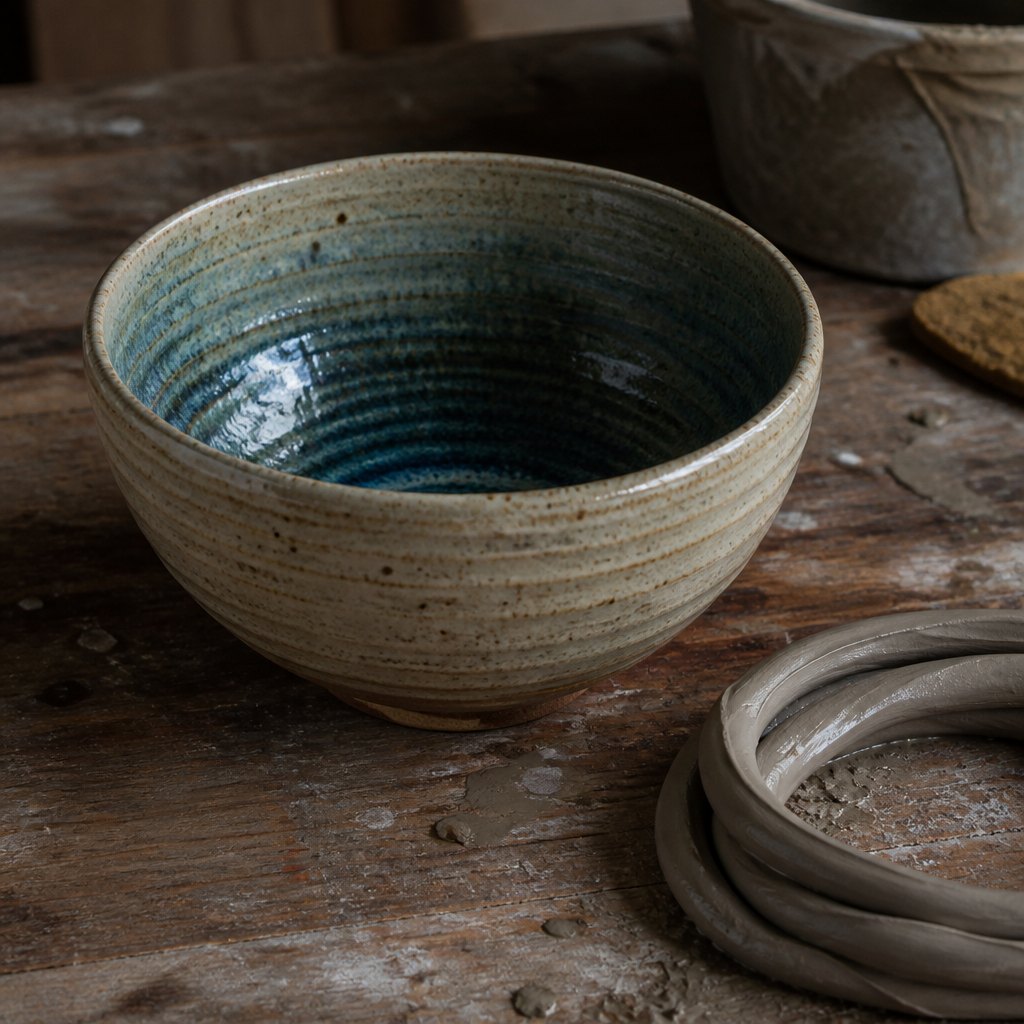 AI-generated
Try the medium
Try ceramics with AI
This example was generated from a prompt like: “A hand-thrown stoneware bowl with a speckled oatmeal glaze pooling darker blue-green inside its curved interior, visible throwing rings spiraling up the exterior, resting on a rough wooden studio table beside a damp clay coil.”
Open the Porcelain Ceramic Art Style generator →The medium today
Studio pottery remains a thriving craft practice, with functional tableware experiencing renewed popularity through small-batch and handmade-goods markets. 3D printing now extrudes clay directly, letting makers produce complex forms impossible to throw or hand-build, while digital glaze calculation software has made testing new glaze recipes far faster than traditional trial and error. Large-scale architectural and public ceramic commissions continue alongside a strong online maker community sharing techniques. Wood-firing and other traditional atmospheric methods have also seen a revival among ceramicists seeking unpredictable, hand-crafted surface results.
Compose your own
To describe a ceramic piece for image generation, specify the form first — a rounded bowl, a tall narrow vase, a coiled sculptural vessel — then the surface: glossy glaze, matte stoneware, crackled celadon, or raw unglazed clay. Note the clay color showing through or beneath the glaze, since earthenware, stoneware, and porcelain each read differently in tone and translucency. Mention glaze color and finish explicitly, such as deep cobalt blue, speckled oatmeal, or dripping ash glaze, and describe surface texture like throwing rings, hand-built seams, or carved patterns. Lighting that catches a glossy glaze's reflection adds convincing material realism.
Frequently asked questions
What's the difference between earthenware, stoneware, and porcelain?
They're clay bodies fired at increasing temperatures — earthenware is porous and low-fired, stoneware is dense and mid-to-high fired, and porcelain is fired hottest, producing a hard, often translucent white body.
Why does clay need to be fired twice?
The first bisque firing hardens raw clay into a stable, porous state safe to handle and glaze, and the second glaze firing melts the glaze coating into a permanent glassy surface fused to that body.
Can you reuse clay that's already been fired?
No — firing permanently and chemically changes clay into a hardened ceramic material that can no longer be softened with water, unlike raw, unfired clay, which can be reclaimed and reused indefinitely.
What causes glaze colors to vary so much?
Glaze color depends on mineral content, firing temperature, and kiln atmosphere — the same glaze recipe can fire out differently in an oxygen-rich versus oxygen-starved kiln, which potters deliberately control for effect.