
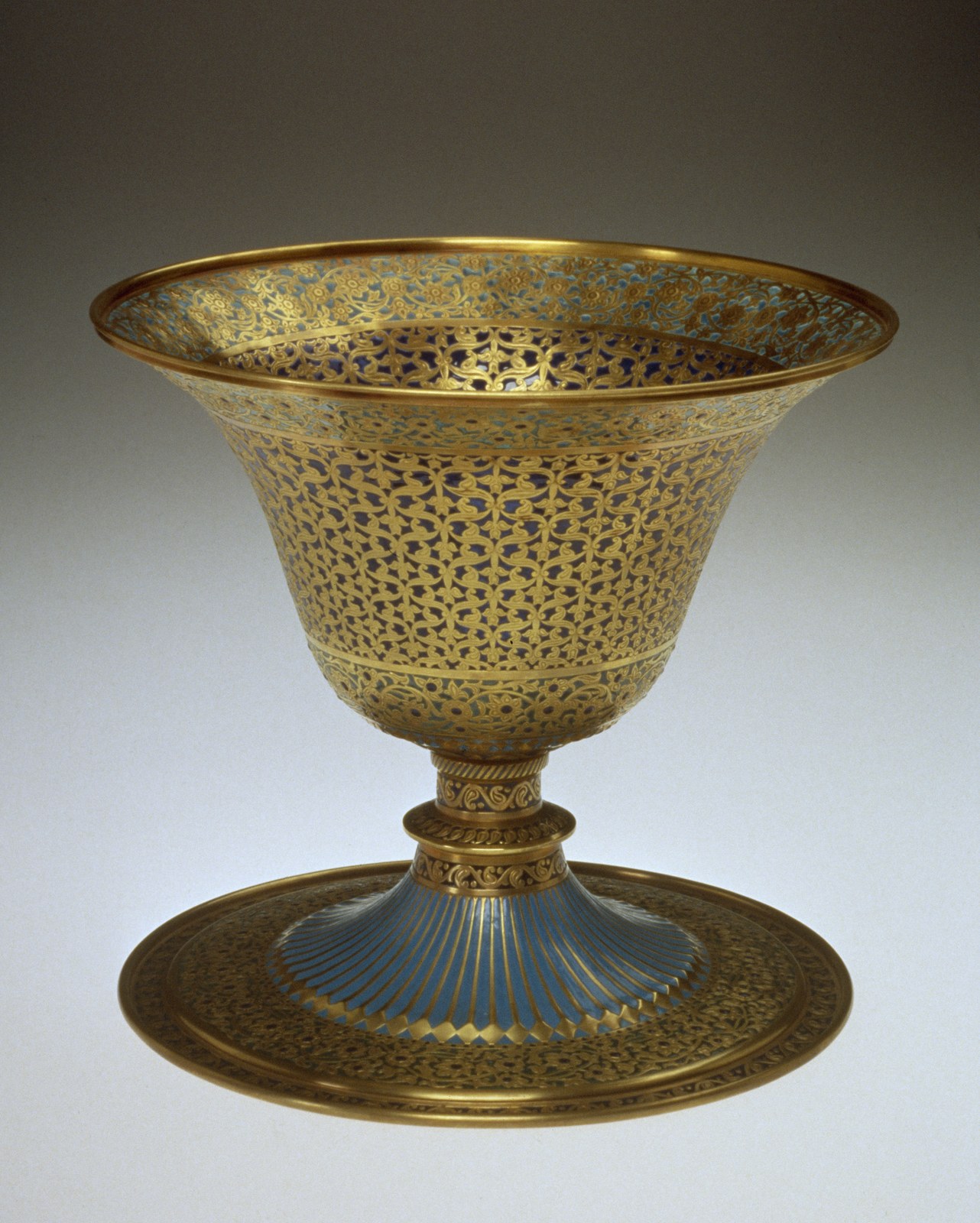
Metal art is any sculptural or decorative work made by shaping metal through heat, force, or removal — casting molten alloy into a mold, forging hot metal under a hammer, welding sheet and bar into new forms, or chasing and repoussé-ing a design into thin plate from front and back. The medium spans scales that few others touch: a signet ring and a forty-foot gate belong to the same family of skills. Bronze and iron dominate the historical record because they survive — buried, submerged, or simply left outdoors — while gold and silver carried status in jewelry and ritual objects. What unites the medium is resistance: metal pushes back against the tool, rewarding patience and physical control in equal measure. Modern metal artists add plasma cutters, TIG welders, and powder coating to the old vocabulary of anvil and crucible, but the core relationship — a stubborn material coaxed into permanence — hasn't changed. Metal rewards those willing to work at the edge of what the material can survive.
What defines the medium
Casting
Molten metal poured into a mold — sand, lost-wax, or investment casting — captures fine detail and allows the same form to be reproduced multiple times, from small bronze figures to monumental public sculpture.
Forging
Heating metal until it glows and shaping it under hammer blows, on an anvil, changes the material's grain structure and makes it tougher — the method behind blades, tools, and architectural ironwork alike.
Welding and fabrication
Cutting, bending, and fusing sheet or bar stock with heat or electric arc lets artists build large-scale or abstract forms piece by piece, favored in contemporary steel sculpture and industrial-scale installation work.
Repoussé and chasing
Working a thin metal sheet from the back (repoussé) to push out relief, then refining the front (chasing) with fine punches, produces raised ornament on vessels, armor, and decorative panels without removing any material.
Patina and finish
Chemical treatments, heat, or simple time oxidize a metal's surface into color — green verdigris on bronze, blue-black on steel — and finishers choose to preserve, accelerate, or strip that skin entirely.
Joinery without welding
Rivets, pins, wire-wrapping, and interlocking tabs join metal parts in traditions and settings where heat-fusion isn't practical, from ancient armor to jewelry, keeping pieces mechanically sound and often reversible for repair.
Materials decoder
The toolkit of metal art
- anvil and hammer
- → the forge's core pairing — the anvil resists, the hammer shapes, and hot metal moves only under both
- crucible
- → the vessel that holds metal past its melting point, ready to pour into a waiting mold
- TIG welder
- → modern precision joinery — a controlled arc that fuses metal with far finer control than gas welding
- chasing hammer and punches
- → small hand tools that push repoussé relief into fine, controlled detail from the front of the sheet
- lost-wax mold
- → a wax original burned away inside a plaster shell, leaving a cavity that molten bronze fills exactly
- patina
- → the chemically induced surface color — verdigris, russet, blue-black — that signals age or deliberate finishing
- sheet and bar stock
- → the raw material of fabrication, cut and bent rather than melted, favored for large welded forms
The story
Metalworking is one of humanity's oldest arts, tracking the Bronze Age and Iron Age that lend their names to whole eras of civilization. Ancient Egyptian goldsmiths, Chinese bronze-casters of the Shang dynasty, and West African metalworkers of Ife and Benin all reached extraordinary sophistication using furnace and lost-wax techniques centuries before industrial tools existed. Medieval Europe built cathedrals full of wrought-iron grilles and gilded reliquaries, while Islamic metalworkers perfected inlay and damascening on brass and steel. The Renaissance elevated bronze casting to a fine art through monumental public statuary, and the Industrial Revolution introduced rolled sheet, cheap steel, and new joining methods that put metalworking within reach of far more makers. Twentieth-century sculptors used oxyacetylene and arc welding to treat metal as a drawing medium in three dimensions, building open, linear forms that earlier casting methods couldn't achieve. Metal art today draws on every one of these lineages at once.
Masterpieces of the medium
| Work | Artist | Date | Why it matters |
|---|---|---|---|
| Ife Bronze Heads | Unknown | 12th-15th century | lost-wax cast copper-alloy portrait heads from the Yoruba kingdom of Ife |
| Benin Bronzes | Unknown | 16th-17th century | brass plaques and figures cast for the Kingdom of Benin's royal court |
| Perseus with the Head of Medusa | Benvenuto Cellini | 1554 | a lost-wax bronze casting later celebrated as a technical triumph of the form |
| Statue of Liberty (repoussé copper skin) | Frédéric Auguste Bartholdi | 1886 | hammered copper sheet over an iron support frame, repoussé at monumental scale |
| Bird in Space | Constantin Brâncuși | 1923 | polished bronze cast and hand-finished into a single continuous form |
 AI-generated
Try the medium
Try metal art with AI
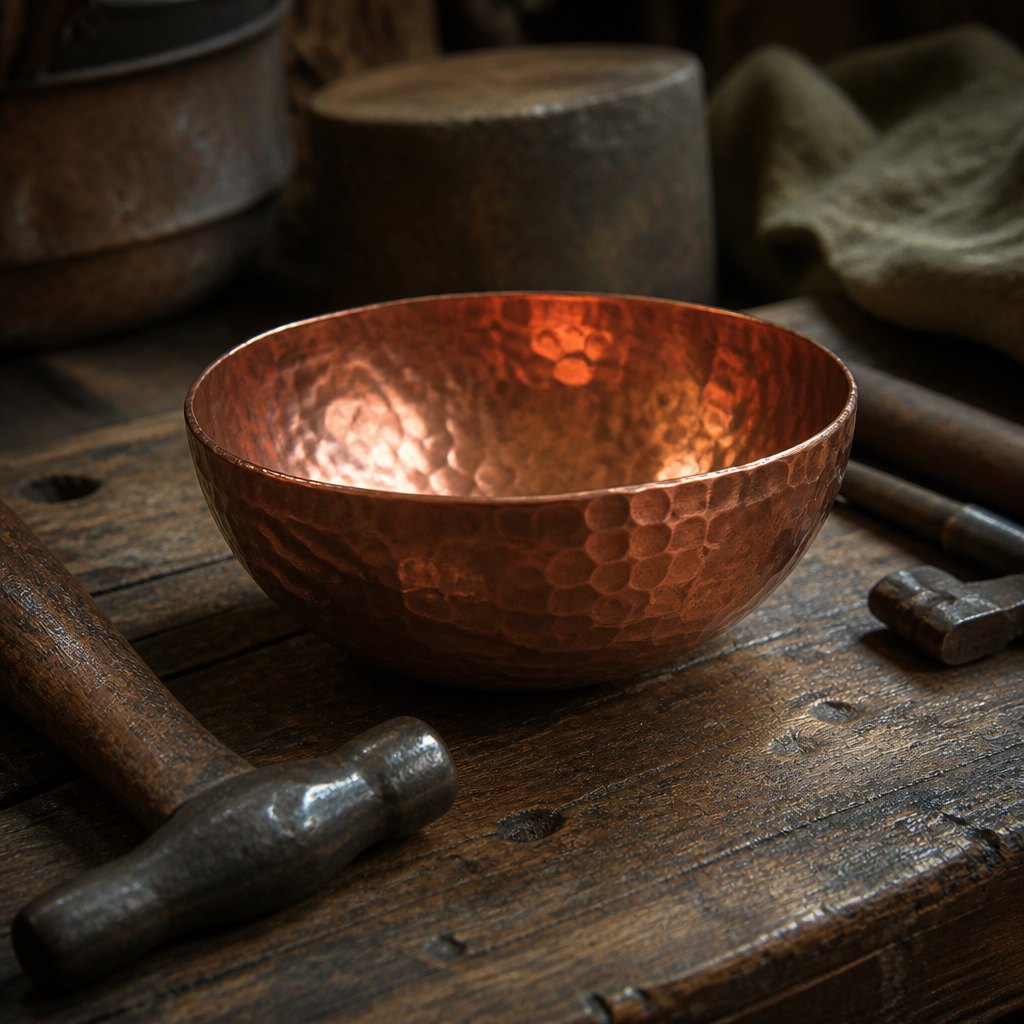
This example was generated from a prompt like: “A small hammered copper bowl on a workbench, its surface covered in faceted planishing marks, edges slightly irregular, warm reddish patina forming at the rim, soft studio light raking across the dented, hand-worked texture.”
Open the Metal Assemblage Sculpture Art Style generator →The medium today
Contemporary metal art spans monumental public sculpture, studio jewelry, functional furniture, and small-batch blacksmithing revived through maker spaces and welding co-ops. Plasma cutters and CNC waterjets now cut precise shapes from steel plate that once took hand-filing, while TIG welding lets fabricators build seamless, almost drawn forms. Powder coating and anodizing have widened the color palette available to metal artists well beyond patina alone. Social platforms have also revived interest in traditional blacksmithing and metalsmithing as visible, video-friendly crafts, drawing new hobbyists into a field long dominated by industrial-scale production.
Compose your own
To render metal art convincingly, commit to one process and let its physical logic show. Cast pieces read as smooth, continuous, and slightly heavy, with fine surface detail and rounded edges where wax or clay softened before casting. Forged and hammered work carries visible tool marks, tapering thicknesses, and a slightly irregular, hand-worked surface. Welded and fabricated pieces show flat sheet and bar stock joined at visible seams, with sharper angles and open, linear construction. Decide on a finish and stay consistent: bright polished metal reflects its surroundings, brushed metal scatters light in fine parallel lines, and patinated or rusted metal shows uneven, mottled color building up in recesses first. Ground the piece with a real light source and a shadow that matches its weight.
Frequently asked questions
What's the difference between casting and forging?
Casting pours molten metal into a mold to take its shape; forging heats solid metal and shapes it under hammer blows without melting it. Casting captures fine detail and repeats easily; forging changes the metal's internal grain, often making the finished piece tougher.
Why does bronze turn green over time?
Bronze is a copper alloy, and copper reacts with oxygen, moisture, and airborne pollutants to form a thin oxide layer called patina, usually green or blue-green. Many artists encourage or chemically accelerate this patina rather than treat it as damage.
Is welded sculpture considered fine art or craft?
Both, depending on context and intent — welded steel sculpture has been treated as serious fine art since the mid-20th century, while the same joining skills also produce furniture, gates, and functional objects classified as craft or design.
What metals are easiest for beginners to work with?
Copper and aluminum are common starting points because they're relatively soft, don't require extreme heat to anneal, and forgive minor mistakes. Steel and bronze demand more specialized equipment and experience before results become reliably clean.