
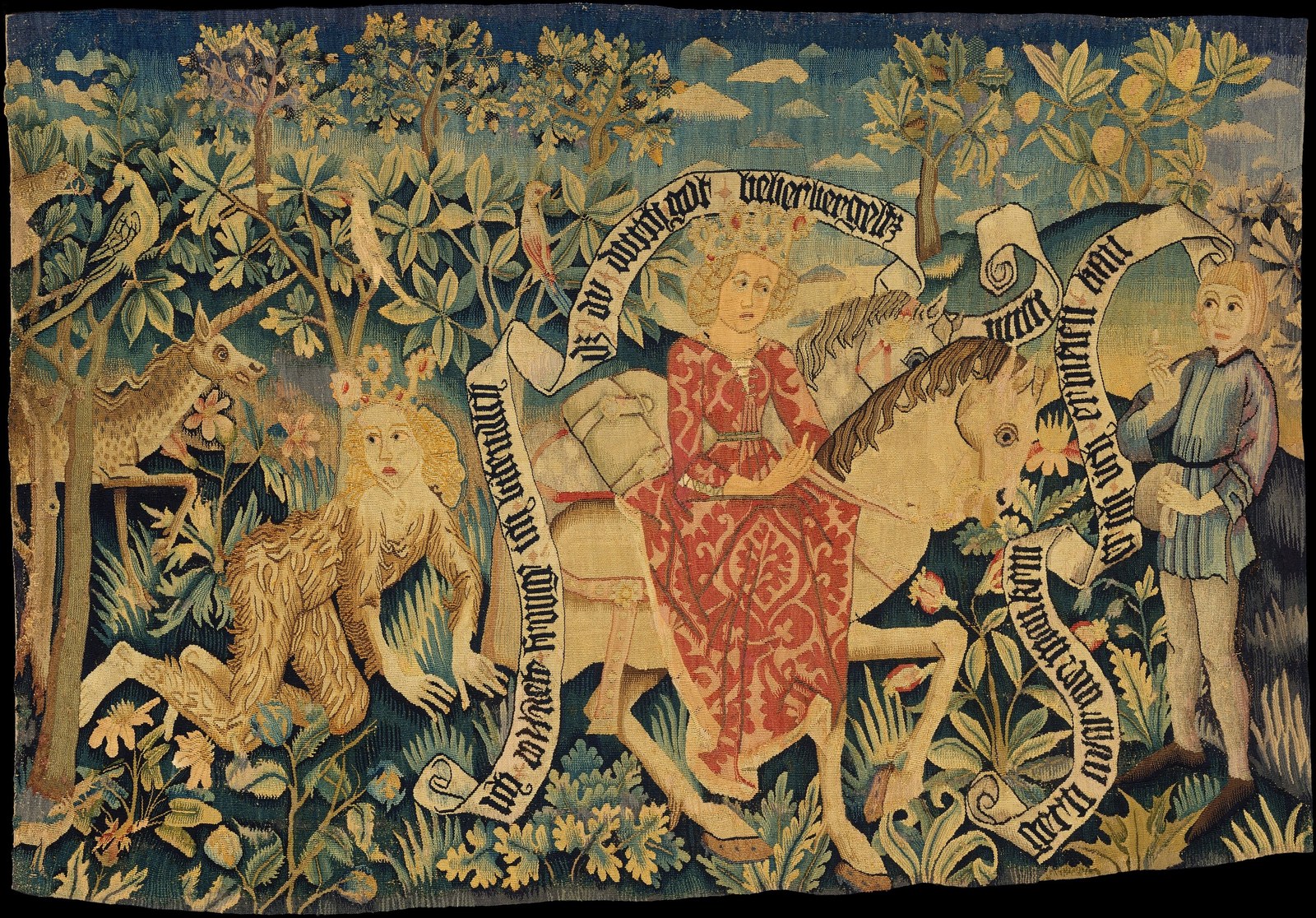
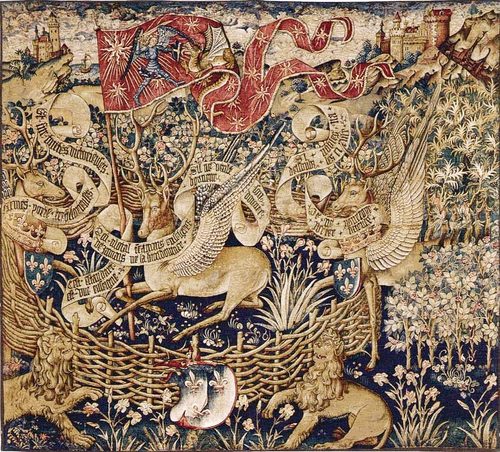

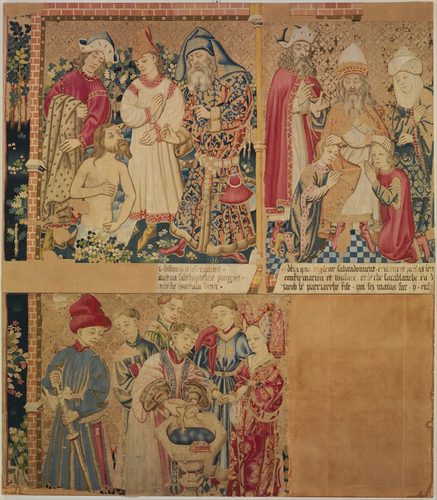
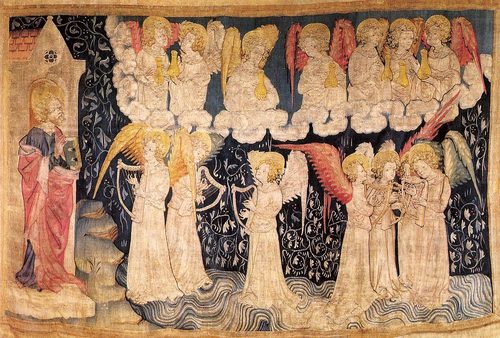
Textile art is the craft of making art from fiber, using techniques like weaving, knotting, dyeing, embroidery, and felting to build cloth or fiber-based forms that range from functional to purely sculptural. The medium's core structural technique is weaving, interlacing a lengthwise warp with a crosswise weft on a loom, but fiber art also includes knotting techniques like macrame, needle and thread embroidery worked onto existing cloth, resist-dyeing methods like batik and shibori that pattern fabric with wax or folded bindings, and felting, which matts loose wool fibers together with moisture, heat, and agitation rather than weaving them at all. Every fiber-producing culture developed its own textile tradition, often carrying deep social and ceremonial meaning encoded in pattern, color, and technique passed down through generations. Contemporary fiber art has expanded the medium well beyond flat cloth into three-dimensional and installation-scale sculptural work, treating thread and fabric as a legitimate fine-art material rather than only a craft or decorative one.
What defines the medium
Warp and Weft
Woven textiles interlace a fixed lengthwise set of threads, the warp, with a crosswise thread, the weft, passed over and under on a loom — the specific over-under pattern determines the fabric's structure and surface texture.
Dyeing and Resist Techniques
Fiber can be colored before or after construction using dye baths, and resist methods like batik's wax or shibori's folded and bound fabric block dye from reaching certain areas, creating pattern through controlled resistance.
Embroidery and Surface Stitching
Embroidery adds thread-based decoration onto an existing woven or felted ground using needle and thread, building raised texture, pictorial imagery, or pattern entirely on the fabric's surface rather than its underlying structure.
Knotting and Non-Woven Structure
Techniques like macrame and knotted rugs build fabric entirely from knots rather than an interlaced warp and weft, producing an openwork or dense knotted texture distinct from any loom-woven cloth.
Felting
Wool fibers matted together with moisture, heat, soap, and agitation bond into a dense, non-woven fabric with no visible thread structure at all, one of the oldest and most direct fiber techniques known.
Pattern as Language
In many textile traditions, specific motifs, colors, and weave structures carry inherited symbolic or regional meaning, so a pattern can identify a maker's community, status, or story as legibly as a written text.
Materials decoder
The toolkit of textile art
- loom
- → a frame that holds warp threads taut so weft can be woven through them, ranging from simple handheld frames to large mechanical looms
- shuttle
- → a tool that carries the weft thread back and forth through the warp during weaving, often hand-thrown on traditional looms
- embroidery hoop and needle
- → holds fabric taut for hand-stitching decorative thread patterns onto its surface
- wax and tjanting tool
- → used in batik to apply melted wax to fabric in patterns that resist dye, revealing the original cloth color underneath once removed
- natural dye vat
- → a bath of plant, mineral, or insect-derived dye used to color fiber or finished cloth before or after construction
- felting needle
- → a barbed needle repeatedly jabbed into loose wool fibers to matt them together into dense, sculptural felted form
- spindle and distaff
- → hand tools used to twist raw fiber into spun thread or yarn before it can be woven or knitted
The story
Textile production is among the oldest human technologies, with spun and dyed fibers found at archaeological sites tens of thousands of years old, predating settled agriculture in some regions. Every culture with access to plant or animal fiber — cotton, wool, silk, flax, bark — developed its own spinning, weaving, dyeing, and decoration traditions, often encoding elaborate symbolic meaning into pattern and color. Silk production and trade shaped centuries of exchange across Asia and beyond, while wool and wool tapestry defined much of European textile history, and resist-dyeing traditions like batik flourished independently across parts of Asia and Africa. Industrialization mechanized spinning and weaving in the eighteenth and nineteenth centuries, moving most textile production out of the home and into factories, which in turn sparked craft revival movements insisting on the value of handmade fiber work. In the twentieth century, fiber artists pushed textile techniques into gallery-scale sculpture and installation, formally establishing fiber art as a fine-art category distinct from craft or decorative tradition.
Masterpieces of the medium
| Work | Artist | Date | Why it matters |
|---|---|---|---|
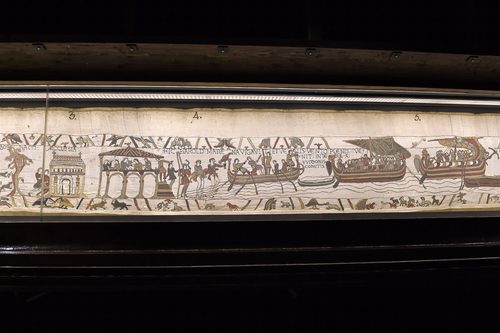
| Bayeux Tapestry | Unknown | c. 1070 | a nearly 230-foot embroidered cloth narrating the Norman Conquest in continuous pictorial detail |
| The Lady and the Unicorn | Unknown | c. 1500 | a set of woven wool-and-silk tapestries celebrated for their intricate millefleur backgrounds and allegorical imagery |
| Pazyryk Carpet | Unknown | c. 5th century BCE | the oldest known surviving pile carpet, preserved in permafrost, showing already sophisticated knotting technique |
| Gee's Bend Quilts | Unknown | 19th century-ongoing | improvisational pieced quilts from a rural Alabama community celebrated for bold geometric abstraction |
| Six Prayers | Anni Albers | 1966-1967 | a woven memorial commission that helped establish weaving as a modern fine-art practice |
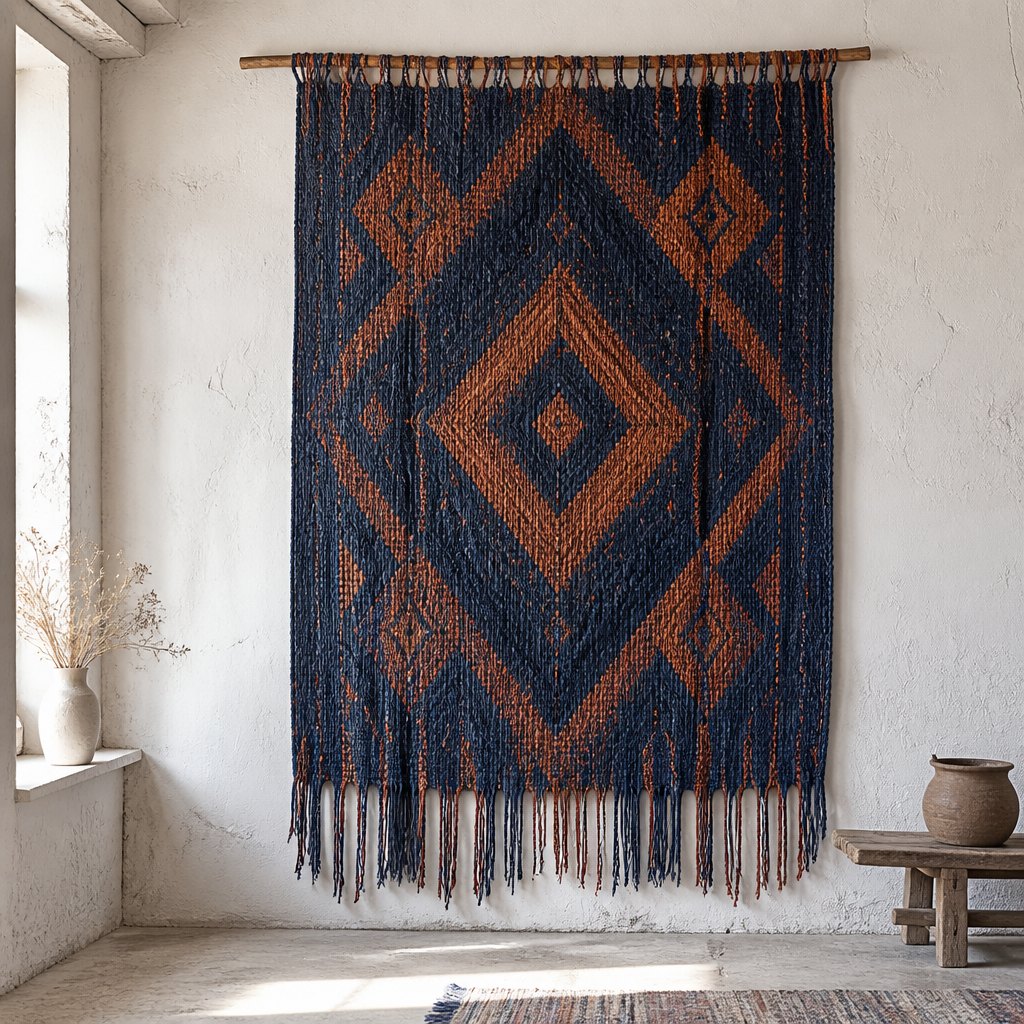 AI-generated
Try the medium
Try textile art with AI
This example was generated from a prompt like: “A large handwoven wall tapestry in deep indigo and warm rust wool, geometric diamond pattern visible in the weave structure, soft fringed edges hanging loose, displayed against a whitewashed studio wall in natural daylight.”
Open the Hand Embroidery Illustration / Textile Art generator →The medium today
Contemporary fiber art regularly appears in major museums and biennials as large-scale sculptural and installation work, no longer confined to a craft category. Digital jacquard looms let artists program complex woven imagery directly from image files, while hand techniques like embroidery, macrame, and natural dyeing have seen a strong revival through social media and small-batch maker communities. Sustainable and slow-fashion movements have renewed interest in traditional natural dyeing and hand-weaving as alternatives to industrial textile production, and many contemporary artists use fiber specifically to address themes of labor, domesticity, and cultural heritage.
Compose your own
To describe textile art for image generation, specify the technique and structure — a woven tapestry with visible warp and weft, a knotted macrame wall hanging, an embroidered pattern on linen, or a felted sculptural form. Describe fiber material explicitly, such as wool, cotton, silk, or jute, since each has a distinct texture and sheen. Note color and pattern in detail, including any resist-dye effects like batik's crackled white lines or shibori's folded circular bursts. Mention scale and how the piece is displayed — hung flat on a wall, draped, or built into three-dimensional form — and describe close-up thread texture for material realism.
Frequently asked questions
What's the difference between weaving and embroidery?
Weaving builds fabric's actual structure by interlacing warp and weft threads on a loom, while embroidery adds decorative stitching onto fabric that already exists, working on top of a woven or felted surface.
How does felting work without weaving?
Felting matts loose wool fibers together using moisture, heat, soap, and friction or repeated needle jabs, bonding the fibers directly into a dense fabric with no woven thread structure at all.
What is resist-dyeing?
Resist-dyeing blocks dye from reaching certain areas of fabric using wax, as in batik, or folding and binding, as in shibori, so the untouched original fabric color shows through as pattern once the resist is removed.
Is textile art considered fine art or craft?
Historically viewed mainly as craft, textile work is now widely shown in major museums and galleries as fine art, especially large-scale sculptural fiber installations that push well beyond traditional cloth.