

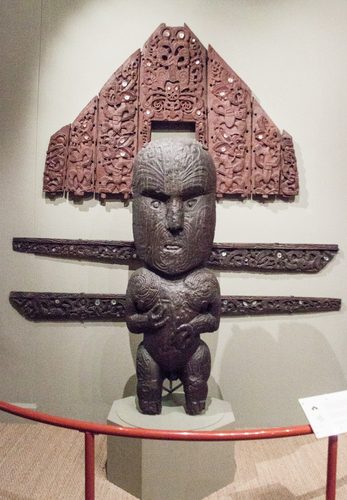
Wood art is any sculptural, carved, turned, or joined work made from timber, worked with or against the grain that runs through every piece. Carving removes material with chisels, knives, or gouges to reveal a form already implied by the block; turning spins a rough blank on a lathe so a fixed tool can shave it into perfect radial symmetry; marquetry and intarsia build pictures from thin veneers of different woods fitted like a puzzle. Unlike stone or metal, wood has directionality — it splits easily along the grain and resists across it — so every technique in the medium is really a negotiation with that structure rather than a fight against a neutral material. Species matter enormously: oak's coarse grain reads differently from walnut's tight, dark figure or pine's soft, knotty give. Finish, from raw oil to high-gloss lacquer, changes how that grain reads as much as the carving itself. Wood art sits at the meeting point of sculpture, furniture, and craft.
What defines the medium
Carving
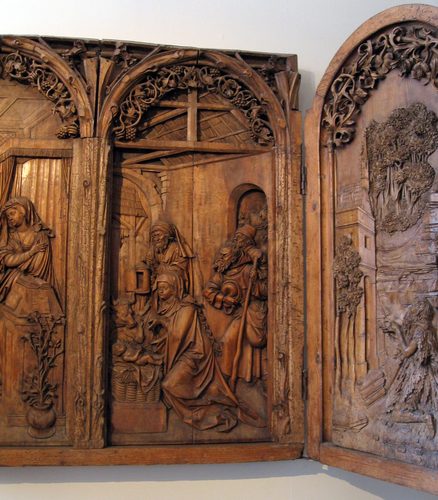
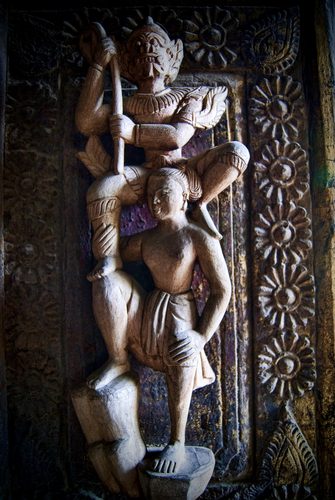
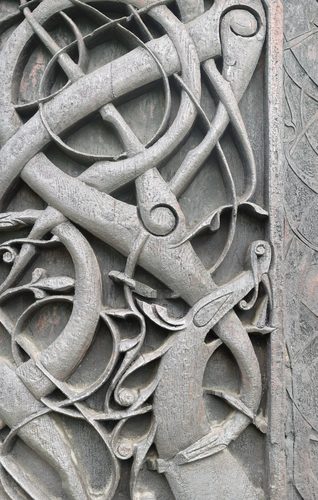
Removing wood with chisels, gouges, or knives, working with the grain wherever possible, reveals a form already latent in the block — the oldest and most direct approach, from relief panels to fully three-dimensional figures.
Turning
Spinning a rough blank on a lathe lets a fixed cutting tool shave it into perfectly round, symmetrical forms — bowls, spindles, and vessels — far faster and more precisely than hand-carving could achieve.
Marquetry and intarsia
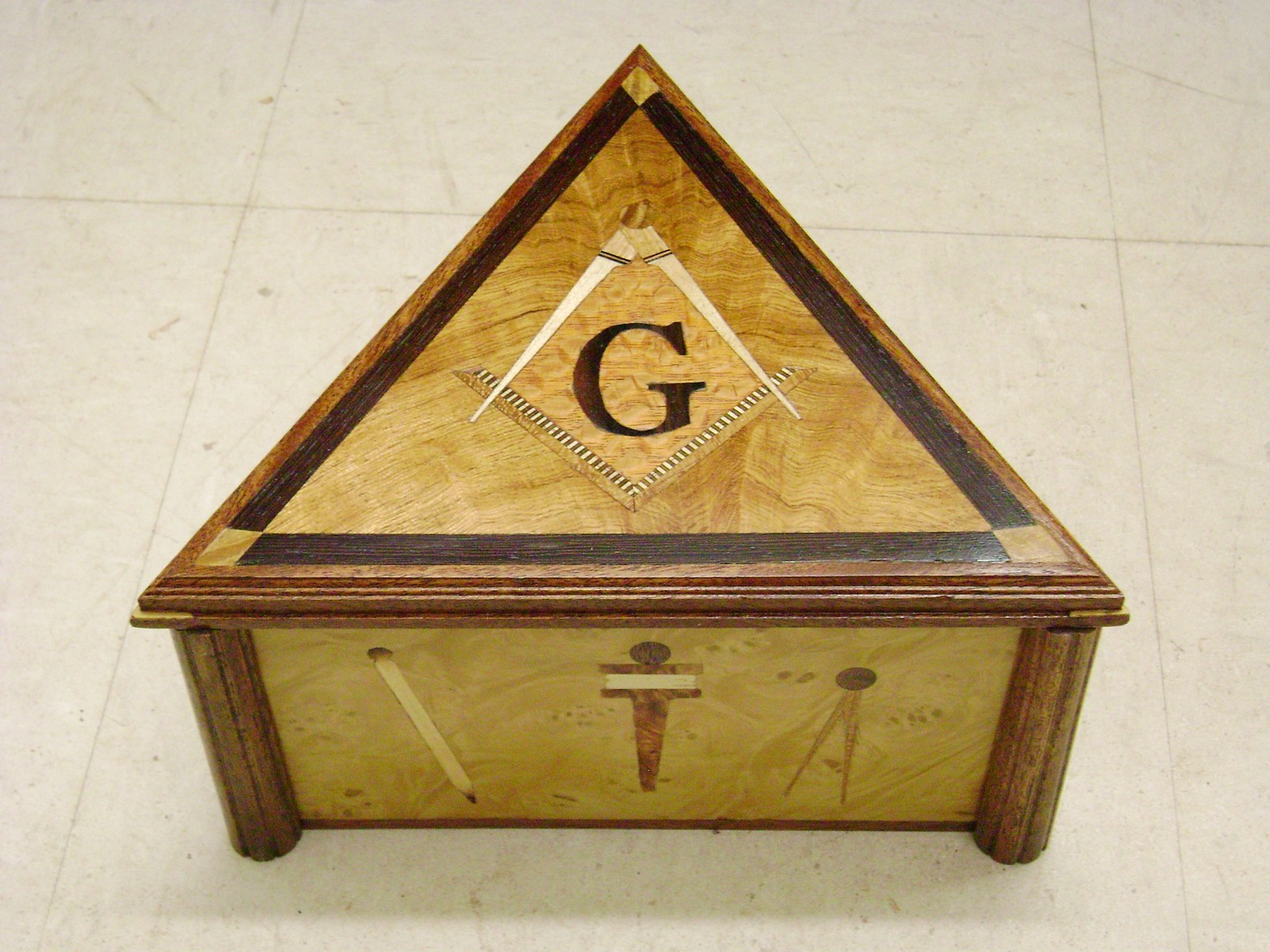
Cutting thin veneers of different-colored woods and fitting them together like a puzzle builds pictorial or patterned images into a flat or curved surface, prized for using wood's natural color and figure instead of paint.
Joinery
Interlocking cuts — dovetails, mortise-and-tenon, finger joints — hold wood together using shape rather than fasteners, a structural vocabulary that turns functional furniture into an expression of craft in its own right.
Reading the grain
Every technique bends around the direction wood fibers run: cutting with the grain is smooth and controlled, cutting across or against it tears and splits, so planning a piece means reading the grain before the first cut.
Finish
Oil soaks in and darkens the wood while keeping a matte, natural look; wax adds soft sheen; lacquer or polyurethane builds a hard, glossy film — the choice determines how much the grain's depth shows through.
Materials decoder
The toolkit of wood art
- carving gouge
- → a curved-blade chisel that scoops material away in controlled strokes, the primary tool of relief and figure carving
- lathe
- → a spinning machine that lets a fixed tool shave a wood blank into perfectly round, symmetrical forms
- dovetail joint
- → interlocking trapezoidal cuts that hold two boards together by shape alone, a signature of fine joinery
- wood grain figure
- → the natural pattern left by growth rings and fiber direction, often the real subject of a finished piece
- veneer
- → a thin sheet of wood sliced from a log, used in marquetry and furniture to apply figured wood over a plainer base
- wood burr / burl
- → a dense, swirling growth deformity prized for dramatic, unpredictable grain patterns in turned and carved pieces
- beeswax and oil finish
- → traditional low-sheen finishes that soak into the surface and deepen color without hiding the grain under a film
The story
Wood carving is likely as old as tool use itself, though its perishability means little survives from deep prehistory compared to stone. Ancient Egyptian furniture and funerary sculpture, West African masks and figures, and Pacific Northwest totem poles all developed independent traditions of carved wood as both sacred object and everyday craft. Medieval European cathedrals filled their choir stalls and altarpieces with elaborate wood relief, while Japanese Buddhist temples produced monumental carved and lacquered figures using joined-block construction to build large forms from smaller pieces. Marquetry flourished in Renaissance Italy and later French royal furniture, turning cabinetry into pictorial art. The lathe, one of the oldest machine tools, gave rise to a parallel tradition of turned bowls and spindles found on nearly every continent. Industrial machinery in the 19th and 20th centuries made precision joinery and veneer widely available, while studio furniture-makers later reclaimed hand technique as a deliberate artistic choice rather than a necessity.
Masterpieces of the medium
| Work | Artist | Date | Why it matters |
|---|---|---|---|
| Ka Statue of King Hor | Unknown | c. 1750 BCE | carved and gilded wooden funerary statue from the Egyptian Middle Kingdom |
| Pacific Northwest Totem Poles | Unknown | 19th century tradition | monumental carved cedar poles recording lineage and myth among Haida and Tlingit peoples |
| Choir Stalls of Ulm Minster | Jörg Syrlin the Elder | 1469-1474 | elaborately carved oak choir stalls with figural relief panels |
| Boulle Marquetry Furniture | André-Charles Boulle | late 17th century | brass-and-shell marquetry cabinetry that turned furniture-making into a pictorial art form |
| Netsuke Toggles | Unknown | Edo period, 17th-19th century | miniature carved wooden toggles combining sculptural detail with wearable function |
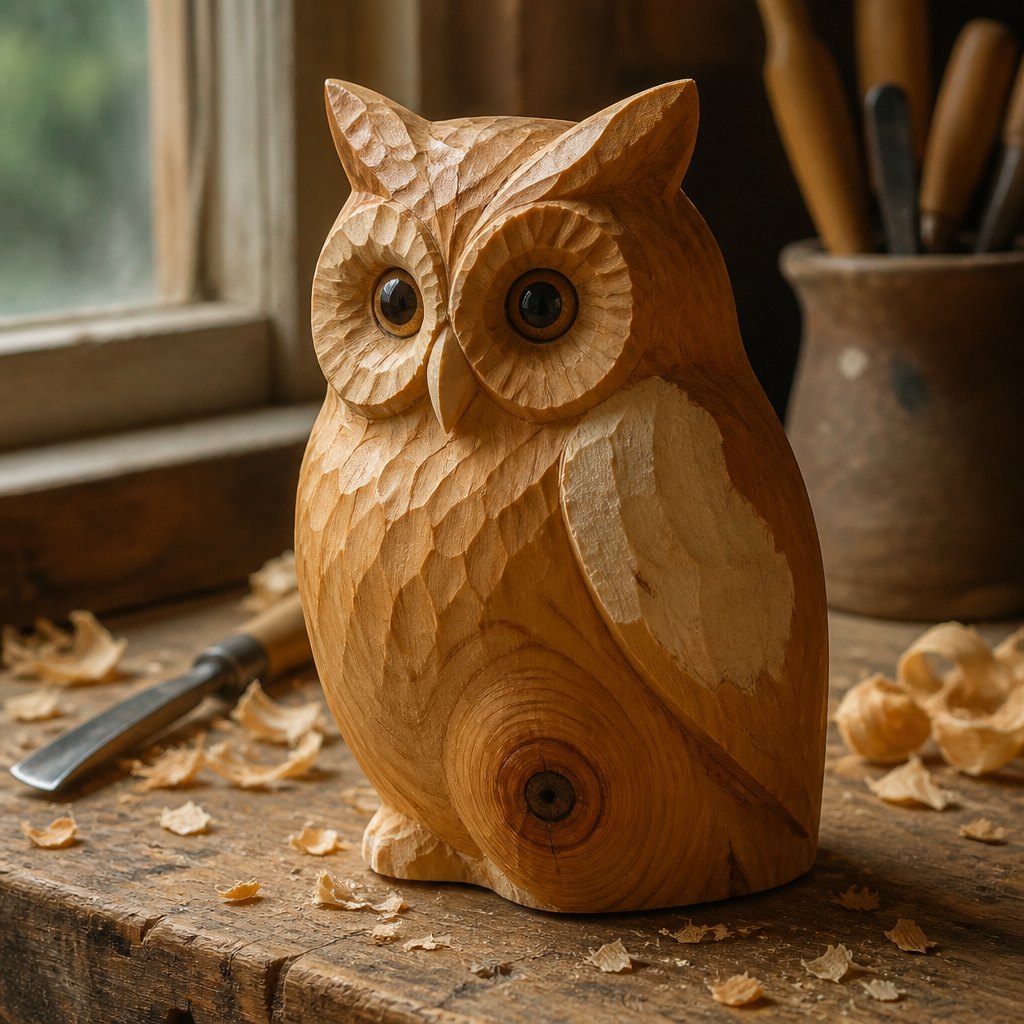 AI-generated
Try the medium
Try wood art with AI
This example was generated from a prompt like: “A hand-carved wooden owl figurine on a workbench, gouge-facet marks catching soft window light, warm honey-colored grain swirling around a knot near the base, wood shavings scattered nearby, a raw unfinished patch left near one wing.”
Open the Wood Carving Sculpture Art Style generator →The medium today
Contemporary wood art ranges from studio furniture-makers pushing joinery as sculpture to chainsaw carvers working at monumental outdoor scale. CNC routers now cut precise relief and marquetry patterns that once took weeks by hand, while woodturners use the lathe to produce thin-walled, almost ceramic-looking vessels. Reclaimed and salvaged timber has become a popular material choice, prized for both sustainability and the character that comes with age and weathering. Green woodworking — carving unseasoned wood with hand tools alone — has also seen a strong revival among makers seeking a slower, more tactile practice.
Compose your own
To render wood art convincingly, show the grain running consistently across every surface, curving around knots and following the form rather than sitting flat like a texture map. Carved surfaces should carry visible tool marks — faceted planes from a gouge, or smooth swept curves where the wood was worked with the grain. Turned pieces need perfect radial symmetry with fine, even ridges left by the lathe tool. Marquetry should show distinct pieces of different-colored wood fitted with tight seams, each with its own grain direction. Match the finish to the goal: raw wood looks dry and matte, oiled wood looks warm and slightly darkened, and lacquered wood reflects light in a tight, glassy highlight.
Frequently asked questions
Why does wood split along the grain?
Wood fibers run in one dominant direction, and the bond between fibers is much weaker than the fibers themselves. A force applied along the grain separates fibers cleanly, while force across the grain has to break them, which is why carvers plan cuts around grain direction.
What's the difference between carving and turning?
Carving removes material by hand with chisels or knives to build any shape, symmetrical or not. Turning spins a blank on a lathe while a fixed tool cuts it, which only produces forms with radial symmetry, like bowls and spindles.
Why do different wood species look so different?
Grain pattern, color, and density vary by species and even by which part of the tree a board is cut from. Oak shows bold ray-fleck figure, walnut has tight dark grain, and pine is pale and soft with visible knots.
Does wood art include furniture?
Yes, when the piece emphasizes craftsmanship, joinery, or sculptural form as much as function. Studio furniture-makers are often treated as artists, with pieces exhibited and collected the same way turned or carved sculpture is.