
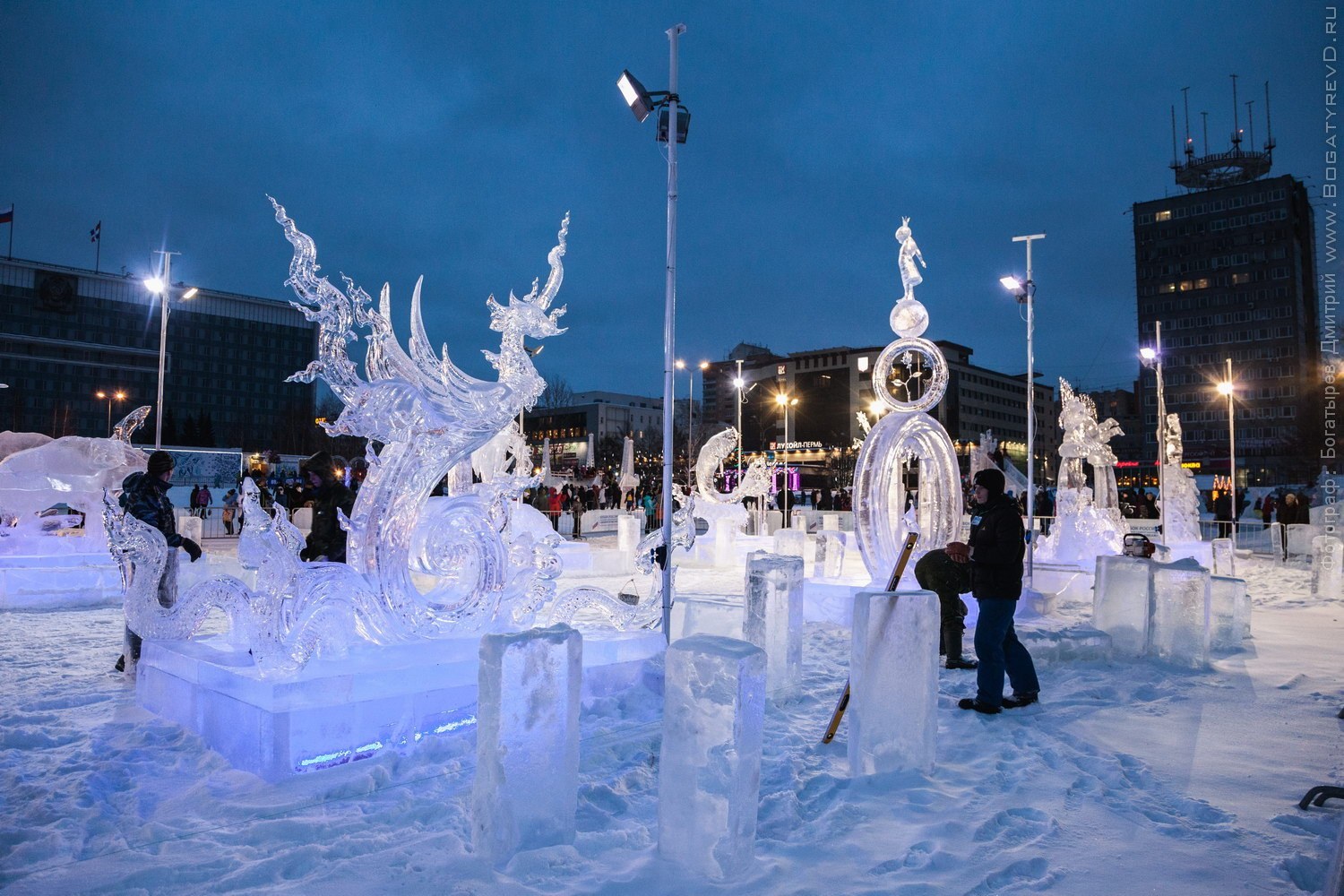
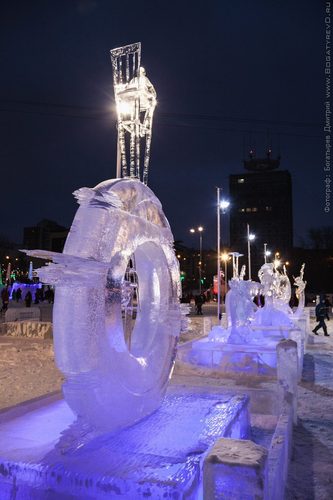
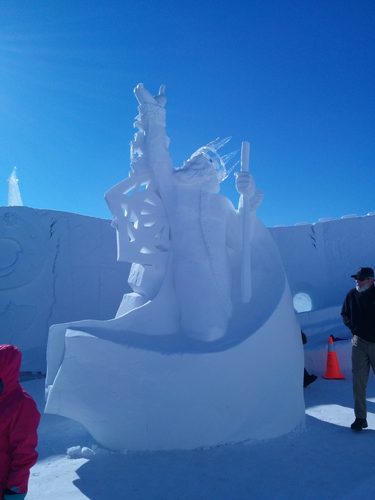
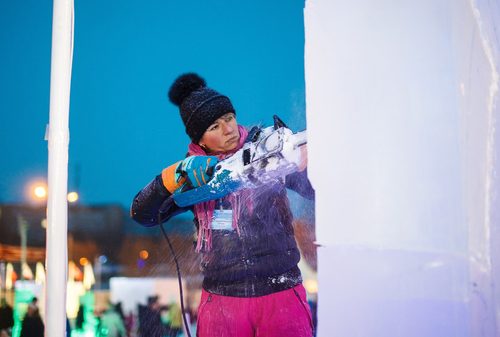
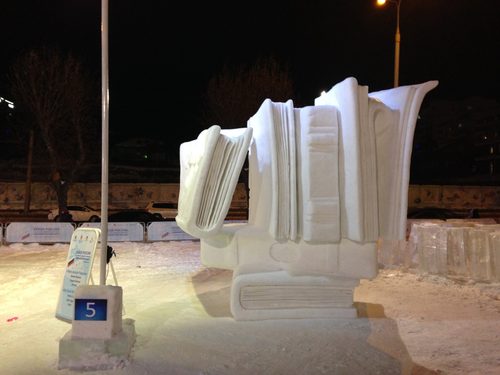
Ice sculpture shapes blocks of frozen water into figures, furniture, or architecture using chainsaws for rough cutting, chisels and rasps for detail, and heated tools for smoothing and fusing pieces together. The best material is clear, bubble-free ice produced by slow, directional freezing that pushes air and impurities out as it forms, unlike cloudy ice frozen quickly in a home freezer. Large works are built from multiple blocks—sometimes dozens—stacked and fused with a thin layer of water that refreezes into a seamless joint. Sculptors work in refrigerated studios or outdoor winter cold to keep the material stable, often against a strict clock before an event or festival. Finished pieces are commonly lit from within or below with colored LEDs, turning the sculpture's facets and internal cracks into glowing patterns. The medium is inherently temporary: pieces are made to be displayed for hours or days before they melt, drip, or are deliberately broken down.
What defines the medium
Clear ice production
Sculptors use slow, directional freezing—often in tanks that circulate water as it freezes—to push air bubbles and cloudiness out, producing the transparent 'crystal clear' blocks needed for detailed, light-catching work.
Rough-out with chainsaw, detail with hand tools
A chainsaw removes large volumes quickly to establish the overall form, then chisels, rasps, and die grinders refine edges, facets, and fine detail that a chainsaw's blade is too coarse to achieve.
Fusing multiple blocks
Large sculptures are assembled from several ice blocks stacked and joined with a thin coat of water, which refreezes almost instantly in cold conditions to bond the pieces into one continuous form.
Cold-chain working conditions
Carving happens in refrigerated studios or sub-freezing outdoor air; even a few degrees above freezing softens edges and causes premature melting, so sculptors race against both the clock and the thermometer.
Internal illumination
LED lights placed inside or beneath the block make cracks, facets, and carved recesses glow, turning a colorless material into a lit centerpiece for events, festivals, and competitions after dark.
Built for a short lifespan
Ice sculpture is intentionally temporary—festival pieces are judged, displayed for a set window, and then left to melt or are cleared away, unlike most sculpture media meant to persist indefinitely.
Materials decoder
The toolkit of ice sculpture
- chainsaw kerf marks
- → rough, parallel cut lines left by a chainsaw blade during initial shaping, later smoothed or left visible for a raw, gestural look
- crystal-clear block
- → bubble-free, transparent ice produced by slow directional freezing, the preferred material for detailed, light-transmitting sculpture
- chisel-faceted surface
- → small flat planes cut by hand tools that catch and scatter light, giving carved ice its sparkling, cut-glass appearance
- fused seam line
- → a faint refrozen joint where separate ice blocks were welded together with water, visible as a subtle line in large multi-block works
- colored LED glow
- → internal or underside lighting that turns a clear sculpture's facets and cracks into a colored, glowing display after dark
- melt drip and pooling
- → water dripping or pooling at the base as the piece warms, a visible sign of the medium's temporary, melting nature
The story
Ice sculpture has roots in centuries-old winter traditions across Scandinavia, Russia, China, and Japan, where frozen banquet centerpieces and lanterns marked festivals and celebrations. In 1740, an entire palace of ice, including furniture and cannons, was built on the frozen Neva River in St. Petersburg for Empress Anna Ioannovna. Sapporo, Japan, began its annual Snow Festival in 1950, and Harbin, China, held its first Ice and Snow Festival in 1963, later expanding it into an annual event from 1985 that today includes an entire city built from ice blocks. The ICEHOTEL opened in Jukkasjarvi, Sweden, in 1989-90, rebuilt from river ice each winter. Fairbanks, Alaska, launched the World Ice Art Championships in 1990. Modern ice sculpture combines traditional chisel work with chainsaws, die grinders, and heat tools, and competitive carving has grown into an international circuit of timed, judged events.
Masterpieces of the medium
| Work | Artist | Date | Why it matters |
|---|---|---|---|
| Ice Palace of Empress Anna Ioannovna | Unknown | 1740 | a full-scale palace of ice, including furniture and a working cannon, built on the frozen Neva River in St. Petersburg |
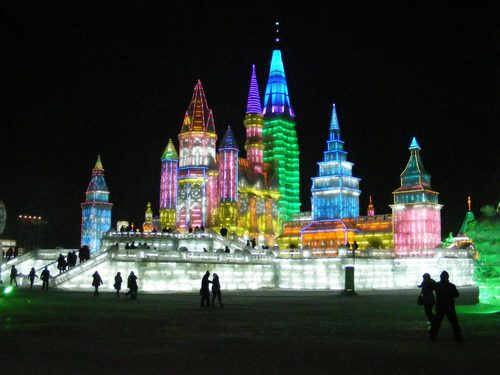
| Harbin Ice and Snow Festival | Unknown | founded 1963, annual since 1985 | an annual festival in Harbin, China, featuring illuminated ice buildings, slides, and sculptures spanning acres |
| Sapporo Snow Festival | Unknown | founded 1950 | Japan's long-running winter festival known for large-scale snow and ice sculptures displayed across Sapporo |
| ICEHOTEL | Unknown | first built 1989-1990 | a hotel rebuilt each winter from river ice in Jukkasjarvi, Sweden, with carved ice rooms and furniture |
| Fairbanks World Ice Art Championships | Unknown | founded 1990 | an Alaska competition where carvers work crystal-clear ice blocks into realistic and abstract sculpture within set time limits |
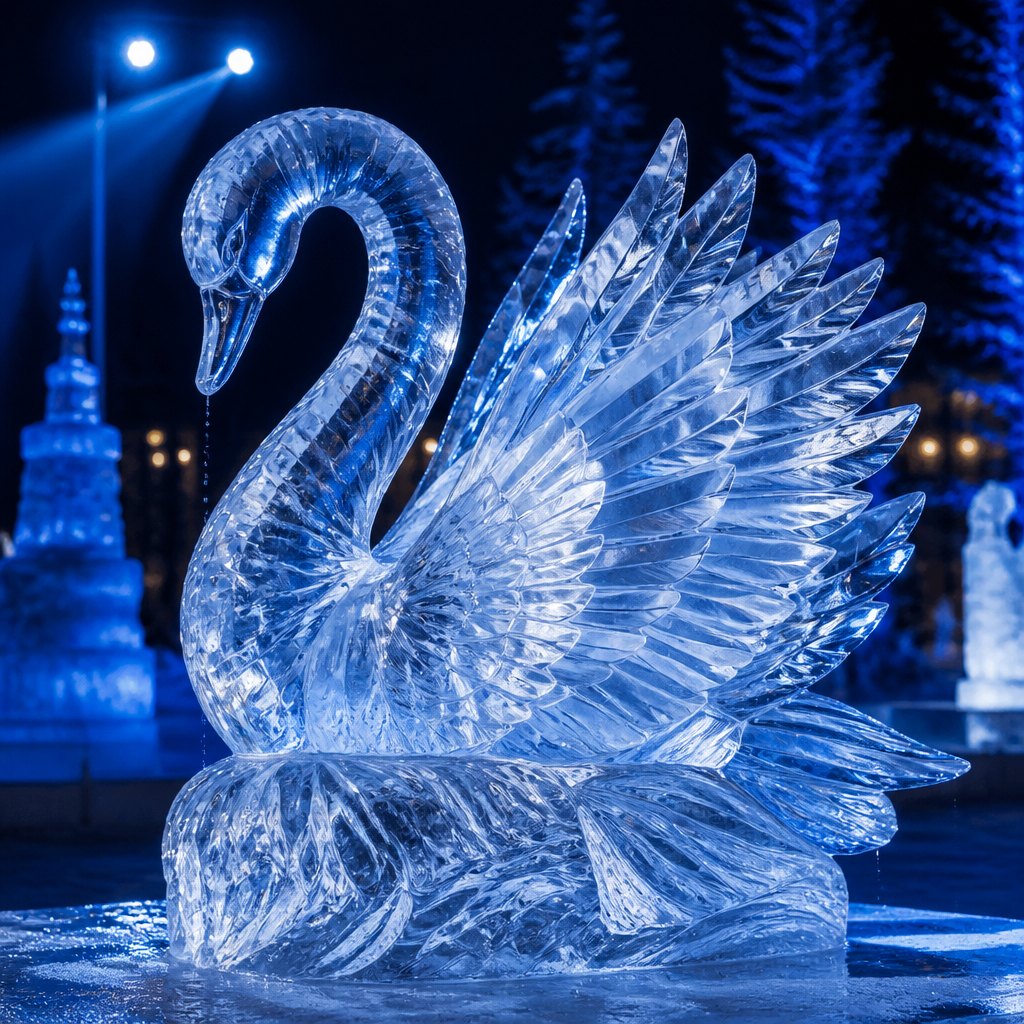 AI-generated
Try the medium
Try ice sculpture with AI
This example was generated from a prompt like: “A translucent ice sculpture of a swan under cool blue stage lighting at a winter festival, faceted chisel marks catching light, chainsaw-textured base, melting droplets, night setting.”
Open the Ice Sculpture Style generator →The medium today
Ice sculpture today appears at weddings, corporate events, and winter festivals worldwide, ranging from single-block centerpieces to entire illuminated cities built for a season. Competitive carving events set strict block sizes and time limits, judging realism, technical difficulty, and design. LED lighting is now standard for evening display, and some venues use reinforced ice for pieces meant to last longer indoors. Because the medium melts, many sculptures exist afterward only through photography and video, and livestreamed carving has become a way for audiences to watch the process rather than only the finished result.
Compose your own
Beginners can start small with a block frozen in a cooler or large container, which yields cloudier ice than professional clear-ice tanks but is enough for practice. Basic tools are a few wood chisels, a rasp, and a hand saw; a heat gun helps smooth surfaces and fuse small pieces. Work in a cold garage, shed, or winter outdoor space rather than a warm room, since ice softens and loses detail quickly above freezing. Start with simple geometric shapes before attempting figures, sketching the design on paper first and transferring rough proportions with a marker. Wear insulated gloves and safety glasses, keep tools sharp for cleaner cuts, and photograph the finished piece promptly, since even a well-carved sculpture begins losing detail within hours at room temperature.
Frequently asked questions
What makes ice sculpture 'clear' instead of cloudy?
Clear ice comes from slow, directional freezing that pushes trapped air and minerals out as it forms; ice frozen quickly, like in a home freezer, traps air and turns cloudy or white.
How long does an ice sculpture last?
Indoors at room temperature, most sculptures visibly soften within a few hours; outdoors in freezing weather, a well-made piece can hold detail for days or longer depending on temperature and sunlight.
What tools do professional ice carvers use?
Chainsaws for rough shaping, chisels and rasps for detail, die grinders for fine texture, and heat guns or torches for smoothing surfaces and fusing separate blocks together.
Can ice sculptures be preserved?
Not permanently—ice always eventually melts. Some pieces are kept in industrial freezers for extended display, and photography or video is the usual way a finished sculpture is preserved afterward.