
Kinetic art is sculpture and installation built around real physical movement rather than a fixed, static form. Materials include metal rods and sheet, wire, ball bearings, electric motors, magnets, mirrors, and reflective disks, assembled so parts rotate, swing, vibrate, or drift in response to wind, motors, water, or a viewer's touch. Hanging mobiles balance shapes on pivoting arms so a light breeze sets them turning; motorized works use small electric or clockwork mechanisms to drive gears, cranks, or rotating elements on a fixed schedule; some pieces respond directly to touch or sensors. The defining look is a suspended or mechanically supported form whose silhouette and shadow keep changing, catching light differently moment to moment. Kinetic sculpture is often engineered as carefully as it is designed, requiring welded joints, precise balance points, and durable bearings so the piece can move reliably for years indoors or out.
What defines the medium
Balance and equilibrium
Hanging kinetic works, especially mobiles, depend on precisely balanced arms and counterweights so shapes rotate freely around a fixed pivot. Even small weight miscalculations stop a piece from moving as intended.
Wind, motor, or viewer as the driver
Kinetic sculpture gets its motion from a specific source—natural air currents, an electric or clockwork motor, water flow, or direct viewer interaction—and that choice shapes the whole engineering of the piece.
Modular, repeated units
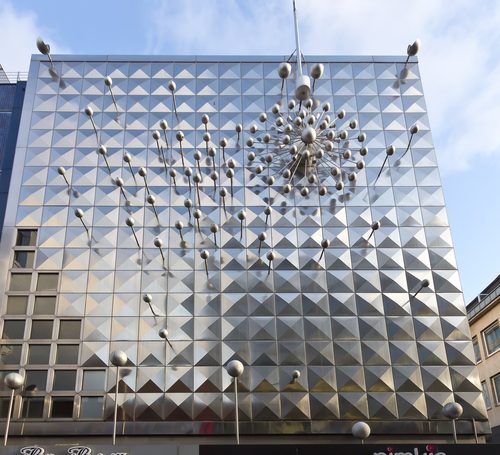
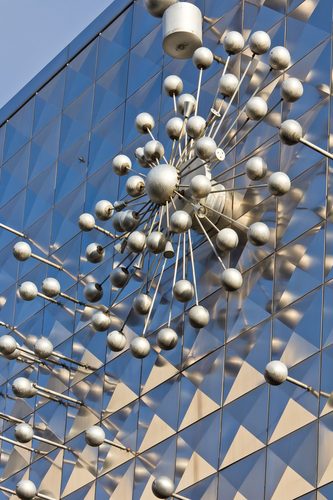
Many kinetic works use dozens or hundreds of identical small elements—rods, discs, or panels—repeated across a structure, so the overall movement reads as a shifting field rather than a single gesture.
Reflective and light-catching surfaces
Polished metal, mirrored disks, and painted panels are common because they visibly change appearance as they move, catching and throwing light differently at each angle rather than staying uniform.
Engineering for durability
Because kinetic works must move reliably for years, makers rely on welded joints, sealed bearings, and weatherproof motors, treating mechanical soundness as inseparable from the sculpture's artistic success.
Movement as the true subject
Unlike static sculpture, a kinetic piece is considered incomplete or misread if seen only in a still photograph; the changing sequence of positions and shadows over time is the actual artwork.
Materials decoder
The toolkit of kinetic art
- pivoting mobile arm
- → a rod balanced at a single point, letting a hanging shape rotate freely with minimal air movement
- ball-bearing pivot
- → a low-friction joint that lets a heavy kinetic part turn smoothly for long periods without wearing down
- small electric motor
- → a compact motorized drive used to turn gears, cranks, or rotating disks on a set, repeating cycle
- wind vane or fin
- → a flat catching surface angled to turn or tilt a sculpture whenever outdoor air currents push against it
- mirrored or polished disk
- → a reflective rotating element that throws shifting light and color across a room or wall as it turns
- counterweight
- → a fixed mass added opposite a moving element to keep a kinetic structure balanced around its pivot
The story
Kinetic art grew out of early 20th-century experiments with real movement in sculpture. Marcel Duchamp built motorized rotating disks and readymade mechanisms in the 1910s-20s, and László Moholy-Nagy's motorized Light-Space Modulator of 1930 combined moving metal, glass, and projected light. Naum Gabo's 1920 manifesto argued for movement as a sculptural element alongside mass and space. The term kinetic art gained wide use after the 1955 group exhibition Le Mouvement at Galerie Denise René in Paris, which gathered artists making mobiles, motorized pieces, and optical works. Postwar sculptors expanded the field through the 1960s using electric motors, magnets, and wind-driven balance, with major museum surveys including MoMA's 1965 exhibition The Responsive Eye establishing kinetic and optical art within mainstream museum collections. Public wind-powered and motorized kinetic sculpture has continued to expand in outdoor commissions since.
Masterpieces of the medium
| Work | Artist | Date | Why it matters |
|---|---|---|---|
| Light-Space Modulator | László Moholy-Nagy | 1930 | motorized construction of moving metal, glass, and light, an early kinetic light sculpture |
| Le Mouvement exhibition | Unknown | 1955 | landmark Paris group show at Galerie Denise René that established the kinetic art movement |
| Kinetic Construction (Standing Wave) | Unknown | 1920 | an early motorized rod sculpture that used vibration to make a solid form appear to dissolve |
| Rotoreliefs | Unknown | 1935 | spinning painted cardboard disks producing illusions of depth and volume through rotation |
| The Responsive Eye exhibition | Unknown | 1965 | MoMA survey exhibition that placed kinetic and optical sculpture firmly in museum collections |
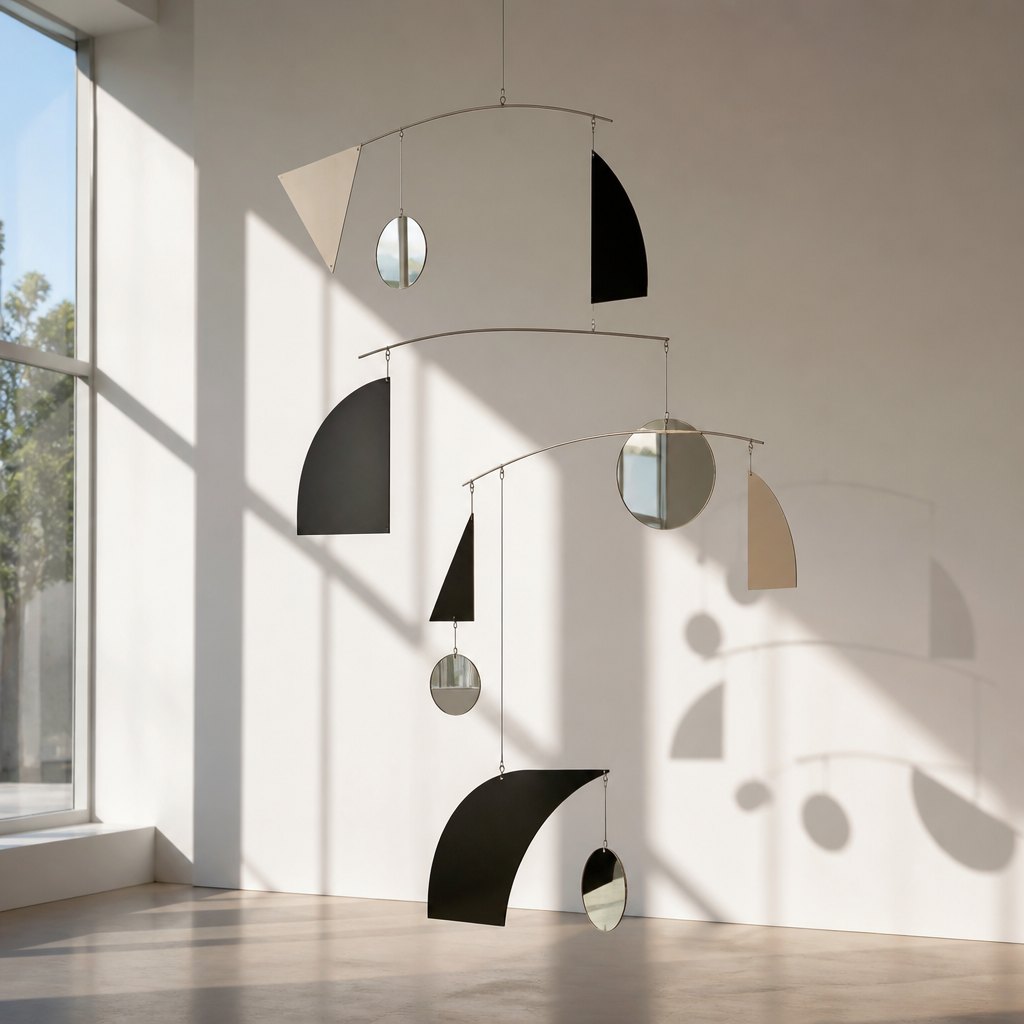 AI-generated
Try the medium
Try kinetic art with AI
This example was generated from a prompt like: “A suspended metal mobile of balanced geometric panels and mirrored discs slowly turning in a sunlit gallery, casting shifting shadows on a white wall, minimalist museum installation.”
Open the Kinetic Art Style generator →The medium today
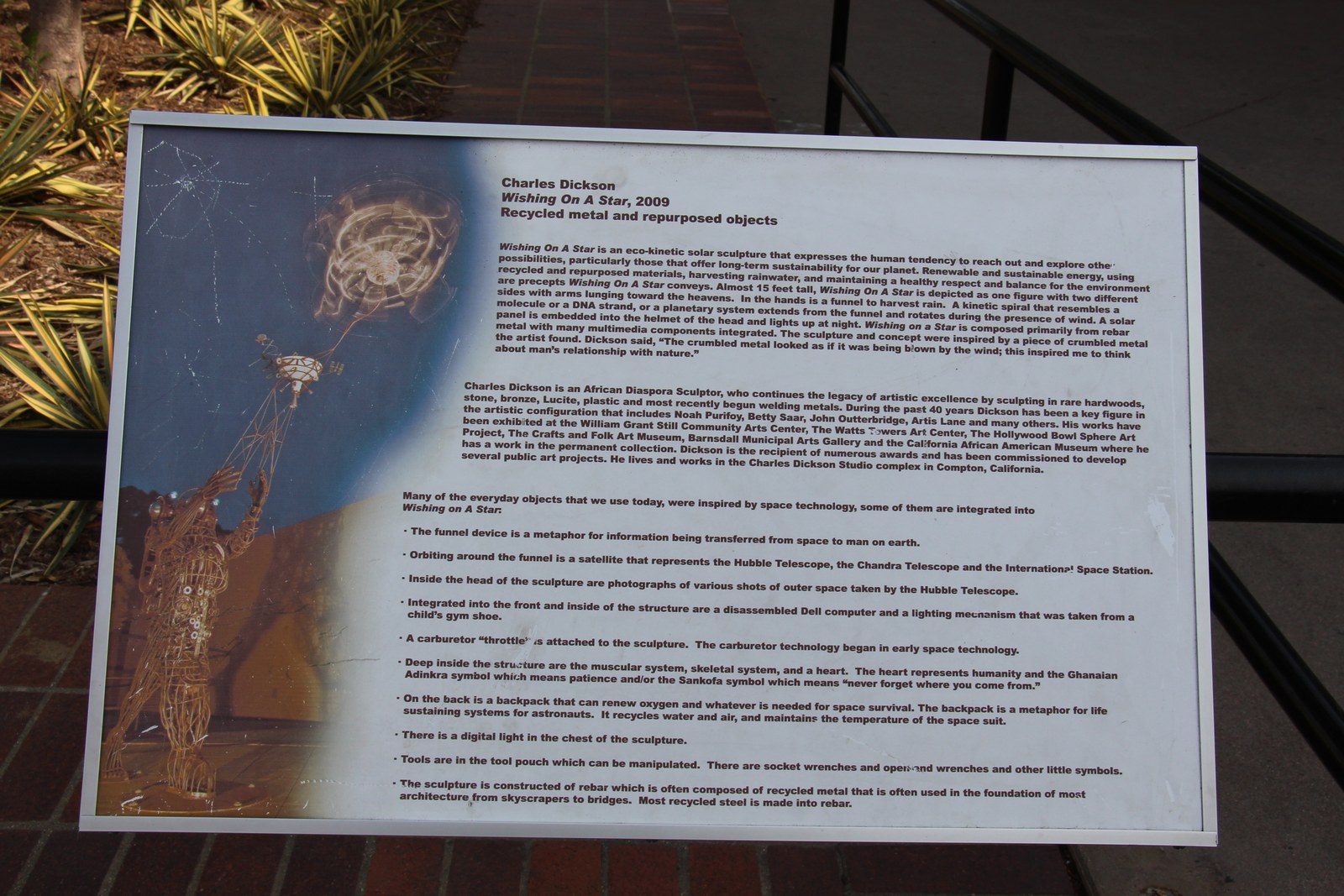
Kinetic art today ranges from small wind-driven garden sculptures to large motorized museum installations and public commissions that respond to sensors or viewer movement. Solar-powered kinetic works have grown as outdoor public art, using photovoltaic cells to drive slow rotation without external power. Interactive kinetic installations that shift shape when a visitor walks past are common in contemporary museum and airport commissions, and kinetic principles now inform product and jewelry design as well as sculpture.
Compose your own
Start small with a simple hanging mobile: cut a few flat shapes from card or thin metal, and balance them on a horizontal rod suspended from its center point, adjusting position until it hangs level. Learn to find a true balance point before adding any motor. For motorized work, a small low-voltage motor, a few gears, and a battery pack are enough to drive a basic rotating element. Study wind-catching shapes like fins and vanes if working outdoors. Always document finished kinetic work on video, since a still photograph cannot capture the actual movement the piece depends on.
Frequently asked questions
What powers a kinetic sculpture's movement?
It varies by piece—hanging mobiles move from natural air currents, motorized works use small electric or clockwork motors, and some interactive pieces respond directly to a viewer's touch or nearby sensors.
Is a mobile the same thing as kinetic art?
A mobile is one type of kinetic art—a balanced hanging sculpture moved by air currents. Kinetic art also includes motorized, water-driven, and touch-responsive sculpture beyond hanging mobiles.
Why is balance so important in kinetic sculpture?
Hanging kinetic pieces depend on a precise pivot point; even a small weight imbalance stops the piece from rotating smoothly or can cause it to hang at a fixed, tilted angle instead of moving freely.
Can kinetic sculpture be shown in a photograph?
A photograph only captures one frozen position of a kinetic work, so it cannot fully represent the piece; video or in-person viewing is needed to see the actual changing motion the sculpture depends on.