

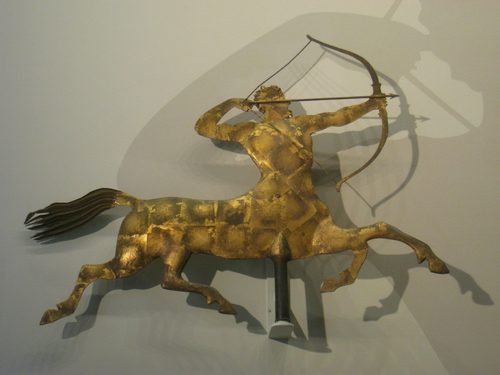
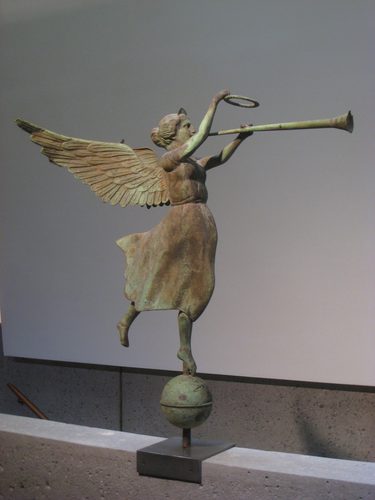
Folk art is visual art and craft made within a community's inherited traditions, learned through family or local practice rather than academic art training. The term covers an enormous range: painted furniture, quilts, carved decoys and figures, pottery, weathervanes, gravestone carving, religious retablos, and decorative signage, unified less by material or subject than by how the maker learned the craft and who the work was made for. Folk art has historically been made by and for ordinary communities rather than wealthy patrons or gallery audiences, and it often serves a practical or ceremonial function alongside its visual appeal — a quilt keeps a family warm, a decoy lures ducks, a retablo gives thanks for an answered prayer. The category sits close to but distinct from "outsider art," which describes self-taught artists working entirely outside any community tradition, and from naive art, a stylistic label sometimes applied more broadly. Folk traditions are typically regional and generational, with motifs, colors, and techniques passed down largely unchanged across decades.
What defines the medium
Learned within a community
Folk art skills pass from family member to family member or within a local tradition, rather than through academic art schools, so technique and motif stay closely tied to a specific region or cultural group over generations.
Function alongside beauty
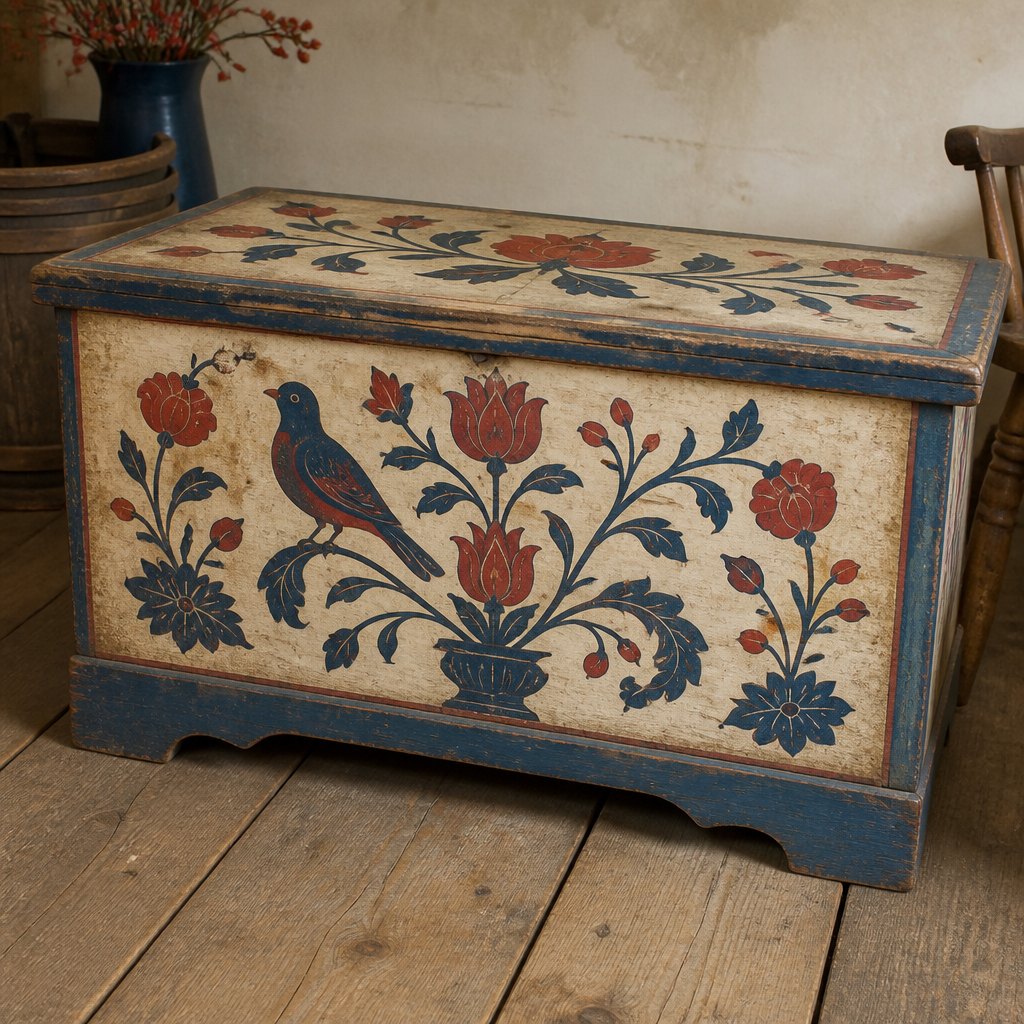
Many folk-art objects serve a practical or ceremonial purpose first — a painted chest, a carved duck decoy, a quilt — with decoration added to an object that would exist and work without it.
Repeated motifs
Symbols, patterns, and compositions recur across generations of makers within a tradition — hex signs, quilt blocks, specific animal or floral forms — functioning almost like a shared visual vocabulary rather than individual invention.
Flattened, direct style
Folk art often favors bold outline, flat color, and simplified proportion over academic perspective and shading, an approach that reads as confident and direct rather than as a technical limitation.
Everyday and available materials
Folk artists typically work with whatever materials are locally accessible and affordable — scrap wood, local clay, homespun fabric, house paint — rather than specialized fine-art supplies, shaping the medium's characteristic look.
Anonymous and collective authorship
Many folk-art traditions credit the community or family line more than an individual maker, and countless historical pieces survive with no attributed name at all, complicating art history's usual focus on named authorship.
Materials decoder
The toolkit of folk art
- quilt block pattern
- → a repeated geometric unit, pieced from fabric scraps, that builds larger quilts through community-shared pattern names
- hex sign
- → a painted circular star or rosette found on barns in Pennsylvania Dutch tradition, decorative and sometimes symbolic
- carved duck decoy
- → a functional hunting tool shaped and painted with enough care to become collected as sculpture
- retablo panel
- → a small painted devotional image on tin or wood, traditionally made to give thanks for an answered prayer
- weathervane
- → a functional wind indicator, often shaped like an animal or ship, doubling as rooftop folk sculpture
- milk paint
- → a simple, inexpensive homemade paint historically used to color folk furniture in flat, matte, saturated color
- gravestone carving
- → hand-lettered and symbol-carved memorial stones made by local craftspeople rather than trained sculptors
The story
Folk art traditions run parallel to, and usually predate, the academic fine-art institutions that later drew a line between them. Nearly every settled culture developed regional decorative traditions in textiles, ceramics, woodwork, and painted objects, carried forward through family workshops and apprenticeship rather than art schools. In North America, folk art became strongly associated with Pennsylvania Dutch furniture and hex signs, New England gravestone carving and weathervanes, Appalachian quilting, and Southwestern Hispanic retablo and santo painting, alongside enslaved and later free Black artisans whose blacksmithing, basketry, and pottery traditions carried skills and motifs from West Africa. American folk art gained serious collector and museum attention in the early 20th century, when modernist artists and collectors admired its directness and formal boldness. The term is sometimes used loosely to include self-taught "outsider" artists working entirely outside any inherited tradition, though scholars increasingly separate the two: folk art implies a shared community tradition, while outsider art implies individual isolation from any art world at all.
Masterpieces of the medium
| Work | Artist | Date | Why it matters |
|---|---|---|---|
| Colonial New England Portraits | Unknown (The Freake Limner) | 1670s | flat, boldly patterned colonial portrait paintings by an unidentified itinerant painter |
| Pennsylvania Dutch Fraktur | Unknown | 18th-19th century | hand-lettered and illustrated birth and baptismal certificates combining calligraphy with folk motifs |
| Gee's Bend Quilts | Unknown (Gee's Bend quilters) | early-to-mid 20th century | bold, improvisational pieced quilts made by generations of Black women in rural Alabama |
| New England Gravestone Carvings | Unknown | 17th-18th century | hand-carved memorial stones featuring winged skulls and soul effigies made by local stonecutters |
| Retablos of Northern New Mexico | Unknown | 18th-19th century | devotional images of saints painted on wood panels by local santeros for home altars |
 AI-generated
Try the medium
Try folk art with AI
This example was generated from a prompt like: “A hand-painted wooden dower chest with flat, bold floral motifs in red and blue, a simplified bird perched on a stylized vine, slightly uneven brushwork, worn milk-paint surface, displayed on a rustic wood plank floor.”
Open the Folk Art Style generator →The medium today
Contemporary folk art continues in living traditions like Appalachian quilting, Southwestern retablo and santo carving, and Pennsylvania Dutch decorative painting, often sold at regional fairs and craft markets rather than fine-art galleries. Folklorists and museums have worked to document and support these traditions as heritage rather than nostalgia, funding apprenticeships that keep specific regional techniques alive. Folk-inspired motifs have also crossed into mainstream design, quilting, and illustration, sometimes without full credit to the communities that originated them, a tension that continues to shape how the field is collected and discussed today.
Compose your own
To render folk art convincingly, favor flat color and bold outline over realistic shading and perspective — folk imagery reads as confident and direct rather than technically limited. Keep proportions simplified and slightly stylized rather than anatomically precise, and repeat clear, simple motifs like stars, birds, hearts, or florals rather than complex original imagery. Use a saturated, limited color palette consistent with hand-mixed or milk paint rather than the wide range of modern synthetic pigment. Show the object's function clearly, whether it's a painted chest, a carved decoy, or a pieced quilt, since folk pieces are typically useful objects first and decorated second.
Frequently asked questions
What's the difference between folk art and outsider art?
Folk art is made within a shared community tradition, passed down through family or regional practice. Outsider art describes self-taught individuals working entirely outside any art world or inherited tradition, often in isolation. The two are related but not interchangeable.
Why is so much folk art unsigned?
Folk traditions historically valued the shared craft of a family or community over individual authorship, and many makers were untrained artisans rather than professional artists seeking recognition. As a result, countless historical pieces survive without any attributed maker's name.
Is folk art considered fine art?
Museums and collectors increasingly treat significant folk art as fine art, especially since modernist artists in the early 20th century admired its formal boldness. It still occupies a distinct category, valued partly for its connection to lived community tradition rather than academic training.
What materials are typical in folk art?
Whatever was locally available and affordable: scrap or local wood, homespun or repurposed fabric, house paint or milk paint, local clay, and found objects. The reliance on everyday materials, rather than specialized art supplies, is part of what defines the category.