
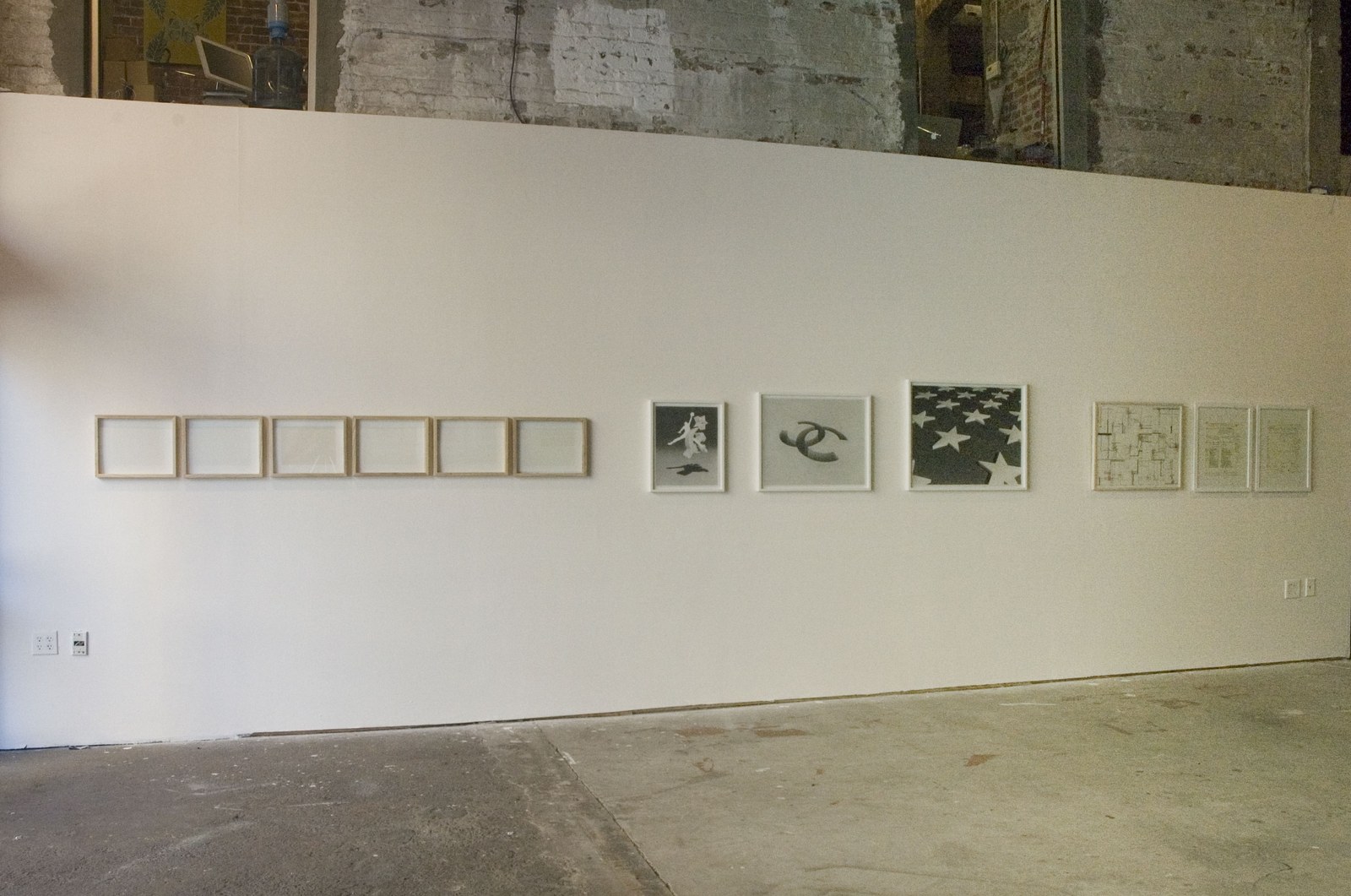
Generative art is any work where an artist defines a process—an algorithm, mathematical rule, or system with built-in randomness—and that process, rather than the artist's hand directly, produces the final image. A creator writes code or sets parameters (color range, line density, a noise pattern, a fractal formula) and runs it, often generating many variations before selecting or exhibiting a set. Output takes several physical and digital forms: vector drawings sent to a pen plotter, a machine arm that draws real ink lines on paper; screen-based animations or still images; and, more recently, generative collections distributed and verified through blockchain platforms. Tools include creative-coding environments and languages, procedural techniques like cellular automata, L-systems, and noise functions, and hardware plotters for physical output. What defines the look is visible rule-following: repeated structures, controlled randomness, grid or lattice underpinnings, and compositions that could not easily be drawn freehand at the same density or precision.
What defines the medium
Rules over direct drawing
The artist writes or configures an algorithm rather than drawing the image directly; the system executes the rules and produces the visible output, often many variations from one set of instructions.
Controlled randomness and seeds
Randomness is built in deliberately—via a pseudo-random number generator tied to a seed value—so outcomes vary within set limits but any specific result can be reproduced exactly by reusing its seed.
Generating and curating at scale
Because the process is automated, artists commonly generate large batches of output and select the strongest examples, or exhibit an entire batch as a series or edition rather than a single unique image.
Plotter output as physical trace
Vector-based generative work is frequently sent to a pen plotter, which draws the algorithm's lines with real ink on paper, giving code-based imagery a physical, hand-drawn-looking texture and line quality.
Tuning parameters as composition
Instead of composing a scene stroke by stroke, the artist adjusts parameters—color palette range, density, iteration count, noise scale—and observes how the system's output shifts in response.
Code as part of the work
The underlying source code or rule set is sometimes published or exhibited alongside the visual output, treated as integral to the piece rather than hidden production machinery.
Materials decoder
The toolkit of generative art
- pen-plotter line
- → a continuous ink line drawn by a computer-controlled arm, giving algorithmic vector paths a physical drawn texture
- grid or lattice structure
- → an underlying regular framework of points or cells that many generative systems build variation on top of
- Perlin or simplex noise texture
- → a smooth, organic-looking randomness function used to vary color, position, or shape without harsh jumps
- fractal recursive pattern
- → a shape built from a rule repeated at shrinking scales, producing self-similar detail at every zoom level
- cellular automaton pattern
- → a grid of cells whose states change step by step according to simple neighbor rules, producing complex emergent patterns
- RGB/HSB code-defined palette
- → colors specified numerically in code rather than mixed by eye, often producing evenly stepped or systematically varied hues
The story
Generative art began alongside early computer graphics: in 1965, exhibitions in Stuttgart, West Germany presented plotter-drawn images generated by algorithms, among the first public showings of computer-made art. The 1968 exhibition Cybernetic Serendipity at London's Institute of Contemporary Arts surveyed cybernetic, computer, and machine-based art internationally, introducing the field to a broad audience. Through the 1970s and 1980s, pioneers working with mainframes and pen plotters explored systems of rules for drawing, while the Ars Electronica festival, founded in Austria in 1979, began recognizing computer-based art with dedicated prizes from 1987. Personal computing in the 1980s and 1990s brought fractal imagery and procedural graphics into wider circulation. The 2001 release of the Processing programming language made creative coding broadly accessible to artists without formal computer-science training. In the early 2020s, blockchain platforms enabled large-scale sale and collection of generative art editions, drawing new attention and a new market to the field.
Masterpieces of the medium
| Work | Artist | Date | Why it matters |
|---|---|---|---|
| Stuttgart computer graphics exhibitions | Unknown | 1965 | among the first public exhibitions of algorithmically generated plotter drawings |
| Cybernetic Serendipity | Unknown | 1968 | landmark ICA London exhibition surveying computer and cybernetic art internationally |
| Ars Electronica Prix founding | Unknown | 1987 | one of the first major international prizes dedicated to computer-based art |
| Processing language release | Unknown | 2001 | open-source creative-coding tool that broadened access to algorithmic art-making |
| First large-scale generative art blockchain sales | Unknown | 2021 | landmark sales establishing a collector market for algorithmically generated editions |
 AI-generated
Try the medium
Try generative art with AI
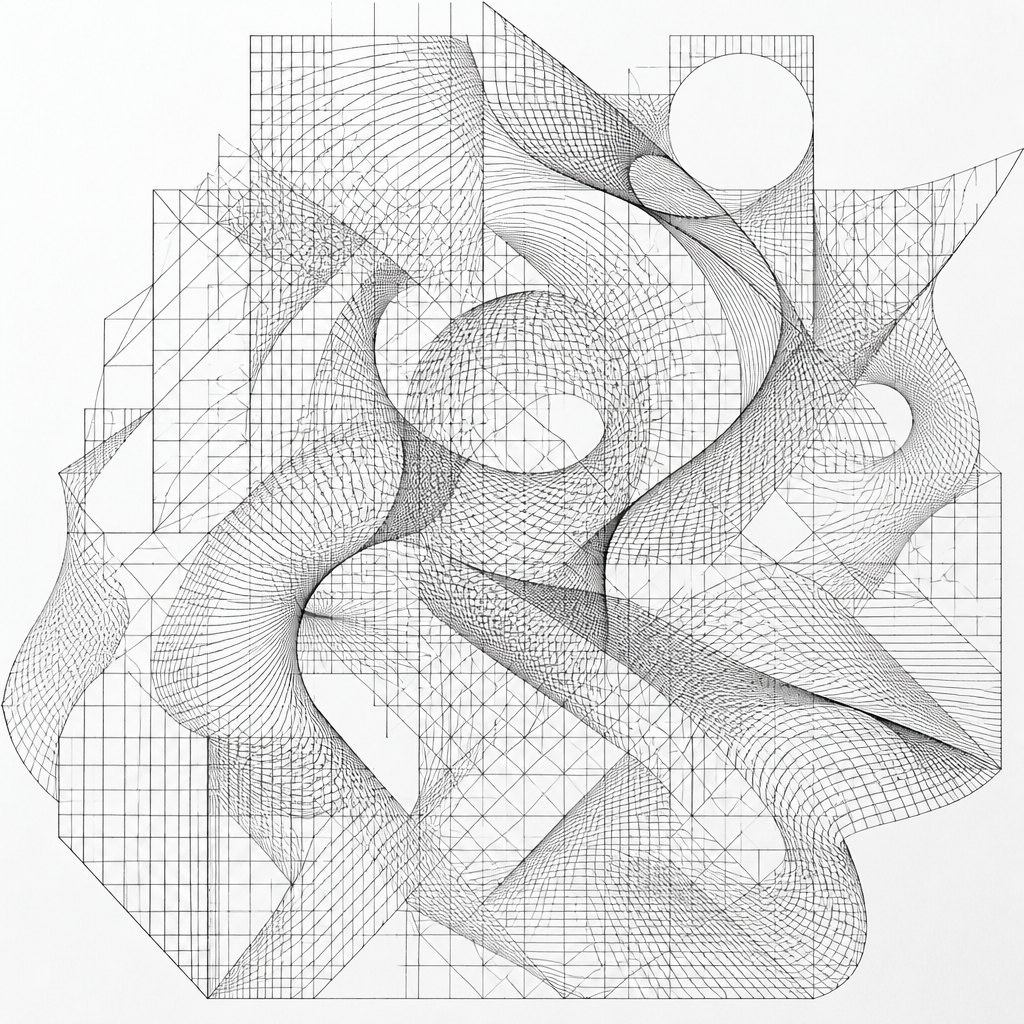
This example was generated from a prompt like: “An abstract pen-plotter drawing of interlocking geometric grids and flowing noise-based curved lines, black ink on white paper, precise repeated algorithmic pattern, fine even line weight.”
Open the Generative Art Style generator →The medium today
Generative art today spans limited-edition pen-plotter drawings sold as physical prints, screen-based generative pieces shown on digital displays or projections, live-coded visuals performed alongside music, and generative collections distributed through blockchain platforms. Open-source creative-coding communities share code and techniques widely online, lowering the barrier to entry. The field overlaps with data visualization and with AI-driven image synthesis, though generative art in its strict sense relies on explicit, artist-defined rules rather than a model trained on existing images.
Compose your own
Start by learning an accessible creative-coding environment such as a browser-based coding sketch tool built for visual work. Write a simple rule-based sketch—loops that repeat a shape, a random or noise function that varies position or color—and run it repeatedly to see how small parameter changes shift the result. Experiment with color range, density, and iteration count as your main creative controls rather than drawing shapes directly. Keep a log of seed values so a favorite output can be reproduced exactly later. Once comfortable with on-screen output, export vector files and send them to a pen plotter for physical, ink-on-paper results.
Frequently asked questions
Is generative art the same as AI art?
No. Generative art uses explicit rules or algorithms the artist writes and controls directly, while AI image tools typically use a trained neural network producing images from prompts, a different underlying process.
Do I need to know how to code to make generative art?
Traditionally coding skills are central to the practice, though node-based or visual programming tools now let people build rule-based systems and see results without writing text-based code.
What is a pen plotter?
A pen plotter is a computer-controlled machine that draws with a real pen or brush following vector coordinates, translating a digital algorithmic drawing into a physical, ink-on-paper artwork.
Is the output different every time you run the same code?
It can be, since many systems include randomness, but artists typically fix a specific seed value so a chosen favorite result can be reproduced exactly whenever needed.