
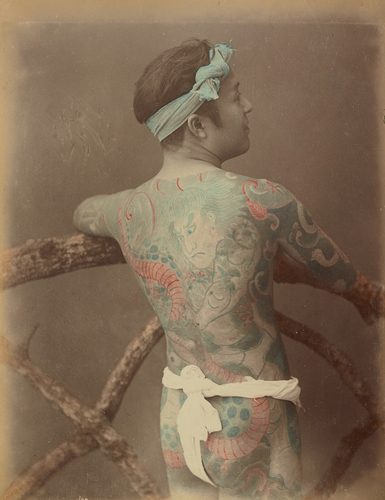
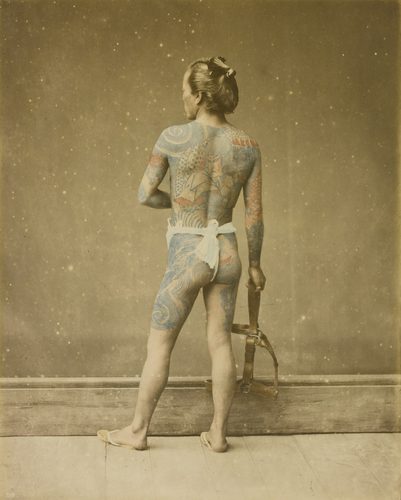
Tattoo art is the medium of creating permanent images by depositing pigment beneath the outer layer of skin, usually with a vibrating needle, so the design becomes part of the body itself. Unlike paint on canvas or ink on paper, the surface here is alive: skin stretches, ages, tans, and scars, so the artist must account for how a design will read decades later, not just the day it is finished. Because the pigment sits in the dermis rather than on a surface, tattoos cannot be layered or undone the way digital or painted work can; each mark is close to a single, final decision. Designs range from bold, solid-lined traditional imagery to fine linework, photorealistic portraits, and abstract blackwork, but nearly all styles share a reliance on clean line quality and a design's ability to wrap and flow around the body's contours.
What defines the medium
Permanent Under the Skin
Pigment is deposited into the dermis, the skin's second layer, where the body's immune response locks it in place, making the mark effectively permanent rather than sitting on a removable surface.
Bold, Confident Linework
Because a tattoo must stay legible as skin ages and pigment softens over years, most styles rely on clean, deliberate outlines and clear shape separation rather than delicate, easily blurred detail.
The Body as Canvas
A design must work with the body's shape, not against it — following the curve of a shoulder, the length of a forearm, or the flat plane of a back — so placement and flow are part of the composition itself.
Healing Changes the Image
A finished tattoo is not the final look; over the following weeks the skin scabs, peels, and settles, and over years pigment migrates and softens slightly, meaning the design continues to shift after the artist is done.
Limited, Deliberate Color
Tattoo pigment has less range than paint and dulls with time and sun exposure, so palettes are typically kept simple and high-contrast, with black and a handful of saturated hues doing most of the work.
One Session, Little Room for Revision
A tattoo is usually completed in one or a few sittings, and while touch-ups exist, the medium leaves little room for the kind of layered revision common in painting or digital art.
Materials decoder
The toolkit of tattoo art
- tattoo machine (coil or rotary)
- → drives a needle up and down at high speed to puncture the skin and deposit ink at a controlled depth.
- needle groupings (liners & shaders)
- → tightly bundled needles for crisp outlines versus wider, looser groupings for filling and shading larger areas.
- tattoo ink / pigment
- → pigment suspended in a carrier solution, formulated to sit stably in the dermis for years without breaking down.
- stencil transfer paper
- → transfers a design outline onto skin in temporary purple ink so the artist has a guide before the machine touches down.
- flash sheet
- → a page of pre-drawn designs, historically hung on shop walls, that clients could pick straight off for a walk-in tattoo.
- skin (the dermis)
- → the actual canvas of the medium — living tissue that stretches, heals, and changes over a lifetime with the design.
- tattoo grip / tube
- → the handled barrel an artist holds to steady and angle the machine and needle during a session.
- sterile single-use supplies
- → disposable needles, gloves, and barrier film that keep the puncture process safe and sanitary.
The story
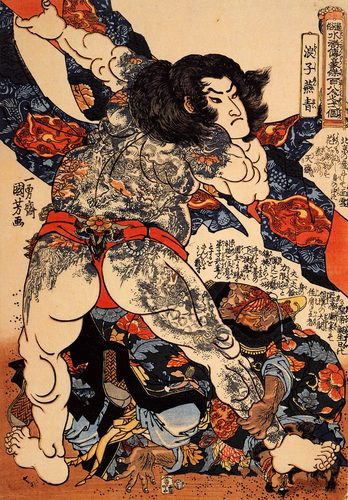
Tattooing is among humanity's oldest continuous art forms: the mummified body of Ötzi the Iceman, dated to roughly 3300 BCE, bears more than 60 simple tattooed lines and dots, and tattooed remains appear across ancient Egyptian, Polynesian, and other cultures. The word 'tattoo' itself derives from the Polynesian tatau, reflecting the deep tradition of tatau and similar practices across the Pacific. Japan developed irezumi, elaborate full-body imagery rooted in folklore and woodblock print aesthetics. In the West, tattooing was long associated with sailors and circus performers before Samuel O'Reilly patented the first electric tattoo machine in 1891, mechanizing a process previously done entirely by hand. Norman "Sailor Jerry" Collins helped codify American traditional style in the mid-20th century, with bold lines and a limited palette suited to sailors' skin and budgets. From the 1970s onward, tattooing gradually shed its outlaw reputation, moving from subculture into mainstream fashion, art, and self-expression by the early 21st century.
Masterpieces of the medium
| Work | Artist | Date | Why it matters |
|---|---|---|---|
| Ötzi the Iceman's tattoos | Unknown | c. 3300 BCE | more than 60 simple dot-and-line tattoos preserved on a mummified body, the oldest tattooed human remains known. |
| Sailor Jerry flash sheets | Norman "Sailor Jerry" Collins | 1930s–1970s | foundational American traditional designs — anchors, swallows, roses — still reproduced by tattoo artists today. |
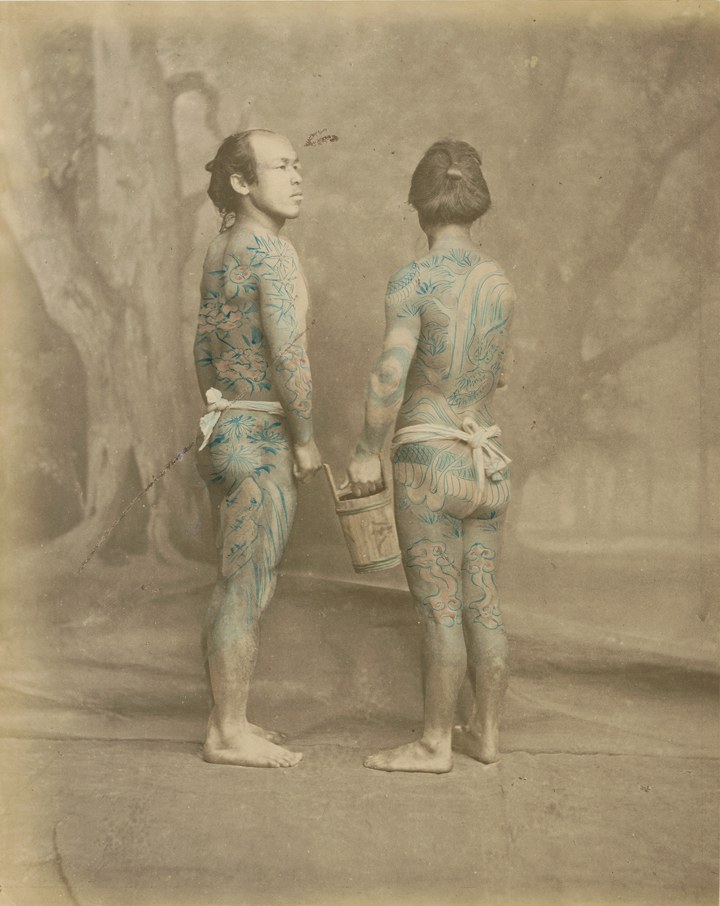
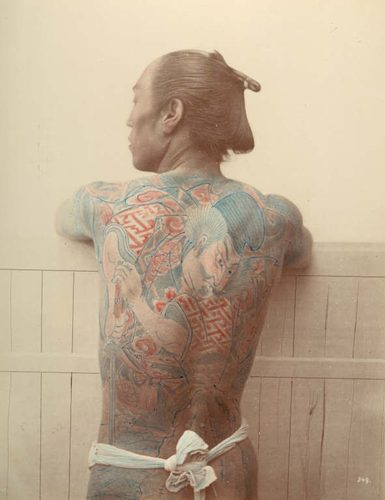
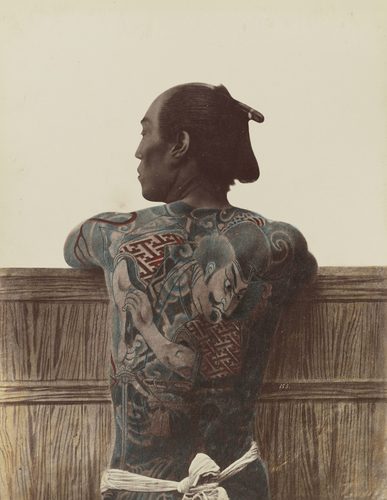
| Traditional irezumi body suits | Unknown | Edo period tradition | elaborate full-back and full-body tattoo compositions depicting folklore and nature, still practiced by specialist artists. |
| Ed Hardy flash designs | Don Ed Hardy | 1970s–2000s | designs that fused Japanese irezumi aesthetics with American traditional style, later licensed into a global streetwear brand. |
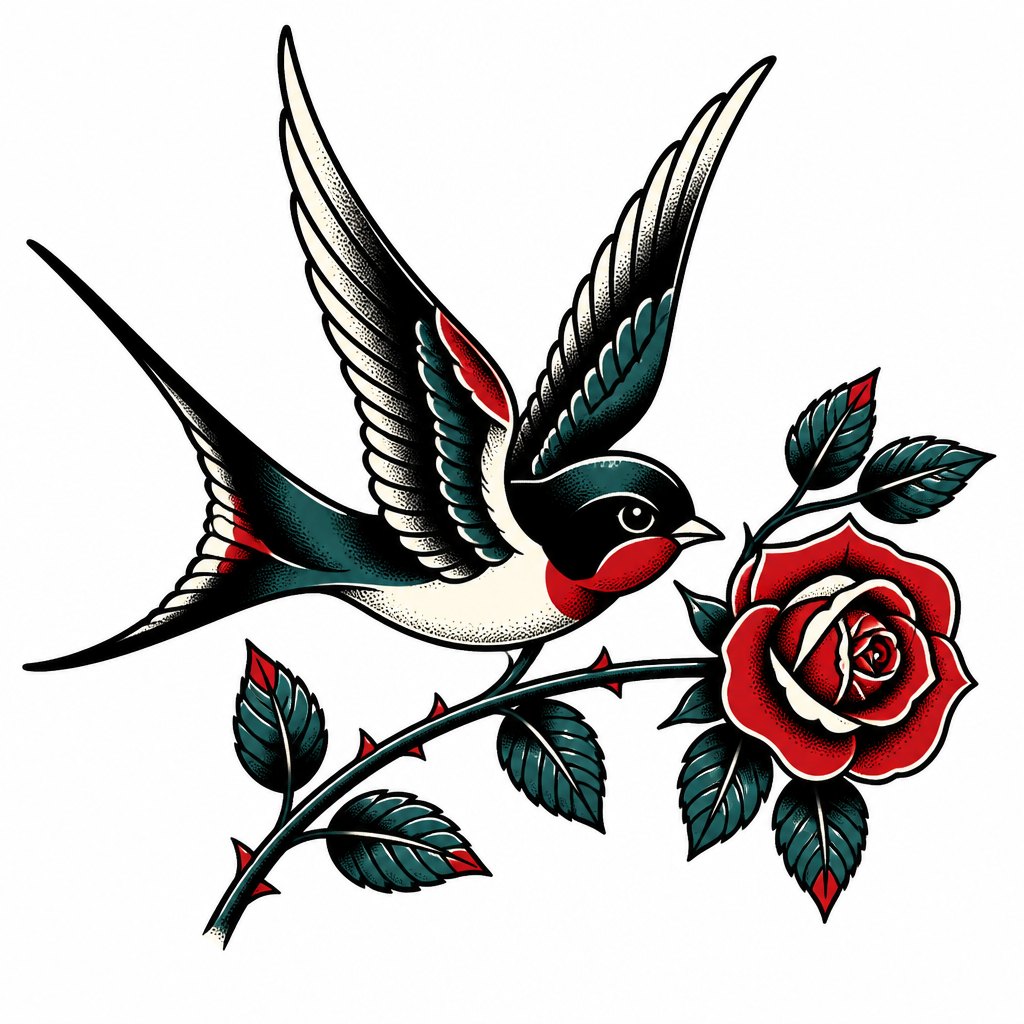 AI-generated
Try the medium
Try tattoo art with AI
This example was generated from a prompt like: “A bold traditional-style tattoo flash design of a swallow gripping a rose stem in its beak, thick black outlines, limited red and teal ink, subtle dotwork shading, clean white background, symmetrical stencil-ready composition.”
Open the Tattoo Flash Art Style generator →The medium today
Tattooing today spans an enormous range of styles, from fine-line minimalism and delicate botanical work to bold neo-traditional, blackwork, and hyperrealistic portraiture. Social media has made artists' portfolios globally visible, turning tattoo shopping into a search for a specific artist's hand rather than a walk-in flash sheet. Conventions, guest spots, and specialty studios now sit alongside neighborhood shops. Laser removal has grown alongside the industry, giving tattoos a practical undo option they never had before. Health and sterilization standards are far stricter than in earlier decades, and stigma has faded significantly across most workplaces and generations.
Compose your own
Start a tattoo design the way a flash illustration is built: choose a single clear subject rather than a crowded scene, since the image must read at a glance on skin. Establish the outline first — a confident, unbroken line does more work in this medium than delicate detail, which tends to blur as skin ages. Keep the color palette limited and high-contrast, since pigment softens over time and busy gradients rarely hold up. Consider how the design will wrap the body part it is meant for, letting the composition follow natural curves rather than fighting them. Add shading sparingly, through dotwork or simple hatching, to suggest depth without overloading the line work. Finish with a clean, stencil-ready outline.
Frequently asked questions
Does getting a tattoo hurt?
Yes, to some degree — it involves repeated skin puncture — but pain varies widely by placement, with bony areas like ribs and hands generally more sensitive than fleshier spots like the outer arm.
How long does a tattoo take to heal?
Surface healing typically takes two to three weeks, while the deeper skin continues settling for a few months, during which color can look slightly different than its final, fully healed appearance.
Can a tattoo be removed?
Largely, through repeated laser sessions that break pigment into particles small enough for the body to clear, though complete removal without any trace can be difficult depending on ink depth and color.
What makes a tattoo design age well?
Bold, clean outlines with clear negative space, since fine detail and tight linework are the first things to blur and blend together as skin stretches and pigment softens over years.