
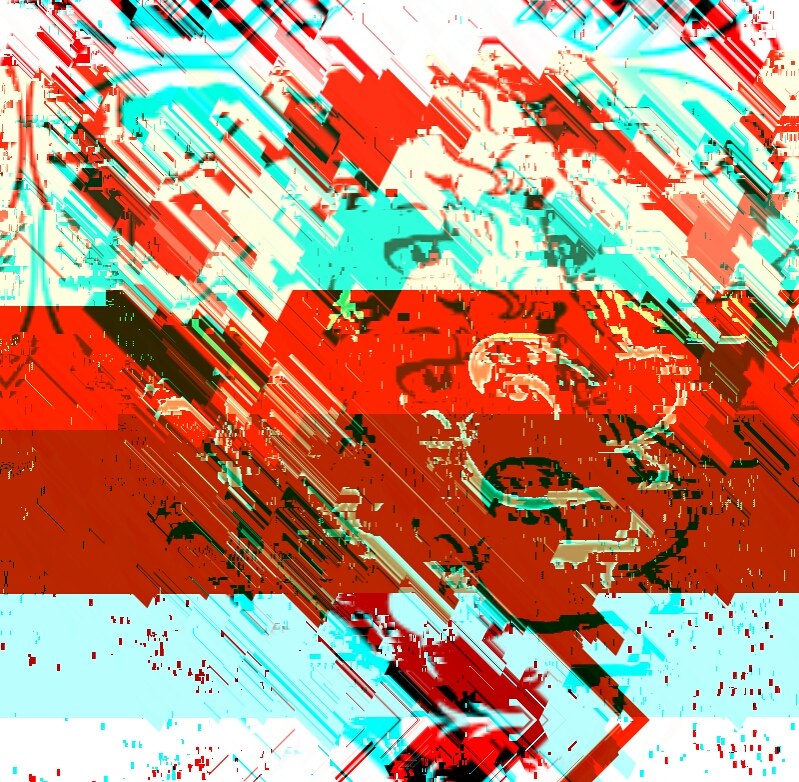
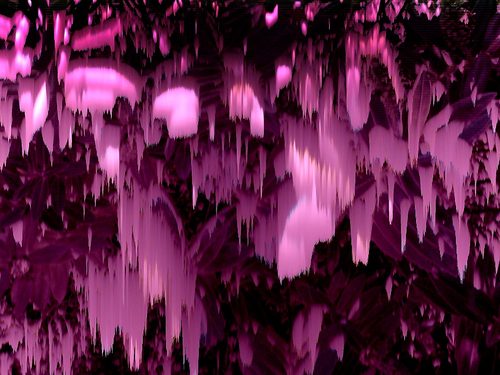
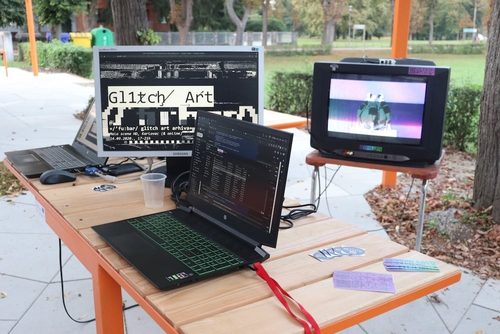
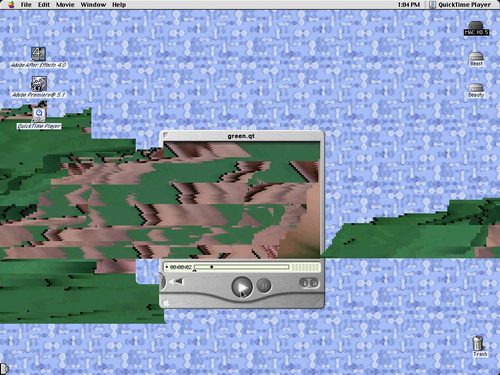
Glitch art is imagery made by deliberately corrupting digital files or analog video and audio signals, then treating the resulting errors as a visual style rather than a flaw to fix. Common methods include databending, opening an image or audio file in software it was never meant for so the program misreads its data as pixels or waveforms; codec exploitation, interrupting or damaging video compression so keyframes smear into datamoshed streams; and circuit bending, rewiring analog hardware like old game consoles or video synthesizers to produce unstable signal noise. Digital tools also generate glitch-like effects directly, such as pixel-sorting algorithms that rearrange pixel rows by brightness or color value. The resulting look includes torn scan lines, blocky compression artifacts, color-channel splitting, jagged data smears, and static banding—visual evidence of a file or signal breaking down, deliberately preserved rather than left to chance.
What defines the medium
Databending
A file is opened or edited in software unrelated to its original format—an audio editor opening an image file, for instance—so the program misinterprets byte data as pixels or sound, producing unpredictable but often reusable distortions.
Codec exploitation and datamoshing
Deleting or duplicating video keyframes disrupts how compression predicts motion between frames, causing images to smear, drag, and bleed into one another, a technique called datamoshing that turns compression logic into a visible effect.
Pixel sorting
An algorithm rearranges rows or columns of pixels by brightness, hue, or another value, producing streaked, melting distortions from an otherwise normal photograph while keeping the underlying image partly recognizable.
Circuit bending
Analog hardware such as old synthesizers, game consoles, or video mixers is rewired or short-circuited to push signals outside normal operating parameters, generating unstable noise, tearing, and color shifts unique to each device.
Controlled versus found glitches
Some glitch artists cause errors deliberately and refine ones that work, while others photograph or screen-record naturally occurring errors, like broken television signals, treating chance malfunction as raw material.
Preserving the artifact
Once a promising glitch appears, makers typically capture it as a still image or video export before further edits or a crashed program erase it, since many glitch effects are unstable and cannot be recreated exactly twice.
Materials decoder
The toolkit of glitch art
- pixel-sort streak
- → a smeared, melting band where pixel rows have been rearranged by brightness or color, dragging an image's data sideways
- datamosh smear
- → video frames bleeding and warping into one another after compression keyframes are removed or corrupted
- JPEG block artifact
- → harsh rectangular color blocks appearing where compressed image data has been damaged or truncated
- scan line tearing
- → horizontal displacement or repetition in an image, echoing analog video signal errors from damaged tape or cabling
- RGB channel split
- → red, green, and blue color channels visibly offset from one another, producing a shadowed, chromatic double image
- static noise banding
- → rough horizontal bands of visual static, referencing broken analog broadcast or corrupted digital signal
The story
Glitch aesthetics trace back to 1960s and 1970s video art, when artists used modified televisions and video synthesizers to deliberately distort broadcast signals, including an early 1963 modified-television installation. In 1978, the video piece Digital TV Dinner used early signal manipulation to corrupt television imagery into abstract patterns. Personal computers of the 1990s made databending accessible, as users discovered that opening image or sound files in the wrong program produced usable visual errors. The 2000s brought dedicated software for pixel sorting and codec-level datamoshing, and the term glitch art gained wider recognition through online communities and the first GLI.TC/H festival, held in Chicago in 2010. Since then, glitch aesthetics have spread into music videos, fashion, and mainstream graphic design.
Masterpieces of the medium
| Work | Artist | Date | Why it matters |
|---|---|---|---|
| Digital TV Dinner | Unknown | 1978 | early video artwork using signal manipulation to corrupt broadcast imagery into abstract patterns |
| Participation TV | Unknown | 1963 | early modified-television installation that distorted broadcast signals through magnetic interference |
| GLI.TC/H festival | Unknown | 2010 | first major festival dedicated to glitch art, held in Chicago, gathering practitioners and theorists |
| Glitch Studies Manifesto | Unknown | 2010 | widely circulated text that helped define and codify glitch aesthetics for a broader audience |
| Early databent image and audio experiments | Unknown | 1990s-2000s | widely shared amateur discoveries of file-format misreading that established databending as a technique |
 AI-generated
Try the medium
Try glitch art with AI
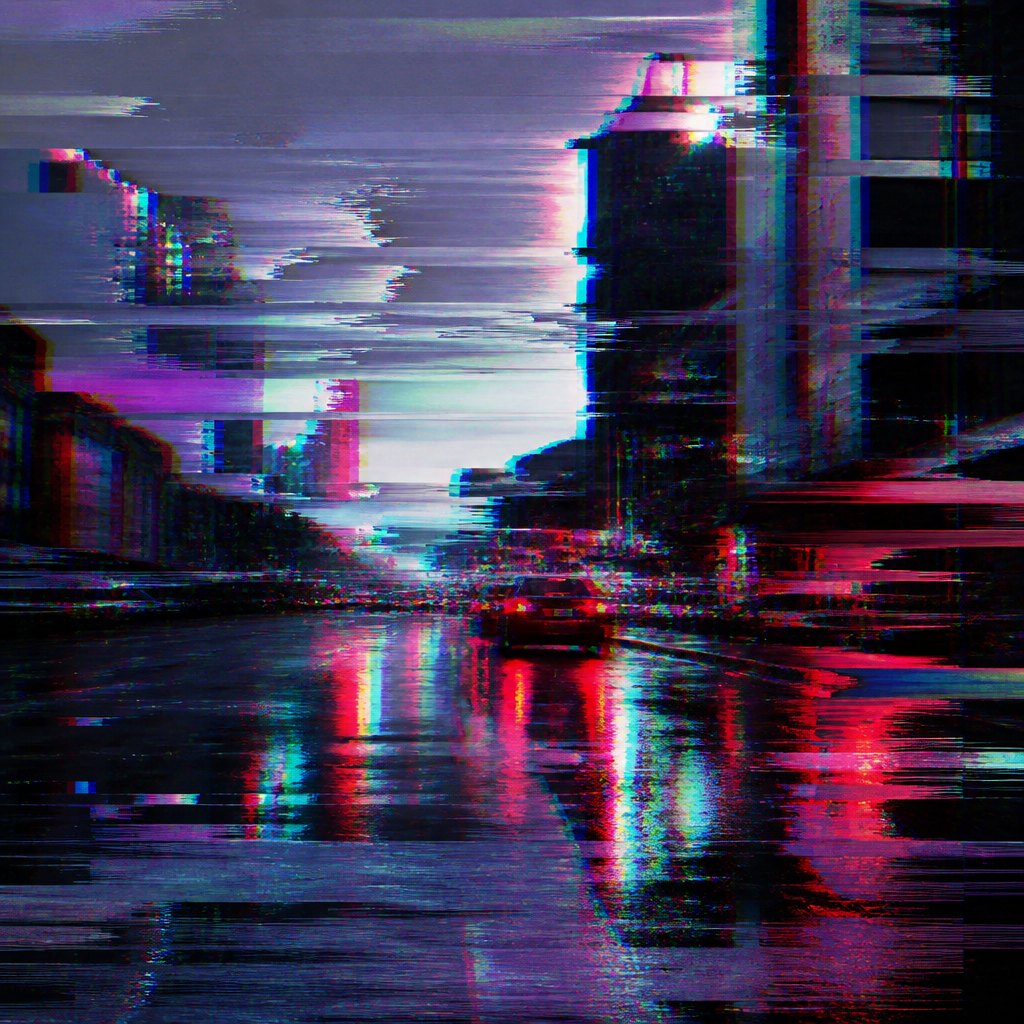
This example was generated from a prompt like: “A corrupted digital photograph with streaked pixel-sorting distortion, torn scan lines, RGB color channel split, blocky compression artifacts, static banding across a fragmented urban scene, glitch art aesthetic.”
Open the Glitch Art Style generator →The medium today
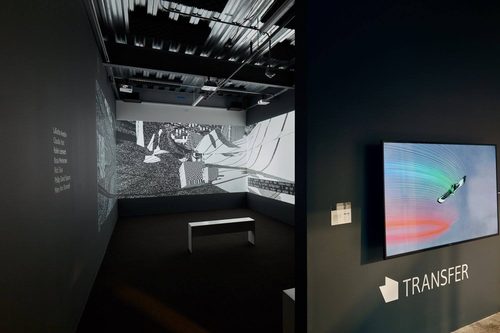
Glitch aesthetics now appear across music videos, fashion photography, album covers, and mainstream motion graphics, often applied through dedicated apps and plugins that simulate datamoshing, pixel sorting, or VHS-style distortion without requiring manual file corruption. Some practitioners still work with raw databending and analog circuit bending for less predictable results. Glitch has also become a recognized category in digital art exhibitions and academic media-art programs, studied alongside broader questions about technological failure and the aesthetics of broken systems.
Compose your own
A simple entry point is databending: open a digital image file in a text or audio editor, make small edits to the raw data, then reopen it as an image to see how the corruption rendered visually. Dedicated apps and plugins now offer pixel sorting, RGB channel shifting, and datamosh-style effects with adjustable sliders, letting beginners experiment without coding. For video, look for tools that let keyframes be deleted or duplicated to trigger frame-blending smears. Save promising results immediately, since many glitch effects are unstable and difficult to reproduce exactly.
Frequently asked questions
What is databending?
Databending means opening a digital file—an image, sound, or video—in software never meant to read that format, so the program misinterprets its raw data and renders visible or audible errors that can be saved as a new work.
Is glitch art random or controlled?
Both—some glitches occur by chance and are then selected and refined, while other techniques, like pixel sorting or specific codec manipulations, are applied deliberately and repeatably to achieve a consistent, controlled look.
What's the difference between glitch art and datamoshing?
Datamoshing is a specific glitch technique that corrupts video compression keyframes to blend and smear frames together. Glitch art is the broader category, including databending, circuit bending, and pixel sorting beyond video alone.
What tools do beginners use for glitch art?
Free hex editors and audio software work for databending images, while dedicated apps and browser tools now offer pixel sorting, RGB shifting, and datamosh-style filters through simple sliders, requiring no coding knowledge.