

Scroll painting is ink and color painted on long strips of paper or silk, mounted for rolling rather than framing flat. East Asian traditions divide the format into hanging scrolls, displayed vertically and viewed as a whole, and handscrolls, unrolled horizontally section by section as a slow, sequential viewing experience. Painters work with ink stick ground on an inkstone, mixed with water, and brushes of varying stiffness on absorbent xuan paper or woven silk, building form through calligraphic brushstrokes rather than blended color. Mineral pigments add color in landscape and figure scrolls, while ink-monochrome painting relies on tonal variation alone. Finished scrolls are backed with paper, mounted with silk borders, fitted with wooden rollers, and stored rolled in protective boxes rather than hung permanently. The related Tibetan thangka, painted on cotton and mounted in silk brocade, follows a similar rolled format for devotional images. Across these traditions, brushwork speed, ink dilution, and blank space carry as much meaning as depicted subject matter.
What defines the medium
Ink stick and inkstone preparation
Ink is ground fresh from a solid stick against a stone inkstone with a little water, producing varying densities of black the painter dilutes further for gray washes. Fresh-ground ink is considered essential for good tonal control.
Handscroll sequential viewing
Handscrolls are unrolled a section at a time from right to left, revealing a continuous composition meant to be experienced gradually rather than seen all at once, closer to reading a narrative than viewing a fixed picture.
Hanging scroll mounting format
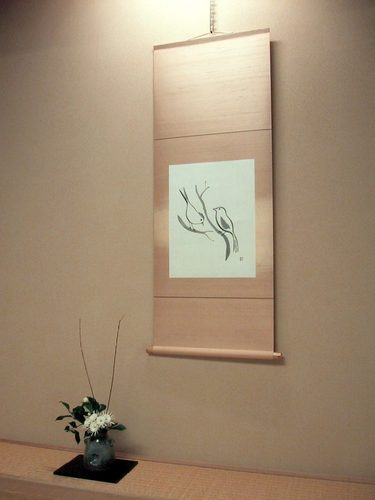
Hanging scrolls are mounted with silk borders and wooden rollers so they can be rolled for storage and hung vertically for display, typically changed seasonally rather than left up permanently like a framed painting.
Brushwork over blending
Form is built through calligraphic brushstrokes of varying pressure, speed, and ink load rather than blended color, so the visible quality of a single stroke—its taper, dryness, or wetness—carries expressive weight.
Use of blank space
Large areas of the paper or silk are often left blank, standing in for mist, sky, or water. This negative space is a deliberate compositional choice that gives painted elements room to breathe and suggests scale beyond the frame.
Seals and colophons
Finished scrolls often carry the painter's seal stamped in red ink, along with inscribed poems or comments called colophons added by the artist, later collectors, or admirers, building a visible record of the work's history.
Materials decoder
The toolkit of scroll painting
- ink stick and inkstone
- → a solid ink block ground with water on a stone slab, producing fresh ink with controllable tone and density
- xuan paper
- → thin, absorbent handmade paper that lets ink bleed and feather, prized for spontaneous brush effects
- silk mounting border
- → woven silk framing the painted panel, part of the scroll's structural mount rather than the image itself
- wooden roller
- → a dowel fixed to a hanging scroll or the end of a handscroll, allowing the work to be rolled for storage
- red seal stamp
- → a carved stone or wood seal stamped in red ink, marking a painter's or collector's ownership and authenticity
- mineral color wash
- → opaque mineral pigment applied over ink outlines in some scrolls, adding color while preserving the brushwork beneath
The story
Scroll painting developed in China alongside brush calligraphy, with the handscroll format established by the Han dynasty though the earliest surviving painted handscrolls date from roughly the 4th to 7th centuries and painting theory formalized by the Six Dynasties period in the 4th to 6th centuries. Landscape and figure handscrolls flourished under the Tang and Song dynasties, with works such as Zhang Zeduan's panoramic riverside scenes from the 12th century showing the format's capacity for sustained narrative. Hanging scrolls became the standard format for display in Chinese and later Japanese homes and temples, often changed with the seasons. Japan adapted Chinese scroll traditions from the 7th century onward, developing its own ink painting schools under painters such as Sesshu Toyo in the 15th century. In Tibet, the thangka developed as a portable devotional painting mounted in a similar rolled silk format, used in Buddhist practice and teaching. Scroll formats declined somewhat with the spread of framed Western-style painting in the 19th and 20th centuries but remain central to East Asian ink painting today.
Masterpieces of the medium
| Work | Artist | Date | Why it matters |
|---|---|---|---|
| Along the River During the Qingming Festival | Zhang Zeduan | c. 1085-1145 | a panoramic handscroll depicting daily life along a river in the Song capital |
| Nine Dragons | Chen Rong | 1244 | an ink handscroll of coiling dragons among clouds and waves, prized for dynamic brushwork |
| Night Revels of Han Xizai | Attributed to Gu Hongzhong | 10th century | a Southern Tang handscroll depicting a nobleman's private banquet in sequential scenes |
| Landscape hanging scrolls | Sesshu Toyo | c. 1495 | ink monochrome landscapes that shaped Japanese scroll painting for centuries |
| Wheel of Life thangka | Unknown | traditional | a Tibetan Buddhist devotional scroll painting mounted in silk brocade, used for teaching |
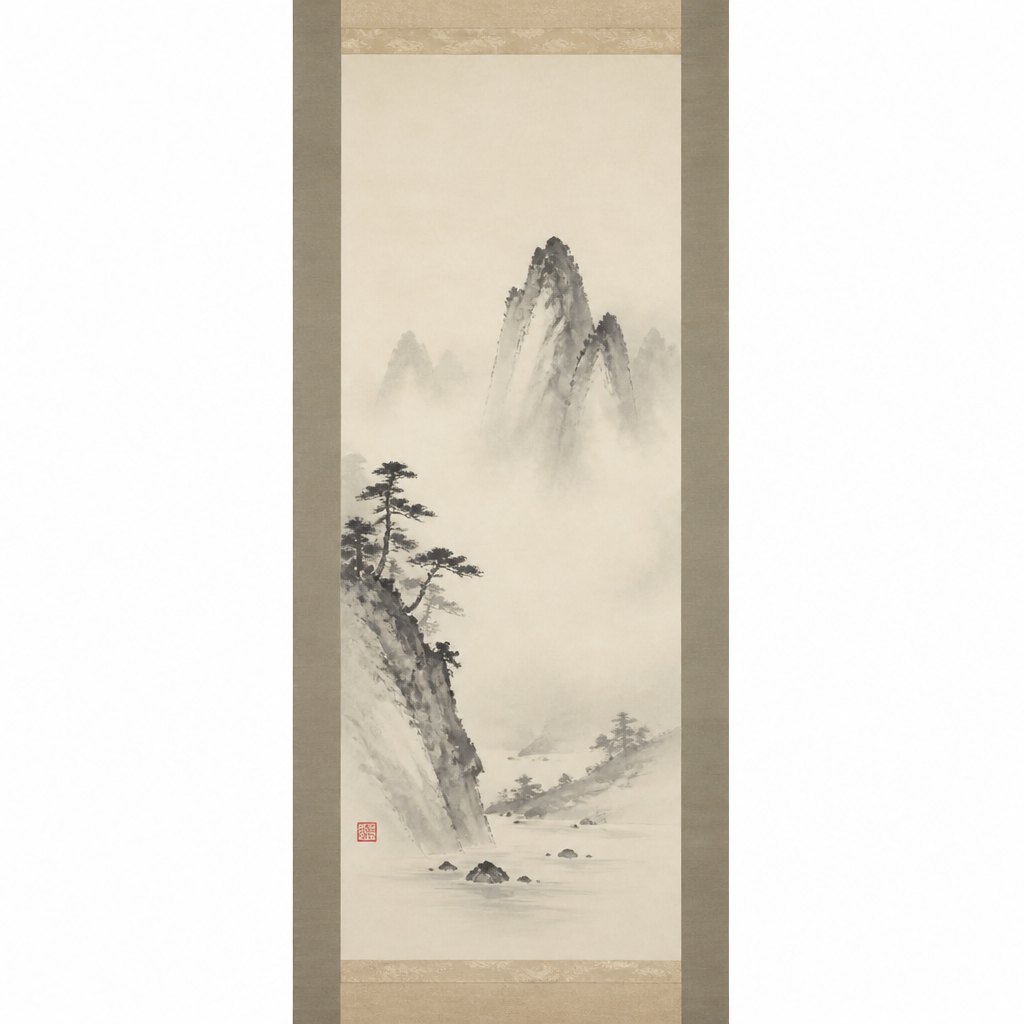 AI-generated
Try the medium
Try scroll painting with AI
This example was generated from a prompt like: “A misty mountain landscape painted in monochrome ink on a vertical hanging scroll, sparse brushwork suggesting distant peaks and pine trees, large areas of blank paper, a small red seal stamp, silk mounting border visible.”
Open the Scroll Painting Style generator →The medium today
Scroll painting continues as an active practice among ink painters trained in traditional brush technique, with museums in China, Japan, Korea, and Tibet holding major historical collections and supporting ongoing conservation of fragile silk and paper mounts. Contemporary ink painters continue working in hanging scroll and handscroll formats, sometimes alongside modern subject matter, while thangka painting remains an active devotional and teaching practice within Tibetan Buddhist communities. The format's emphasis on brushwork and blank space also informs digital ink-style illustration and animation today.
Compose your own
Beginners typically start with basic brush-and-ink exercises on inexpensive paper before attempting a mounted scroll: practicing controlled strokes at varying pressure and speed to learn how a brush loaded with more or less ink and water behaves. A soft goat-hair or mixed-hair brush, a grindable ink stick and stone (or bottled ink as a substitute), and absorbent xuan paper are the essential starting materials. Practicing single elements—bamboo leaves, orchid petals, or simple rock forms—builds brush control before attempting a full landscape. Leaving deliberate blank space rather than filling the whole sheet is worth practicing early. Mounting a finished piece as an actual scroll is a specialized craft usually left to professional mounters.
Frequently asked questions
What's the difference between a hanging scroll and a handscroll?
A hanging scroll is mounted for vertical display and viewed as a complete image at once, while a handscroll is mounted horizontally and unrolled section by section, meant to be viewed gradually like a continuous narrative.
What materials are used in scroll painting?
Ink ground from a solid stick on a stone, mineral pigments for color, and brushes of varying stiffness applied to absorbent xuan paper or woven silk, later backed and mounted with silk borders and wooden rollers.
Is a thangka the same as a Chinese scroll painting?
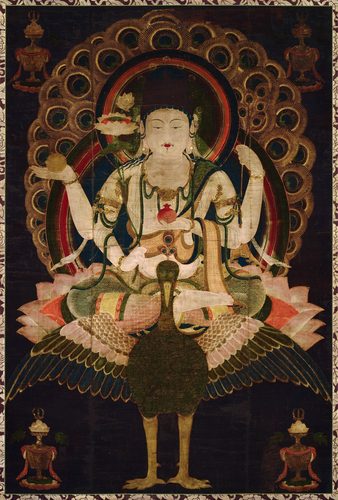
Thangkas are Tibetan Buddhist devotional paintings on cotton or silk, mounted in a similar rolled silk format for storage and display, related to but distinct from Chinese and Japanese ink scroll traditions.
Why is blank space so important in scroll painting?
Empty areas of paper or silk stand in for mist, sky, or water and give painted elements room to breathe, a deliberate compositional choice considered as meaningful as the painted subject itself.