
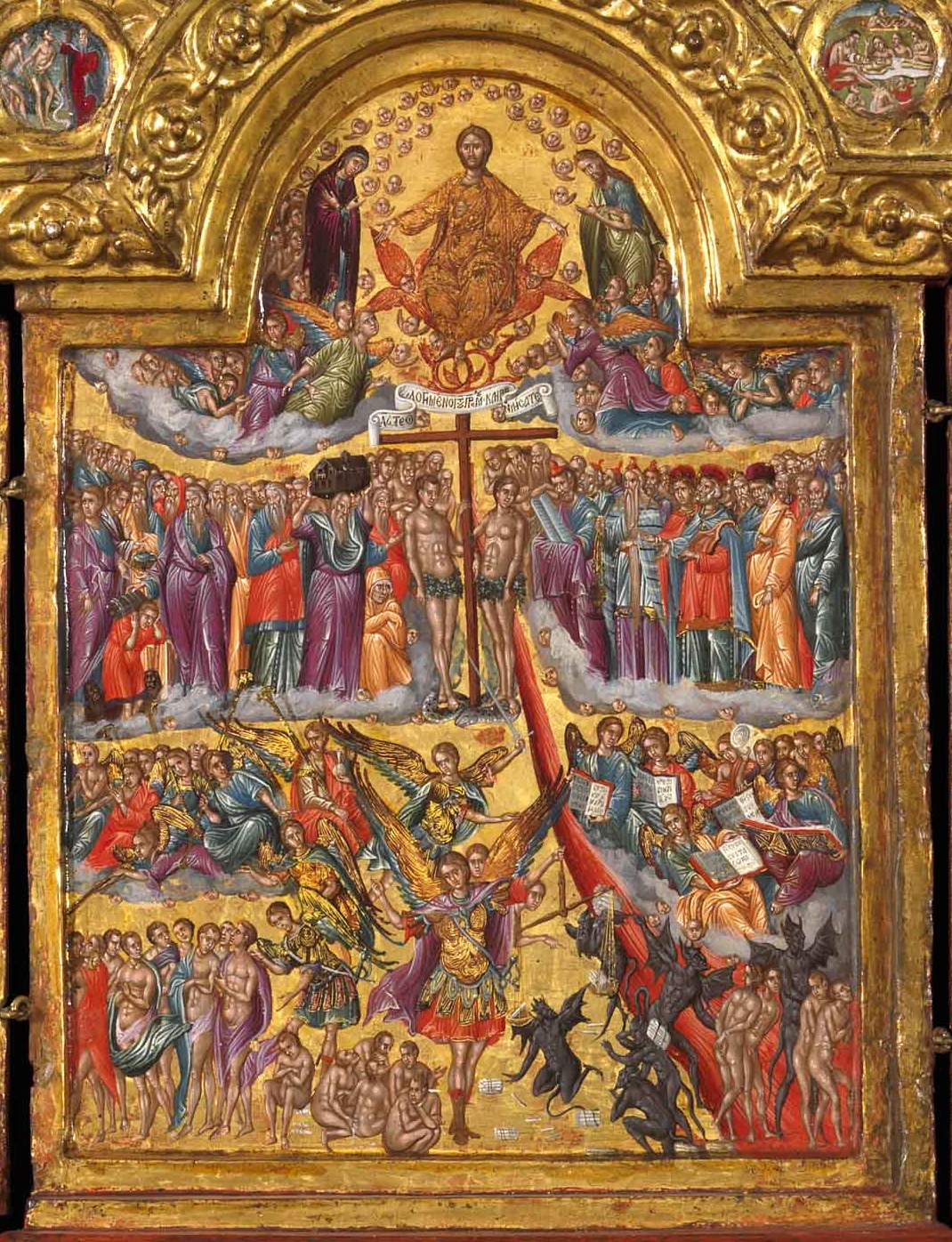
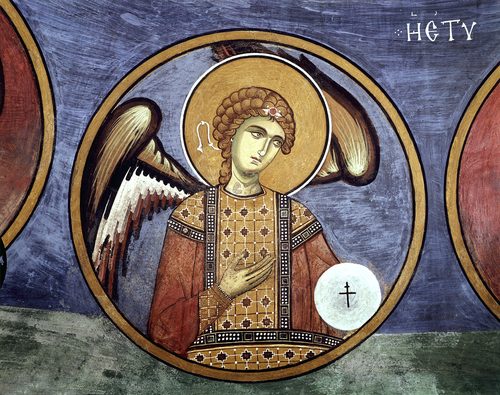
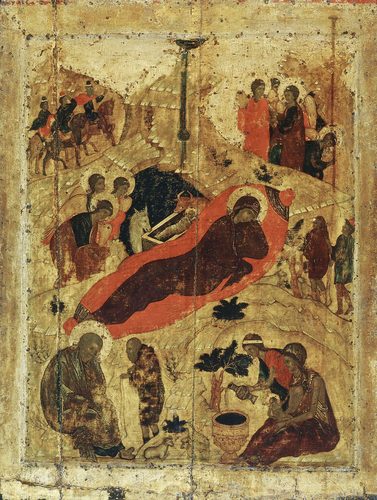
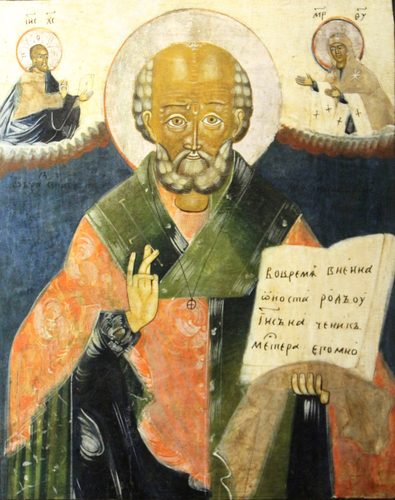
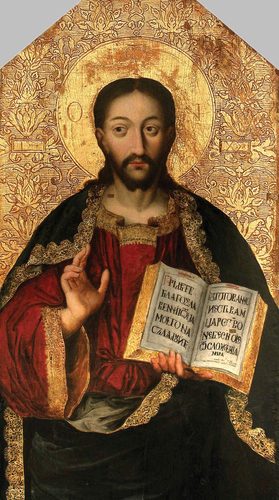
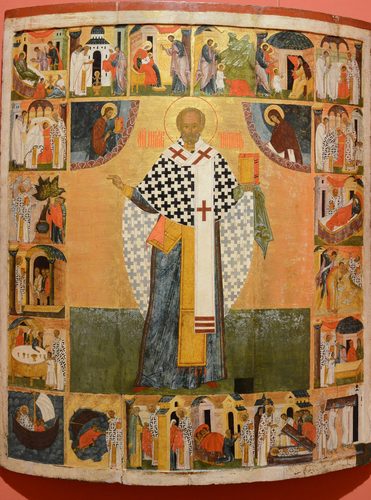
Icon art is the painted tradition of Orthodox Christian devotional images—panels showing Christ, the Virgin Mary, or saints, made for veneration in churches and homes rather than purely aesthetic display. Icons are painted in egg tempera on wood panels, typically limewood or linden, prepared with a fabric-reinforced gesso ground called levkas. Pigments are ground from natural minerals and earths, bound with egg yolk, and built up in thin, controlled layers following strict compositional formulas passed down through workshop tradition. Gold leaf covers backgrounds and haloes, symbolizing divine light rather than a literal sky. Figures appear flattened and frontal, with elongated features, reversed perspective, and little cast shadow, conventions meant to convey a spiritual rather than naturalistic presence. Byzantine icon painting from the 6th century onward established these forms, and Russian workshops in centers like Novgorod and Moscow developed distinct regional styles from the 12th century, producing some of the tradition's most celebrated surviving panels.
What defines the medium
Egg tempera on wood panel
Icons are painted in egg tempera—pigment bound with egg yolk—on wood panels, usually limewood, chosen for a fine, even grain that resists warping and takes detail well. The medium dries fast, forcing controlled, deliberate strokes.
Levkas ground preparation
Panels are prepared with levkas, a chalk-and-glue ground reinforced with linen or canvas, sanded smooth before painting begins. This layered ground keeps the surface stable and gives tempera a firm, absorbent base to grip.
Reverse perspective and flattened space
Icons avoid single-point perspective, instead using reverse perspective where lines widen toward the viewer, and flattened space with little shadow, conventions that push the image toward symbolic rather than realistic depth.
Gold leaf background
Backgrounds and haloes are covered in gold leaf, applied over a red bole ground and burnished to a shine, representing divine, uncreated light rather than a physical setting or time of day.
Fixed compositional canons
Figures and scenes follow long-established compositional types, or canons, repeated across centuries with only minor regional variation, so a given subject is recognizable by pose and arrangement across different workshops.
Layered painting order
Painting proceeds in a fixed sequence—dark underpainting called proplasmos, followed by successive lighter flesh tones, then fine white highlights on features—building form through layered value rather than blended color.
Materials decoder
The toolkit of icon art
- egg tempera
- → pigment bound with egg yolk, applied in thin fast-drying layers that build up flesh tones through successive highlights
- gold leaf halo
- → burnished gold sheet behind a figure's head, representing divine light rather than a literal object or accessory
- levkas ground
- → a chalk-and-glue gesso layer reinforced with cloth, sanded to a smooth, absorbent surface for tempera
- red bole
- → a reddish clay layer beneath gold leaf, its warm tone showing through burnished gold and helping it catch light
- reverse perspective
- → lines and forms that widen toward the viewer instead of receding, flattening space and pulling the image outward
- elongated figures
- → stretched proportions and large eyes, a stylistic convention distancing the image from naturalistic portraiture
The story
Icon painting developed within early Christian art and became formalized in the Byzantine Empire from the 6th century, with the monastery of Saint Catherine in Sinai preserving some of the oldest surviving panels. A period of Byzantine Iconoclasm in the 8th and 9th centuries banned religious images before their restoration was formally affirmed in 843. Byzantine painters codified compositional canons that spread with Orthodox Christianity into Russia after the conversion of Kievan Rus in 988. Regional schools flourished in Novgorod, Pskov, and Moscow from the 12th to 16th centuries, producing celebrated painters such as Theophanes the Greek and Andrei Rublev, whose Trinity icon remains one of the most studied works of the tradition. Russian icon painting reached a peak of refinement in the 15th and 16th centuries. Museums in Moscow, Saint Petersburg, and Athens now hold major collections, and icon painting continues as a living liturgical practice in Orthodox churches worldwide.
Masterpieces of the medium
| Work | Artist | Date | Why it matters |
|---|---|---|---|
| Theotokos of Vladimir | Unknown | c. 12th century | a revered Byzantine-style panel long housed in Moscow, an Eleusa-type Virgin and Child |
| Trinity | Andrei Rublev | c. 1425-1427 | tempera and gold leaf on panel, among the most studied works of Russian icon painting |
| Christ Pantocrator | Unknown | 6th century | an early encaustic panel from Saint Catherine's Monastery, one of the oldest surviving icons |
| Angel with Golden Hair | Unknown | late 12th century | a Novgorod school panel prized for its soft modeling and luminous color |
| Novgorod frescoes and panels | Theophanes the Greek | 1378 | works noted for loose, expressive brushwork within the Byzantine canon |
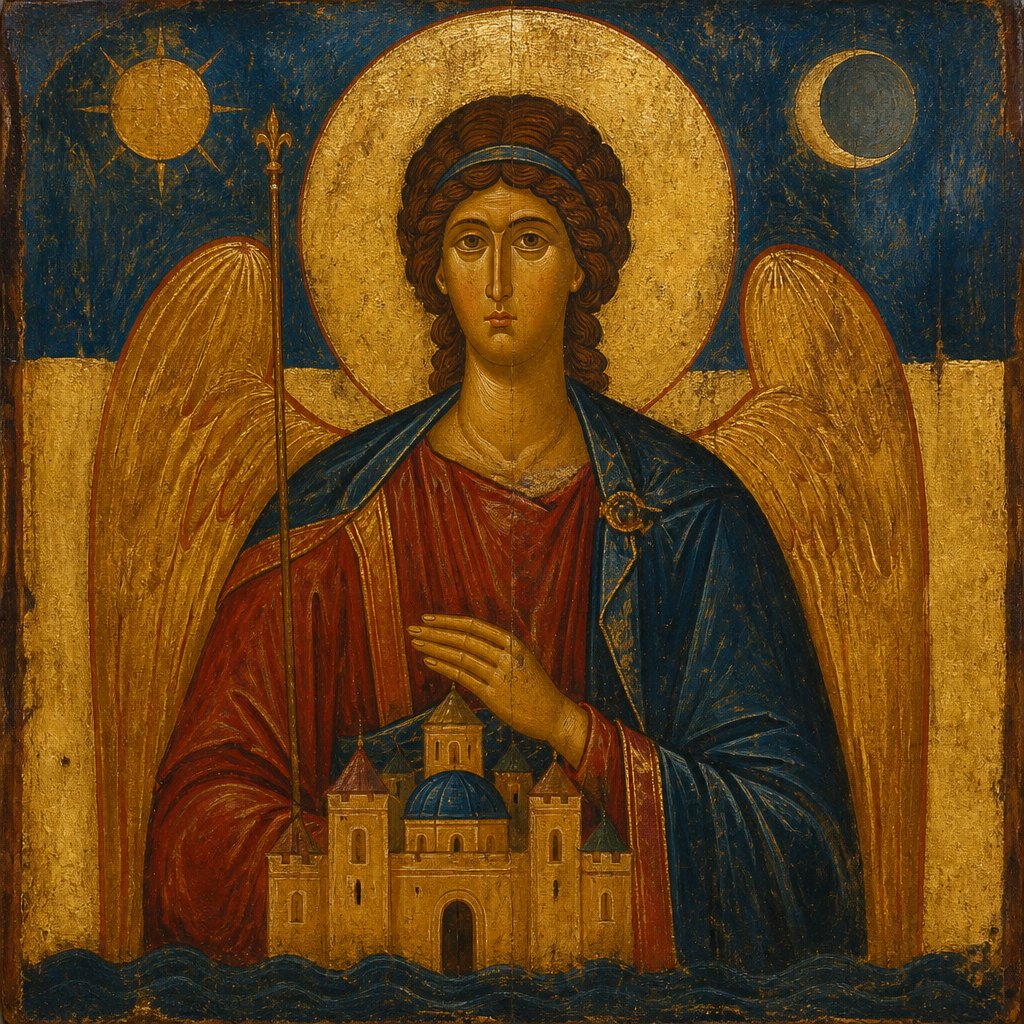 AI-generated
Try the medium
Try icon art with AI
This example was generated from a prompt like: “A stylized devotional panel painting in the Byzantine icon tradition: frontal elongated figure with a gold leaf halo backdrop, egg tempera in deep red and blue, aged wood panel texture, flattened symbolic space.”
Open the Icon Art Style generator →The medium today
Icon painting continues as an active liturgical practice in Orthodox churches and monasteries worldwide, with painters trained in traditional workshops still following historical materials and compositional canons. Museums in Russia, Greece, and elsewhere preserve major historical collections and support ongoing conservation research into pigments and panel construction. Contemporary icon painters produce new works for churches following the same tempera-and-gesso method, while the visual language of gold backgrounds and flattened, frontal figures continues to influence religious and decorative art beyond the Orthodox tradition.
Compose your own
Traditional icon painting is learned through years of workshop apprenticeship, but a beginner can start by studying the layered tempera method on a small prepared panel or gessoed board. Egg tempera is mixed fresh each session by grinding pigment with egg yolk and a little water, then applied in thin, controlled layers rather than thick strokes. Start with a dark base tone for skin areas, then build up lighter values in successive coats, finishing with fine white highlight lines on features. Practicing gold leaf application—laying a red bole ground, then burnished gold leaf—is a separate skill worth learning on its own. Copying an existing composition closely is the traditional way students learn the canon before developing their own hand.
Frequently asked questions
What is egg tempera and why is it used for icons?
Egg tempera binds pigment with egg yolk, producing a fast-drying, matte, and extremely durable paint film. Its quick drying suits the controlled, layered technique icon painters use to build flesh tones and detail.
Why do icons use gold backgrounds?
Gold leaf represents divine, uncreated light rather than a physical sky or setting, a convention meant to place the figure outside ordinary time and space rather than in a realistic scene.
Why do icon figures look flat and elongated?
Icons intentionally avoid naturalistic modeling and single-point perspective, using flattened space, reverse perspective, and elongated proportions to emphasize spiritual presence over physical likeness.
Are new icons still painted today?
Yes, trained painters continue producing icons for churches and private devotion using traditional tempera-on-panel methods, following established compositional canons passed down through workshop training.