
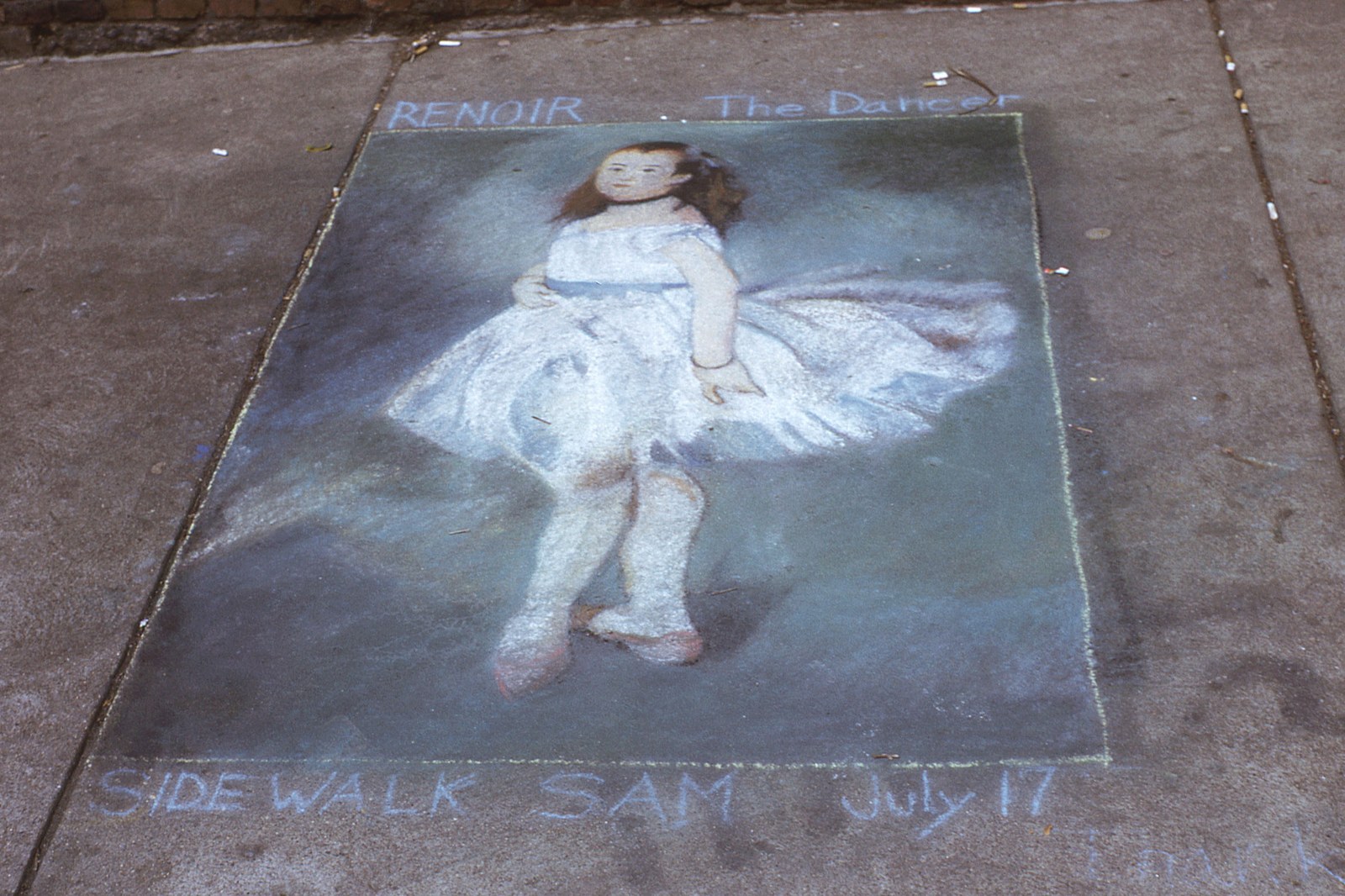
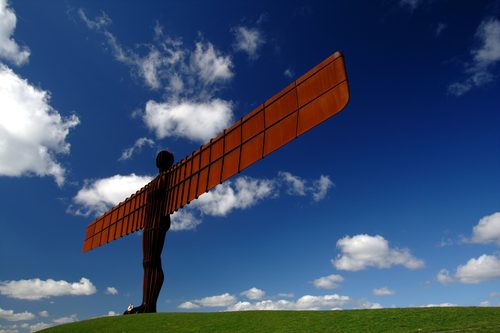
Street art is visual work made directly in public space—on walls, shutters, sidewalks, and utility boxes—using spray paint, stencils, wheatpaste paper, rollers, or a combination of these. It grew out of graffiti writing but expanded beyond lettering into figurative imagery, large murals, and installed objects, often made without property owner permission though increasingly commissioned by cities and businesses. Stencils let an artist repeat a precise image quickly across many surfaces, cut from cardboard or acetate and sprayed through in layers of color. Wheatpaste involves printing or painting an image on paper, then adhering it to a wall with a flour-and-water paste, a fast method for covering large areas without spray equipment. Murals scale up further, sometimes covering entire building facades and taking days to complete with rollers, extension poles, and aerial lifts. The look ranges from raw and fast, meant to be seen briefly before removal, to polished, large-scale work planned like a public commission. Its defining trait is location: the artwork is inseparable from the specific wall and neighborhood where it exists.
What defines the medium
Working directly on walls
Street art is made on existing public surfaces—brick, concrete, metal shutters—rather than a portable canvas, so the artist must adapt composition to a wall's texture, scale, and surroundings, often working quickly and outdoors.
Stencil layering
Stencils are cut from cardboard, acetate, or metal and sprayed in successive layers, each cut isolating one color or shape. This lets an image be repeated identically across many locations far faster than freehand painting.
Wheatpaste application
Wheatpaste artists print or paint an image on paper in the studio, then adhere it to a wall with a flour-and-water paste in the field. It is fast to install and allows detailed imagery without spraying on site.
Permission and permanence
Some street art is made without authorization and removed within days by property owners or weather; other pieces are commissioned by building owners or city programs and maintained for years as sanctioned public art.
Scale and tools for murals
Large murals are painted with rollers, extension poles, and aerial lifts rather than a single spray can, often planned first as a scaled digital or paper sketch, then gridded or projected onto the wall for accuracy.
Site-specific meaning
Street art is closely tied to its location—a piece often responds to a neighborhood's history, an adjacent building, or nearby text—so photographing or removing it from that wall changes its meaning.
Materials decoder
The toolkit of street art
- spray can overspray
- → a soft, diffuse edge or halo around painted shapes left by aerosol spray, distinct from a hard brushed or rolled edge
- cut stencil edge
- → a crisp, slightly interrupted outline with small connecting bridges, left where a cut stencil template was sprayed through
- wheatpaste seams
- → visible paper edges, wrinkles, or overlap lines where a printed or painted sheet was pasted onto a wall surface
- roller-painted fields
- → flat, evenly covered areas of color with a faint stippled texture, used to block in large mural backgrounds quickly
- extension-pole mural scale
- → an artwork spanning multiple stories, its proportions and detail visible only from a distance across a street or plaza
- weathered, partial surface
- → peeling paper, faded spray color, or partial buffing over older work, showing a wall's history of repeated painting
The story
Street art grew out of graffiti writing that emerged on New York City subway cars and walls in the late 1960s and 1970s, expanding through the 1980s as artists moved from lettering into figurative imagery and stencils. Wheatpaste poster campaigns spread through cities including Paris and New York in the 1980s and 1990s, letting artists install detailed printed images quickly and anonymously. The form gained wider institutional attention in the 2000s: London's Tate Modern commissioned large-scale outdoor works on its riverside facade in 2008, and Los Angeles's Museum of Contemporary Art staged a major survey exhibition, Art in the Streets, in 2011. City-run mural programs, including Philadelphia's Mural Arts Program launched in 1984, turned once-illegal wall painting into sanctioned public art. Today street art appears in sanctioned mural festivals, on commercial buildings, and in ongoing photographic documentation projects that preserve work before it is painted over or demolished.
Masterpieces of the medium
| Work | Artist | Date | Why it matters |
|---|---|---|---|
| East Side Gallery murals | Unknown | 1990 | a 1.3-kilometer stretch of the former Berlin Wall painted by artists soon after its fall |
| Tate Modern outdoor commission series | Unknown | 2008 | large-scale murals installed on the museum's riverside facade, an early major institutional street art show |
| Art in the Streets exhibition | Unknown | 2011 | a survey at Los Angeles's Museum of Contemporary Art, one of the first major US museum shows of street art |
| 5Pointz aerosol art center | Unknown | 1993-2014 | a Queens warehouse complex covered floor to roof in rotating murals before its demolition |
| Philadelphia Mural Arts Program murals | Unknown | 1984-present | a city-run program that has produced thousands of sanctioned public murals across the city |
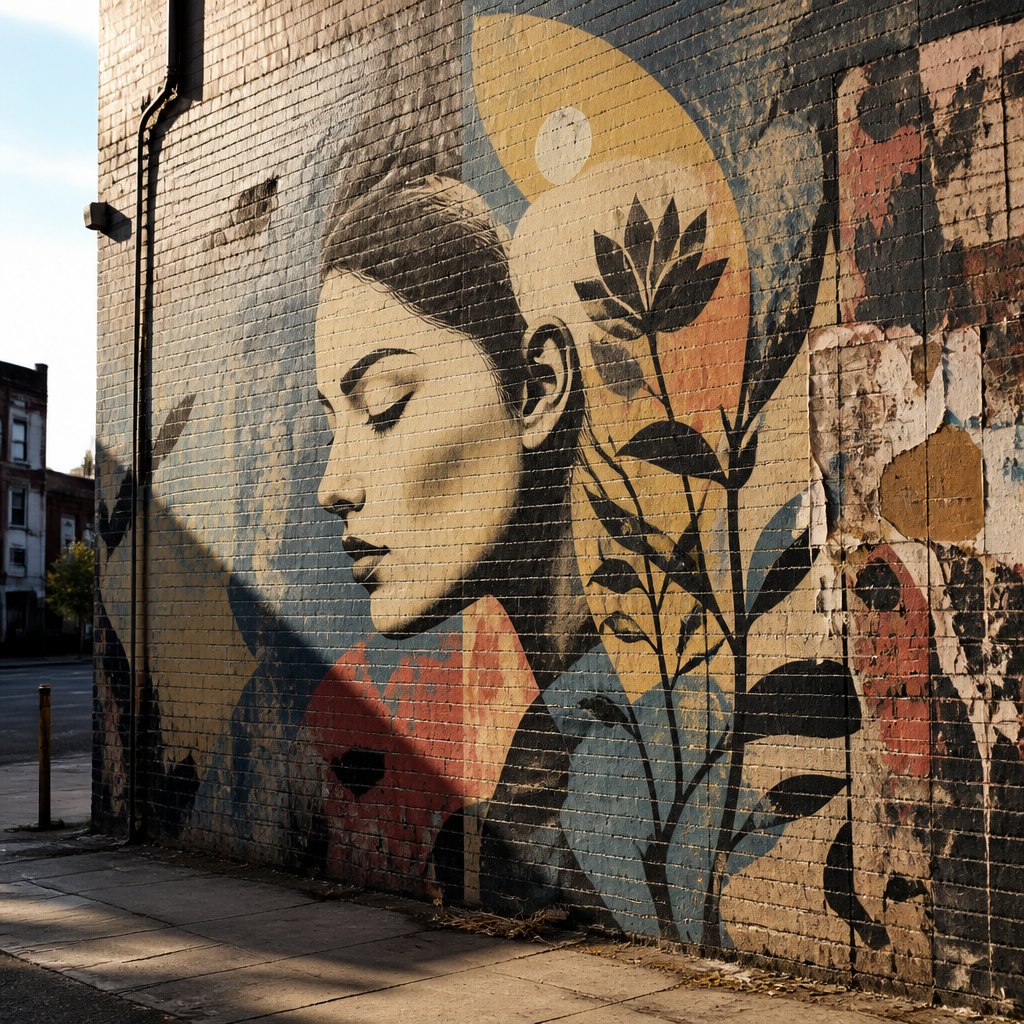 AI-generated
Try the medium
Try street art with AI
This example was generated from a prompt like: “A weathered brick wall covered in a large stenciled mural, layered spray-paint color with soft aerosol edges, faded wheatpaste poster fragments peeling nearby, urban street setting, late afternoon light.”
Open the Street Art Style generator →The medium today
Street art today ranges from unsanctioned overnight pieces to city-funded mural festivals that bring painters to a single neighborhood for a week of work. Municipal programs commission murals for community centers, underpasses, and building facades, treating street art as a tool for neighborhood revitalization. Documentation has become part of the practice itself, with photographers archiving murals before weather, buffing, or redevelopment erases them. Museums now regularly collect photographs and preserved fragments of significant street art works.
Compose your own
Beginners typically start with legal walls or permission from a property owner rather than public surfaces, since unsanctioned painting can carry legal penalties. Basic tools include aerosol spray paint in a range of caps for different line widths, or exterior latex paint and rollers for larger mural work. Practicing stencil cutting on cardboard or acetate is a low-cost way to learn repeatable imagery before tackling a wall. Sketching a composition to scale on paper first, then gridding or projecting it onto the wall, keeps large murals proportional. Working outdoors means planning around weather and light, and photographing finished work promptly, since street pieces are often temporary.
Frequently asked questions
Is street art the same as graffiti?
They overlap but differ: graffiti usually centers on stylized lettering and tags, often unsanctioned, while street art includes a wider range of imagery, stencils, and wheatpaste, and is increasingly created with permission or commission.
How do stencils work in street art?
An artist cuts a design out of cardboard, acetate, or metal, leaving open shapes where paint should pass through. Holding the stencil against a wall and spraying over it deposits paint only in those cut areas, allowing fast, repeatable images.
Is street art legal?
It depends on permission: painting on private or public property without the owner's consent is generally illegal and can be removed or prosecuted, while commissioned murals and city-sanctioned mural programs are fully legal and often funded.
Why does so much street art disappear quickly?
Unsanctioned work is often painted over or cleaned by property owners and city buffing crews, and paper-based wheatpaste pieces weather, tear, or peel within weeks, which is why photographic documentation is central to the practice.