
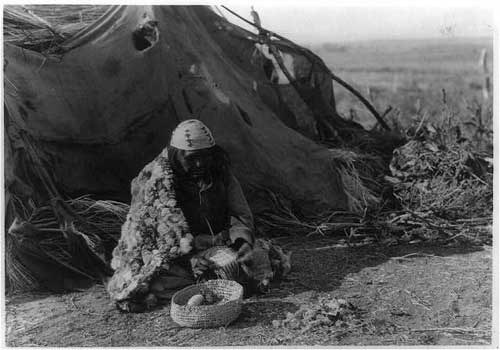
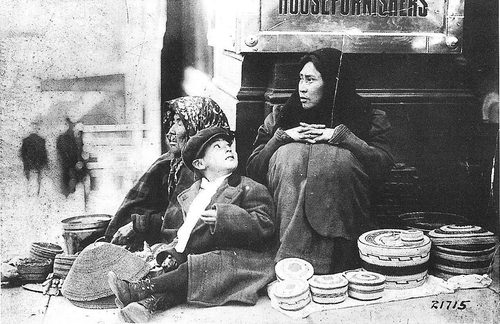
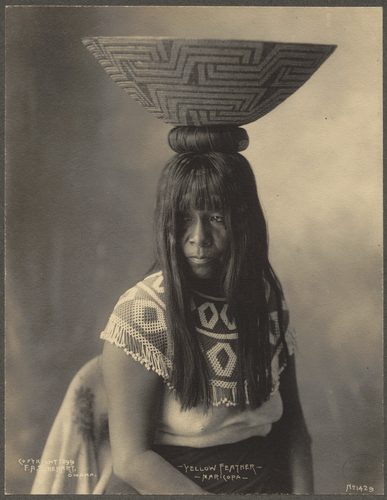
Basketry shapes natural plant fibers into vessels through hand weaving techniques that need no loom or needle, only prepared material and often a simple awl. Coiling stitches a continuous spiraling bundle of fiber into a shape, row sewn to row, producing tight, rounded forms. Twining wraps two flexible weft strands around a set of stiffer upright spokes, twisting them together for a strong, ridged surface. Plaiting weaves flat strips over and under each other like a mat, common in splint and bamboo work. Materials are gathered and processed before weaving—reeds and willow soaked to become pliable, wood split into thin splints, grasses dried and sometimes dyed—and choice of material is closely tied to what grows locally, from Pacific coast willow and sedge root to Appalachian white oak and Japanese bamboo. The result ranges from tightly coiled storage baskets to open, airy woven trays and lidded containers.
What defines the medium
Coiling construction
A bundle of fiber is wound into a tight spiral and stitched to the coil beneath it with a thinner fiber or thread, building the wall upward row by row from a flat or slightly domed base.
Twining technique
Two flexible weft strands are twisted around each other as they pass in front of and behind a series of rigid upright spokes, locking the spokes in place and producing a strong, textured surface.
Plaiting and checkerwork
Flat strips of splint, bamboo, or palm are woven directly over and under one another in a simple grid, a fast method well suited to mats, trays, and rectangular baskets with straight sides.
Fiber preparation
Raw material is gathered, then soaked, split, scraped, or pounded to make it pliable and even in width before weaving begins; poorly prepared fiber cracks or weaves unevenly regardless of technique.
Base-to-rim building order
Nearly every basket starts with a base, builds the walls upward through repeated rows of the chosen technique, and finishes with a reinforced rim that locks the top edge and prevents unraveling.
Regional material and pattern
The plants available locally shape both structure and design—willow, splint oak, pine needle, sweetgrass, or bamboo each behave differently, giving each basketry tradition a distinct texture and pattern vocabulary.
Materials decoder
The toolkit of basketry
- coiling
- → a continuous spiral of stitched fiber bundle, the technique behind tight, rounded basket forms
- twining
- → two weft strands twisted around rigid spokes, producing a strong, ridged woven surface
- awl
- → a pointed hand tool used to pierce coiled fiber so stitching thread can pass through
- splint
- → a thin strip of pounded and split wood, usually oak or ash, woven into rigid plaited baskets
- sweetgrass
- → a fragrant plant coiled alone or combined with other fibers in certain Indigenous North American baskets
- checkerwork plaiting
- → an over-under woven grid pattern of flat strips, common in mats and rectangular baskets
The story
Basketry likely predates pottery, with woven impressions found pressed into ancient clay fragments dating back roughly 10,000 years. Distinct regional traditions developed worldwide: Native American communities such as the Pomo and Washoe of California refined coiled basketry into fine, sometimes feather-decorated forms by the 19th century, while Nantucket lightship baskets emerged in mid-19th-century New England, woven by lightship crewmen from rattan and wood. In Appalachia, white oak splint baskets carried a British Isles plaiting tradition into rural American craft. African communities, including in Botswana and Rwanda, developed coiled and woven baskets using local grasses and sisal, often with strong geometric coloring. Japanese basketry reached particular refinement in fine split bamboo work during the Edo period, prized for flower-arranging containers. These traditions continued largely unbroken into the 20th century through practicing artisan communities.
Masterpieces of the medium
| Work | Artist | Date | Why it matters |
|---|---|---|---|
| Pomo Feathered Basket | Unknown | 19th century | coiled California basket decorated with feathers and shell beads |
| Nantucket Lightship Basket | Unknown | mid-19th century | woven rattan basket made by Nantucket lightship crewmen |
| Rwandan Agaseke Basket | Unknown | traditional form | coiled sisal basket with a distinctive peaked lid |
| Appalachian Splint Basket | Unknown | 19th century | plaited white oak splint basket from rural American craft |
| Japanese Bamboo Flower Basket | Unknown | Edo period | finely woven bamboo basket made for ikebana flower arranging |
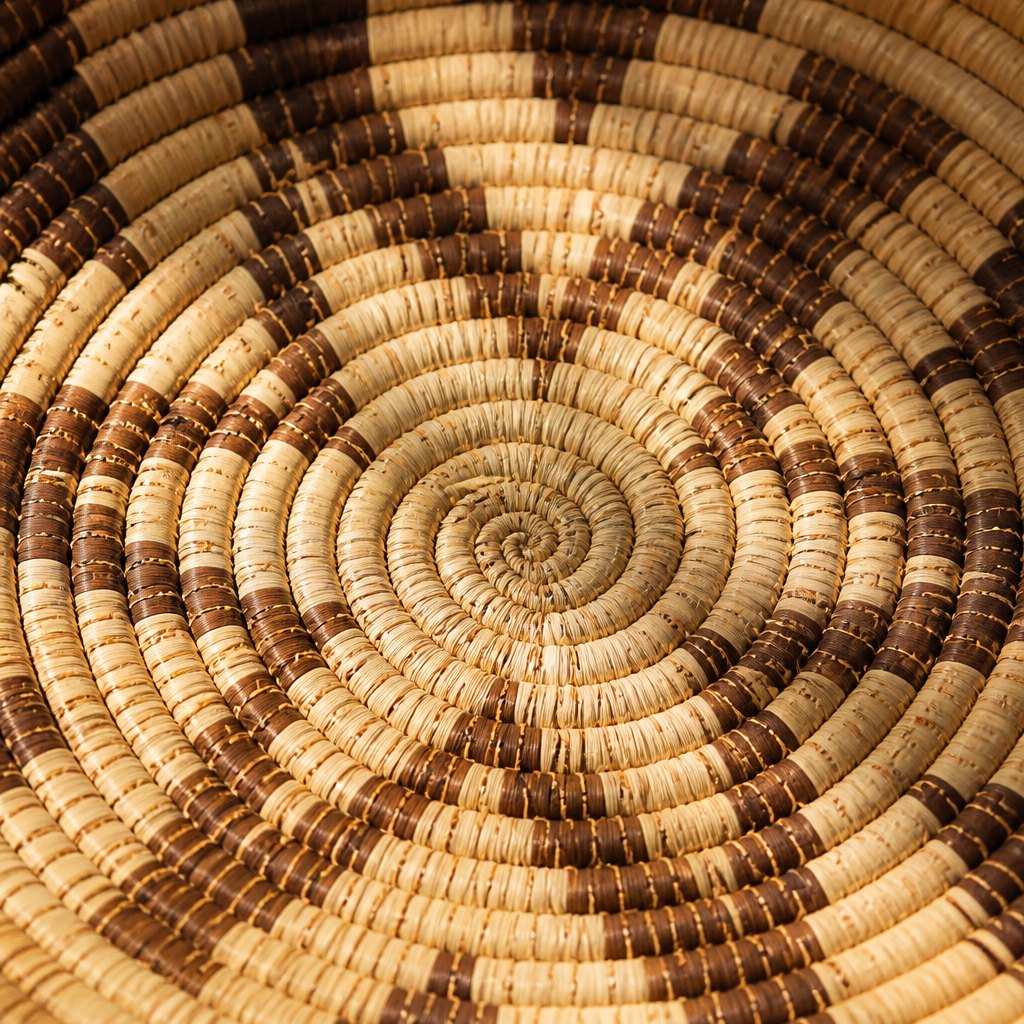 AI-generated
Try the medium
Try basketry with AI
This example was generated from a prompt like: “Close-up of a tightly coiled natural fiber basket with a geometric brown and tan pattern, visible spiral stitching between coils, warm natural light raking across the textured woven surface.”
Open the Basketry Art Style generator →The medium today
Basketry continues as a living craft among Indigenous and rural artisan communities who maintain coiling, twining, and plaiting traditions passed down through generations, often sold at craft markets and cultural centers. Contemporary fiber artists borrow basketry structures for sculptural, non-functional work exhibited in galleries. Sustainable and locally sourced plant material remains central to the practice, with reed, willow, and grasses still gathered and prepared largely by hand before weaving begins.
Compose your own
Begin with a soft, forgiving material like reed or raffia, softened by soaking in water for ten to twenty minutes until pliable. Start with a simple flat coiled base, wrapping a core fiber and stitching it with a thinner strand using a blunt needle or awl, then build the walls upward row by row. Alternatively, try plaiting flat strips over and under each other to form a simple mat before shaping it into a basket. Keep material damp while working, and finish the rim by folding and stitching the final row securely.
Frequently asked questions
What's the difference between coiling and twining?
Coiling stitches a spiraling fiber bundle into rounded forms, while twining twists two weft strands around rigid upright spokes to build straighter, ridged walls. Both need no loom, but produce noticeably different textures.
What materials are used in basketry?
Common materials include willow, reed, splint oak or ash, pine needles, sweetgrass, bamboo, and various grasses, chosen for local availability and how well they bend, split, or hold a stitched shape.
How are baskets made waterproof?
Tightly coiled baskets can hold water briefly through fiber swelling alone, but most traditional waterproof vessels were lined with pitch, resin, or clay, or used only for dry storage rather than liquids.
Is basketry considered a form of weaving?
Yes—basketry uses core weaving structures like plaiting and twining, though coiling is closer to sewing since it stitches wound fiber rather than interlacing separate strands, distinguishing it from loom-based textile weaving.