
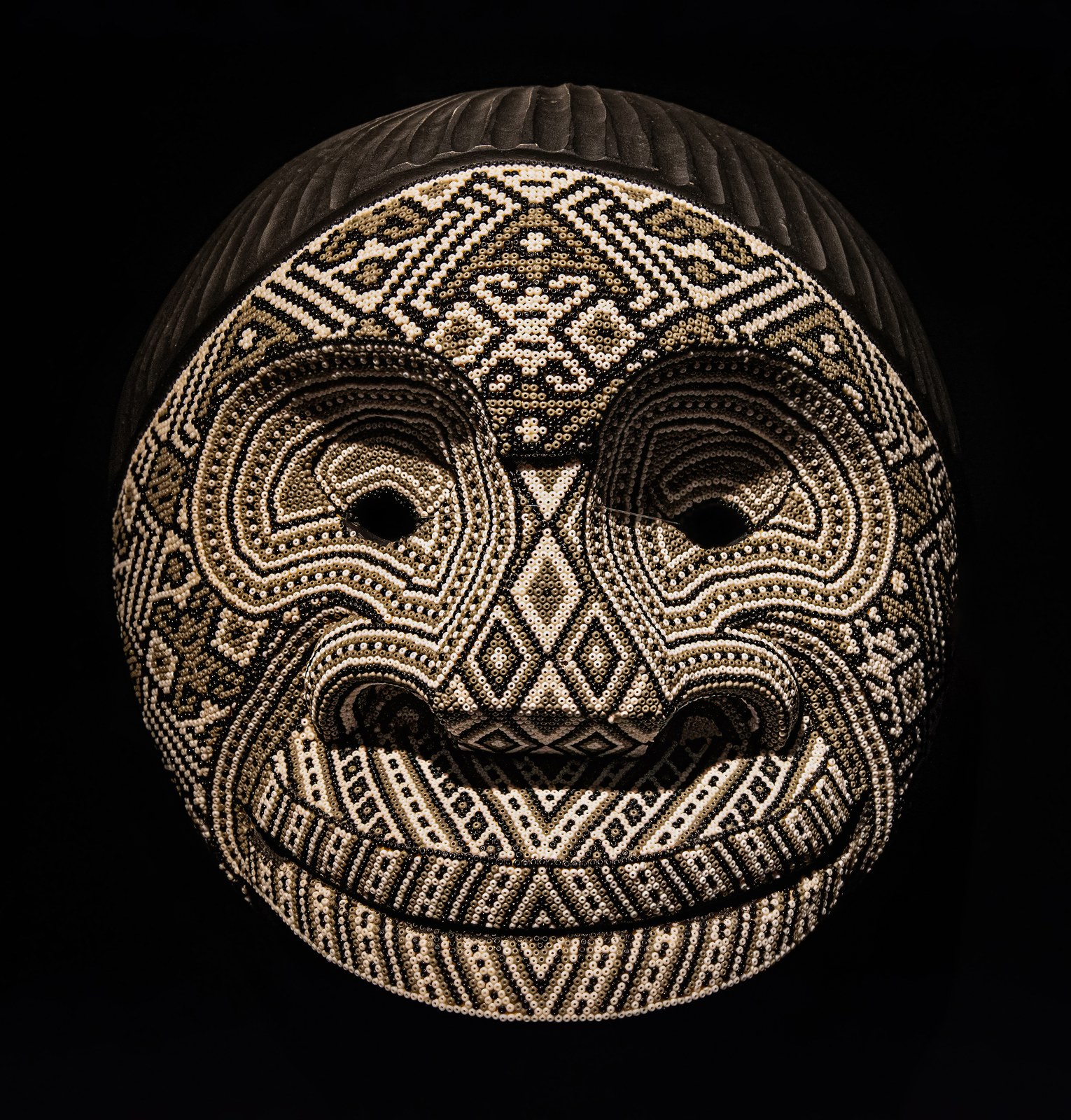
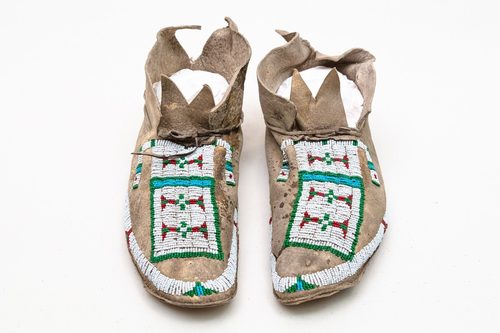
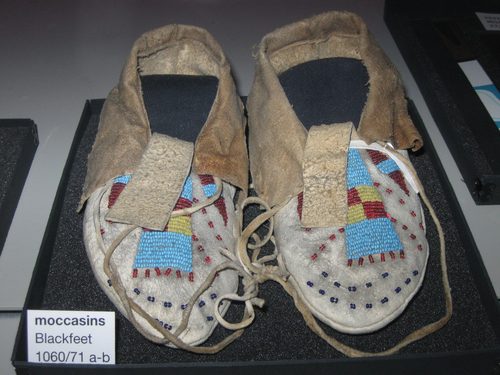
Beadwork is the art of applying small beads—glass seed beads, shell, bone, or stone—to a surface or into a standalone fabric of interlocking beads. Two broad approaches exist: loom weaving, where beads sit between parallel warp threads to form straight-edged woven strips, and off-loom stitching, including lazy stitch, peyote stitch, and appliqué, where a needle and thread sew beads directly onto hide or cloth or link them into a flexible mesh with no backing at all. Sinew was the traditional sewing thread among many Indigenous North American beadworkers, later joined by cotton and nylon thread as glass trade beads spread globally from the 16th century onward. Beadwork appears on moccasins, garments, belts, bags, jewelry, and regalia, with pattern styles—geometric lane designs, floral vines, concentric color rings—varying by region and tradition, each built from a grid of tiny, uniformly sized beads.
What defines the medium
Loom versus off-loom technique
Loom-woven beadwork produces flat, straight-edged strips ideal for belts and bands, while off-loom stitches like peyote and brick stitch create flexible, shapeable beadwork that can curve around a form or stand alone without backing.
Lazy stitch on hide
Rows of beads are strung and sewn down at both ends in a slight arc directly onto tanned hide, a fast technique historically used to fill large areas of garments and moccasins with dense color.
Uniform bead sizing
Seed beads are sorted by aught number, a sizing system where a higher number means a smaller bead, and consistent sizing within a piece keeps rows even and patterns reading clearly at a distance.
Backing material choice
Beadwork is sewn onto hide, canvas, or cloth depending on the tradition and end use, with the backing chosen for flexibility, durability, and how well it takes a needle without tearing under tension.
Thread selection
Traditional sinew, a twisted animal tendon fiber, gives strong, slightly stretchy stitching for hide work, while modern beadworkers often use waxed nylon or cotton thread for its consistency and easy availability.
Pattern grids and symmetry
Most beadwork is planned on a graphed grid before stitching begins, mapping color changes row by row so geometric or floral motifs repeat accurately and stay symmetrical across the finished piece.
Materials decoder
The toolkit of beadwork
- seed bead
- → a tiny, uniform glass bead sized by aught number, the basic unit of most beadwork patterns
- lazy stitch
- → rows of beads sewn down in a slight arc at both ends, a fast technique for filling large hide surfaces
- peyote stitch
- → an off-loom technique that interlocks beads into a flexible woven fabric without any backing
- bead loom
- → a small frame holding parallel warp threads used to weave flat, straight-edged beaded bands
- sinew thread
- → traditional twisted animal tendon fiber used to sew beads securely onto tanned hide
- geometric lane pattern
- → repeating diamond and triangle motifs arranged in bands, characteristic of Plains beadwork design
The story
Beads count among humanity's oldest ornaments, with shell beads from African sites dated to roughly 70,000 years ago. Glass beadmaking centered in Venice from the 15th century supplied trade beads that circulated globally through colonial-era trade networks, reaching Indigenous peoples across the Americas and Africa. Among Plains and Woodlands nations of North America, glass seed beads increasingly replaced porcupine quillwork through the 19th century, applied with lazy stitch and appliqué to hide garments, moccasins, and regalia. In southern and eastern Africa, Zulu, Ndebele, and Maasai communities developed distinct color-coded beadwork traditions using imported glass beads for garments and personal adornment. In 19th-century Europe and America, beaded reticules and embroidered accessories became a popular domestic parlor craft, often worked in fine glass beads on canvas.
Masterpieces of the medium
| Work | Artist | Date | Why it matters |
|---|---|---|---|
| Beaded Hide Shirt | Unknown | 19th century | Plains lazy-stitch beadwork in floral and geometric design |
| Zulu Beaded Apron | Unknown | late 19th century | southern African beadwork using a color-coded pattern system |
| Victorian Beaded Reticule | Unknown | c. 1860s | European beaded evening bag with a fine floral motif on canvas |
| Beaded Moccasins | Unknown | 19th century | Woodlands beadwork with a floral vine pattern on hide |
| Maasai Beaded Collar | Unknown | 20th century | East African beaded ornament built from concentric color rings |
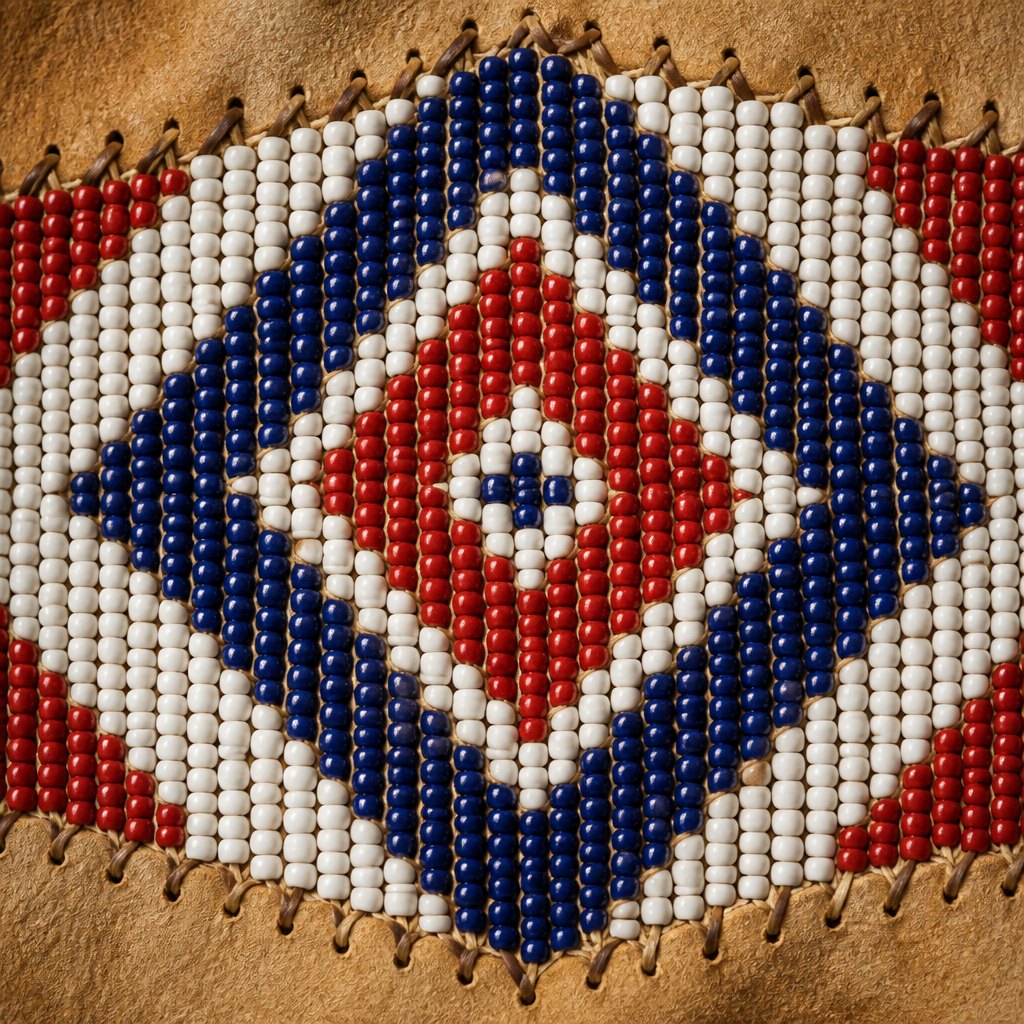 AI-generated
Try the medium
Try beadwork with AI
This example was generated from a prompt like: “Close-up of a beaded hide panel with a geometric diamond pattern in red, white, and deep blue seed beads, visible sinew stitching between rows, warm even studio light showing individual bead facets.”
Open the Beadwork Art Style generator →The medium today
Beadwork remains a living tradition among many Indigenous communities, worn as powwow regalia and ceremonial dress and taught across generations. African beadwork continues as both cultural adornment and a widely traded craft form sold as jewelry and accessories. Hobbyist beadwork has grown through shared peyote and brick-stitch patterns, with seed beads now mass-produced mainly in the Czech Republic and Japan and sold in a huge range of finishes and sizes.
Compose your own
Start with a beading needle, thin nylon or waxed cotton thread, and a bag of uniform seed beads in one aught size. Choose a simple off-loom stitch like brick stitch or peyote stitch and follow a printed graph pattern, adding one row of beads at a time and checking tension so the fabric lies flat. For hide appliqué, practice lazy stitch on a scrap of leather or thick fabric, stringing a short run of beads and tacking it down at both ends. Work in good light with a bead mat to keep loose beads from rolling away.
Frequently asked questions
What's the difference between loom and off-loom beadwork?
Loom beadwork weaves beads between fixed warp threads for flat, straight-edged strips, while off-loom stitches like peyote or brick stitch interlock beads directly with thread, producing flexible pieces that can curve or stand without backing.
What beads should a beginner use?
Uniform glass seed beads in a mid-range size, such as size 11, are easiest to start with because their consistent shape keeps stitches even and makes early pattern mistakes easy to spot and fix.
How are seed beads sized?
Seed beads are measured by aught number, written like 11/0; a higher number means a smaller bead. Sizes commonly range from large size 6 beads down to very fine size 15 beads used for detailed work.
Is beadwork the same as embroidery?
Bead embroidery is one branch of beadwork, stitching beads onto a fabric or hide backing much like thread embroidery. Loom weaving and off-loom stitches like peyote, by contrast, build a self-supporting beaded fabric with no separate backing.