
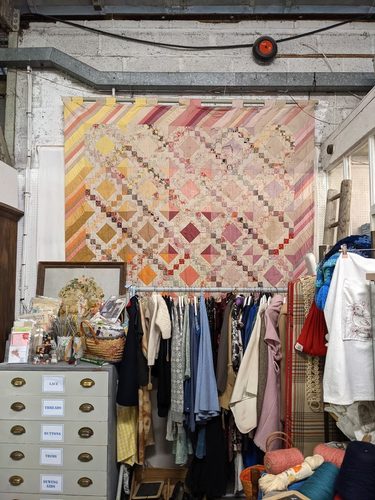
Quilt art is a layered textile made of three parts: a decorative top pieced from cut fabric shapes or appliquéd with fabric motifs, a soft batting layer for warmth and loft, and a plain backing fabric, all held together by rows of hand or machine quilting stitches. Piecing joins small geometric shapes—squares, triangles, hexagons—into blocks that repeat across the surface in patterns like Log Cabin, Flying Geese, or Double Wedding Ring. Appliqué instead layers cut shapes onto a background and stitches their edges down, allowing curved, pictorial designs. Cotton has long been the standard fabric, chosen for its even weave and ease of stitching, though silk and wool crazy quilts use irregular scraps and heavy embroidery. The quilting stitches themselves, worked in parallel lines, cross-hatching, or curved feather patterns, hold the layers together while adding their own texture. Quilts range from utilitarian bedcovers made from worn clothing scraps to elaborate album quilts signed by many hands, and today stand as both domestic craft and recognized gallery art.
What defines the medium
Piecing versus appliqué
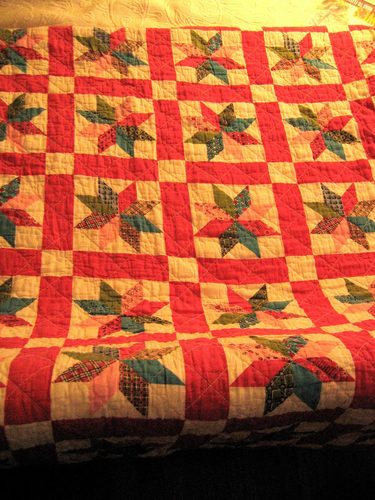
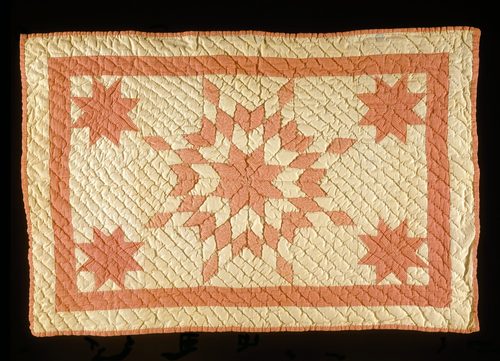
Piecing sews small cut shapes edge to edge into a flat geometric top, while appliqué layers cut motifs onto a background fabric and stitches down their edges. Many quilts combine both techniques within the same top.
The repeating pieced block
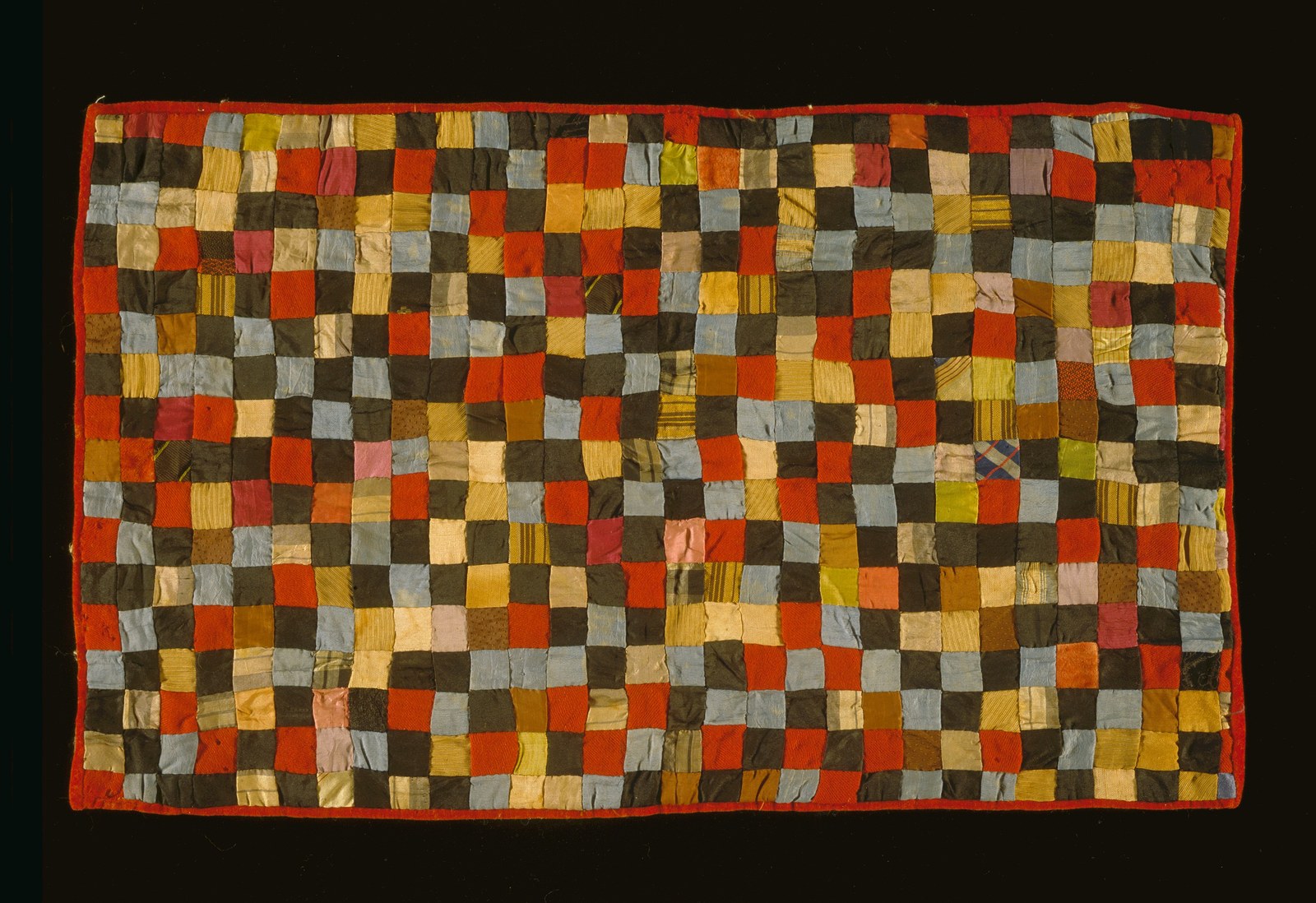
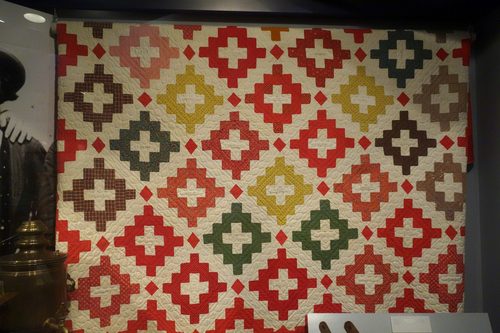
Most pieced quilts are built from a single block pattern, like Log Cabin or Nine Patch, sewn many times in identical fabric and arrangement, then joined edge to edge into rows to form the full quilt top.
Three layers and the quilting stitch
A finished quilt always has a top, a batting layer for loft and warmth, and a backing, held together by stitching that passes through all three. This quilting can follow the pieced pattern or run in independent lines or curves.
Fabric selection and scrap economy
Traditional quiltmakers pieced tops from worn clothing, feed sacks, and dressmaking scraps, giving early quilts an improvised, mixed-fabric look. Modern quilters often buy coordinated fabric lines for a planned color scheme instead.
Borders and sashing
Plain or patterned fabric strips called sashing separate pieced blocks, while wider borders frame the finished top before quilting. Both help unify a design and give the eye a resting place between busy pieced sections.
Signature and provenance
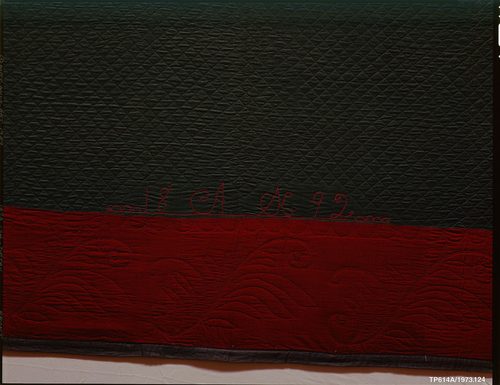
Many quilts, especially album and friendship quilts, carry inked or embroidered names, dates, and inscriptions from multiple makers, turning the finished object into a shared record of a community or family.
Materials decoder
The toolkit of quilt art
- calico/cotton print
- → the standard everyday fabric for piecing, chosen for even weave and easy stitching
- Log Cabin block
- → strips arranged around a central square, one of the most recognized pieced quilt patterns
- hand quilting stitch
- → small, even running stitches passing through all three layers, visible as a textured line
- batting
- → the soft interior layer of cotton, wool, or polyester that gives a quilt its loft and warmth
- template piecing
- → fabric shapes cut from rigid templates for precise, repeatable pieced patterns
- crazy quilt embroidery
- → irregular silk and velvet patches joined with decorative feather or herringbone stitching
The story
Quilting as bedcover construction reaches back centuries, with pieced and appliquéd examples surviving from medieval Europe and colonial America. American quiltmaking flourished through the 18th and 19th centuries as women pieced blocks from dress scraps and feed sacks, gathering at communal quilting bees to finish large frames. Album and Baltimore quilts of the 1840s-1850s featured elaborate appliquéd blocks signed by friends and family. Hawaiian quiltmakers developed bold single-motif appliqué designs from imported cotton in the 19th century. The Victorian era brought crazy quilts, asymmetrical silk and velvet patches embellished with fancy embroidery stitches. Amish communities in Pennsylvania and the Midwest produced geometric quilts in solid, saturated wool from the late 19th century onward. In rural Gee's Bend, Alabama, generations of quilters developed bold, improvisational piecing from work clothes and scraps, gaining wide museum recognition in the early 2000s. Quilt art continues today as both a domestic tradition and a recognized studio art practice.
Masterpieces of the medium
| Work | Artist | Date | Why it matters |
|---|---|---|---|
| Rajah Quilt | Unknown | 1841 | patchwork made by convict women aboard a ship bound for Australia |
| Baltimore Album Quilt | Unknown | c. 1847-1852 | elaborate appliquéd squares signed by multiple contributing makers |
| Housetop pattern quilt, Gee's Bend | Unknown | mid-20th century | bold improvisational piecing from an Alabama quiltmaking community |
| Ku'u Hae Aloha appliqué quilt | Unknown | 19th century | Hawaiian single-motif appliqué design using imported cotton fabric |
| Victorian crazy quilt | Unknown | c. 1880s | asymmetrical silk and velvet patches joined with fancy embroidery stitching |
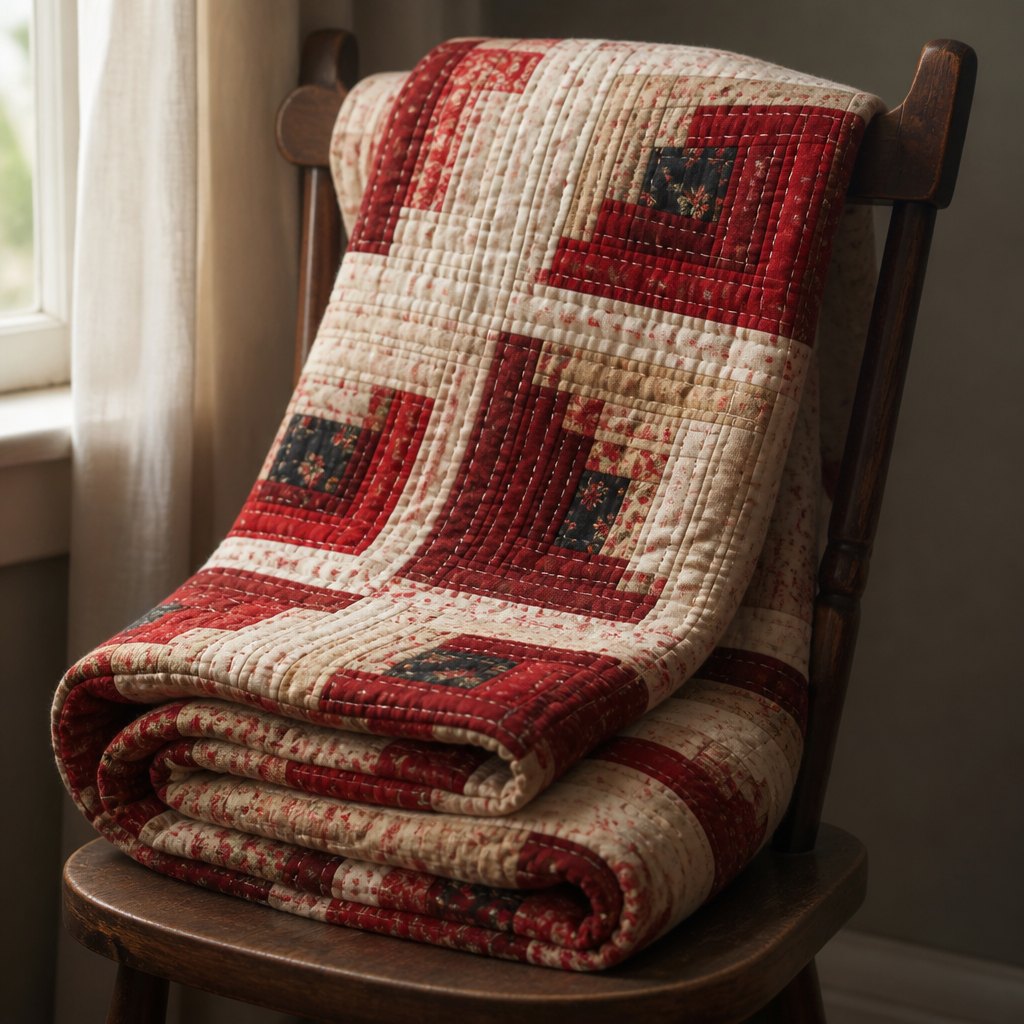 AI-generated
Try the medium
Try quilt art with AI
This example was generated from a prompt like: “A folded patchwork quilt in Log Cabin pattern, red and cream cotton strips pieced around dark centers, hand-quilted stitching visible, draped over a wooden chair in soft window light.”
Open the Quilt Art Style generator →The medium today
Contemporary quilt art spans traditional pieced bedcovers, art quilts made for wall display, and mixed-media works incorporating paint, photo transfer, and unconventional materials. Modern quilting embraces improvisational piecing, bold solid colors, and negative space alongside historic block patterns. Longarm quilting machines let makers stitch elaborate all-over designs quickly, while hand quilting persists among traditionalists. Quilt guilds, retreats, and international quilt shows sustain a large community, and museums now regularly exhibit historic and contemporary quilts as fine art rather than only domestic craft.
Compose your own
Beginners start with a simple pieced pattern like a Nine Patch or Log Cabin, cutting accurate squares or strips with a rotary cutter, ruler, and self-healing mat. Fabric is joined with a consistent quarter-inch seam allowance, pressed flat after each seam, and assembled into blocks before joining into rows. Once the pieced top is complete, it is layered with batting and a backing fabric, basted to prevent shifting, then quilted by hand or machine in straight lines or a simple grid. A walking foot helps feed layers evenly through a home sewing machine. Binding strips finish the raw edges. Learning accurate piecing and consistent pressing matters more at first than pattern complexity, since small errors compound across many repeated blocks.
Frequently asked questions
What's the difference between piecing and appliqué?
Piecing sews cut fabric shapes edge to edge to build a flat pattern, while appliqué stitches cut motifs on top of a background fabric. Piecing suits geometric patterns; appliqué allows curved, pictorial designs like flowers or figures.
What is batting made of?
Batting is the soft interior layer between a quilt's top and backing, typically cotton, wool, polyester, or a blend. The fiber affects warmth, loft, drape, and how the quilting stitches sit on the finished surface.
How long does it take to make a quilt?
Timing varies widely with size and complexity—a simple lap quilt might take a few weekends, while an elaborate hand-pieced and hand-quilted bed-sized piece can take many months of steady work.
What makes a quilt an 'art quilt' rather than a bedcover?
Art quilts are made for wall display rather than use, often using unconventional materials, imagery, or abstract composition, and are judged by the same visual standards applied to painting or fiber sculpture.