
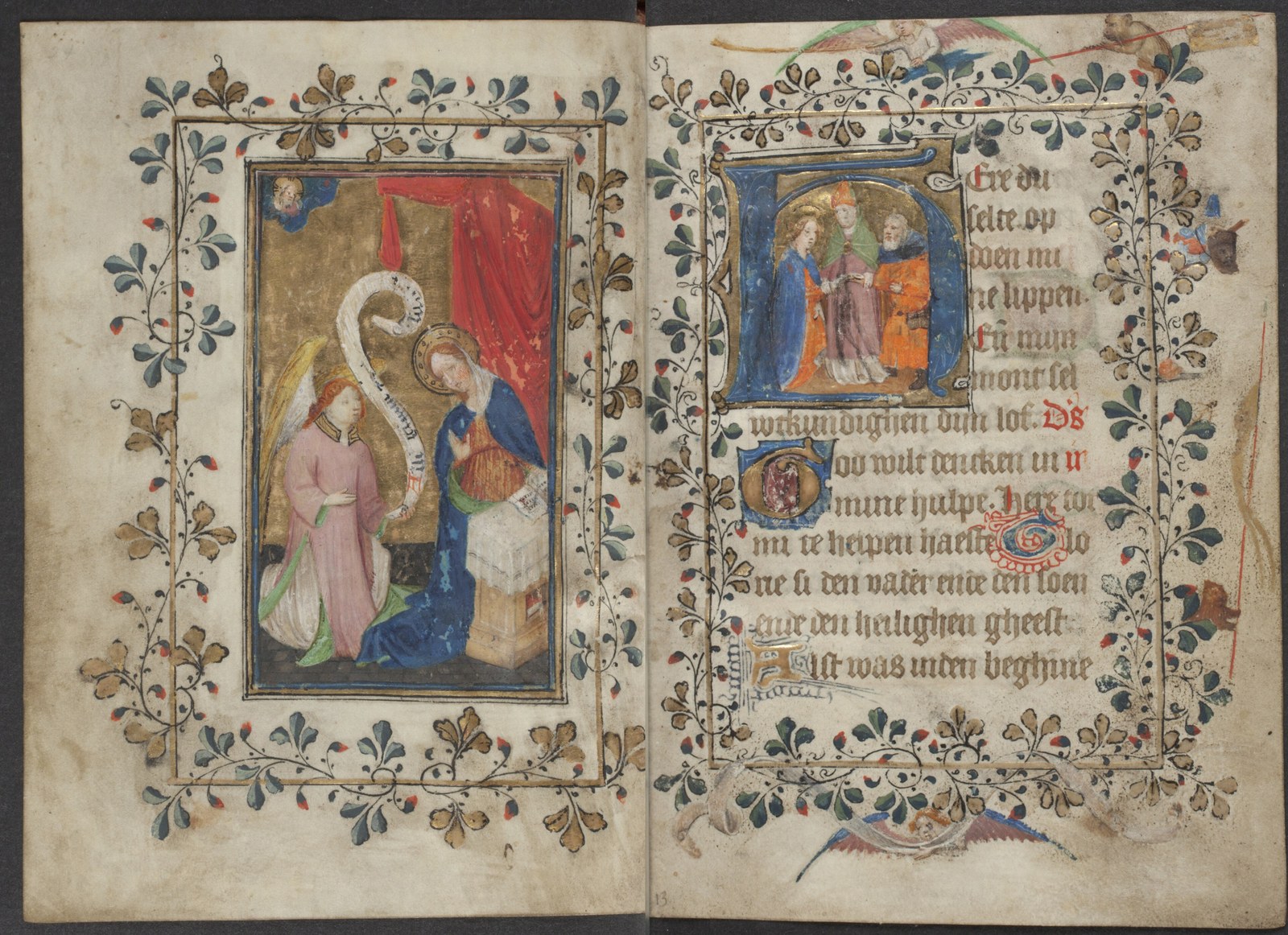
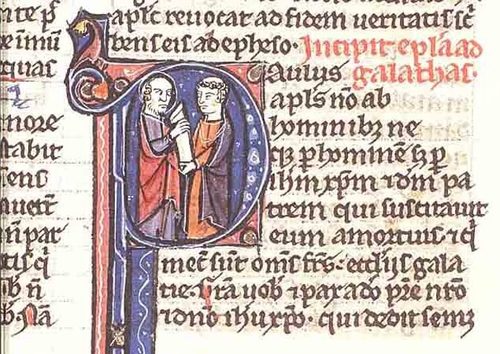
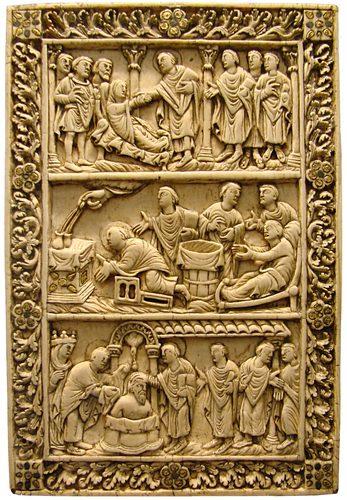
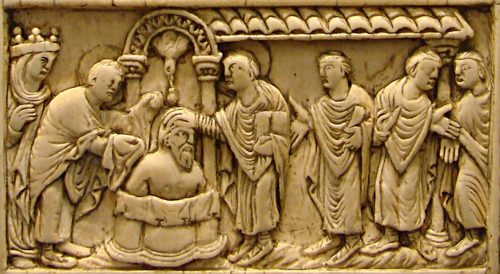
Book arts covers the making of books as physical and visual objects—illuminated manuscripts, hand-bound editions, and artist's books that treat structure and material as part of the work rather than a neutral container for text. Traditional materials include vellum or parchment, later paper, sewn with linen or silk thread through folded sections called signatures, and covered in leather, cloth, or wood boards. Illuminators applied tempera pigment and burnished gold leaf to initials, borders, and full-page miniatures, while scribes ruled lines and wrote text by hand with a quill and iron gall ink before printing existed. Binders sew signatures onto raised cords or tapes, attach boards, and cover the spine and boards in leather or cloth, often finishing with blind or gold tooling pressed into the leather with heated brass tools. Contemporary artist's books extend the form into sculptural and conceptual territory, using unconventional folds, materials, or structures where the book's physical form carries as much meaning as its content.
What defines the medium
Sewing signatures
Pages are folded into small groups called signatures and sewn together through the fold, usually onto raised cords or tapes running across the spine, which is the structural basis of a hand-bound book.
Ruling and layout
Manuscript pages are ruled with faint guide lines, using a stylus, lead, or pricked holes, before any text is written, keeping columns and line spacing consistent across a page written entirely by hand.
Illumination and gilding
Gold leaf is laid over a raised gesso base and burnished to a mirror shine before pigment is added, so gilded letters and borders in a manuscript catch light differently from the flat painted areas around them.
Boards and covering
Wood or pasteboard boards are attached to the sewn spine structure, then covered in leather, cloth, or paper, wrapped and pasted around the edges so the covering material conceals the raw board beneath.
Tooling decoration
Heated brass tools are pressed into dampened leather to create blind or gold-leafed impressions, building repeated patterns or lettering across a cover through many individual small stampings.
Concept-driven structure
Artist's books, unlike traditional bindings, often let a book's physical form—unusual folds, cuts, or materials—carry meaning directly, treating the codex or fold structure itself as part of the artistic statement.
Materials decoder
The toolkit of book arts
- vellum or parchment
- → prepared animal skin used as a writing surface before paper became common, smoother and more durable than early paper, still used for fine bindings.
- burnished gold leaf
- → wafer-thin gold laid over raised gesso and polished to a mirror shine, the signature material of illuminated manuscript initials and borders.
- iron gall ink
- → a dark brown-black ink made from tannin and iron salts, the standard writing ink of medieval and early modern manuscripts, often fading to warm brown with age.
- sewn signatures on raised cords
- → visible ridges across a book's spine where folded page groups are sewn onto cords, the structural skeleton beneath a hand-bound cover.
- tooled leather cover
- → repeated stamped patterns pressed into leather with heated brass tools, sometimes filled with gold leaf, marking a fine hand binding.
- bone folder
- → a smooth, flat tool of bone or plastic used to crease folds and press down glued paper cleanly without leaving tool marks.
The story
Book arts trace back to hand-copied manuscripts on papyrus, parchment, and vellum produced in monastic scriptoria across medieval Europe, the Islamic world, and Asia. Illuminated gospel books such as the Lindisfarne Gospels, made around 700 in northern England, and the Book of Kells, made around 800, show elaborate painted initials and interlace borders alongside handwritten text. Court workshops later produced luxury manuscripts like the Très Riches Heures du Duc de Berry in the early fifteenth century. Johannes Gutenberg's movable-type printing press, developed in Mainz around 1450, gradually shifted book production from hand copying to print, though hand illumination continued on early printed books. Hand bookbinding remained a specialized craft through the following centuries, refined by guild binders in leather with tooled decoration. The nineteenth-century private press movement, including William Morris's Kelmscott Press founded in 1891, revived fine hand printing and binding in reaction to industrial book production, influencing the artist's book movement that emerged through the twentieth century.
Masterpieces of the medium
| Work | Artist | Date | Why it matters |
|---|---|---|---|
| Book of Kells | Unknown | c. 800 | illuminated gospel manuscript with intricate interlace and initials |
| Lindisfarne Gospels | Unknown | c. 700 | early illuminated gospel book from northern England |
| Très Riches Heures du Duc de Berry | Limbourg brothers | c. 1412-1416 | illuminated book of hours with detailed calendar scenes |
| Gutenberg Bible | Johannes Gutenberg | 1455 | first major European book printed with movable type |
| Kelmscott Chaucer | William Morris | 1896 | private press edition with custom type and woodcut borders |
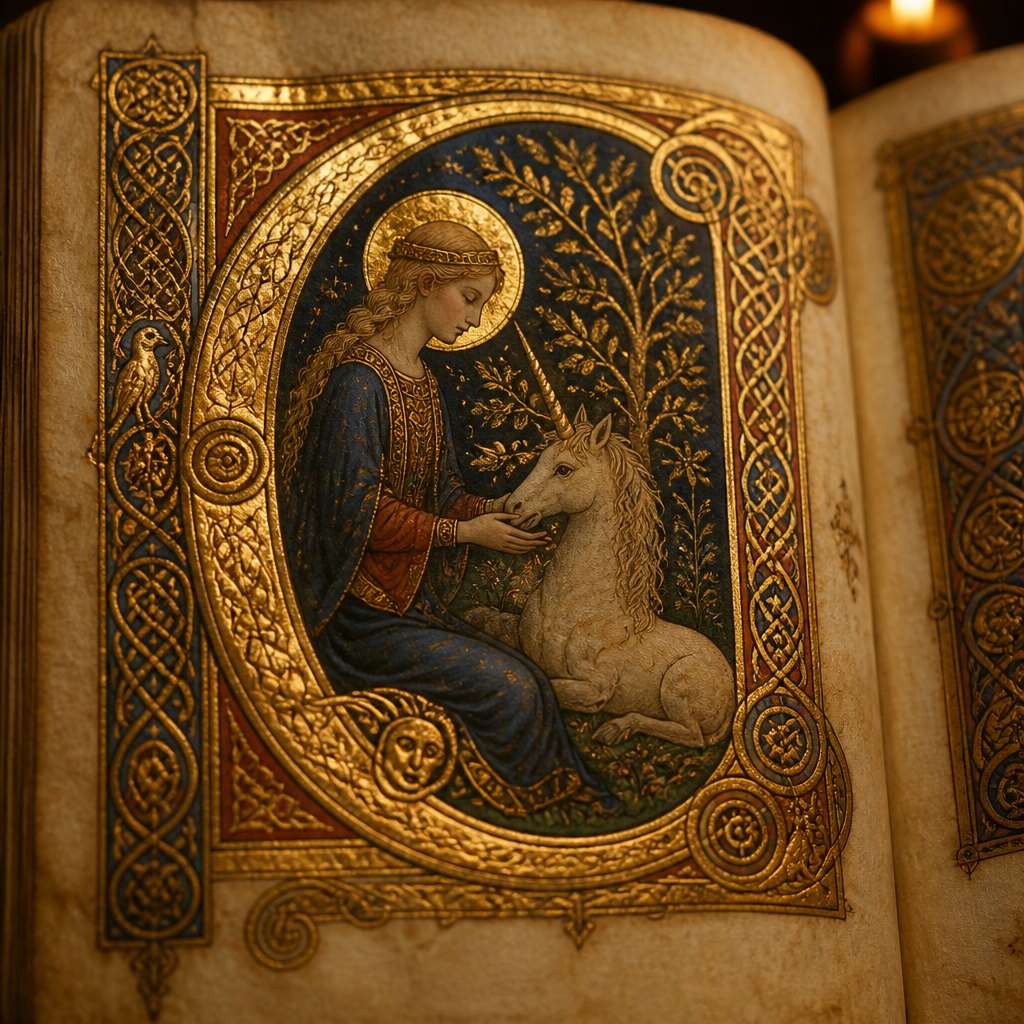 AI-generated
Try the medium
Try book arts with AI
This example was generated from a prompt like: “An open illuminated manuscript page with gold leaf initials, intricate interlace border patterns, dark iron-gall script text, aged cream vellum surface, warm candlelit lighting, close macro detail of the gilded decoration.”
Open the Book Arts Art Style generator →The medium today
Book arts today spans conservation and hand binding of historic manuscripts, small private presses producing letterpress-printed limited editions, and artist's books held in university and museum special collections. Papermaking, calligraphy, and traditional gilding are taught in dedicated book arts centers and workshops alongside digital printing and binding methods. Contemporary artist's books often experiment with unconventional structures, folded sculptural forms, or unusual materials, while facsimile editions and digitized manuscript collections have made historic illuminated books newly accessible for study without physical handling.
Compose your own
Beginners usually start with simple pamphlet stitching—folding a few sheets into a signature and sewing through the fold with a needle and waxed thread along three or four holes. From there, a basic case binding introduces cutting boards, gluing endpapers, and covering with paper or cloth using a bone folder to crease clean edges. Learning to fold signatures accurately and keep glue thin and even prevents warping. Calligraphy and illumination can be practiced separately with a broad-edge pen, gouache, and basic gilding size before combining them with binding. Studying facsimiles of historic manuscripts or visiting a special collections library shows how layout, script, and decoration work together on an actual page.
Frequently asked questions
What is the difference between a manuscript and an illuminated manuscript?
Any hand-written book is a manuscript; an illuminated manuscript specifically includes painted decoration such as gilded initials, borders, or miniature scenes added by a specialist illuminator alongside the scribe's text.
How is gold leaf applied to a manuscript page?
A raised gesso base is laid where the gold will sit, left to dry slightly tacky, then a thin sheet of gold leaf is pressed on and burnished with a smooth stone or tool until it lies flat and mirror-bright.
What holds a hand-bound book together?
Folded page groups called signatures are sewn through their folds onto cords or tapes running across the spine; the sewn structure, not the glue alone, carries the weight and flexing of an opened book.
What is an artist's book?
An artist's book is a work where the physical book form—its folds, binding, materials, or structure—is itself part of the artistic content, rather than a neutral container for separately created text or images.