

Furniture design is the practice of shaping functional objects—chairs, tables, cabinets, beds—so that structure, material, and form work together as a single aesthetic statement. Designers work in wood, metal, plastic, glass, and upholstery textile, choosing joinery and construction methods that suit both the material's properties and the object's intended style. A chair might rely on hand-cut mortise-and-tenon joints and carved cabriole legs in a period revival piece, or on steam-bent plywood and welded tubular steel in a modernist one. Drawings, scale models, and full-size prototypes precede finished pieces, especially where a design will go into repeated production rather than remain a single studio object. Upholstered forms add padding, webbing, and fabric or leather over a wood or metal frame. Across eras the defining look shifts with available materials and philosophy—ornate carving and marquetry in earlier centuries, bent wood and tubular steel under twentieth-century modernism, molded plastic and CNC-cut panels more recently.
What defines the medium
Joinery as structure
Traditional furniture relies on mechanical joints—mortise-and-tenon, dovetail, dowel—cut so the wood's own shape locks pieces together, often reinforced with glue rather than depending on it alone for strength.
Form follows material
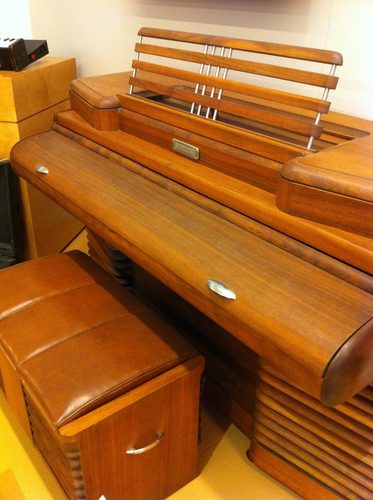
Steam-bent wood, molded plywood, and welded tubular steel each dictate different silhouettes; twentieth-century modernist designers made the visible logic of a material's bending or welding part of the finished look.
Working drawings and prototypes
Furniture is planned through scale drawings and full-size mockups before final construction, letting a designer test proportion, joint placement, and comfort before committing to expensive material and repeated production runs.
Period ornament vocabularies
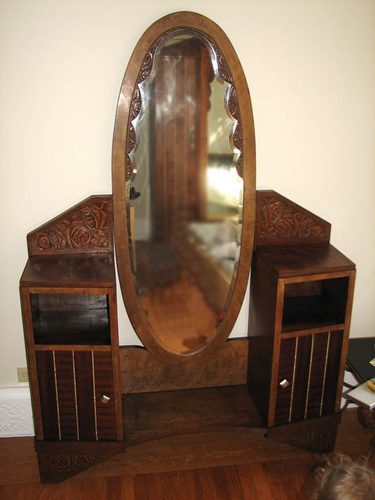
Historic styles carry recognizable ornament sets—rococo scrollwork and cabriole legs, neoclassical fluting and inlay, Art Deco geometric veneer—so a trained eye can date a piece from its carved or applied decoration alone.
Upholstery construction
Seating built for comfort layers webbing or springs, padding, and fabric or leather over a wood or metal frame, with the visible stitching, tufting, and piping forming part of the design as much as the frame beneath.
One-off versus production design
A designer working for a single client can carve and fit a unique piece by hand, while designs intended for factory production must be engineered for consistent joints and parts that assemble the same way every time.
Materials decoder
The toolkit of furniture design
- mortise-and-tenon joint
- → a peg cut to fit a matching slot, the workhorse joint locking frame members together in traditional wood furniture without visible metal fasteners.
- dovetail joint
- → interlocking trapezoidal fingers cut into drawer or box corners, resisting being pulled apart and often left visible as a mark of hand craftsmanship.
- cabriole leg
- → a curved leg swelling outward at the knee and tapering to a foot, the signature silhouette of rococo and Queen Anne furniture.
- steam-bent wood
- → solid wood softened with steam and bent around a form, producing continuous curved frames without cutting across the grain.
- tubular steel frame
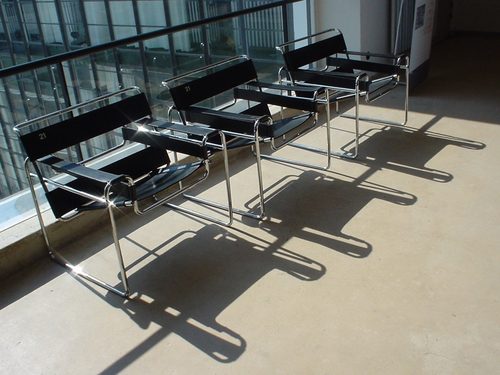
- → chromed or painted metal tube bent into a chair or table frame, the defining material of Bauhaus-era modernist furniture.
- caning or rattan weave
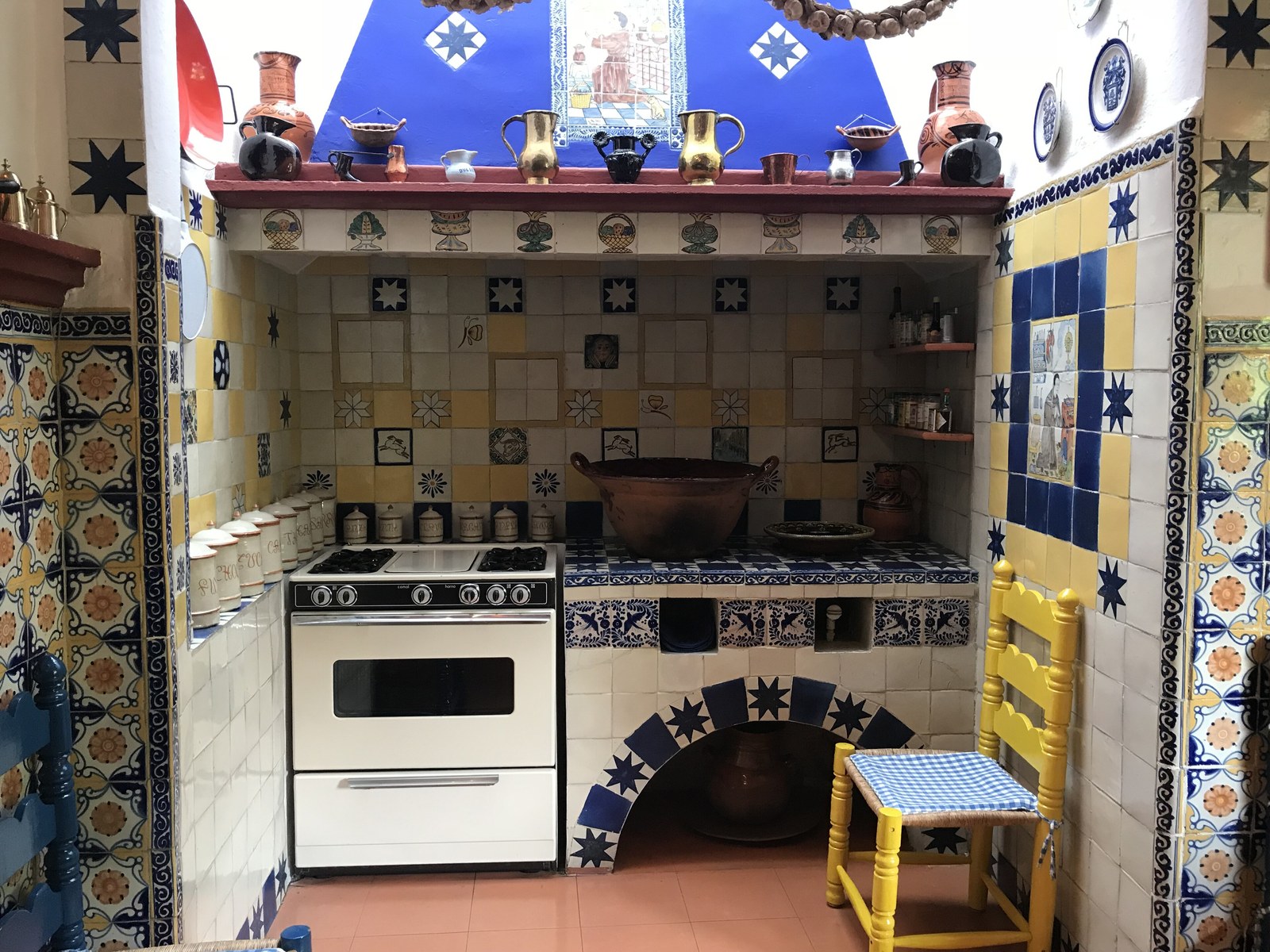
- → a woven mesh of split cane or rattan set into a wood frame for seats and backs, adding lightness and visible open pattern.
The story
Furniture takes recognizable form as early as ancient Egypt, where carpenters built folding stools and carved chairs for elite households, and continues through the Greek klismos chair's curved legs and Roman couches. Medieval European furniture was heavy joined oak, while the Renaissance introduced marquetry and classical proportion into cabinets and chairs. Eighteenth-century England produced named design vocabularies through pattern books—Thomas Chippendale's rococo-influenced forms, followed by Hepplewhite and Sheraton's neoclassical lines. Michael Thonet's 1859 steam-bent beechwood No. 14 chair introduced mass-produced furniture manufacturing. The early twentieth century brought the Arts and Crafts reaction against industrial ornament, followed by Bauhaus designers who paired tubular steel with function-first minimalism in the 1920s. Art Deco furniture layered exotic veneers and geometric form in the same decade. Mid-century modern design after the Second World War popularized molded plywood and plastic shell chairs for mass production.
Masterpieces of the medium
| Work | Artist | Date | Why it matters |
|---|---|---|---|
| Klismos chair | Unknown | 5th century BCE | ancient Greek chair form with distinctive curved outward-splayed legs |
| Ribband-Back chair | Thomas Chippendale | 1754 | rococo-influenced chair from the pattern book The Director |
| No. 14 chair | Michael Thonet | 1859 | steam-bent beechwood chair produced by early mass manufacturing |
| Fauteuil armchair | Émile-Jacques Ruhlmann | 1920s | Art Deco armchair in fine veneer with restrained geometric lines |
| Chiavari chair | Unknown | 19th century | lightweight Italian ladder-back chair still produced by regional workshops |
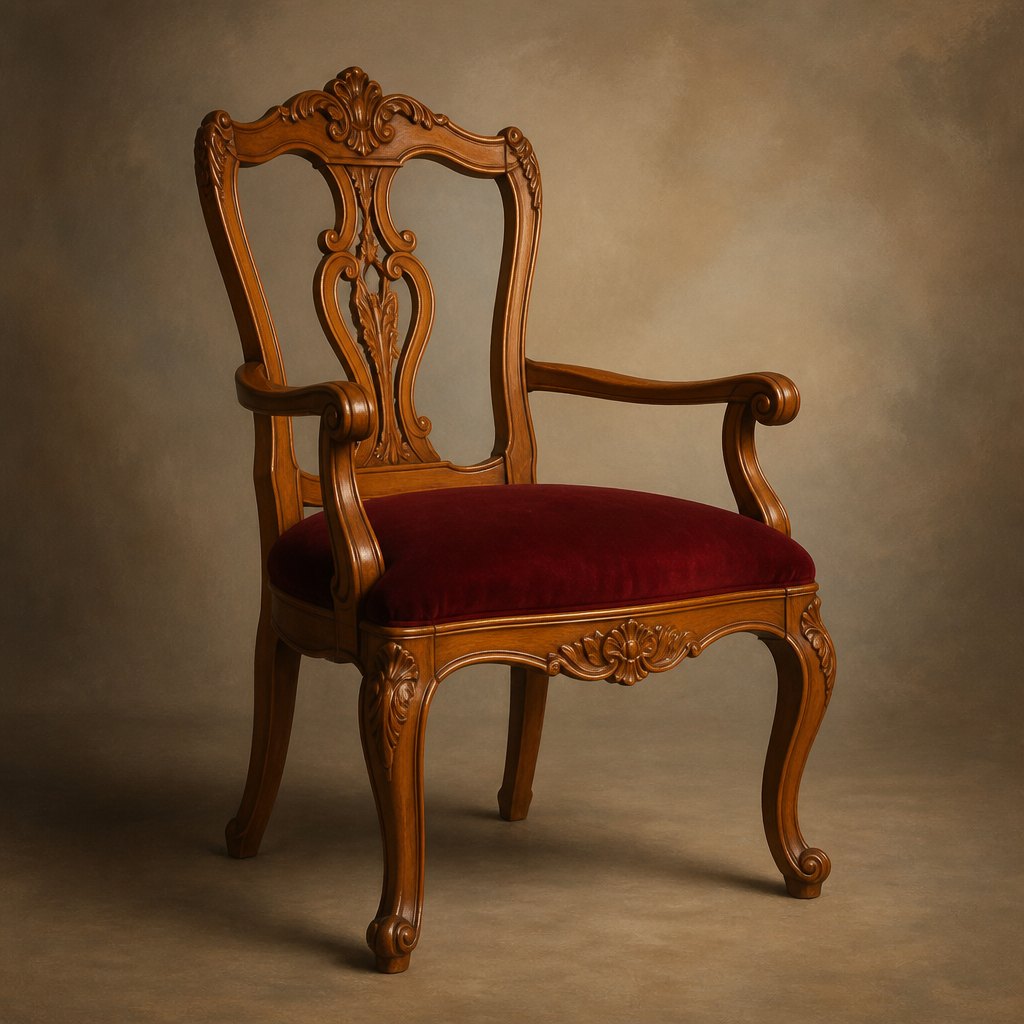 AI-generated
Try the medium
Try furniture design with AI
This example was generated from a prompt like: “A wooden armchair with gracefully curved cabriole legs and hand-carved scrollwork, warm honey-toned finish, upholstered seat in deep burgundy fabric, photographed in a softly lit studio against a plain background.”
Open the Furniture Design Style generator →The medium today
Furniture design today spans mass-produced flat-pack pieces engineered for shipping and assembly, studio furniture made by individual craftspeople in small runs, and digitally fabricated work cut or 3D printed from CAD files. Sustainable material sourcing, reclaimed wood, and modular systems that adapt to smaller living spaces have become common priorities. Museums and design schools continue to study historic joinery and period styles alongside new manufacturing methods, and vintage mid-century and modernist pieces remain widely collected and reproduced under license.
Compose your own
Beginners in furniture design typically start with a small, simple project—a stool or side table—learning basic joinery like screwed butt joints or dowels before attempting mortise-and-tenon or dovetail work by hand or with a router jig. Sketching to scale and building a cardboard or plywood mockup helps test proportion and stability before cutting final material. Basic tools include a saw, chisel, drill, and clamps, with sandpaper and a wood finish like oil or varnish for the final surface. Studying period styles and visiting furniture collections builds a vocabulary of leg shapes, joints, and proportions. Many designers move from hand tools to CAD software and CNC cutting once comfortable with the basic structural logic that any successful piece of furniture must support real weight and use.
Frequently asked questions
What joint is strongest for furniture?
Mortise-and-tenon and dovetail joints are considered the strongest traditional wood joints because they lock mechanically rather than relying only on glue, resisting both pulling and racking forces over decades of use.
What is the difference between studio furniture and mass-produced furniture?
Studio furniture is designed and built individually or in small runs by a single maker, while mass-produced furniture is engineered for identical parts, flat-pack shipping, and assembly by unskilled labor at scale.
Why is tubular steel associated with modernist furniture?
Bauhaus-era designers in the 1920s used bent tubular steel because it was industrially produced, lightweight, and allowed cantilevered forms impossible in solid wood, matching the movement's function-first philosophy.
How can I tell what era a piece of furniture is from?
Leg shape, joinery visible at corners, ornament style, and material are strong clues—cabriole legs suggest rococo, tapered fluted legs suggest neoclassical, tubular steel or molded plywood suggest twentieth-century modernism.