
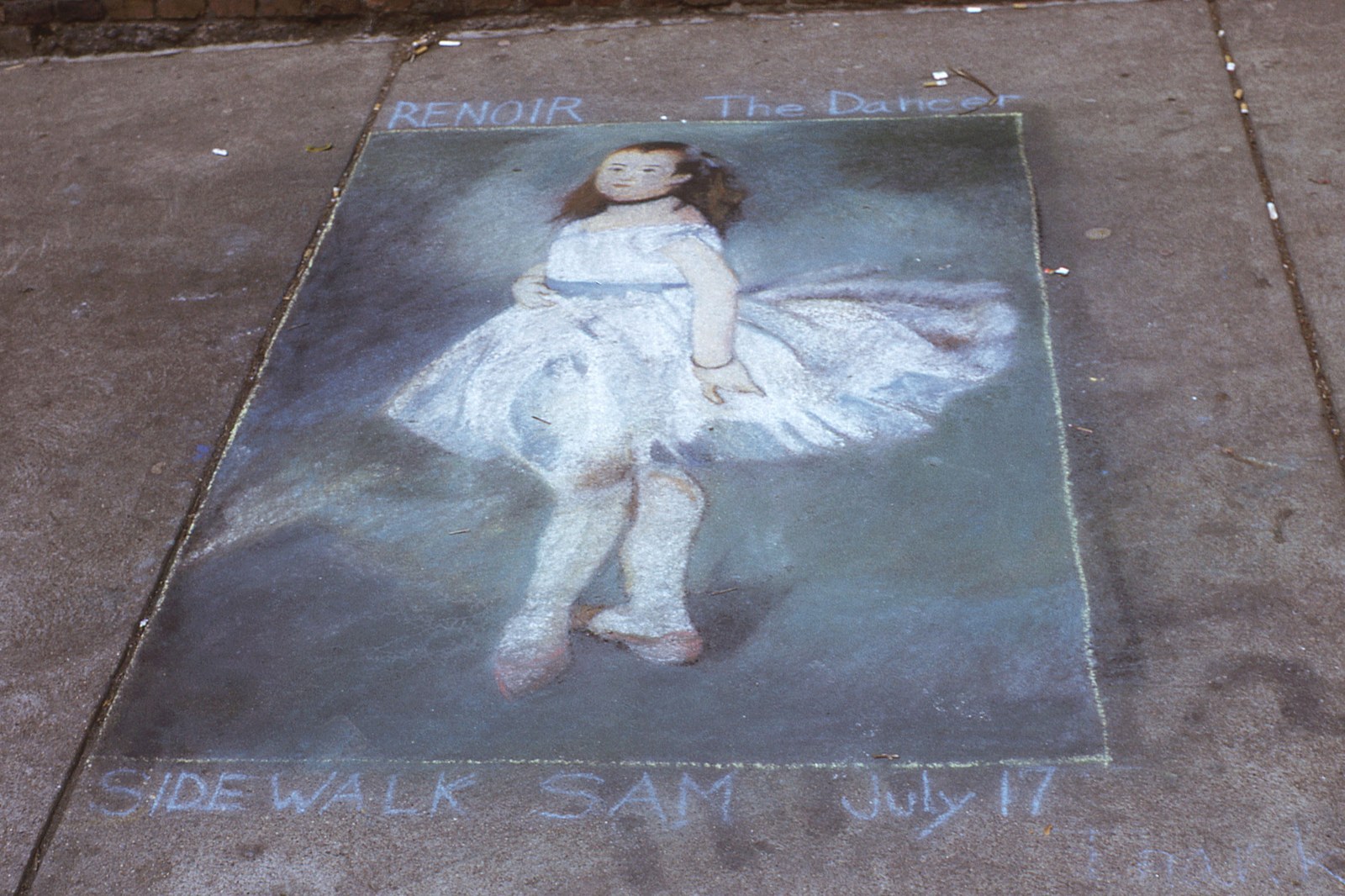
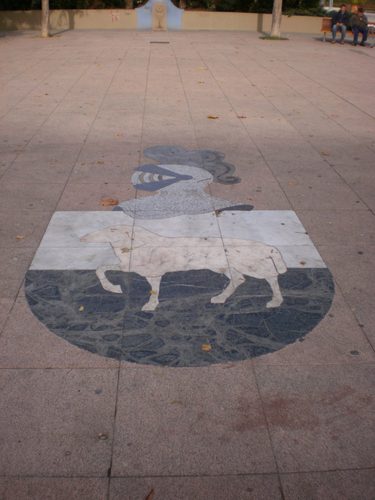
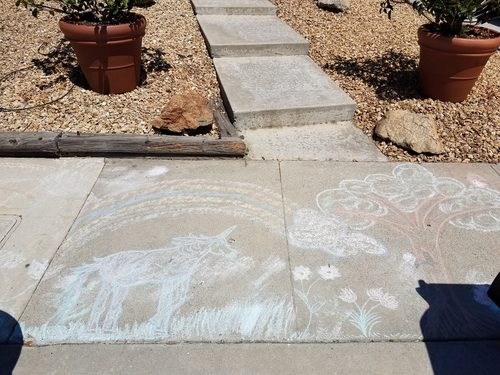
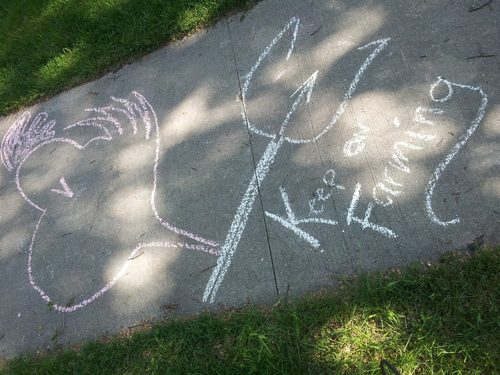
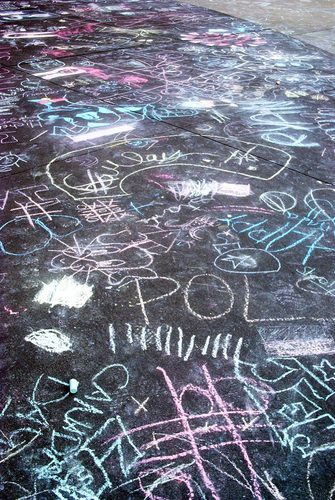
Chalk art is drawing or large-scale image-making done with sticks of compressed pigment—traditional dustless chalk, pastel chalk, or oil pastel—applied directly onto pavement, sidewalks, chalkboards, or paper. The medium is defined by its powdery pigment: fingers, sponges, or blending stumps smear chalk into soft gradients, while the side of a stick lays down broad color fields and the tip gives crisp line work. Street or pavement chalk art is typically drawn at large scale directly on asphalt or concrete, often as a temporary public performance meant to wash away with rain. A branch called 3D or anamorphic chalk art uses forced perspective and distorted proportions so the image only reads correctly as a three-dimensional illusion when photographed from one specific angle. Chalk's softness makes it fast to apply and blend but fragile and smudge-prone, requiring careful handling, crouched posture for pavement work, and sometimes a fixative spray to slow fading.
What defines the medium
Working at ground level
Pavement chalk artists kneel or crouch directly on the surface for hours, working section by section since the whole image often can't be judged from standing height until the piece is finished.
Blending with hand and tool
Fingers, rags, sponges, or blending stumps smear chalk pigment into soft gradients; bare-handed blending is common and leaves visible smudge textures characteristic of the medium.
Anamorphic distortion for 3D effect
Artists stretch and skew proportions using a grid or projected outline so the image compresses correctly only when viewed through a camera lens from one marked spot, creating a depth illusion.
Temporary and site-specific
Most pavement chalk art is meant to be temporary, weathering away with rain and foot traffic within days, and is documented mainly through photography and video rather than preserved as an object.
Underdrawing with grids
Large compositions start with a light grid or projected outline scaled up from a small reference sketch, keeping proportions correct across a much bigger surface than the original drawing.
Layering light to dark
Chalk is built from light base tones up to darker shadow layers, since dark chalk is difficult to lighten once it has been pressed into the porous texture of pavement or paper.
Materials decoder
The toolkit of chalk art
- chalk stick
- → a compressed pigment stick, softer and more powdery than pastel, laid down broadly with the side or finely with the tip
- pavement grid lines
- → faint construction lines marking proportions for a large street image, visible before color fills them in
- anamorphic distortion
- → deliberately stretched, skewed shapes that only resolve into a readable 3D image from one specific camera angle
- hand-blended smudge
- → soft, powdery gradients created by smearing chalk pigment with fingers or a rag rather than a blending tool
- fixative spray sheen
- → a light matte coating sometimes applied to finished chalk work to slow smudging and fading
- crouched working posture
- → the ground-level, physically demanding stance visible in process photos of pavement chalk artists at work
The story
Street chalk drawing traces to Italian 'madonnari,' itinerant artists who from at least the sixteenth century drew devotional images, often of the Madonna, in chalk on pavement outside churches and festivals in exchange for donations. The tradition nearly disappeared by the early twentieth century but was revived through Italian festivals, notably the Grazie di Curtatone chalk painting competition held annually near Mantua since 1972, credited with restarting interest in the craft. Pavement chalk festivals spread internationally from the late twentieth century, including the Sarasota Chalk Festival, founded in 2007 in Florida. Anamorphic 3D chalk art, using forced perspective to create illusions of depth or collapsing pavement, became a popular festival attraction and internet phenomenon from the 2000s onward, drawing crowds to watch large street images take shape over a single day or weekend.
Masterpieces of the medium
| Work | Artist | Date | Why it matters |
|---|---|---|---|
| Madonnari street paintings | Unknown | 16th century-present | traveling Italian street painters recreate devotional imagery in chalk on pavement outside churches |
| Grazie di Curtatone chalk festival | Unknown | since 1972 | annual Italian competition near Mantua credited with reviving the pavement chalk art tradition |
| Sarasota Chalk Festival | Unknown | since 2007 | large-scale 3D pavement chalk festival held annually in Florida |
| Anamorphic 3D pavement illusions | Unknown | 2000s-present | forced-perspective chalk drawings that appear three-dimensional from one camera angle, popular at street festivals |
| Edinburgh Festival Fringe pavement art | Unknown | 20th century-present | street chalk artists working near festival venues, a long-running informal urban tradition |
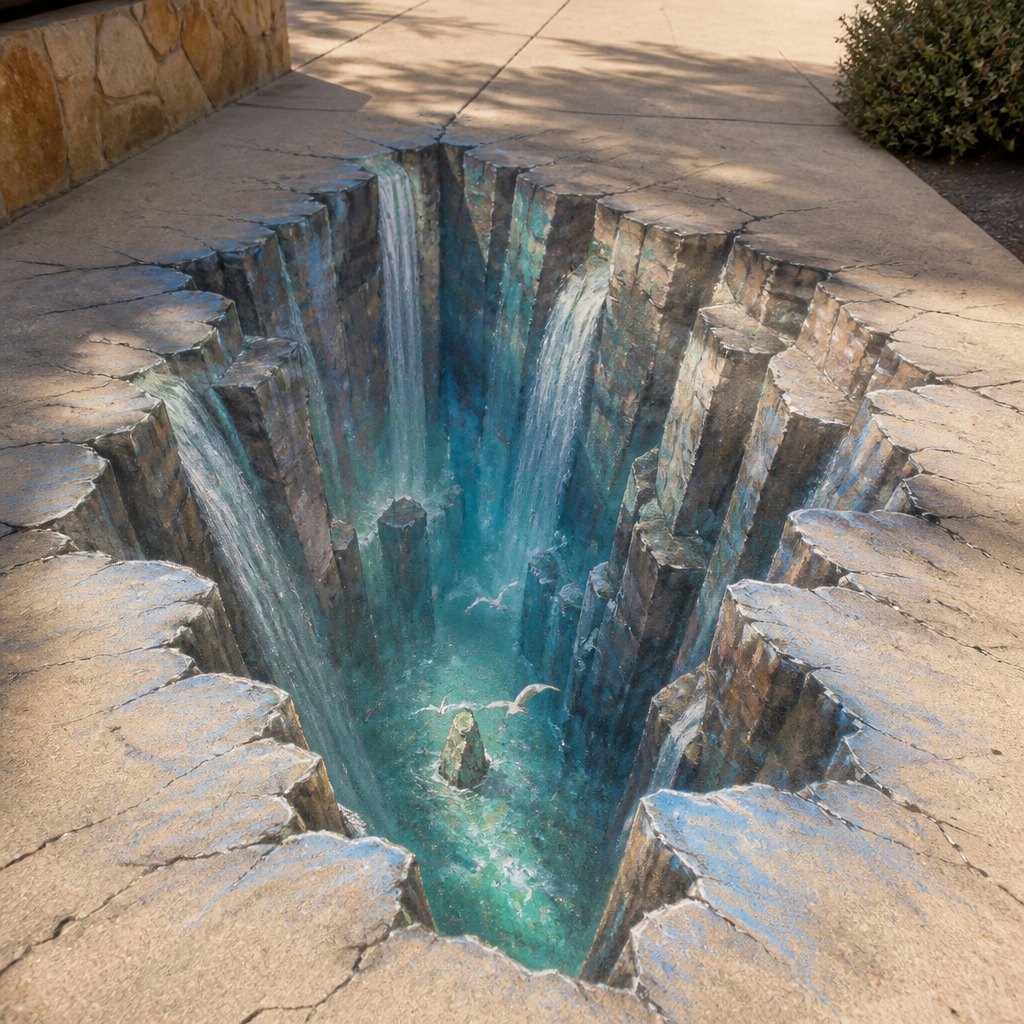 AI-generated
Try the medium
Try chalk art with AI
This example was generated from a prompt like: “A large 3D anamorphic chalk drawing on a sunlit sidewalk showing a deep collapsing chasm illusion, rendered in soft blended pastel chalk with chalky matte texture, viewed from a low angle so the depth illusion reads convincingly.”
Open the Chalk Art Style generator →The medium today
Chalk art today ranges from casual sidewalk doodles to elaborate festival competitions where teams spend a full day building photorealistic or anamorphic 3D scenes across dozens of square meters of pavement. Time-lapse and drone footage of these pieces circulates widely online, since the finished illusion often only reads correctly through a camera lens. Chalk remains popular in community events, school programs, and busking, prized because materials are cheap and the format invites public participation, even though most work washes away within days.
Compose your own
Beginners can start with a basic box of pavement chalk or soft pastel chalk sticks and a stretch of dry sidewalk or driveway. Sketch a simple outline first with a light-colored stick, then block in large color areas before adding detail and shadow. Blend adjacent colors with a finger, rag, or sponge for smooth transitions, and keep a damp cloth nearby to clean hands and correct mistakes. Working in sections from top to bottom avoids smudging finished areas with a dragging hand or knee. For a 3D illusion, study reference photos of anamorphic chalk art, mark a fixed viewing spot, and stretch proportions using a projected grid before adding color.
Frequently asked questions
How long does chalk street art last?
Ordinary pavement chalk art typically survives only until the next rain or heavy foot traffic, sometimes just a day or two outdoors, which is part of its appeal as a temporary, performance-like art form.
What makes 3D chalk art look three-dimensional?
The artist deliberately distorts proportions using forced perspective so the flat drawing only compresses into a convincing 3D illusion when photographed from one specific marked angle and height.
What's the difference between chalk and pastel?
Traditional chalk is a softer, more powdery, less pigmented stick often used for pavement and blackboards, while pastel is more heavily pigmented and used mainly on paper for richer color saturation.
Can chalk art be preserved?
A light fixative spray can slow smudging and fading on chalk drawings, but pavement chalk art is generally meant to be temporary and is preserved mainly through photography rather than the physical piece.