
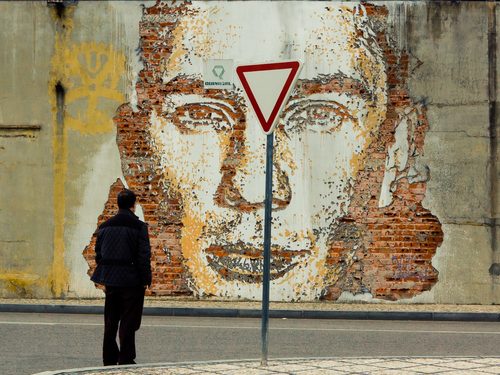

Spray paint art is any image, letterform, or mural made by releasing pigment from a pressurized aerosol can rather than applying it with a brush. The can atomizes paint into a fine mist that a nozzle directs onto a surface, letting an artist build gradients, sharp edges, and large fields of flat color quickly and from a distance. Stencils, masking tape, and cardboard block areas to create hard lines, while freehand cap control shapes clouds, fades, and drips. The medium favors bold outlines, saturated color, and wall-scale ambition, since a can covers ground far faster than a brush. It grew out of graffiti lettering on trains and walls in the 1970s and expanded into large legal murals, stencil art, and studio canvases. Surfaces range from brick and concrete to canvas and metal, usually sealed afterward with a clear coat. Distinctive traits include soft airbrush-like gradients, crisp stencil edges, visible drip marks, and a glossy or matte aerosol sheen unlike brushed paint.
What defines the medium
Cap control and nozzle choice
Different spray caps—skinny, fat, or specialty—change line width and paint flow, letting an artist move from fine detail to wide fills without switching cans. Cap selection is one of the medium's core technical skills.
Layering with stencils and masks
Tape, cardboard, and cut stencils block areas of a surface to create sharp edges and multi-layer color separations, essential for detailed portraits, text, and repeatable multi-color designs across several pieces.
Distance and pressure control
Holding the can close creates thick, drippy lines and saturated color; holding it farther away produces fine, misty gradients. Controlling can distance and spray duration is central to shaping form and light.
Legal walls versus illicit graffiti
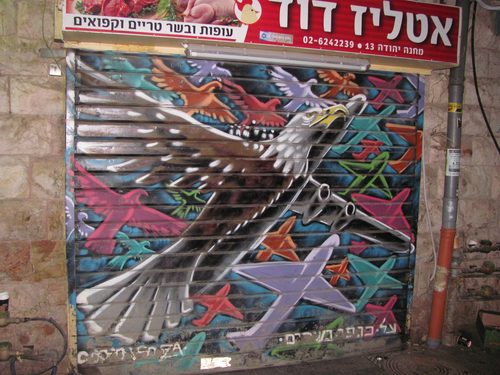
Commissioned murals painted with permission on designated legal walls differ from unauthorized graffiti painted quickly at night to avoid detection, a distinction that historically shaped the medium's stylistic speed.
Piece structure: outline, fill, highlight
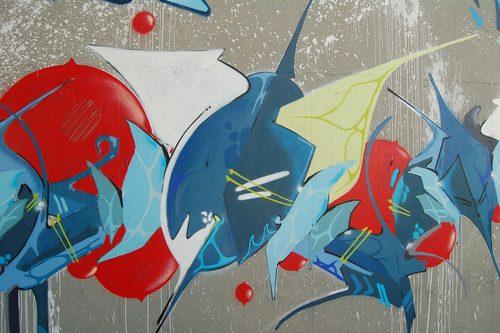
Classic aerosol pieces follow a sequence—sketch or black outline first, flat color fill second, then white or light highlights and shading added last to build volume and dimension into flat lettering or figures.
Sealing the finished surface
Outdoor aerosol murals are often finished with a clear varnish or anti-graffiti coating to protect saturated pigment from UV fading, rain, and pollution, extending the life of an otherwise exposed public artwork.
Materials decoder
The toolkit of spray paint art
- aerosol can
- → the pressurized metal canister that atomizes paint into a fine spray, recognizable by its rattling mixing ball and colored nozzle cap
- skinny cap
- → a narrow spray nozzle producing thin, controlled lines used for outlines, lettering, and fine detail work
- fat cap
- → a wide nozzle that releases a broad, soft-edged spray for filling large areas of color quickly
- stencil
- → a cut cardboard, plastic, or paper template that blocks spray to create sharp, repeatable edges and layered color separations
- drip marks
- → runs of paint trailing down a surface, an intentional or accidental signature texture of fast aerosol application
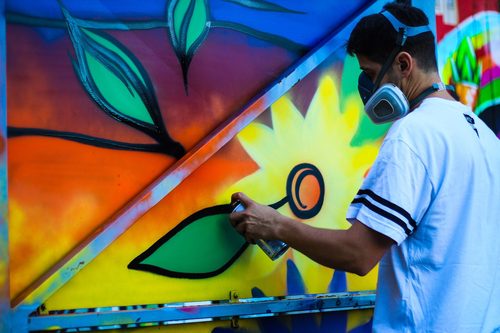
- respirator mask
- → protective equipment worn while spraying, commonly seen in process photos due to strong fume exposure from aerosol work
The story
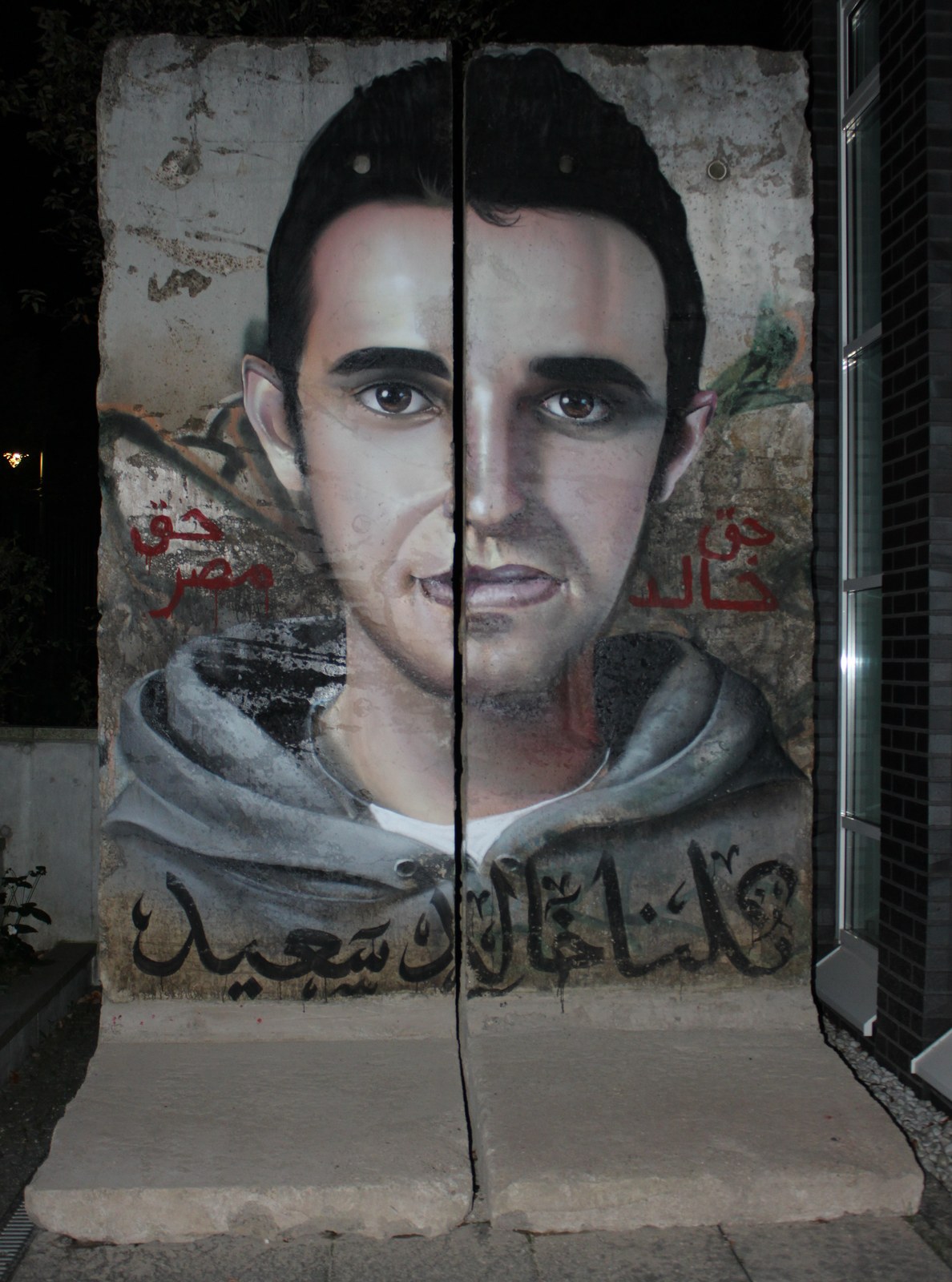
Aerosol spray paint was patented in the United States in 1949, giving artists a fast, portable way to apply pigment. Spray paint art as a recognized form grew from graffiti culture that emerged in Philadelphia and New York City in the late 1960s and early 1970s, when writers used cans to tag subway cars and walls with stylized lettering. By the mid-1970s, whole subway cars were covered in elaborate 'wildstyle' pieces, documented in photographs before trains were repainted or scrapped. The style spread internationally through the 1980s, reaching cities including Berlin, where artists painted murals on the Berlin Wall, later covering the mile-long East Side Gallery after 1989. Stencil-based spray art developed alongside freehand lettering from the 1980s onward. Museums began exhibiting aerosol-based work by the 1980s, and legal mural walls, festivals, and commissioned public murals became common worldwide by the 2000s, moving the medium from illicit subculture toward mainstream public art.
Masterpieces of the medium
| Work | Artist | Date | Why it matters |
|---|---|---|---|
| New York City Subway Wildstyle Pieces | Unknown | 1970s-1980s | whole subway cars covered in elaborate aerosol lettering, documented through photography before trains were repainted |
| Berlin Wall East Side Gallery | Unknown | 1990 | a mile-long stretch of the former Berlin Wall painted with aerosol murals after German reunification |
| Melbourne's Hosier Lane murals | Unknown | 1990s-present | a legal laneway where aerosol murals are continuously repainted and photographed by visitors |
| 5Pointz aerosol art building | Unknown | 1993-2014 | a Queens warehouse covered floor to ceiling in aerosol murals before demolition |
| Bristol's Stokes Croft murals | Unknown | 2000s-present | a UK neighborhood known for large-scale legal aerosol murals along its main streets |
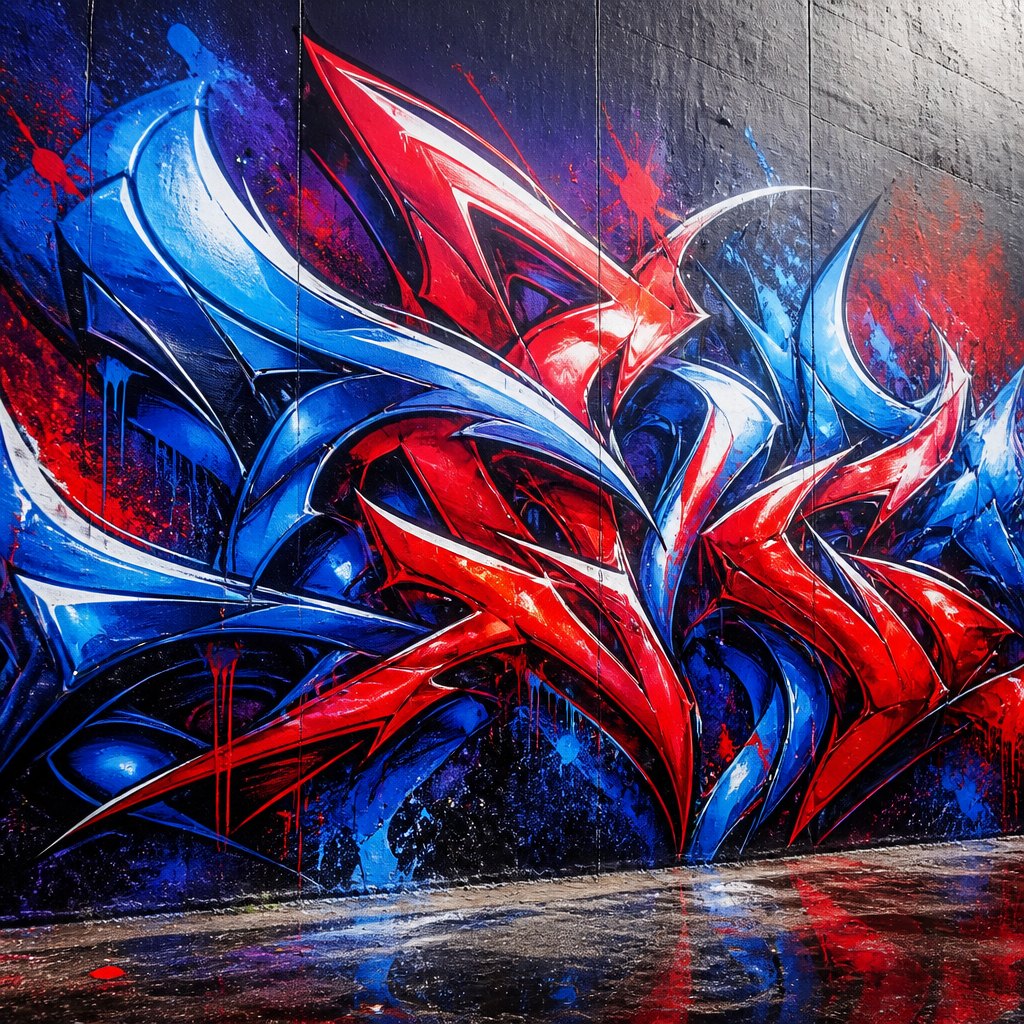 AI-generated
Try the medium
Try spray paint art with AI
This example was generated from a prompt like: “A large urban wall mural painted in bold aerosol spray paint, saturated red and electric blue wildstyle lettering with sharp white highlights, visible drip marks, glossy paint sheen, concrete texture showing through thin areas.”
Open the Spray Paint Art Style generator →The medium today
Spray paint art today spans illegal graffiti, commissioned murals, gallery canvases, and stencil prints sold as editions. Cities worldwide host legal walls and mural festivals where artists paint large-scale public work in daylight with permission. Aerosol techniques have merged with airbrushing, projection-assisted outlining, and hybrid paint-marker detailing. The medium is widely documented on social media, where time-lapse videos of murals being painted draw large audiences. Museums now regularly include aerosol-based street art in exhibitions on contemporary public art.
Compose your own
Beginners start with a few cans in contrasting colors, a respirator mask, gloves, and a well-ventilated or outdoor space, since fumes are strong and flammable. Practice basic cap control first—thin lines with a skinny cap, broad fills with a fat cap—on cardboard or a test wall before attempting a full piece. Sketch the design small on paper, then scale it up in chalk or pencil outline on the surface. Work background to foreground: base fill first, then outline, then highlights and shadow. Simple cardboard stencils help beginners achieve clean edges without freehand confidence. Test spray distance and pressure on scrap material, since fresh cans spatter differently than half-empty ones, and finish outdoor work with a clear sealant coat.
Frequently asked questions
Is spray paint art the same as graffiti?
They overlap but aren't identical—graffiti specifically refers to unauthorized lettering or tags in public space, while spray paint art includes any aerosol-based work, including legal murals, stencils, and canvases.
What surfaces work best for spray paint?
Brick, concrete, wood, and primed canvas all hold aerosol paint well; smooth glossy surfaces need a primer coat first so the spray doesn't bead or peel off later.
Why do spray-painted murals need a clear coat?
Outdoor murals face UV light, rain, and pollution that fade and degrade aerosol pigment; a clear varnish or anti-graffiti coating protects color and eases future cleaning.
What's the difference between stencil art and freehand aerosol art?
Stencil art uses a cut template to block spray and produce sharp, repeatable edges, often for portraits or text, while freehand aerosol art is drawn directly with the can, producing looser lines and gradients.