
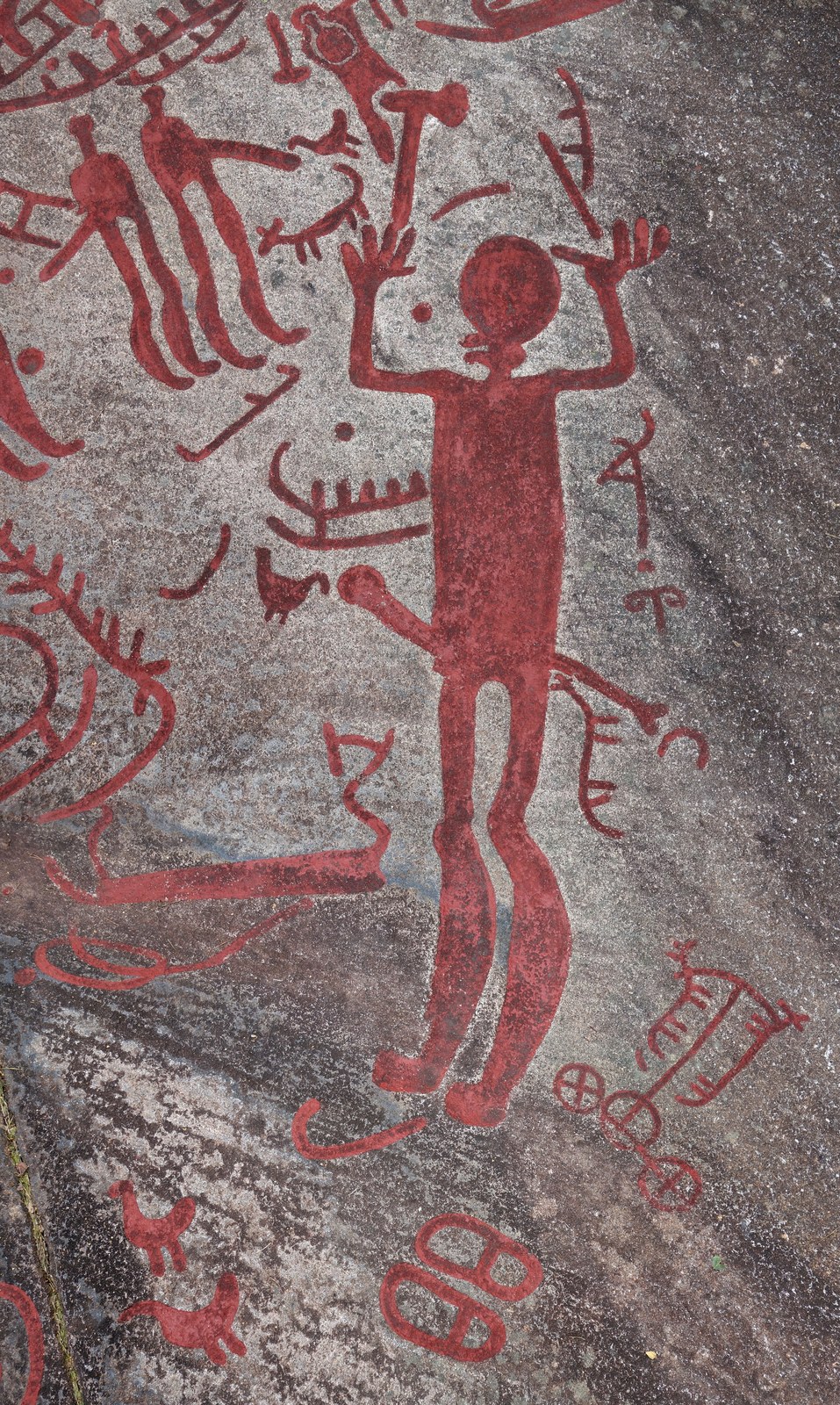
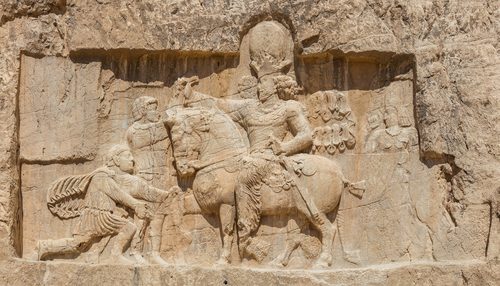
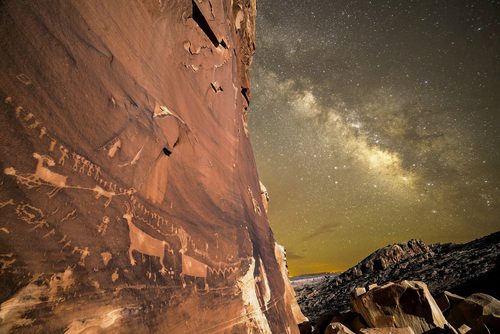
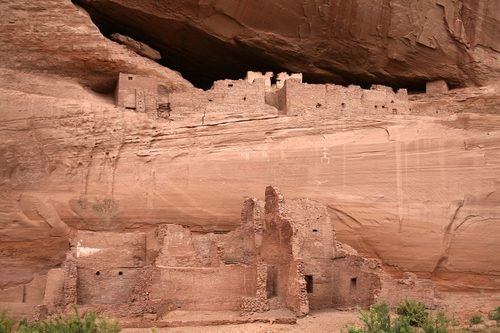
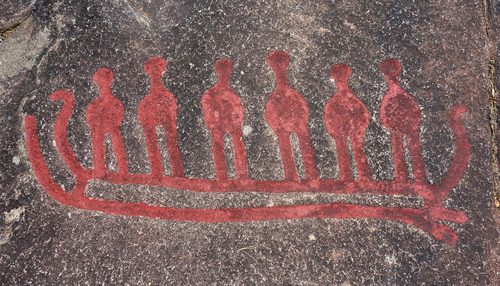
Rock art is imagery made directly on natural stone through carving, pecking, incising, or painting, produced by cultures across every inhabited continent from tens of thousands of years ago into recent centuries. Petroglyphs are created by removing rock surface—pecked, chiseled, or scratched with a harder stone tool—to expose lighter rock beneath, leaving an engraved image. Pictographs are painted using mineral pigments such as red and yellow ochre, charcoal, and manganese oxide, sometimes mixed with animal fat, blood, or plant binders and applied with fingers, chewed sticks, or blown through a hollow reed to create stenciled hand outlines. Common subjects include animals, human and spirit figures, hunting scenes, hand stencils, and abstract geometric marks such as spirals, grids, and dots. Rock art appears on cave walls, open rock shelters, and exposed boulder surfaces, and its meaning is tied to the specific communities and landscapes where it was made. Sites survive because stone is durable, though pigment fades and surfaces erode over millennia.
What defines the medium
Petroglyph technique: pecking and incising
Images are carved by repeatedly striking the rock with a harder stone to remove its surface, or scratched with a sharp point, producing a lighter engraved mark against darker rock underneath.
Pictograph pigment and application
Mineral pigments like ochre, charcoal, and clay are ground and mixed with a binder such as animal fat or plant sap, then applied with fingers, fiber brushes, or blown through a tube for stencil effects.
Superimposition across generations
Many rock art panels show layers of images painted or carved over centuries by different groups, with newer marks overlapping older ones on the same rock surface at long-used sites.
Site selection
Rock art concentrates at shelters, cave mouths, water sources, and prominent rock faces, often at locations with long-term human use or particular visibility within the surrounding landscape.
Recurring motif types
Hand stencils, animal figures, human figures, and geometric marks such as circles, spirals, and grids recur across widely separated regions and time periods, though their meanings vary by culture.
Natural rock surface as a component
Artists often worked with existing cracks, bulges, and color variations in the stone, letting natural rock features suggest or complete an animal's form or body within the finished image.
Materials decoder
The toolkit of rock art
- ochre pigment
- → red, yellow, or brown mineral pigment ground from iron-rich rock, the most common paint used in pictographs worldwide
- hand stencil
- → a handprint outline created by placing a hand against rock and blowing pigment around it, found at sites on multiple continents
- pecked engraving
- → a petroglyph technique where repeated strikes with a hard stone remove surface material to expose a lighter mark underneath
- rock varnish
- → a dark natural coating on some rock surfaces that petroglyphs cut through, creating strong contrast between mark and background
- superimposed panels
- → multiple layers of images from different periods overlapping on one rock face, a sign of long, repeated use of a site
- x-ray style animal figure
- → a painting convention, especially in parts of Australia, showing an animal's internal organs or skeleton alongside its outline
The story
Rock art spans the longest continuous record of human image-making. Some of the oldest known figurative paintings, found in Chauvet Cave in southern France, date to roughly 30,000-32,000 BCE and depict horses, lions, and rhinoceroses in charcoal and ochre. Lascaux, also in France, was painted around 15,000-17,000 BCE with polychrome bulls, horses, and deer. In India, the Bhimbetka rock shelters preserve paintings made across tens of thousands of years, into the historic period. Petroglyphs at Twyfelfontein in Namibia, estimated at up to 6,000 years old, show engraved animal tracks and figures on sandstone. Aboriginal rock art across Australia, including sites in Kakadu, represents one of the longest continuously practiced rock art traditions, with imagery reworked over more than 20,000 years. Sites worldwide were recorded systematically from the nineteenth century onward, and many, including Lascaux and Chauvet, are now protected as UNESCO World Heritage sites.
Masterpieces of the medium
| Work | Artist | Date | Why it matters |
|---|---|---|---|
| Chauvet Cave paintings | Unknown | c. 30,000-32,000 BCE | southern France, among the oldest known figurative cave paintings, depicting horses, lions, and rhinoceroses |
| Lascaux Cave paintings | Unknown | c. 15,000-17,000 BCE | Dordogne, France, polychrome paintings of bulls, horses, and deer across a network of caverns |
| Bhimbetka rock shelters | Unknown | Upper Paleolithic-historic period | central India, layered rock paintings spanning tens of thousands of years, a UNESCO World Heritage site |
| Twyfelfontein petroglyphs | Unknown | up to c. 6,000 years old | Namibia, engraved animal figures and tracks on sandstone outcrops |
| Kakadu rock art sites | Unknown | spanning over 20,000 years | northern Australia, layered pictographs including x-ray style animal depictions |
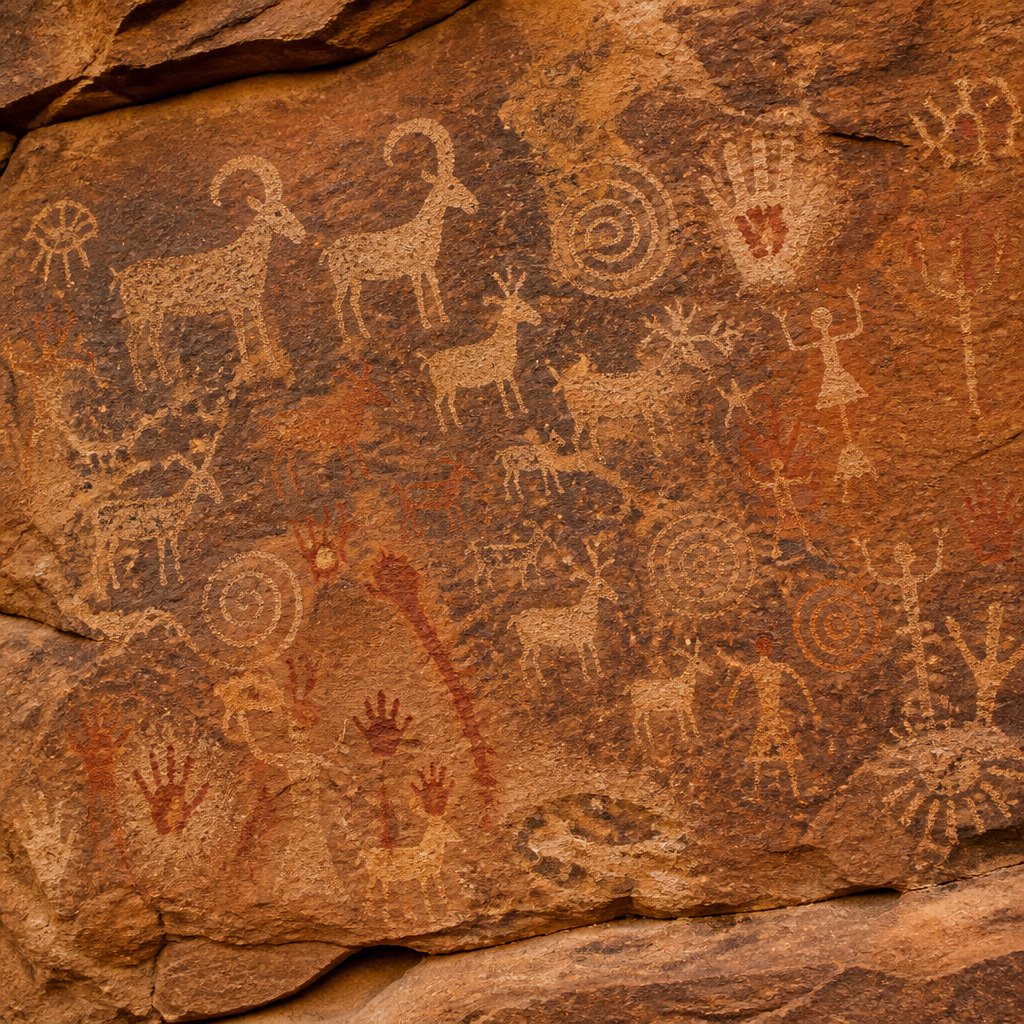 AI-generated
Try the medium
Try rock art with AI
This example was generated from a prompt like: “A weathered sandstone rock face covered in ancient petroglyphs and ochre pictographs, showing pecked animal figures, hand stencils, and geometric spirals, warm reddish-brown stone texture, natural desert lighting, archaeological documentation style.”
Open the Rock Art Style generator →The medium today
Rock art sites today are studied through archaeology, chemical dating of pigments, and digital imaging that reveals faded marks invisible to the naked eye. Many significant sites, including Lascaux and Bhimbetka, are protected as UNESCO World Heritage sites, with public access to original caves often restricted or replaced by accurate replicas to prevent damage from humidity and foot traffic. Indigenous communities in Australia, southern Africa, and the Americas continue to be involved in documenting, interpreting, and protecting rock art connected to their ancestral lands, as dating techniques continue to reshape understanding of site ages.
Compose your own
Rock art can't be practiced in its original form since surviving sites are protected archaeological and cultural heritage, but its techniques can be studied or approximated safely. Petroglyph-style mark-making can be tried with a hammerstone and chisel on a discarded stone slab, learning how pecking removes surface layers to expose lighter rock beneath. Pictograph techniques can be explored by grinding natural ochre or clay pigments, mixing them with water or a plant binder, and applying them with fingers or a fiber brush to a rough stone or plaster surface. Visiting a protected rock art site with a guide, or studying published photographs and archaeological reports, is the responsible way to learn the medium's regional styles.
Frequently asked questions
What's the difference between a petroglyph and a pictograph?
A petroglyph is carved, pecked, or incised into rock, removing surface material to leave an engraved mark, while a pictograph is painted onto the rock surface using mineral or organic pigment.
How old is the oldest known rock art?
Some of the oldest confirmed figurative paintings, at Chauvet Cave in France, date to roughly 30,000-32,000 years ago, though dating methods continue to refine age estimates at sites worldwide.
Who made rock art?
Rock art was made by many distinct prehistoric and historic cultures across every inhabited continent; most works are unattributed to individuals and understood through the communities and regions where they arose.
Can visitors see original rock art sites today?
Some sites remain open with guided access, but many significant caves, including Lascaux, are closed to the public and replaced by accurate replicas to protect fragile pigments from humidity and light.