
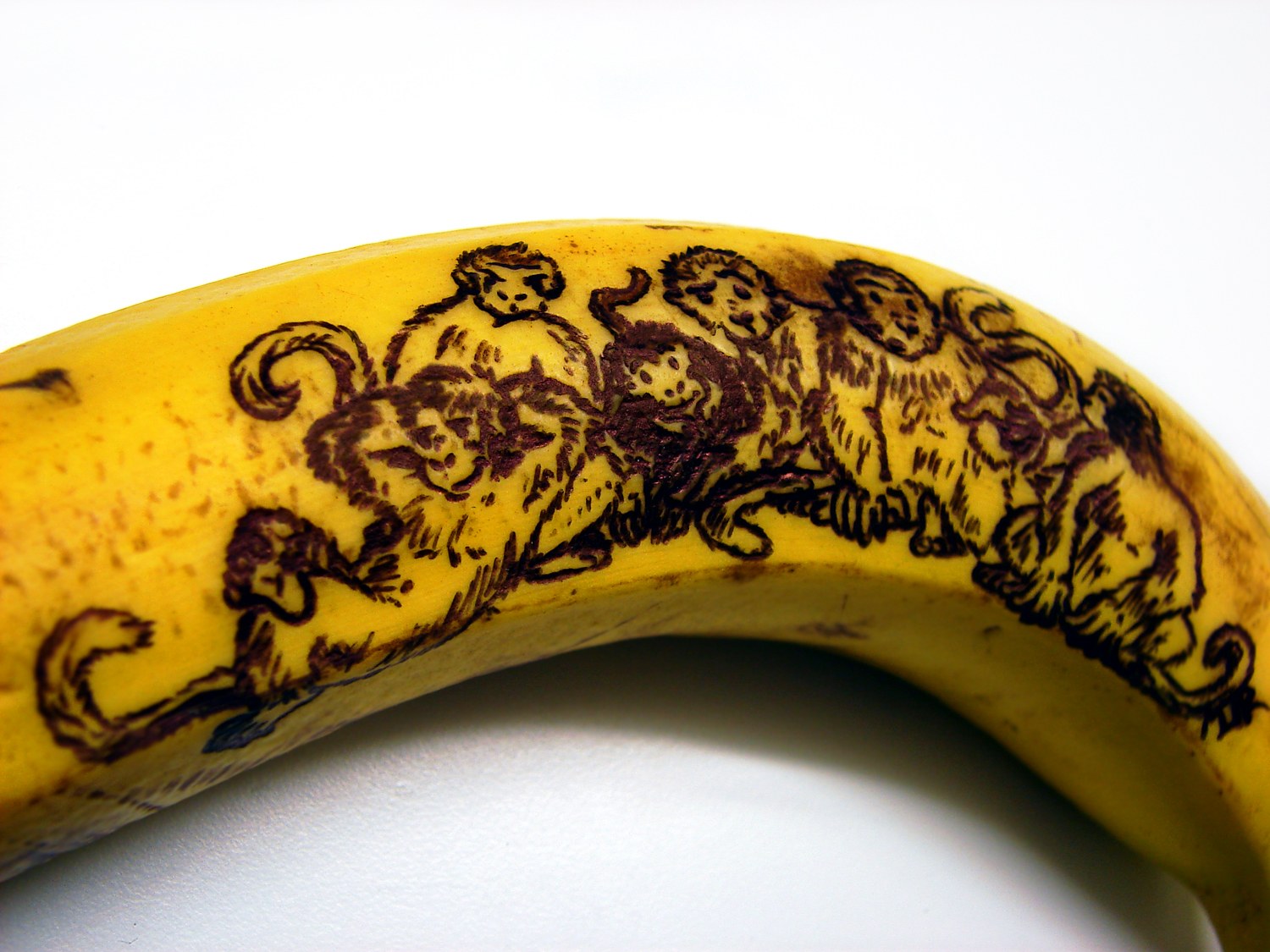
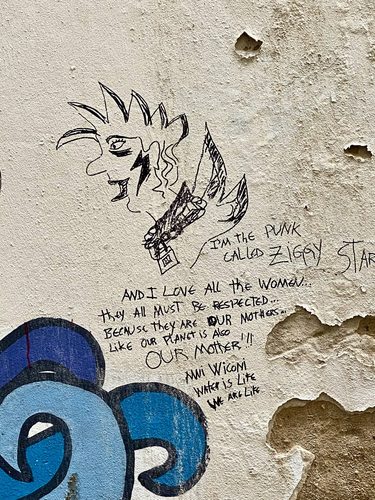
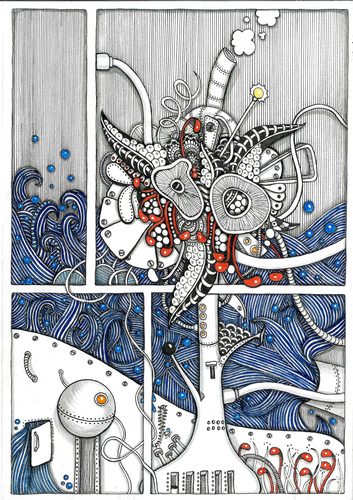
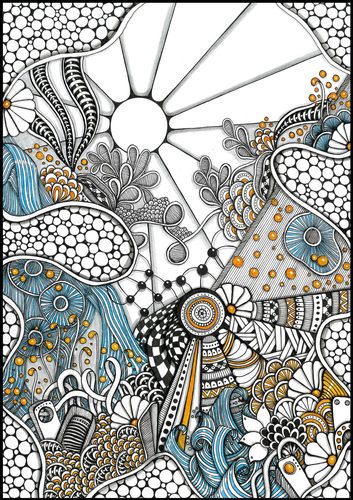
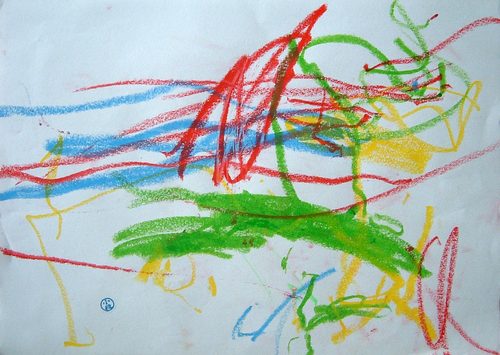
Doodle art is informal, unplanned drawing produced with whatever tool is nearby—ballpoint pen, pencil, marker, or gel pen—on margins, notebook pages, napkins, or scrap paper. It grows from small, repeated marks: spirals, stars, eyes, flowers, geometric fills, and simple faces drawn without a preliminary sketch or fixed subject. Doodles often start from a single shape that gets echoed and elaborated across the page, filling negative space with cross-hatching, dots, or patterned bands until the surface is dense with linework. Unlike planned illustration, doodling has no correction stage—lines stay where they land, and mistakes get absorbed into the next pattern rather than erased. The look is loose, repetitive, and rhythmic, closer to visual note-taking than composed drawing. Structured variants apply the same impulse in a deliberate grid, while pure doodling stays loose, marginal, and made mostly for the drawer's own hand and eye.
What defines the medium
Repetition builds the pattern
A doodle usually starts from one small shape—a spiral, a leaf, a box—then repeats and varies it across the page. The pattern grows through accumulation rather than a planned composition, so density builds gradually as the hand keeps moving.
No sketch, no erasing
Doodles are drawn directly in ink or pen with no preliminary pencil layout. Lines stay where they land, and unwanted marks are folded into the next shape rather than corrected, giving doodles their loose, unfiltered character.
Margins and found surfaces
Doodling happens on whatever surface is already at hand—a notebook margin, meeting agenda, napkin, or worksheet corner—rather than a dedicated sheet of paper, which is part of why it reads as casual and incidental.
A small, recurring motif vocabulary
Most doodlers return to a personal set of shapes—stars, eyes, flowers, cubes, faces, arrows—refining the same handful of forms over many sessions until they become an identifiable personal shorthand.
Filling negative space
Once outlines are down, doodlers often pack the gaps between shapes with cross-hatching, dots, stripes, or small repeated marks, turning empty background into another layer of texture rather than leaving it blank.
Structured tangle methods
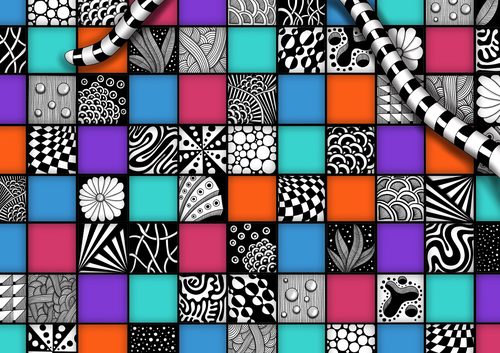
Some doodling follows a deliberate method, drawing a random grid of sections and filling each with a distinct repeating pattern in a fixed sequence of steps, turning casual doodling into a structured, teachable technique.
Materials decoder
The toolkit of doodle art
- ballpoint pen
- → the most common doodling tool, cheap and always at hand, producing a thin, consistent, slightly scratchy line
- gel pen
- → a smoother, richer-inked pen favored for filling large doodle shapes evenly without streaking or skipping
- cross-hatching fill
- → layered sets of parallel lines used to shade or texture a doodled shape without needing a separate shading tool
- spiral motif
- → one of the most repeated doodle shapes, drawn outward from a center point to fill space with rhythmic curves
- notebook margin
- → the blank border of a page where doodles most often appear, drawn during a lecture, call, or waiting period
- dot pattern fill
- → small repeated dots used to shade or texture negative space quickly, a common stand-in for cross-hatching
The story
Doodling has existed as long as people have had a pen and an idle moment—medieval scribes filled manuscript margins with small drawings unrelated to the text beside the sacred pages they copied, and soldiers and students have long covered notebooks and letters with idle sketches. The word doodle entered English in the 17th century meaning a fool or simpleton, and only shifted toward its modern meaning of an absent-minded scribble in the 20th century. Psychologists began studying doodling as a form of unconscious thought in the mid-20th century. In 2004, Rick Roberts and Maria Thomas formalized a structured version called Zentangle, teaching doodling as a repeatable meditative method. Digital drawing tablets and doodle apps have since moved the habit from paper margins onto phones and styluses, and doodle-style illustration is now used deliberately in books, branding, and animation.
Masterpieces of the medium
| Work | Artist | Date | Why it matters |
|---|---|---|---|
| Marginalia in the Book of Kells | Unknown | c. 800 CE | illuminated Gospel manuscript whose margins include small, unplanned decorative sketches |
| Marginal drawings, Maximilian's Prayerbook | Albrecht Dürer | 1515 | pen sketches added into the margins of a printed prayerbook page |
| Notebook sketches (Codex Atlanticus) | Leonardo da Vinci | c. 1478-1519 | loose marginal sketches and diagrams scattered among notes and studies |
| Marginalia in medieval bestiaries | Unknown | 13th century | small doodled creatures and hybrid figures drawn in manuscript margins |
| Trench sketchbooks of World War I | Unknown | 1914-1918 | soldiers' idle pen doodles filling notebook pages between letters home |
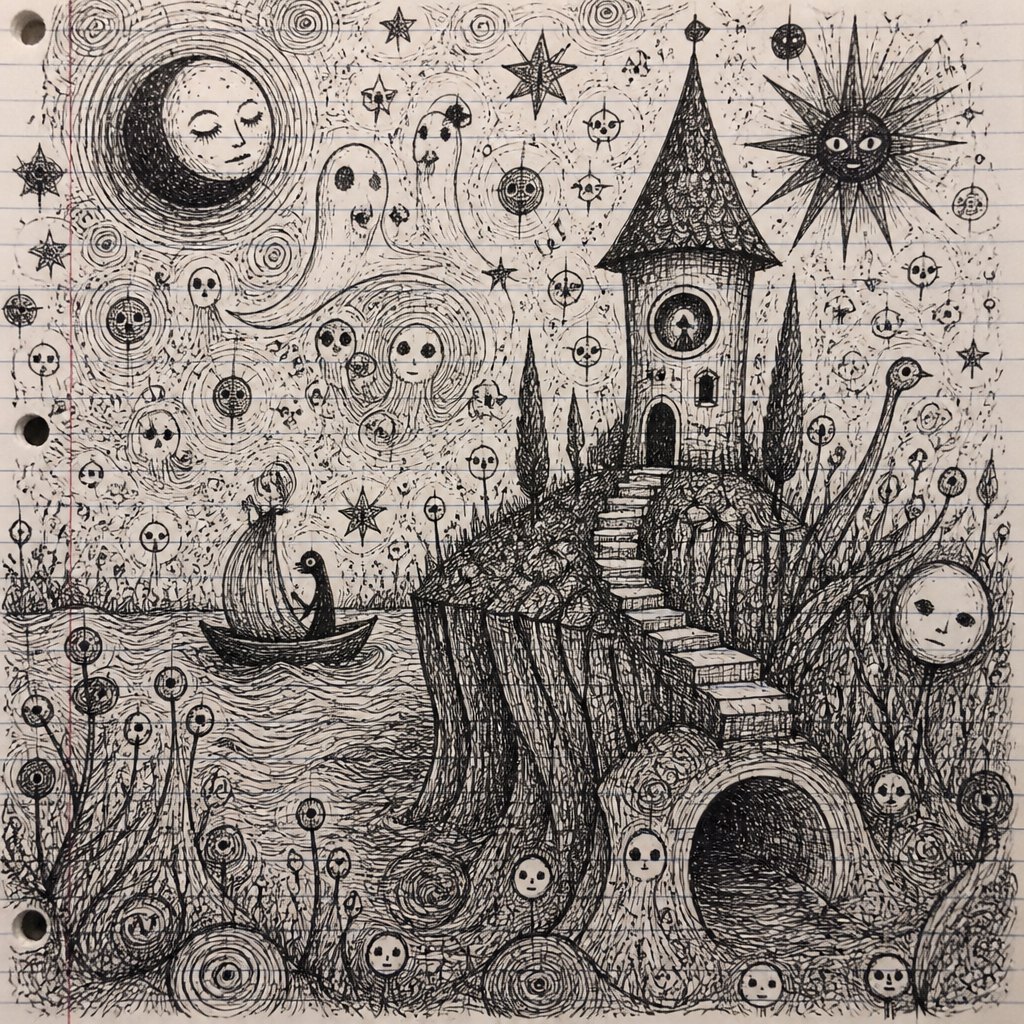 AI-generated
Try the medium
Try doodle art with AI
This example was generated from a prompt like: “A notebook page densely covered in black ballpoint doodles—spirals, stars, tiny faces, and cross-hatched fills—drawn in loose, repetitive ink lines with no color, casual margin-sketch style.”
Open the Doodle Art Style generator →The medium today
Doodling today happens as much on touchscreens as on paper, with stylus apps letting anyone sketch idly during calls or commutes. Structured tangle-drawing methods are taught in workshops and books as a relaxation practice. Doodle-style illustration—loose line, flat color, playful motifs—has become a deliberate aesthetic choice in editorial art, packaging, and social-media animation, borrowing the informality of the margin sketch on purpose rather than by accident.
Compose your own
Start with a pen or pencil and blank paper rather than a screen—the immediacy of ink discourages overthinking. Pick one small shape, like a spiral, leaf, or box, and repeat it across the page without planning a layout. Let one shape suggest the next instead of sketching first. Fill empty gaps with simple textures like dots, stripes, or cross-hatching. Avoid erasing; absorb stray marks into the next pattern. Short daily sessions of five to ten minutes build a personal vocabulary of shapes faster than occasional long sessions.
Frequently asked questions
Is doodling considered real art?
Doodling is recognized as a genuine, if informal, drawing practice—researchers study it as a form of visual thinking, and doodle-based illustration is used professionally in books, branding, and animation.
What tools work best for doodling?
A simple ballpoint or gel pen is enough; consistency of line matters more than the tool. Fine-tip markers and mechanical pencils are also common, and digital doodling uses a stylus on a tablet or phone.
What is Zentangle?
Zentangle is a structured doodling method created in 2004 that divides a small tile into random sections and fills each with a distinct repeating pattern, following a fixed set of steps taught as a relaxation exercise.
Do doodles need to be planned before drawing?
No—doodling is defined by its lack of planning. Most doodles begin with a single shape and grow through repetition and improvisation rather than a sketch or composition drawn out in advance.