
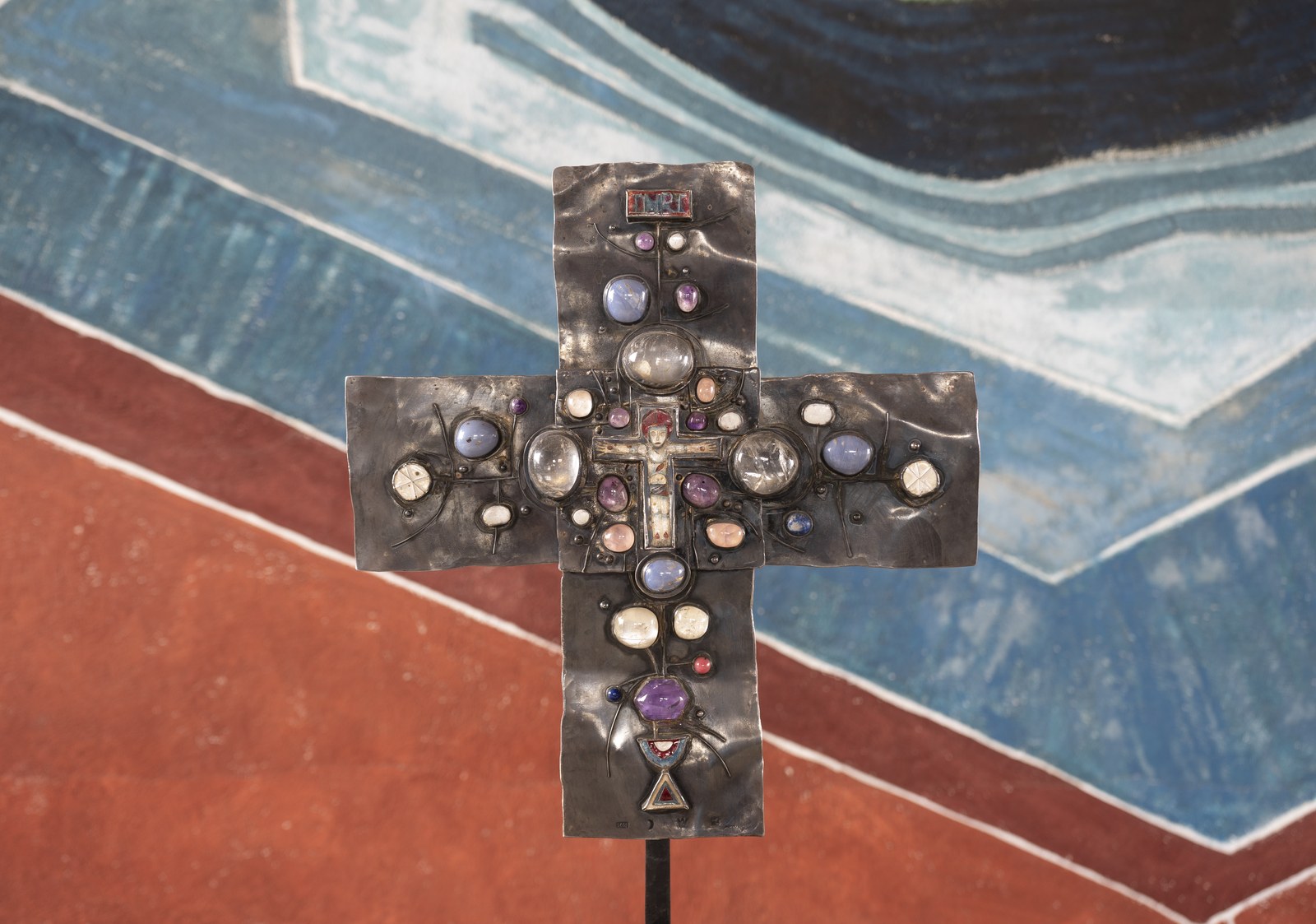
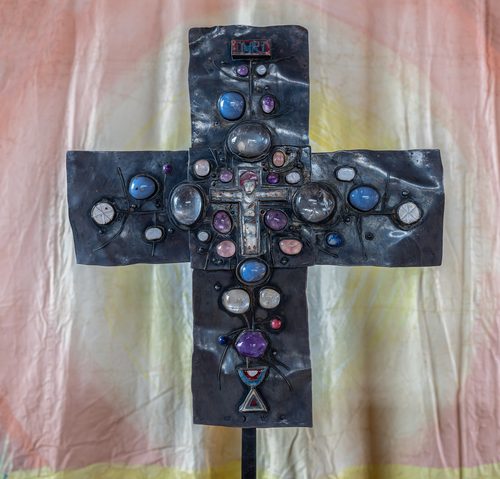

Enamel is powdered colored glass, called frit, fused onto a metal base by firing in a kiln at temperatures around 750-850°C until it melts into a smooth, glassy coating. The metal—usually copper, but also gold, silver, or bronze—is prepared to hold the enamel in one of several ways. Cloisonné divides the surface into cells with thin metal wire soldered on edge, filling each cell with a different color. Champlevé instead carves or etches recesses directly into the metal and floods them with enamel. Plique-à-jour removes any backing so light passes through the enamel like stained glass. Painted enamel, associated with Limoges, applies enamel in successive layers directly onto a flat copper plaque much like oil paint, building shading and detail through repeated firings and grinding. Each color layer is fired separately since different pigments melt at different temperatures, and the surface is ground and polished flat between firings. The finished object has a hard, glossy, saturated color unlike paint or glaze on ceramic.
What defines the medium
Cloisonné cell construction
Thin metal wire is bent into a pattern and soldered edge-up onto the base, creating small compartments that are individually filled with enamel powder and fired. The wires remain visible as fine metallic outlines in the finished piece.
Champlevé carving
Instead of adding wire, champlevé cuts or etches recessed cells directly into a thicker metal plate, then fills them with enamel that is ground flush with the surrounding metal surface after firing, leaving raised metal lines between colors.
Multiple low-temperature firings
Because different enamel colors melt at slightly different temperatures, pieces with several colors are fired more than once, hottest-melting colors first, with grinding and polishing between firings to keep the surface even.
Metal base selection
Copper is the most common and affordable base for enamel work, gold and silver hold color especially well and resist oxidation, and the metal's expansion rate must be compatible with the enamel to prevent cracking on cooling.
Painted enamel technique
Limoges-style painted enamel builds an image in successive fired layers on a flat copper plaque, much like oil glazing, starting with a dark ground and adding lighter, more detailed layers with each firing pass.
Grinding and polishing
After firing, enamel surfaces are ground flat with abrasive stones to remove bubbles and level color cells, then polished to a high gloss, a finishing stage that reveals the true saturation and clarity of the fired glass.
Materials decoder
The toolkit of enamel art
- cloisonné wire
- → thin soldered metal strips that divide a design into cells, visible as fine outlines separating each fired color
- champlevé recess
- → carved or etched hollows in metal filled with enamel, leaving the surrounding metal surface as a raised outline
- plique-à-jour
- → backless enamel cells that let light pass through like stained glass, used for translucent jewelry and small panels
- guilloché ground
- → a mechanically engraved pattern under translucent enamel that catches light through the colored glass layer
- muffle kiln
- → a small enclosed kiln used to fire enamel at controlled low heat without exposing it to open flame or soot
- grisaille enamel
- → monochrome gray enamel painting built in shaded layers over a dark ground, a Limoges specialty for portrait plaques
The story
Enamel decoration on metal dates to ancient Egypt and Mycenaean Greece, but it matured as a major art form in Byzantine cloisonné work from the 6th century onward, seen in objects like the gold and enamel Pala d'Oro altarpiece in Venice. Chinese cloisonné developed independently, reaching a peak during the Ming dynasty's Jingtai reign in the 1450s, giving the technique its Chinese name, jingtailan. Medieval Limoges in France became a center for champlevé enamel on copper by the 12th and 13th centuries, producing reliquaries and liturgical objects exported across Europe. By the 15th and 16th centuries, Limoges shifted to painted enamel plaques depicting portraits and religious scenes, fired in successive layers. Russian workshops, most famously Fabergé under Peter Carl Fabergé, revived enamel for luxury objects in the late 19th century, using guilloché engraving beneath translucent color. Enamel remains a specialized craft for jewelry, decorative objects, and conservation of historic pieces.
Masterpieces of the medium
| Work | Artist | Date | Why it matters |
|---|---|---|---|
| Pala d'Oro | Unknown | 10th-14th century | Byzantine gold and cloisonné enamel altarpiece in St Mark's Basilica built up over several centuries |
| Jingtai-period cloisonné vase | Unknown | c. 1450-1457 | Chinese cloisonné on bronze that gave the technique its Chinese name jingtailan |
| Limoges reliquary casket | Unknown | 13th century | champlevé enamel on copper with a blue enamel ground typical of medieval Limoges workshops |
| Portrait enamel plaques | Léonard Limosin | 16th century | painted grisaille and color enamel portraits on copper built in successive fired layers |
| Imperial Easter eggs | Peter Carl Fabergé | 1885-1917 | guilloché enamel fired over engraved gold and silver surfaces |
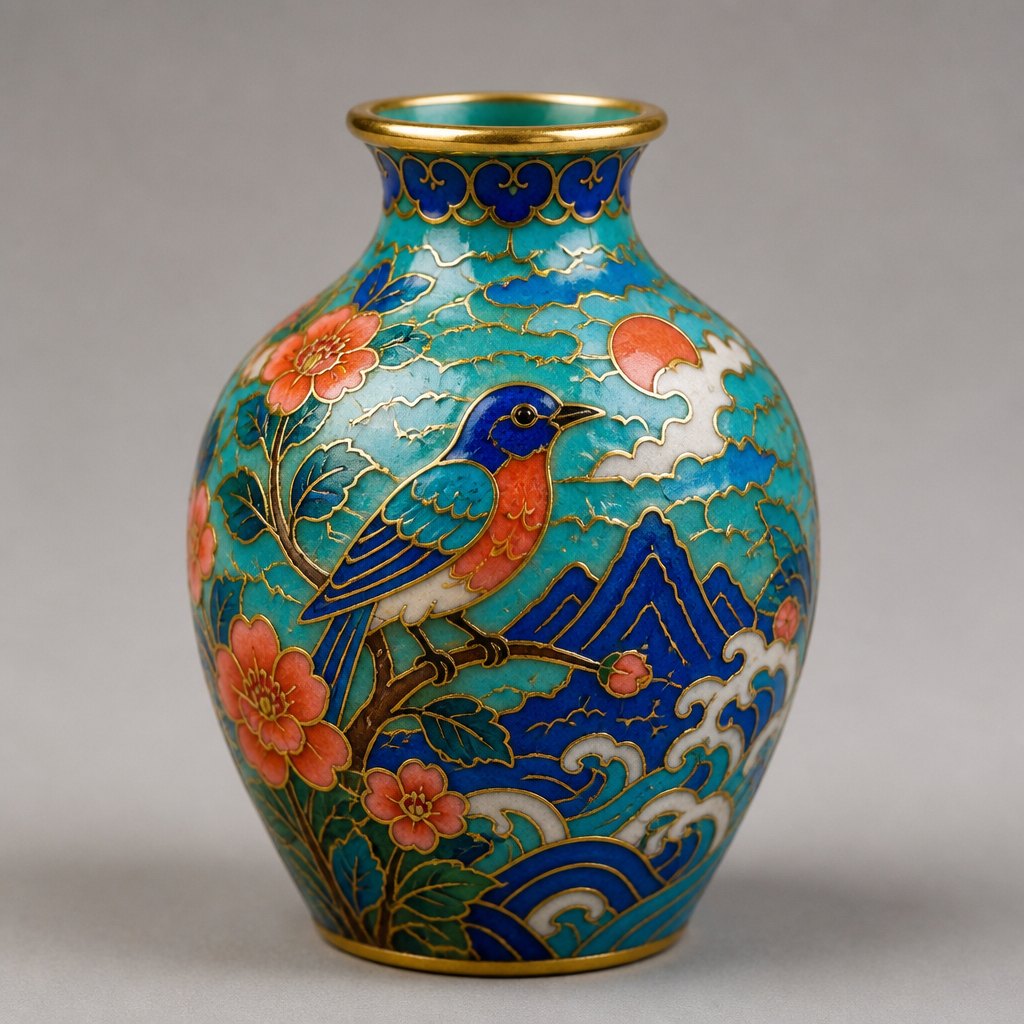 AI-generated
Try the medium
Try enamel art with AI
This example was generated from a prompt like: “A small cloisonné enamel vase with turquoise, cobalt, and coral colored cells divided by fine gold wire outlines, glossy fired surface reflecting soft light, set against a plain neutral background.”
Open the Enamel Art Style generator →The medium today
Enamel work continues in jewelry making, small decorative objects, and museum conservation of historic cloisonné and champlevé pieces. Contemporary metalsmiths use enamel for wearable art, often combining cloisonné or champlevé techniques with modern metals and torch-firing kilns instead of traditional wood-fired ones. Enamel pins and small badges, mass-produced with simplified stamped cloisonné-style cells, have made the look of enamel familiar to a much wider audience than fine art enamel ever reached, even though the process differs from hand-fired workshop pieces.
Compose your own
Beginners typically start with torch-fired enamel on small copper blanks—disks, pendants, or simple shapes—since a handheld torch or small kiln is more accessible than a full enameling studio. Sifting or wet-packing powdered enamel onto a cleaned, prepared copper surface and firing briefly until it melts glossy is the basic cycle, repeated for each additional color layer. Cloisonné requires bending and soldering fine wire before filling cells, while champlevé needs etching or engraving tools to carve recesses first. Safety matters: enamel firing produces fumes and the copper must be cleaned of oxidation between firings. Basic supply kits with pre-ground enamel colors, a small kiln, and copper blanks let beginners test the process affordably.
Frequently asked questions
What is the difference between cloisonné and champlevé?
Cloisonné adds thin wire to a flat metal surface to create cell walls, while champlevé carves or etches recesses directly into a thicker metal plate. Both are then filled with enamel and fired, but champlevé leaves the metal as the dividing line.
Why does enamel need multiple firings?
Different enamel colors melt at different temperatures, and a design usually layers several colors, so pieces are fired more than once, generally hottest-melting colors first, with grinding between firings to keep the surface level.
What metals work best for enameling?
Copper is the most common and affordable base; gold and silver hold enamel color especially clearly and resist oxidation but cost more. The metal's rate of expansion must be close to the enamel's to avoid cracking during cooling.
Is enamel the same as glaze on ceramics?
Both are fused glass coatings, but enamel is fired onto metal at lower temperatures and enamel colors stay separate and vivid within cells or painted layers, while ceramic glaze covers a clay body and often blends more during firing.