
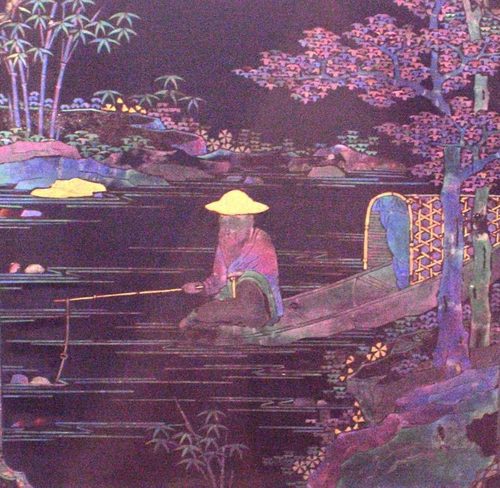
Lacquer is a natural resin, most often the sap of the lacquer tree Toxicodendron vernicifluum, applied to wood, bamboo, or fabric-covered cores in many thin coats. Each layer must dry slowly in a humid, dust-free chamber before the next is brushed on and polished smooth, so a single finished object can carry dozens or even hundreds of coats built up over weeks or months. The cured lacquer forms an extremely hard, glossy, water-resistant shell far tougher than ordinary varnish. Decoration takes several forms: maki-e sprinkles gold or silver powder into wet lacquer to create metallic designs; carved lacquer, built from especially thick layers, is cut with a knife to reveal colored bands beneath; inlay techniques set mother-of-pearl, eggshell, or metal into the surface before final coats seal it. Because raw lacquer sap can cause skin irritation, artisans traditionally train for years to handle it safely. The result is a warm, deep-toned or vividly colored surface, most often black or red, prized for boxes, trays, furniture, and panels across East and Southeast Asia.
What defines the medium
Layer-by-layer buildup
Lacquer is applied in many thin coats rather than one thick one, since a thick layer would crack or never fully cure. Each coat is dried in a controlled humid environment and often sanded before the next is brushed on.
Curing conditions
Raw lacquer cures through a chemical reaction with humidity rather than simple evaporation, so pieces dry in a damp, dust-free cabinet or room rather than open air, a step unfamiliar to most other paint or varnish processes.
Maki-e gold sprinkling
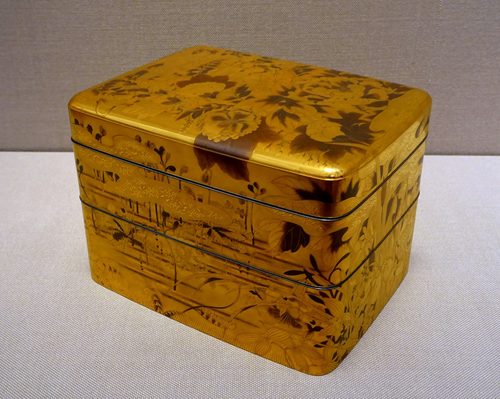
Wet lacquer is drawn into a design, then gold or silver powder is sprinkled or brushed on before it sets, fusing the metal into the surface. Further clear lacquer coats and polishing can be added to protect or deepen the metallic effect.
Carved lacquer
Thick carved lacquer, built from dozens of colored layers, is cut with a knife once cured to reveal contrasting bands of color beneath, most commonly cinnabar red over black, producing raised relief designs.
Core material choice
Lacquer is applied over a prepared core—wood, woven bamboo, cloth-wrapped frames, or even leather—chosen for strength and lightness, since the lacquer shell itself adds rigidity and a smooth base for decoration.
Polishing between coats
Between coats, the surface is sanded or rubbed smooth with charcoal, stone, or fine abrasive powder, a repetitive step that both flattens imperfections and gives the final finish its characteristic deep, mirror-like gloss.
Materials decoder
The toolkit of lacquer art
- urushi sap
- → the raw resin tapped from the lacquer tree, the base material of East Asian lacquerware before pigments are added
- maki-e gold powder
- → fine gold or silver dust sprinkled into wet lacquer to create metallic sprinkled-picture designs
- cinnabar red layers
- → thick red lacquer built up for carving, exposing bands of color when cut, a hallmark of Chinese carved lacquer
- mother-of-pearl inlay
- → thin shell pieces set into lacquer before final coats, catching iridescent light within a dark glossy ground
- black ground lacquer
- → a deep, mirror-black base coat, the most common foundation color for East Asian lacquer objects
- humid drying cabinet
- → an enclosed damp chamber used to cure each lacquer layer slowly, essential since lacquer hardens through moisture, not air-drying
The story
Lacquer craft in China dates back roughly 7,000 years, with lacquered wooden objects found at Neolithic sites such as Hemudu, and reached a high level of skill by the Han dynasty, when lacquered vessels were prized luxury goods, as seen in tombs like Mawangdui. The technique spread to Japan, Korea, and Southeast Asia over the following centuries. Japan developed maki-e gold-sprinkled decoration during the Heian period, refining it into an elaborate court craft by the Kamakura and Edo periods, including major commissioned trousseaux such as the Hatsune wedding set of the 1630s. Chinese carved lacquer, cutting through thick layered color to reveal designs in relief, flourished from the Song and Ming dynasties onward. From the 16th century, Japanese and Chinese lacquer objects made for European trade, sometimes called Namban ware, introduced the material to Western collectors, inspiring European imitation lacquer known as japanning. Lacquer remains a living craft in Japan, China, Korea, Vietnam, Myanmar, and Thailand.
Masterpieces of the medium
| Work | Artist | Date | Why it matters |
|---|---|---|---|
| Mawangdui tomb lacquerware | Unknown | 2nd century BCE | painted lacquer vessels and coffins from a Han dynasty tomb near Changsha |
| Hatsune trousseau | Unknown (Koami workshop) | 1637-1639 | elaborate maki-e lacquer wedding furnishings made for a shogunal bride |
| Namban export cabinet | Unknown | late 16th century | Japanese lacquer furniture inlaid with mother-of-pearl made for the Portuguese trade |
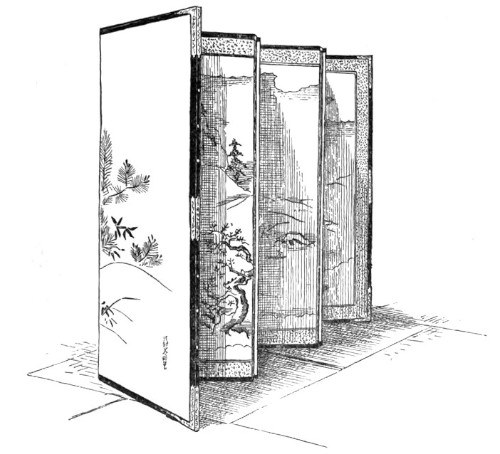
| Coromandel folding screen | Unknown | 17th-18th century | large carved and painted Chinese lacquer screens exported to Europe |
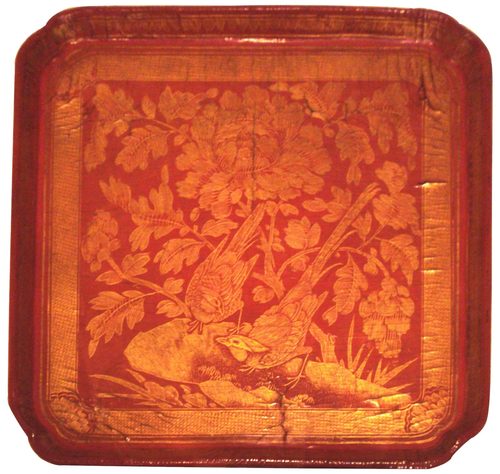
| Carved cinnabar lacquer box | Unknown | Ming dynasty | red lacquer built from dozens of layers and carved with relief floral designs |
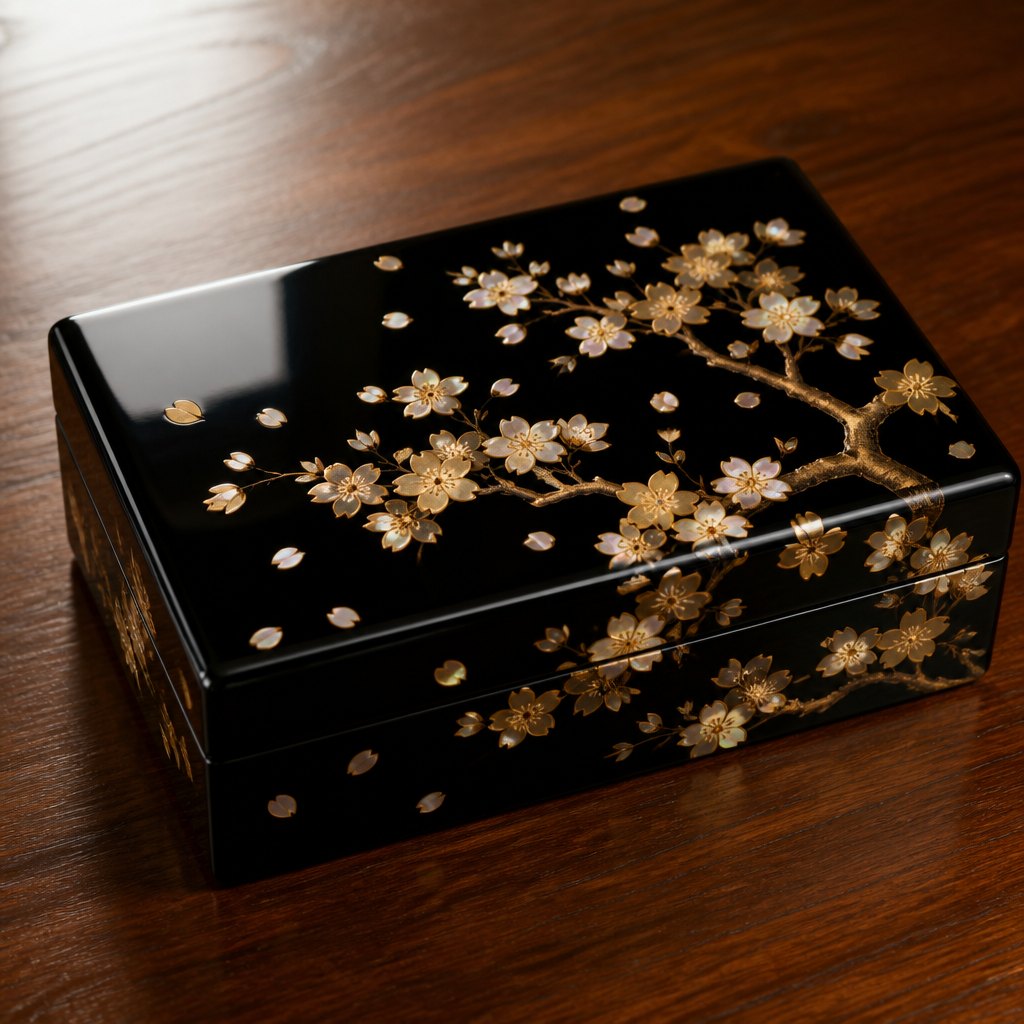 AI-generated
Try the medium
Try lacquer art with AI
This example was generated from a prompt like: “A black lacquer box with gold maki-e sprinkled cherry blossom design, glossy mirror-like surface reflecting soft light, mother-of-pearl inlay accents, resting on a plain wooden table.”
Open the Lacquer Art Style generator →The medium today
Lacquer craft continues as a protected traditional skill in Japan, China, Korea, Vietnam, and Myanmar, supporting boxes, trays, furniture, tableware, and fine art panels. Some regions recognize master lacquer artisans through cultural heritage designations, and workshops train apprentices over years given the technique's slow, layered process. Synthetic cashew lacquer and modern urethane finishes now offer faster, less allergenic alternatives to traditional tree sap for everyday lacquerware, though fine art and museum-grade pieces still rely on natural urushi and traditional multi-year curing and polishing methods.
Compose your own
Traditional urushi lacquer requires careful handling since raw sap can cause serious skin reactions, so most beginners start instead with synthetic alternatives such as cashew lacquer or modern polyurethane lacquer, which mimic the look without the same handling risk. Practice applying thin, even coats with a wide flat brush onto a smooth wood or MDF base, sanding lightly between each dried layer. Simple decoration can begin with sprinkling metallic powder or mica into a final wet coat before it sets, echoing maki-e without needing gold leaf. A slow, humid drying space improves the cure and gloss of natural lacquer specifically. Patience matters more than speed, since a convincing lacquer finish depends on many thin layers rather than one thick coat.
Frequently asked questions
What is lacquer actually made from?
Traditional East Asian lacquer comes from the sap of the lacquer tree, Toxicodendron vernicifluum, refined and sometimes tinted with pigment. Modern alternatives include cashew-based lacquer and synthetic urethane finishes that imitate its glossy, hard surface.
Why does lacquer need so many layers?
A single thick coat of lacquer would crack or fail to cure evenly, so artisans build the finish from dozens of thin coats, each dried and often sanded before the next, resulting in a deep, durable, glass-like surface.
What is maki-e?
Maki-e is a Japanese lacquer technique where gold or silver powder is sprinkled into a design drawn in wet lacquer, fusing the metal into the surface before further clear coats and polishing protect and enrich the metallic image.
Is raw lacquer sap dangerous to work with?
Yes, raw urushi sap contains a compound that commonly causes skin irritation on contact, similar to poison ivy, which is why traditional lacquer artisans train for years to handle it safely and why beginners often use synthetic substitutes.