
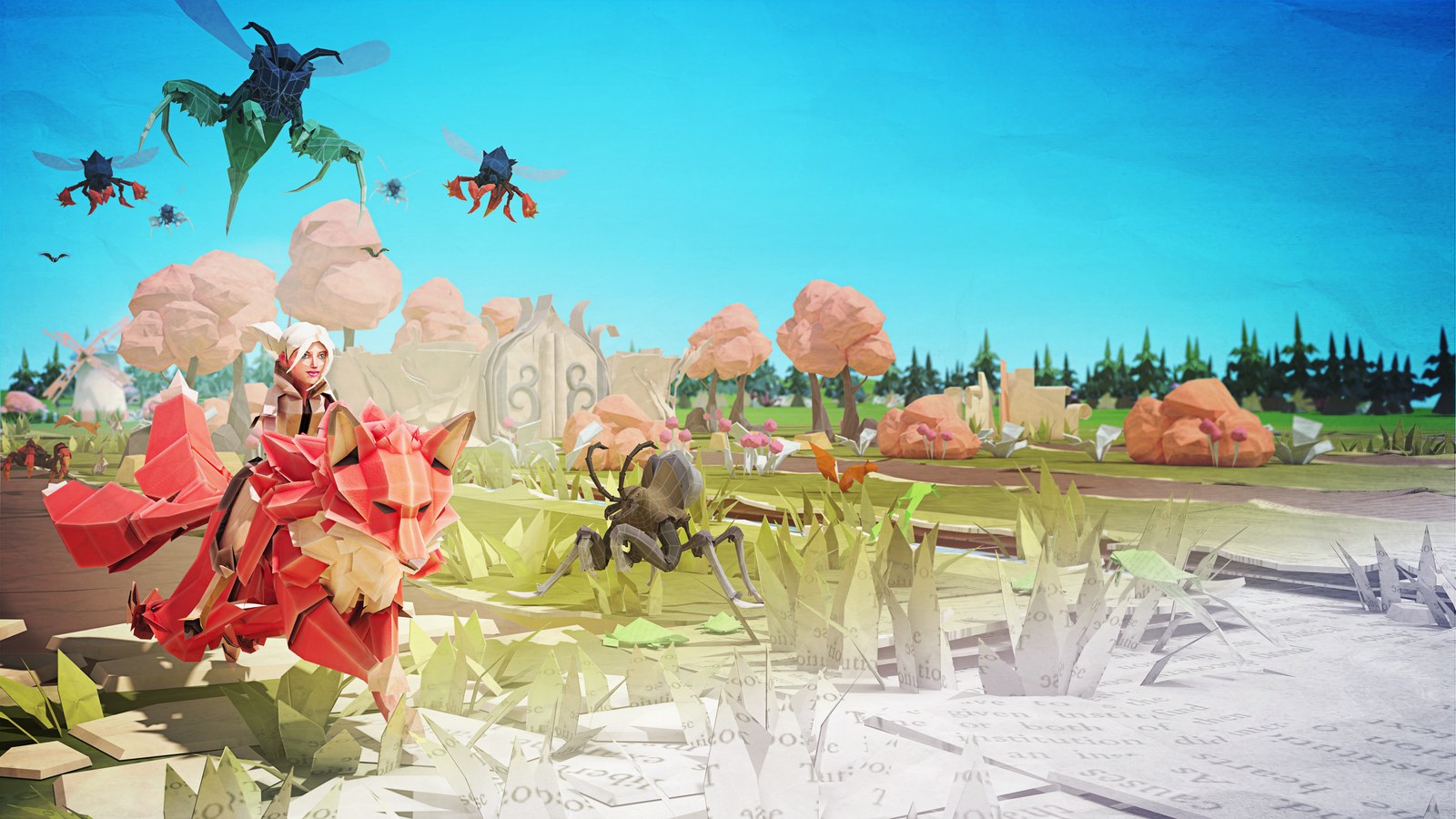
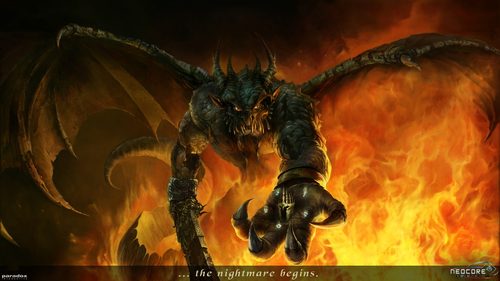
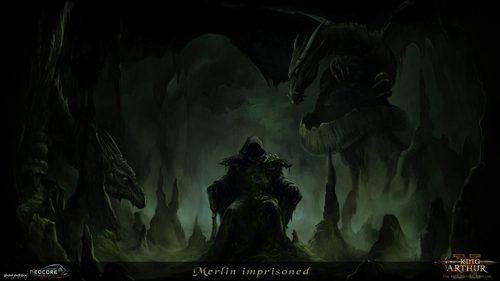
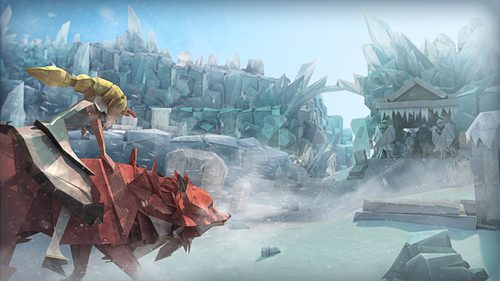
Game art covers the full visual production behind a video game: concept paintings that establish mood and design, pixel or vector sprites for 2D games, and sculpted 3D models, textures, and environment art for 3D worlds. Concept artists work digitally in painting software, blocking in color and lighting before a game's look is locked. Sprite artists build small, repeatable images pixel by pixel for characters and tiles, often limited to a fixed palette recalling early consoles. 3D artists sculpt models in software, then paint textures and set up materials so surfaces react correctly to in-game lighting. Unlike a painting or print, game art is made to function inside an interactive system: it must read clearly at small sizes, tile seamlessly, or animate across many frames. Finished game art appears as concept illustrations, promotional key art, and playable environments, and increasingly turns up framed in exhibitions devoted to the medium.
What defines the medium
Concept art and mood boards
Concept art establishes visual direction before production begins, painted quickly to explore color, silhouette, and lighting. Studios rely on it to agree on a look before committing time to finished 3D or pixel assets.
Pixel art and limited palettes
Sprite work uses small canvases and restricted color counts, with each pixel placed deliberately so a tiny image still reads clearly as a recognizable character, object, or tile at a glance during gameplay.
3D modeling and texturing
Environment and character art is sculpted in 3D software, then unwrapped and painted with texture maps that simulate material, grime, and wear so surfaces respond correctly under in-game lighting.
Style guides and consistency
Large teams follow a fixed style guide covering palette, proportion, and rendering rules so artwork produced by many different hands across a long production still reads as one coherent world.
Silhouette and readability
Characters and objects are designed to be recognizable by outline alone, since players scan busy scenes quickly during play rather than studying a single still image at length.
Key art and promotional illustration
Polished single images made for box covers, trailers, and marketing are distinct from rougher in-engine assets, often painted separately to present the game's world at its most dramatic and finished.
Materials decoder
The toolkit of game art
- digital painting tablet strokes
- → visible brush texture from a stylus and tablet, the signature mark of concept art made in painting software
- pixel grid
- → individual square pixels placed by hand, the defining texture of sprite-based 2D games
- wireframe mesh
- → the polygon skeleton under a 3D model, visible before textures and lighting are applied
- texture map
- → a flat painted image wrapped around a 3D model to give it color, grime, and surface detail
- tile set
- → small repeating background images arranged edge to edge to build a scrolling 2D game level
- limited color palette
- → a small fixed set of colors, a holdover from hardware limits many pixel artists still choose deliberately
The story
Early video games in the 1970s and early 1980s relied on blocky sprites limited by tiny memory and low-resolution displays, producing the chunky pixel look of arcade cabinets and home consoles. As hardware improved through the 1990s, games moved toward richer sprite work and then early 3D polygon graphics. Concept art grew into a dedicated discipline as studios needed painted visions of characters and worlds before building them, a pipeline borrowed from film production. Games such as Myst (1993) and later Shadow of the Colossus (2005) pushed environment art toward painterly, cinematic detail. In 2012 New York's Museum of Modern Art added video games including Pac-Man and Tetris to its design collection, and the Smithsonian American Art Museum staged The Art of Video Games, formally recognizing the medium in museum spaces. Real-time engines have since let game art approach photorealism while pixel art has returned as a deliberate stylistic choice among independent developers.
Masterpieces of the medium
| Work | Artist | Date | Why it matters |
|---|---|---|---|
| Pac-Man | Unknown | 1980 | arcade sprite design later acquired into MoMA's design collection in 2012 |
| Tetris | Unknown | 1984 | block-based puzzle graphics included in MoMA's 2012 video game acquisition |
| The Art of Video Games | Unknown | 2012 | Smithsonian American Art Museum exhibition surveying four decades of game visuals |
| Myst | Unknown | 1993 | pre-rendered painterly environments that shaped adventure-game art direction |
| Shadow of the Colossus | Unknown | 2005 | environment art praised for its sparse, atmospheric landscape design |
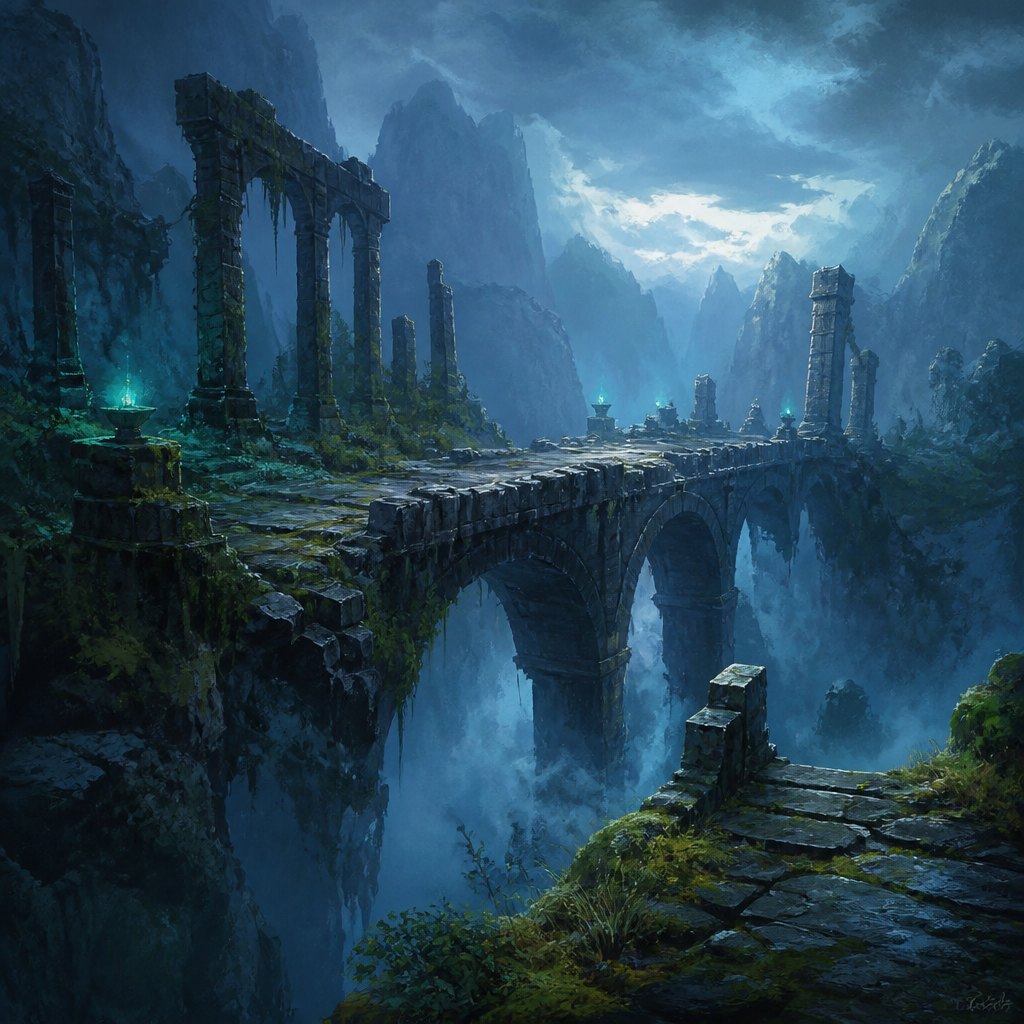 AI-generated
Try the medium
Try game art with AI
This example was generated from a prompt like: “A fantasy game environment concept painting of a ruined stone bridge over a misty ravine, digital brushwork, moody blue-green lighting, layered atmospheric perspective, painterly detail suited to video game key art.”
Open the Game Art Style generator →The medium today
Game art today ranges from hyper-detailed 3D environments rendered in real time to deliberately low-resolution pixel art made by small independent teams. Concept art has become a visible career path of its own, with portfolio sites and social platforms showcasing environment paintings and character designs outside of any finished game. AI-assisted tools now help generate quick concept variations, while museum and gallery exhibitions increasingly treat game art, from early arcade sprites to contemporary cinematic renders, as a serious historical medium worth collecting and displaying.
Compose your own
Starting in game art usually means picking a lane: concept painting, pixel art, or 3D modeling. Concept artists typically learn digital painting fundamentals in software like Photoshop or Procreate, studying color, light, and composition before moving to environment and character design. Pixel artists work in tools such as Aseprite, placing individual pixels deliberately within small canvases and limited palettes. 3D artists start with free software like Blender, learning modeling, UV unwrapping, and texture painting, then move into engines such as Unity or Unreal to see how art behaves under real-time lighting. Recreating a favorite sprite or environment and sharing work in online communities are standard ways beginners build a portfolio.
Frequently asked questions
Is game art the same as concept art?
Concept art is one part of game art, used early in production to establish look and mood. Game art also includes finished in-engine assets like textures, models, and sprites that players actually see during play.
What software do game artists use?
Concept and texture painting commonly happens in Photoshop or Procreate, 3D modeling in Blender, Maya, or ZBrush, and pixel art in dedicated tools like Aseprite, with assets assembled inside engines such as Unity or Unreal.
Why does pixel art still exist with modern hardware?
Many independent developers choose pixel art deliberately for its distinct look, faster production time, and nostalgic association with early consoles, not because of any technical limitation on today's hardware.
Can game art be exhibited outside of a game?
Yes—concept paintings, character designs, and environment art are regularly shown as standalone illustrations in galleries, museum exhibitions, and printed art books separate from the playable game itself.