
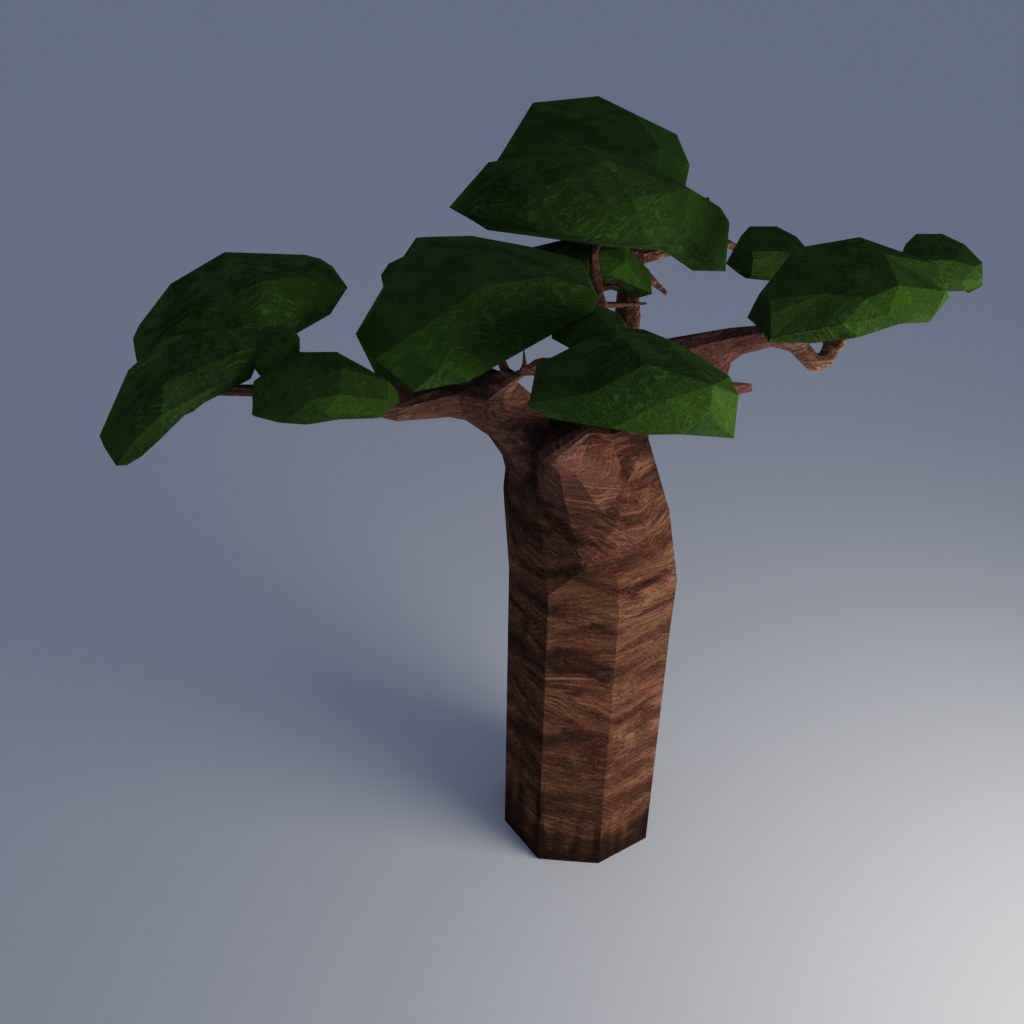
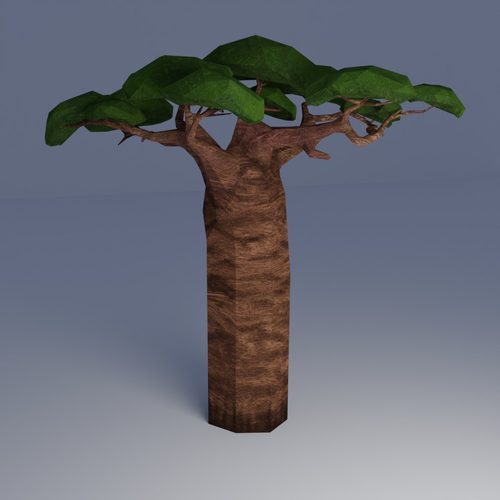

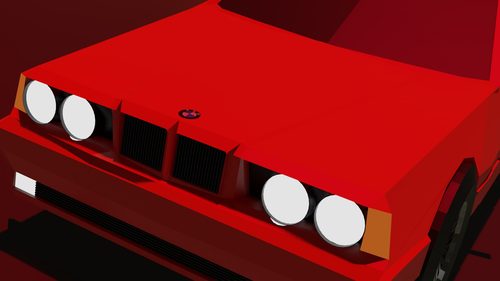
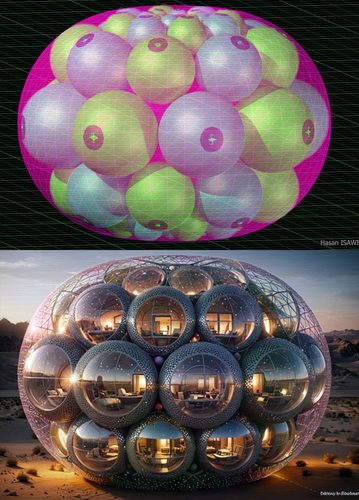
Low poly art builds forms—landscapes, animals, portraits, vehicles—from the smallest number of flat polygon faces that will still read as a recognizable shape. Each face is typically shaded as a single flat color or a simple gradient rather than blended smoothly across the surface, so edges between triangles stay sharp and visible, giving objects a crystalline, gem-cut look. The style originated as a technical necessity: early 3D consoles and PCs could only render a limited polygon count in real time, producing blocky characters and jagged terrain by default. Artists later adopted the constraint deliberately, using 3D software like Blender to model faceted shapes on purpose, or vectorizing photographs into triangulated color patches in 2D illustration tools. The look now spans stylized game art, landscape illustration, and poster design, prized for its clean geometric read and nostalgic echo of early 3D graphics.
What defines the medium
Minimal polygon budget
A model or illustration is built from as few flat triangular or quad faces as possible while still remaining clearly readable as the intended subject, whether a mountain, animal, or figure.
Flat or gradient shading per face
Each polygon face is colored as one solid tone or a simple two-color gradient, rather than smooth continuous shading, which keeps the underlying facets visually distinct.
Visible hard edges between facets
Unlike high-poly smooth 3D work, the boundaries between adjacent faces remain sharp and apparent, giving surfaces a faceted, crystalline character instead of rounded contours.
Modeled in 3D then rendered or vectorized
Work is typically built in 3D software such as Blender, then either rendered directly as a still image or its wireframe traced into flat vector illustration for print or web use.
Restricted, per-face color palette
Color is often assigned individually per polygon from a limited palette, creating patchwork gradients across a sky, terrain, or subject rather than a single continuous hue.
Deliberate hardware-era aesthetic
The visible facet constraint intentionally echoes 1990s console and early PC 3D graphics, where low polygon counts were an unavoidable hardware limitation rather than a stylistic choice.
Materials decoder
The toolkit of low poly art
- flat-shaded triangle
- → a single triangular face rendered as one solid color, the basic visual and structural unit of the low poly style
- faceted terrain
- → hills or mountains built as a jagged crystalline surface where every ridge and slope is a distinct flat plane
- visible wireframe mesh
- → the underlying grid of connected triangles shown as an overlay or stylistic outline referencing the 3D construction
- gradient sky plane
- → a large flat polygon shaded with a smooth color gradient used to stand in for atmospheric sky or water
- gem-cut figure
- → a character or animal built from angular faceted planes rather than rounded, continuously shaded contours
- single-direction flat lighting
- → one simple light source producing one shade value per face rather than soft continuous shadow gradation
The story
Low poly geometry began as a byproduct of hardware limits in early 3D graphics. Titles like Sega's Virtua Fighter and Nintendo's Star Fox, both released in 1993, rendered characters and vehicles from only a few hundred polygons because contemporary processors could not handle more, producing the blocky, faceted look now associated with the style. Through the late 1990s, rising processing power let games render smoother, higher-detail models, and the faceted look faded as a technical necessity. Around the early 2010s, illustrators and game designers revived faceted geometry as a deliberate aesthetic choice; stock illustration platforms saw a wave of low poly landscape and animal graphics roughly between 2013 and 2015, and indie games such as Journey (2012) used simplified, faceted terrain for painterly effect. Accessible tools like Blender's decimate modifier made faceted modeling easy for hobbyists, spreading the look into web design, posters, and vector art referencing early 3D graphics.
Masterpieces of the medium
| Work | Artist | Date | Why it matters |
|---|---|---|---|
| Star Fox | Unknown | 1993 | early home-console 3D game whose faceted ships and terrain were shaped directly by hardware polygon limits |
| Virtua Fighter | Unknown | 1993 | one of the first fully 3D polygonal fighting games, its blocky character models defining the arcade low-poly look |
| Rez | Unknown | 2001 | stylized shooter built from simplified polygonal forms, often cited as an early game treating faceted geometry as deliberate art |
| Journey | Unknown | 2012 | used simplified low-poly desert dunes shaded with warm gradients for a painterly, faceted landscape |
| Low-poly stock illustration trend | Unknown | c. 2013 | faceted geometric landscape and animal graphics became a widespread web and print design trend |
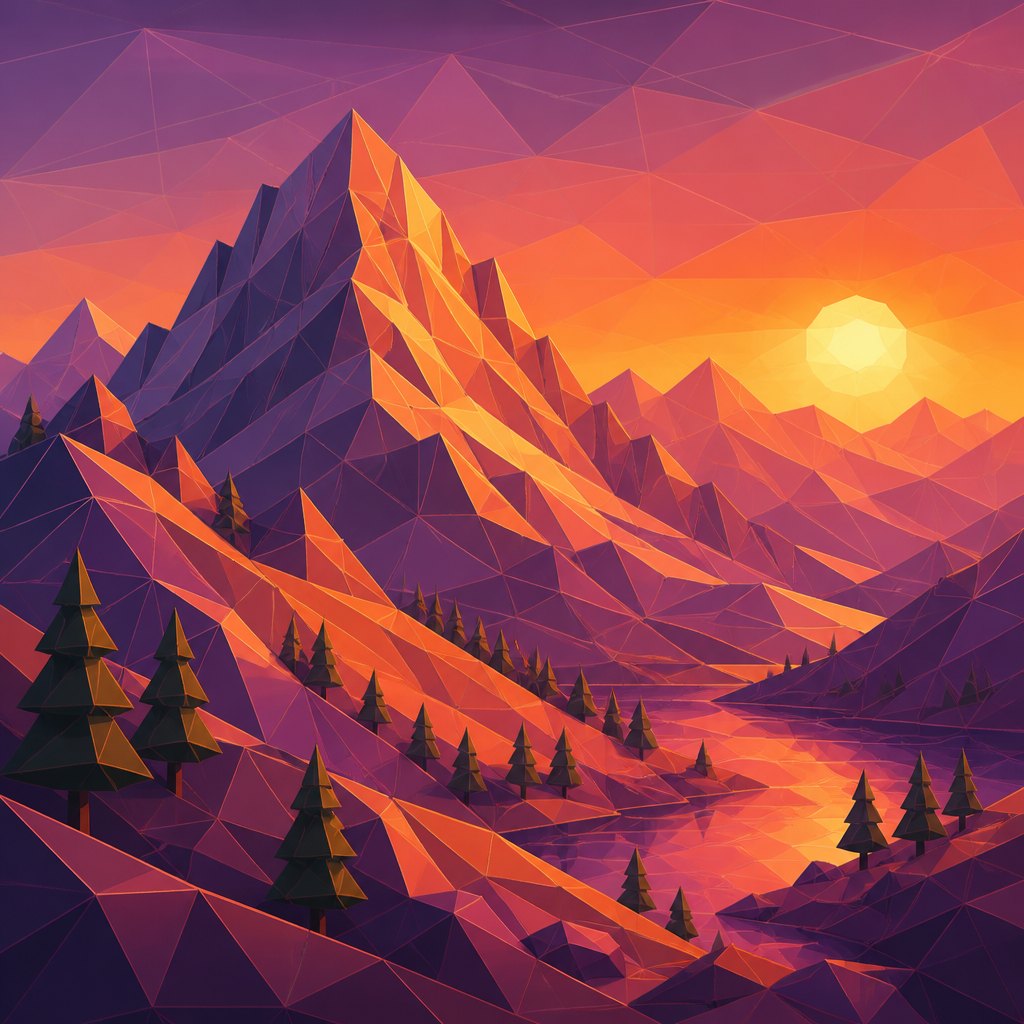 AI-generated
Try the medium
Try low poly art with AI
This example was generated from a prompt like: “Faceted low-poly mountain landscape at sunset, angular crystalline peaks shaded in warm gradient oranges and purples, flat-shaded triangular planes, visible geometric wireframe edges, minimalist geometric trees dotting the slopes.”
Open the Low Poly Art Style generator →The medium today
Low poly art now appears widely in web design, mobile games, print posters, and VR or AR assets where efficient rendering still matters. It is used as a nostalgic, clean-graphic style rather than a technical necessity, appearing on merchandise, app icons, and generative art tools that can produce faceted images on demand. Indie game jams dedicated to low poly and voxel aesthetics keep the look active in game development, valued for its instantly recognizable geometric simplicity across screens of any size.
Compose your own
Start with free 3D software such as Blender. Model or import a simple object, then apply a decimate modifier to reduce its polygon count until individual facets become clearly visible. Assign flat-shaded materials so each face reads as one distinct color, and light the scene simply with one main source to create contrast between facets. Alternatively, work in a 2D vector tool by tracing triangulated shapes over a photo reference, a technique sometimes called photo-to-polygon. Export a still render first before attempting interactive low-poly assets for a game engine.
Frequently asked questions
What makes an image "low poly" rather than just simple 3D?
Low poly specifically means the model is built from a small, visibly countable number of flat faces with hard edges between them, rather than smooth shading that hides the underlying geometry.
Do I need 3D software to make low poly art?
Not necessarily. Many low poly illustrations are drawn in 2D vector programs by manually triangulating shapes over a reference photo, though modeling in 3D software gives more control over lighting and perspective.
Why did early video games use low poly models?
Console and PC processors in the early 1990s could only calculate and render a limited number of polygons per frame in real time, so blocky, faceted models were a direct result of hardware constraints, not a style choice.
Is low poly art still relevant given today's powerful graphics hardware?
Yes—modern hardware can render far more detail, so low poly is now chosen deliberately for its clean geometric look, faster rendering on mobile devices, and nostalgic reference to early 3D graphics.