
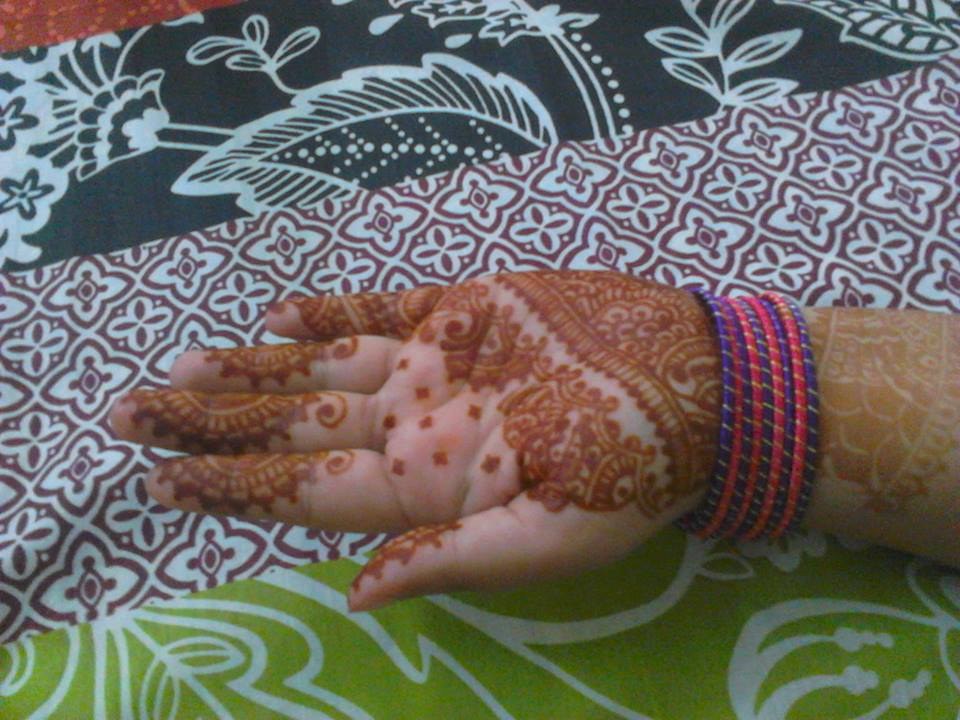
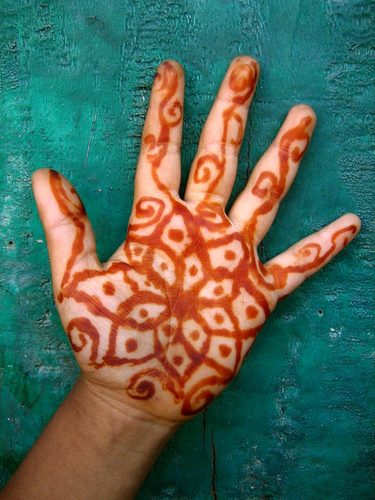
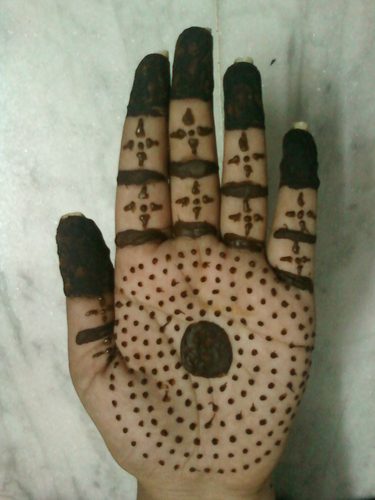
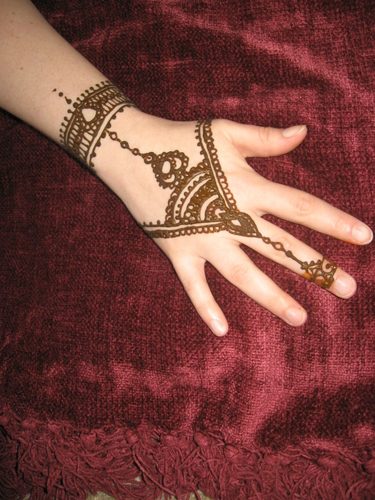
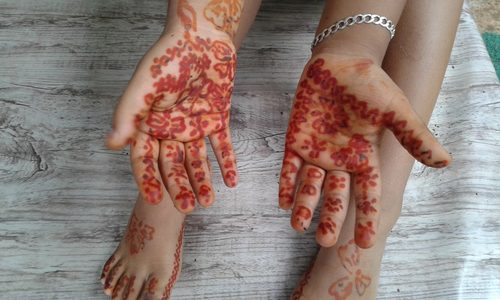
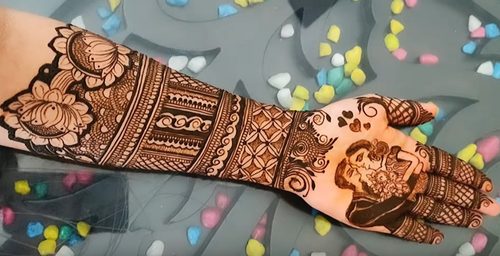
Henna art, also called mehndi, decorates skin with intricate temporary patterns using a paste made from dried, powdered leaves of the henna plant, Lawsonia inermis. The powder is mixed with liquids such as lemon juice or tea and sometimes essential oils into a smooth paste, then applied through a fine-tipped cone or a small metal applicator bottle, allowing lines as thin as a pen stroke. Common motifs include paisleys, mandalas, floral vines, dotted borders, and geometric lattice work, often built into dense, symmetrical compositions covering the palms, backs of the hands, and feet. The paste is left on the skin for several hours, sometimes overnight, then scraped or flaked away. Underneath, the skin stains from pale orange to a deep reddish-brown, deepening over the following day or two before gradually fading over one to three weeks. Henna is widely practiced across South Asia, the Middle East, and North Africa, especially for weddings and festive occasions, and has spread globally as a body art tradition.
What defines the medium
Paste preparation
Henna powder is sifted and mixed with an acidic liquid such as lemon juice, sometimes combined with sugar and essential oils, then rested for hours so the dye compound releases fully before it is loaded into an applicator.
Fine-line application tools
Most artists apply paste through a cone rolled from cellophane or plastic, or a fine-nozzled squeeze bottle similar to a cake-decorating tip, giving control over line width from thin outlines to filled-in dense sections.
Motif vocabulary
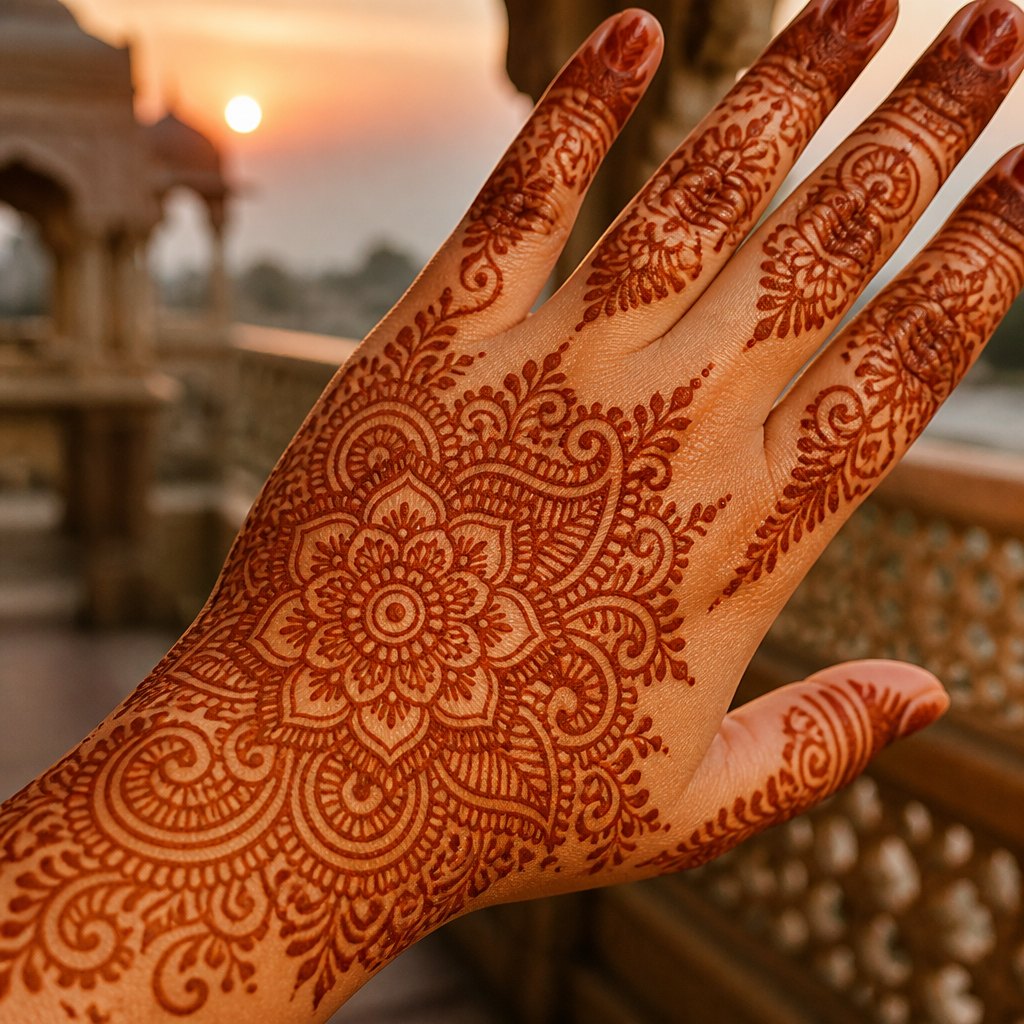
Recurring motifs include paisleys, lotus and vine florals, peacocks, mandala-style circular centerpieces, and fine dotted or checkered borders, combined into symmetrical patterns that follow the natural lines of the hand or foot.
Regional style differences
Design density and motif choice vary by region: heavier, lace-like coverage is associated with South Asian styles, bold floral and geometric patterns with Arabic styles, and angular, symbolic patterns with North African styles.
Drying and sealing
Once applied, the paste is left to dry for several hours and often sealed with a sugar-lemon mixture to keep it from cracking or flaking off too early, deepening the eventual stain left on the skin underneath.
Placement and symmetry
Hands and feet are the most common canvas, chosen partly because the skin there stains most deeply, with designs typically built in mirrored, symmetrical compositions across both hands or both feet.
Materials decoder
The toolkit of henna art
- henna cone
- → a hand-rolled cellophane cone used to pipe fine paste lines, the standard low-cost applicator for detailed mehndi work.
- dark green-brown paste
- → fresh henna paste appears deep green-brown before it dries; its color is not the final stain color left on skin.
- fine continuous linework
- → the hallmark of skilled henna work is an unbroken, evenly pressured line, thin enough for delicate detail without breaks.
- mandala centerpiece
- → a circular radiating pattern often placed in the center of the palm as the anchor point for the surrounding design.
- paisley motif
- → a curved teardrop shape derived from South Asian textile design, one of the most recurring forms in mehndi patterns.
- stain gradient
- → the finished color starts pale orange and deepens to reddish-brown over 24 to 48 hours before gradually fading over one to three weeks.
The story
Henna has stained skin and hair for thousands of years, with evidence of its use in ancient Egypt, where mummified remains show henna-dyed nails and hair dating back over 3,000 years. The plant's dye properties were recorded across the ancient Mediterranean, Middle East, and South Asia, and by the medieval period henna application had become tied to celebration and ritual across these regions. Historical Indian and Middle Eastern manuscripts and artworks depict henna-adorned hands at weddings and festivals for centuries, passed down through generations of family and community artists rather than formal schools. Design styles diverged regionally over time, producing the dense lace-like patterns associated with South Asia and the bolder floral work associated with the Arab world. Henna spread more broadly into Western popular culture from the late twentieth century onward, marketed as temporary body art, prompting health warnings about additive-laced 'black henna' products containing harmful synthetic dye.
Masterpieces of the medium
| Work | Artist | Date | Why it matters |
|---|---|---|---|
| Henna-stained nails and hair on Egyptian mummies | Unknown | c. 1200 BCE | archaeological evidence of henna dye use in ancient Egyptian burial practice |
| Mughal-era manuscript depictions of henna application | Unknown | 16th-17th century | miniature paintings showing henna-adorned hands at court celebrations |
| Traditional bridal mehndi patterns, South Asia | Unknown | documented from 19th century | dense, lace-like hand and foot patterns recorded in colonial-era photography and texts |
| North African henna hand-painting traditions | Unknown | documented from 19th century | angular, symbolic geometric patterns recorded in regional ethnographic photography |
| Global spread of temporary henna body art | Unknown | late 20th century | henna kiosks and body art stalls popularized mehndi patterns outside their countries of origin |
 AI-generated
Try the medium
Try henna art with AI
This example was generated from a prompt like: “Close-up photograph of a hand decorated with intricate reddish-brown henna patterns, paisley and floral mandala motifs, fine detailed linework, warm natural lighting, skin visible between design elements.”
Open the Henna Art Style generator →The medium today
Henna art today remains central to weddings and festive occasions across South Asia, the Middle East, and North Africa, alongside a global market for henna as decorative body art at fairs, festivals, and tourist destinations. Pre-mixed cones and bottled paste have made application more accessible outside traditional communities. Health authorities continue to warn against 'black henna,' a product often containing the industrial dye PPD, which can cause severe skin reactions and is distinct from natural henna paste. Design references circulate widely online, blending regional styles into new hybrid patterns.
Compose your own
Beginners typically start with a pre-made henna cone or paste kit rather than mixing their own, since consistency is hard to judge without experience. Practice basic elements first—straight lines, dots, small paisleys, and simple vine curls—on paper before moving to skin. Hold the cone like a pen with steady, light pressure, keeping a consistent distance from the surface for even line width. Start on the back of the hand or forearm, working from a centerpiece outward rather than filling in randomly. Let the paste dry undisturbed for several hours, avoid water contact during that time, and gently scrape off the dried paste rather than washing it away for the deepest stain.
Frequently asked questions
How long does a henna design last?
A henna stain typically lasts one to three weeks, gradually fading as the top layer of skin cells sheds. Areas with thicker skin, like palms and soles, tend to hold color longest, while thinner skin fades faster.
Is henna the same as a temporary tattoo?
No. Natural henna stains skin reddish-brown through a plant dye and fades gradually, while temporary tattoos use inks or transfers. Some products sold as 'black henna' contain a synthetic dye that can cause serious allergic reactions.
Does applying henna hurt?
No, henna paste is applied on top of the skin with no needles or breaks in the surface. It feels similar to icing being piped on, and the only sensation during drying is the paste tightening slightly as it dehydrates.
Can I make my own henna paste at home?
Yes, using henna powder, an acidic liquid like lemon juice, and rest time for the dye to release, though pre-mixed cones from reputable makers offer more consistent results for beginners than a first homemade batch.