
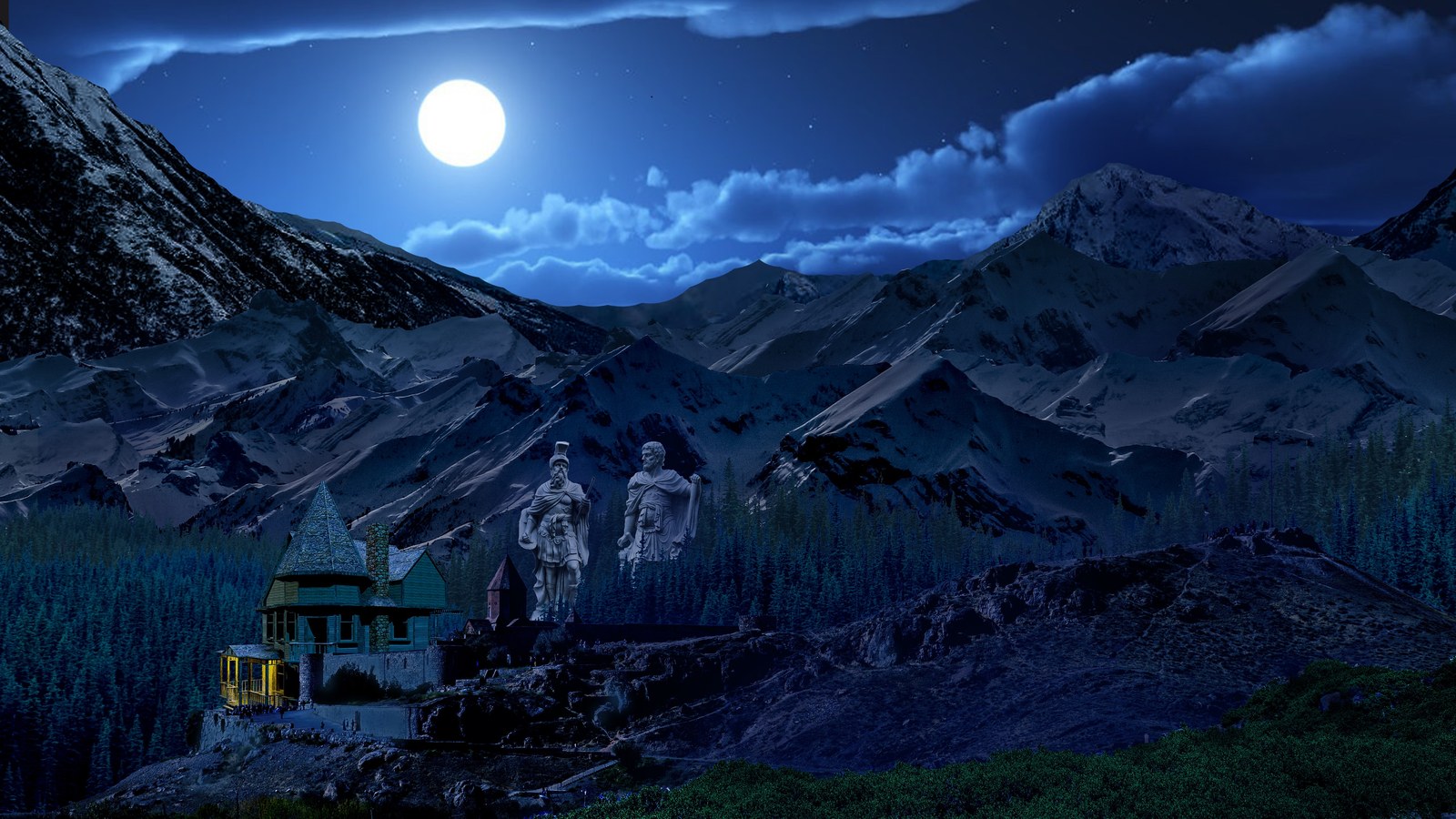
Matte painting is a film technique for extending or replacing part of a set with a painted image so seamlessly that audiences read it as one continuous photographed scene. Traditionally an artist painted on a sheet of glass positioned between the camera and the live set, leaving a clear window where actors were filmed, or painted a rigid board photographed separately and combined later using an optical printer or the sodium vapor process. The paint had to match the film stock's grain, contrast, and lighting exactly, and the camera generally stayed locked in one position so the illusion held from only that viewpoint. Since the 1990s the craft shifted to digital matte painting, built in Photoshop or 3D software from photographs, hand-painted detail, and camera-tracked geometry, then composited with live footage and CGI to build skylines, ruins, and landscapes no set could physically contain.
What defines the medium
Glass or board painting technique
Traditional matte shots painted directly onto a pane of glass mounted in front of the lens, or onto a rigid board, leaving a section clear or masked for the live-action elements to show through.
Exact perspective matching
Painted architecture and vanishing points had to match the camera's specific lens and angle precisely; even a small mismatch collapsed the illusion of continuous space.
Matching film stock's tone and grain
Painters muted color saturation and matched contrast and grain so the painted section photographed indistinguishably from the live footage beside it, avoiding an obviously flatter look.
Locked-off camera position
Classic glass and board mattes only aligned correctly from one fixed viewpoint, so the camera typically stayed static during the shot rather than panning or moving through space.
Layered optical or digital compositing
Live actors, painted backgrounds, and sometimes miniatures were combined on an optical printer frame by frame; today the same layering happens digitally with camera-tracked software.
Digital matte painting workflow
Contemporary matte painters build environments in Photoshop from photobashed reference and hand-painted detail, then integrate the image with 3D camera moves and CGI elements.
Materials decoder
The toolkit of matte painting
- painted glass pane
- → a sheet of glass positioned in front of the camera lens, painted everywhere except a clear window left open for live actors
- matte board
- → a rigid painted panel photographed separately from the live set and combined with it later in the compositing process
- sodium vapor process plate
- → a technique using sodium lamps to separate foreground actors from a painted background within the same film frame
- optical printer composite
- → film equipment used to combine separately shot painted and live-action elements frame by frame before digital compositing existed
- digital matte painting layer
- → a photobashed and hand-painted digital image built from multiple Photoshop layers to extend or replace a photographed film set
- atmospheric haze fade
- → a soft blue-grey gradient applied to distant painted elements to mimic real depth and distance, keeping far background convincingly hazy
The story
Glass matte painting was popularized in early Hollywood by cinematographer Norman Dawn, who used painted glass to extend sets as early as 1907. The technique became standard through the studio era, building fantastical backgrounds for films like King Kong (1933), Gone with the Wind (1939), and Citizen Kane (1941). Studios kept dedicated matte painting departments staffed with skilled artists through the mid-twentieth century, refining the sodium vapor process for cleaner composites without visible black-line edges. The technique continued into the blockbuster era of the 1970s and 1980s for films requiring vast alien or historical vistas. Digital compositing tools arriving in the 1990s let painters work in Photoshop instead of glass, integrating painted environments with camera-tracked 3D elements. By the early 2000s, fully digital matte painting had largely replaced physical glass and board techniques in mainstream film production.
Masterpieces of the medium
| Work | Artist | Date | Why it matters |
|---|---|---|---|
| King Kong | Unknown | 1933 | matte paintings extended Skull Island's jungle canopy and cliffs beyond the built studio sets |
| Gone with the Wind | Unknown | 1939 | large-scale matte paintings depicted burning Atlanta and sweeping plantation vistas |
| The Wizard of Oz | Unknown | 1939 | a painted Emerald City skyline extended a modest studio backlot set |
| Citizen Kane | Unknown | 1941 | Xanadu's vast halls were built through painted glass mattes combined with live sets |
| Mary Poppins | Unknown | 1964 | painted London rooftops were combined with live-action performers using the sodium vapor process |
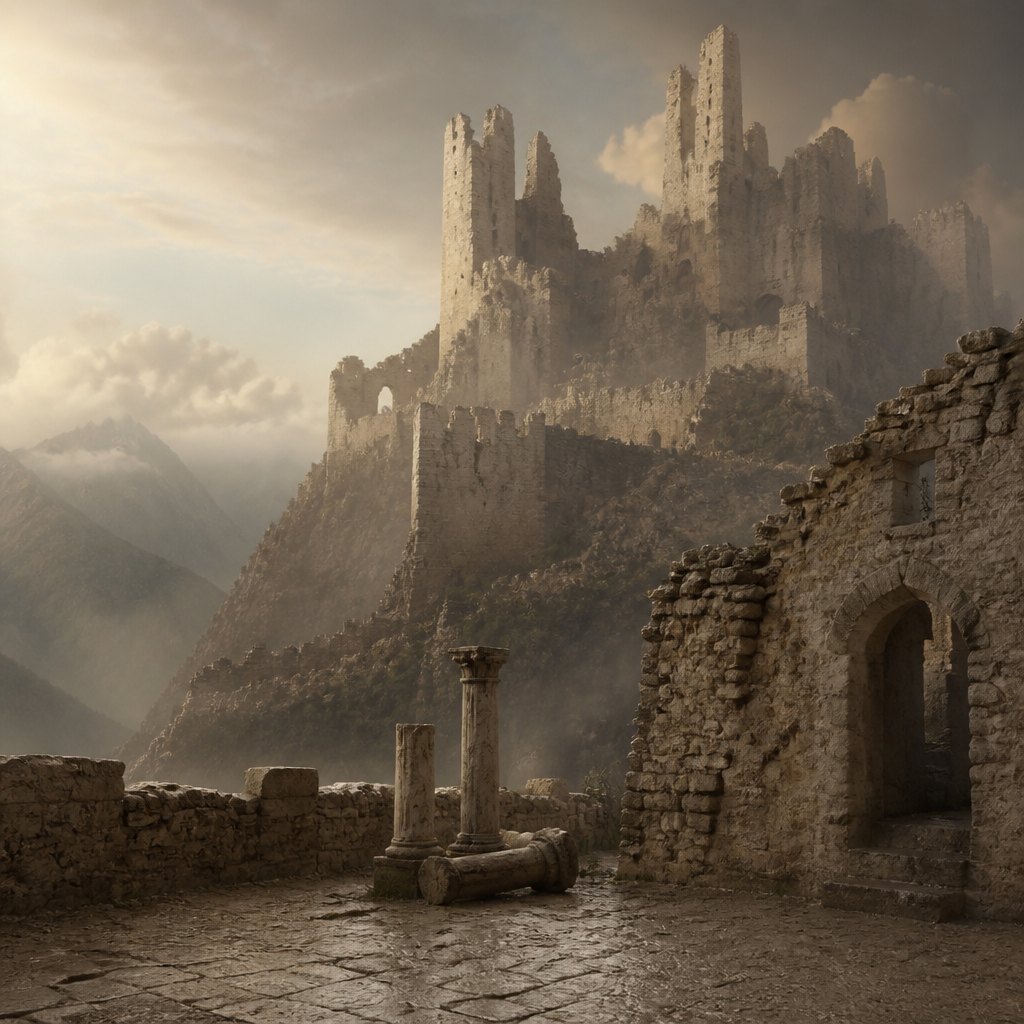 AI-generated
Try the medium
Try matte painting with AI
This example was generated from a prompt like: “Crumbling ancient fortress ruins towering above a small photographed stone courtyard, painted sky and distant mountains blended seamlessly with the live set, muted sepia tones, soft atmospheric haze, cinematic matte painting depth.”
Open the Matte Painting Style generator →The medium today
Digital matte painting now happens almost entirely in software, with artists building layered environments in Photoshop and blending them with CGI and camera-tracked live footage. Virtual production techniques let some environments exist as fully modeled 3D sets rather than flat paintings, displayed on LED walls behind actors in real time. The traditional glass-and-board craft has largely disappeared from mainstream film, but its compositing logic—matching perspective, light, and grain between painted and photographed elements—remains central to visual effects and concept art work.
Compose your own
Begin with photobashing in Photoshop or a free program like Krita: combine several photographs into one believable scene, matching horizon lines, perspective, and lighting. Practice extending a real photo's sky or distant mountains so the seam disappears. Study one-point and two-point perspective, and train your eye to match color grading and grain between a photographed foreground and a painted background. Try exercises like replacing a building's rooftop or adding a distant skyline to a street photo before attempting a full environment extension.
Frequently asked questions
What is the sodium vapor process?
A technique used through the mid-twentieth century that separated live actors from a painted background using sodium lamps and a special beam-splitting camera, producing a cleaner composite than earlier glass-painting methods.
Do matte painters still paint on physical glass?
Rarely. Since the 1990s the craft moved almost entirely to digital painting in software like Photoshop, though the underlying goal of blending painted and photographed elements seamlessly remains the same.
How is matte painting different from concept art?
Concept art explores ideas and designs before filming, while matte painting produces a finished, camera-ready background image meant to be composited directly into a shot as if photographed.
Why did the camera have to stay still for traditional matte shots?
A glass or board matte only lined up correctly with the live set from one exact viewpoint, so moving the camera would reveal the painted section did not match the real space behind it.