
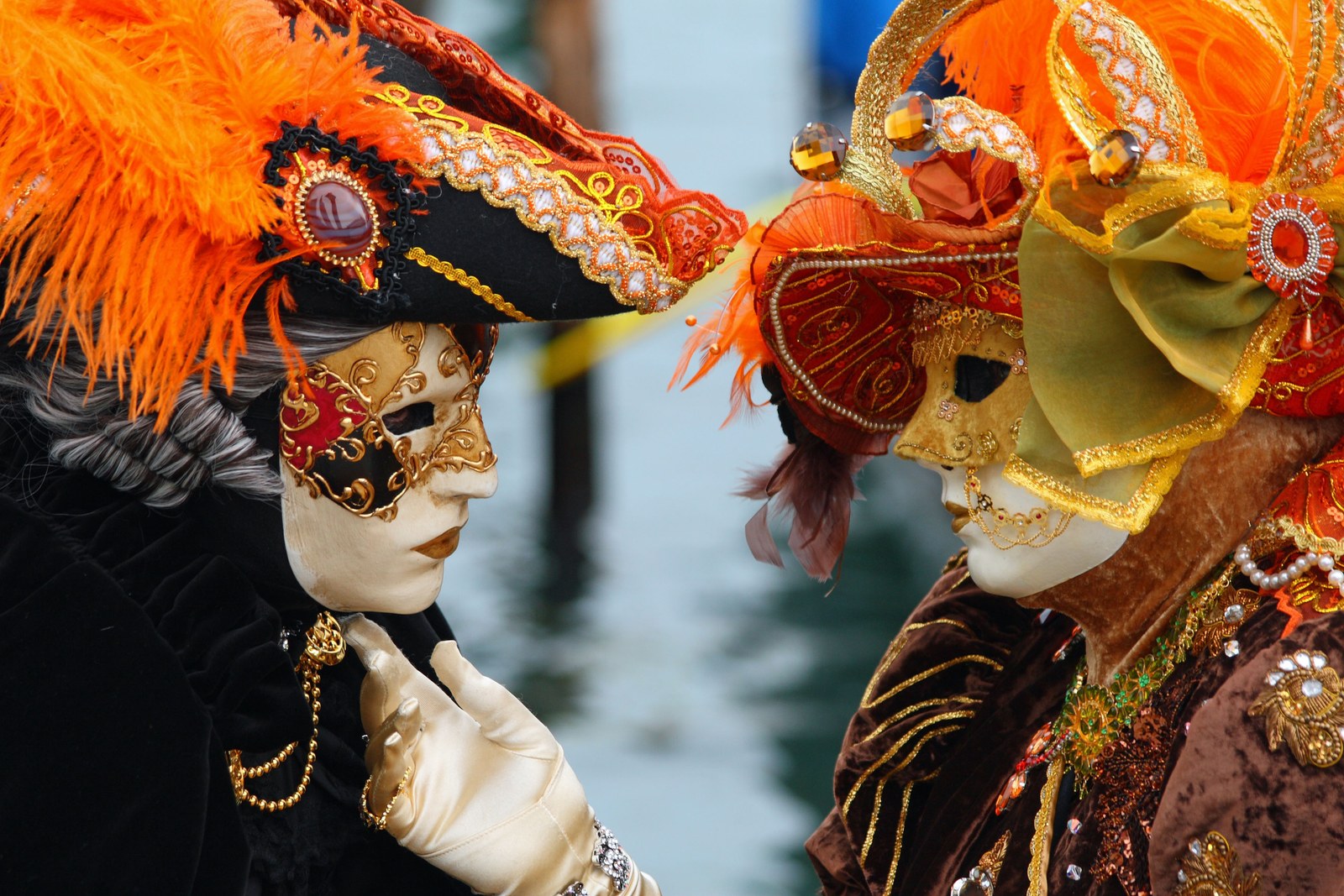
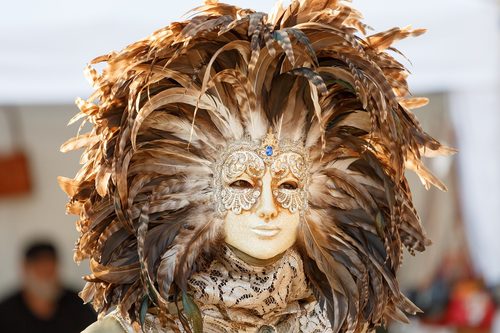
Mask art covers the carving, molding, and decoration of face coverings worn for theater, carnival, and festival. Bases vary by tradition: Noh masks are carved from cypress wood, Venetian masks are cast from papier-mâché or leather over a clay or plaster mold, and Commedia dell'arte masks are shaped from boiled leather pressed while damp. Once the shell is formed, makers sand it smooth, seal it with gesso, and build up the finish in layers—paint, gold or silver leaf, varnish, and often feathers, sequins, or fabric trim. Eye and mouth openings are cut to let the wearer see and breathe while keeping the sculpted expression intact. Straps, ribbons, or a handheld stick secure the mask in place. The finished object reads instantly from a distance, relying on exaggerated brow, nose, or mouth shapes and bold color contrast rather than fine detail to project character across a room or a crowded street.
What defines the medium
Full-face and half-face forms
Masks are built as full-face shells covering the whole head or half-face designs that leave the mouth free for speech and expression. Theatrical traditions like Commedia dell'arte favor the half-mask so the actor's voice and jaw remain visible to the audience.
Material by tradition
Each mask lineage has a signature material: carved wood for Noh, boiled leather for Commedia dell'arte, papier-mâché or gesso-coated fabric for Venetian carnival. The material shapes both weight and how fine the sculpted detail can be.
Gilding and paint finishing
After the base shell is sanded smooth, makers apply gesso, then paint and often metal leaf in gold or silver. Multiple thin coats build a glossy, durable surface that catches light under stage or festival lighting.
Attachment hardware
Ribbons, elastic cord, chin straps, or a slender handheld stick hold the mask to the face or hand. This hardware is fitted last, after decoration, so it does not interfere with painting or gilding.
Exaggeration for visibility
Features are enlarged and simplified—arched brows, elongated noses, wide painted mouths—so expression reads clearly from a distance, whether across a theater or down a carnival parade route.
Stock character types
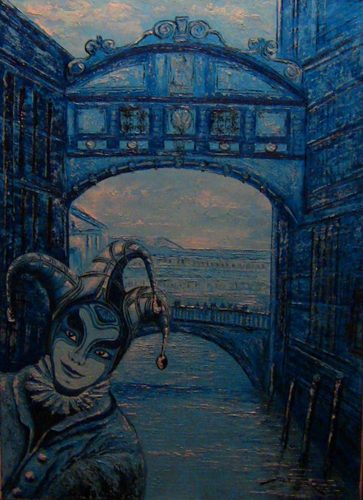
Many mask traditions reuse a fixed set of recognizable characters, such as Commedia dell'arte's Arlecchino and Pantalone, so audiences instantly identify personality and role from the mask's design alone.
Materials decoder
The toolkit of mask art
- papier-mâché
- → layered paper pulp pressed over a mold and dried into a light, rigid shell used for Venetian and carnival masks
- gesso and gold leaf
- → a chalky primer followed by thin sheets of metal leaf, giving Venetian masks their smooth, glossy, metallic finish
- carved cypress wood
- → the hand-carved wooden base of Noh masks, left with restrained, understated painted features
- boiled leather
- → leather softened, molded while damp, and dried into a rigid shape used for Commedia dell'arte masks
- sequins and feather trim
- → decorative embellishment stitched or glued to festival and Mardi Gras masks for sparkle and movement
- eye and mouth cutouts
- → functional openings framed in paint or gilding that let the wearer see and breathe without breaking the sculpted face
The story
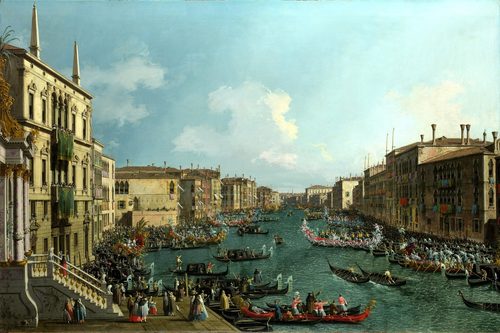
Mask-making theater traditions date back to ancient Greece, where terracotta and linen masks amplified voice and expression in outdoor amphitheaters from the 5th century BCE. Japanese Noh theater developed carved wooden masks from the 14th century, refined over generations into a small set of standardized character types. Commedia dell'arte troupes in 16th-century Italy fixed leather half-masks to a repertoire of stock characters. Venice's Carnival masks trace to the medieval period, reaching elaborate heights by the 18th century before Austrian rule suppressed public Carnival in 1797; the festival and its mask-making workshops were officially revived in 1979 and remain a major craft tradition today. Festival masks such as Mardi Gras and Day of the Dead calavera masks grew from separate regional celebrations into internationally recognized public art forms, now held in museum decorative-arts collections worldwide.
Masterpieces of the medium
| Work | Artist | Date | Why it matters |
|---|---|---|---|
| Bauta mask | Unknown | 18th century | traditional Venetian Carnival mask in gessoed, gilded papier-mâché with a squared jaw |
| Ko-omote Noh mask | Unknown | Muromachi period, 14th-16th c. | carved cypress mask representing a young woman, painted with restrained detail |
| Terracotta theatrical mask | Unknown | c. 4th century BCE | Greek votive mask reflecting exaggerated theatrical facial types |
| Arlecchino mask | Unknown | 16th century | molded leather Commedia dell'arte mask with a distinctive low brow and patched design |
| Calavera festival mask | Unknown | traditional, ongoing | painted papier-mâché skull mask worn during Mexican Day of the Dead celebrations |
 AI-generated
Try the medium
Try mask art with AI
This example was generated from a prompt like: “An ornate Venetian carnival mask displayed on black velvet, gessoed papier-mâché finished in gold leaf and deep red paint, intricate scrollwork around the eyes, dramatic museum spotlighting, richly textured surface detail.”
Open the Mask Art Style generator →The medium today
Mask-making survives as active craft in Venetian ateliers, Japanese Noh workshops, and carnival cities worldwide, alongside museum conservation of historic examples. Contemporary makers still hand-finish leather and papier-mâché with paint and leaf, while newer tools like 3D-printed molds speed up base shaping for festival and cosplay masks. Public collections display masks as decorative art objects, and annual carnivals such as Venice's and Trinidad's continue to commission new designs each year within long-established stock character traditions.
Compose your own
A beginner starts with a premade paper-pulp or plastic mask blank, or forms one over a balloon or clay mold using strips of papier-mâché. Once dry, the surface is sanded smooth and sealed with gesso. Features can be built up with additional paper pulp or lightweight modeling paste before painting. Acrylic paint works well for base color and shading, with metallic leaf or paint added for gilded highlights. Eye holes are cut before final finishing, and elastic cord or ribbon is attached last so it does not disturb wet paint.
Frequently asked questions
What materials are traditional carnival masks made from?
Most Venetian carnival masks are built from papier-mâché or gesso-coated fabric molded over a plaster form, then painted and often finished with gold or silver leaf and decorative trim.
Why do Noh masks look so understated compared to carnival masks?
Noh masks are carved from wood and painted with restrained, subtle expressions because the actor's movement and the play's poetic language, not exaggerated features, carry the emotional performance.
What is the difference between a full-face and half-face mask?
A full-face mask covers the entire face and is common in carnival and Noh traditions; a half-face mask leaves the mouth exposed, letting an actor speak clearly, as used in Commedia dell'arte.
How are historic masks preserved in museums?
Museums store historic masks in climate-controlled cases to protect fragile paint, gilding, and leather or wood from humidity swings, light exposure, and handling damage over time.