

Puppet art is the making and performing of figures animated by a hidden operator rather than acting under their own power. A puppet's construction depends on its type: marionettes are jointed figures carved from wood or molded, strung from a wooden control bar and moved by strings from above; hand and glove puppets fit over a performer's hand and arm, with head and hands carved or sculpted and a soft fabric body; rod puppets are moved from below or behind with rigid rods attached to limbs; shadow puppets are flat, often intricately perforated figures cut from leather or cardstock and pressed against a lit screen so only their silhouette and pierced detail are visible. Puppet makers combine woodcarving, sculpture, sewing, and sometimes leatherwork with an understanding of how a figure must move on stage. Painted faces, costume fabric, and jointing all serve the performance rather than standing as a static object, so puppets are often judged by how convincingly they move as much as how they look at rest.
What defines the medium
Type dictates construction
A puppet's category—marionette, hand puppet, rod puppet, or shadow puppet—determines its entire build, from jointing method to material. Makers choose construction to match how the figure will be gripped or strung and moved on stage.
Jointing for movement
Marionettes and rod puppets rely on carefully placed joints at the neck, shoulders, elbows, and hips so a figure can gesture convincingly. Loose, well-balanced joints matter more than fine surface detail for a puppet that must perform.
Control bar and strings
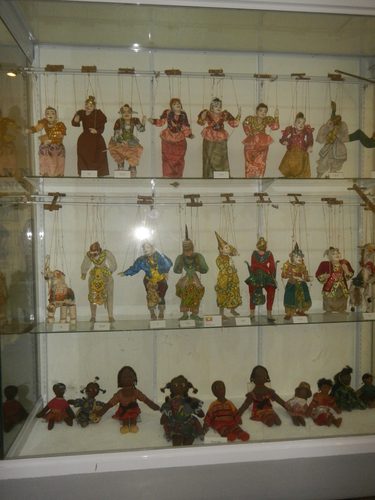
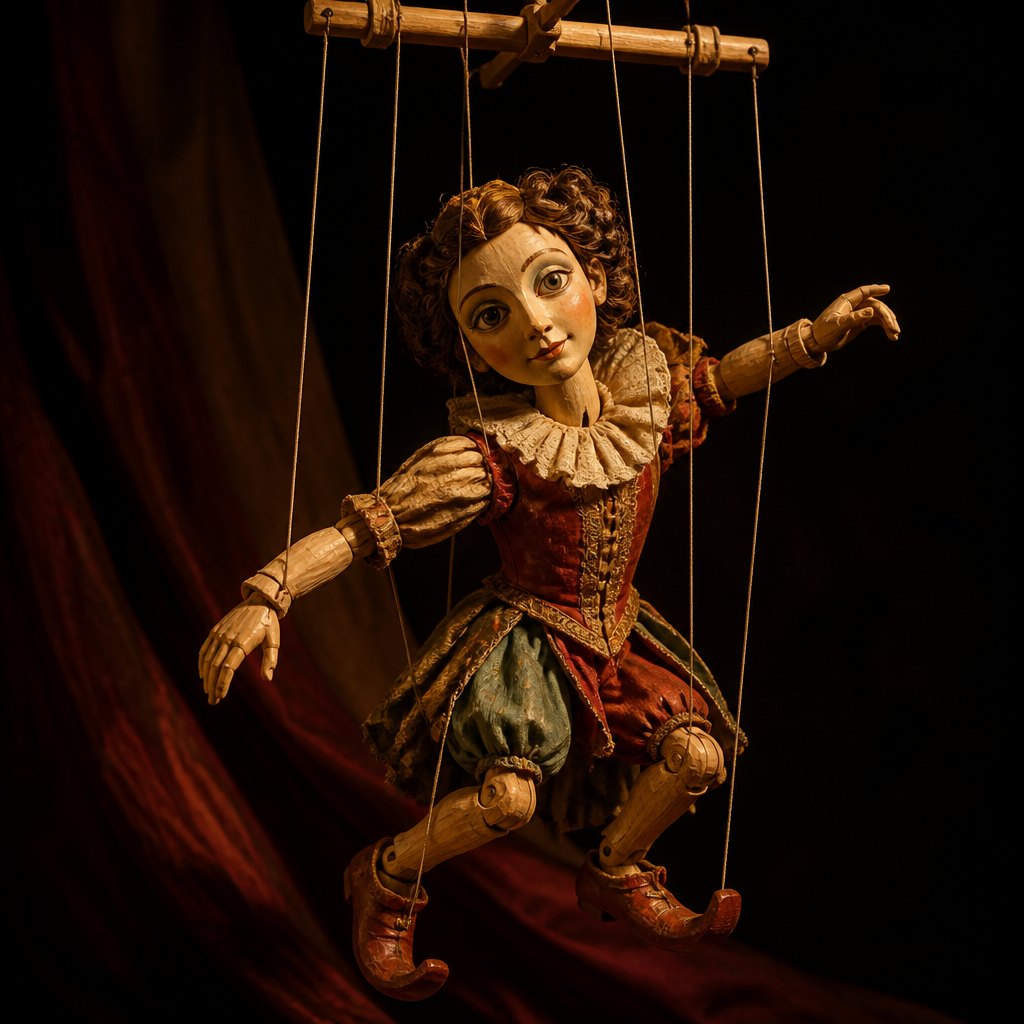
Marionette strings run from a wooden or metal control held by the puppeteer down to key points on the figure—head, hands, and sometimes knees or back—letting one operator translate hand movement into walking, bowing, or turning.
Silhouette over surface for shadow puppets
Shadow puppets are designed for their outline and pierced detail against a lit screen, not for close viewing. Fine perforated patterns for clothing and features read clearly only once light passes through the flat leather or card figure.
Hidden performer, visible figure
Across puppet traditions, the operator typically stays out of sight or visually minimized behind a booth, screen, or costume, so audience attention stays on the puppet rather than the hand or rod controlling it.
Repainting and repair over generations
Traditional touring and folk puppets were repainted, restrung, and repaired across long working lives rather than replaced, so surviving historic puppets in collections often show layers of paint and patched costume from decades of use.
Materials decoder
The toolkit of puppet art
- control bar
- → a wooden crosspiece marionette strings attach to, held by the puppeteer to translate hand movement into the figure's gestures
- carved wooden head
- → a sculpted head, often painted, used across marionette and hand-puppet traditions as the figure's most detailed and expressive part
- perforated leather figure
- → a flat, intricately cut leather shadow puppet whose pierced patterns let light through to form detailed silhouettes on screen
- glove body
- → a soft fabric body sewn to fit over a performer's hand and forearm, identifying a hand or glove puppet rather than a strung marionette
- rod attachment
- → a rigid stick fixed to a puppet's limb or head, operated from below or behind to produce broader, sweeping gestures strings cannot
- painted booth screen
- → the curtained stage or lit screen a puppeteer works behind, keeping the human performer hidden from the audience's view
The story
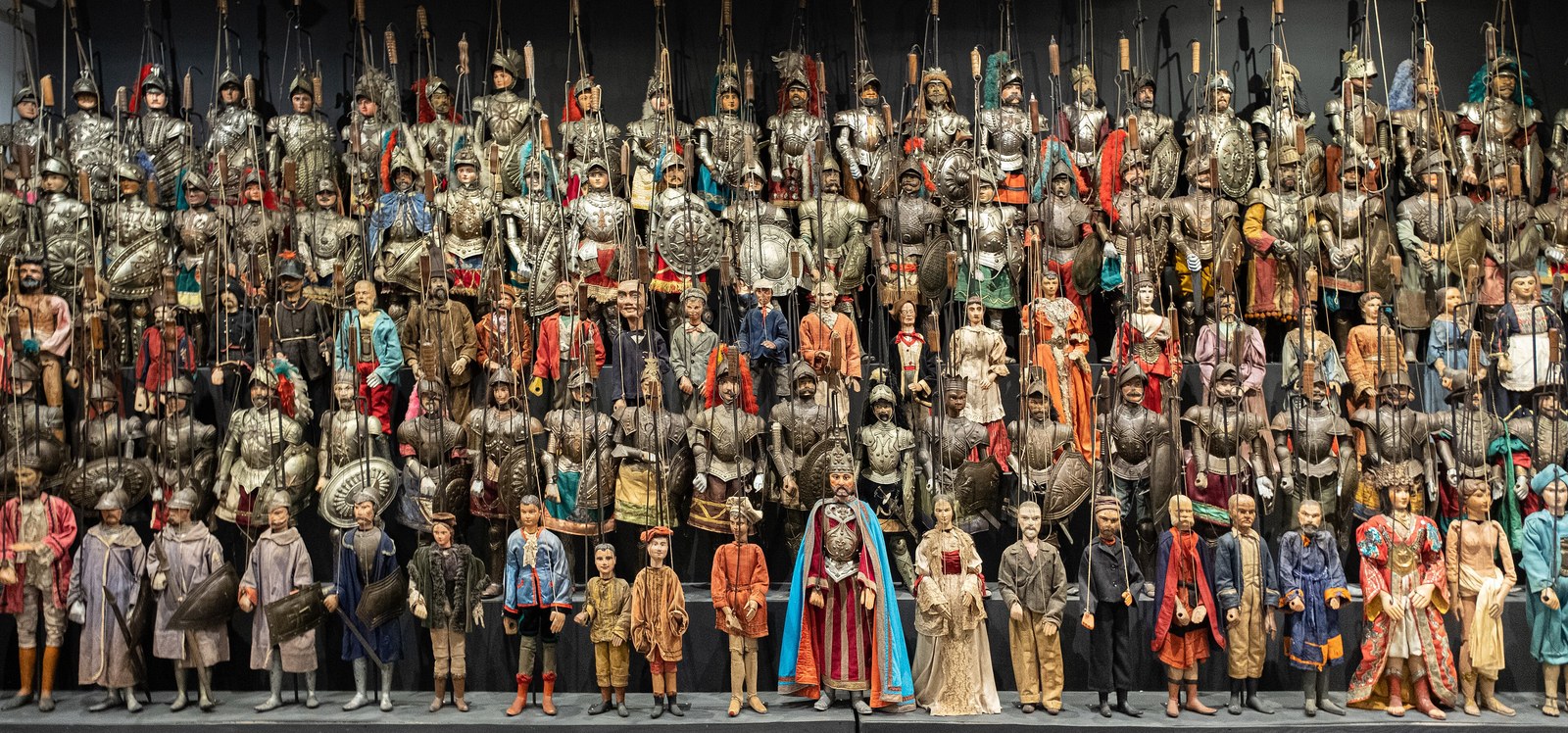
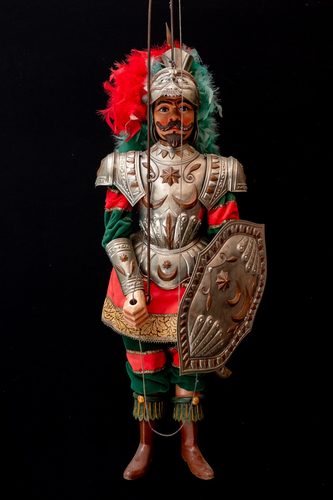
Puppetry appears across many independent traditions with long, separately documented histories. Wayang kulit, the shadow puppet theatre of Java and Bali using flat leather figures pressed against a lit screen, is documented in Indonesian written sources from at least the eleventh century. Japanese bunraku puppet theatre developed in Osaka in the late seventeenth century, using large rod puppets operated visibly by three coordinated puppeteers per figure alongside chanted narration and shamisen music. European string marionette theatre grew from medieval religious performance into the popular touring marionette troupes of eighteenth and nineteenth century Europe, with Sicily's Opera dei Pupi tradition of armored knight marionettes flourishing through the nineteenth century. The English hand-puppet character Punch, adapted from the Italian commedia dell'arte figure Pulcinella, was first recorded performing in London in 1662. Museums worldwide now hold historic puppet collections documenting these regional traditions.
Masterpieces of the medium
| Work | Artist | Date | Why it matters |
|---|---|---|---|
| Wayang Kulit shadow puppets | Unknown | documented from 11th century | flat, intricately perforated leather figures from Java and Bali, pressed against a lit screen for shadow theatre |
| Bunraku puppets | Unknown | developed late 17th century | large Japanese rod puppets operated by three visible puppeteers per figure, paired with chanted narration |
| Opera dei Pupi marionettes | Unknown | 19th century | Sicilian armored knight marionettes, carved and strung for touring chivalric adventure performances |
| Punch puppet | Unknown | first recorded 1662 | English hand-puppet character adapted from the Italian Pulcinella, first documented performing in London |
| Czech marionette figures | Unknown | 18th-19th century | carved wooden marionettes from a strong Bohemian marionette theatre tradition, now held in regional puppet museums |
 AI-generated
Try the medium
Try puppet art with AI
This example was generated from a prompt like: “A carved wooden marionette with painted face and jointed limbs, hanging from visible strings attached to a wooden control bar, warm stage lighting, richly detailed costume fabric, dark theatrical backdrop, close-up studio photograph.”
Open the Puppet Art Style generator →The medium today
Puppet art today spans traditional touring marionette and shadow theatre, television and film puppetry, and large-scale rod and body puppets built for parades and stage productions. Dedicated puppet museums preserve historic marionettes, hand puppets, and shadow figures alongside their control mechanisms and staging. Puppet-making combines woodcarving, sewing, and sometimes robotics for more mechanized figures, while traditional forms like wayang kulit and bunraku continue as living performance traditions. Puppetry is also widely used in education and therapy settings for its ability to represent characters and emotions indirectly.
Compose your own
A beginner typically starts with a simple hand puppet, since it needs no strings or rods to master—just a sewn or purchased body fitted over the hand with a basic sculpted or fabric head. Practice moving the puppet's head and hands smoothly and keeping its focus directed at whatever it addresses, since audiences read intention from small consistent gestures. Moving to a marionette requires learning a control bar with a handful of strings—head, hands, and feet—and practicing basic walks and turns before attempting complex gestures. Shadow puppetry beginners can start with simple flat cardstock silhouettes on sticks against a backlit screen, refining cut detail once basic movement and staging feel natural. In every form, movement and timing matter more at first than elaborate construction.
Frequently asked questions
What's the difference between a marionette and a hand puppet?
A marionette is strung from above and controlled with a control bar, allowing complex full-body movement from a distance. A hand puppet fits directly over the performer's hand, giving less range of motion but more immediate, intimate control.
How do shadow puppets create detail?
Shadow puppets are cut from thin leather or cardstock with fine perforations for clothing patterns, facial features, and jewelry. When light shines through the flat figure onto a screen, these cut details appear as intricate silhouette patterns.
Why do bunraku puppets need three operators?
Bunraku puppets are large and heavy enough to require one puppeteer for the head and right hand, one for the left hand, and one for the feet, coordinating closely so the figure moves as a single believable character.
Are traditional puppets still performed today?
Yes—wayang kulit shadow theatre, bunraku, and various marionette traditions continue as living performance forms in their regions of origin, alongside museum collections that preserve historic figures and their staging equipment.