
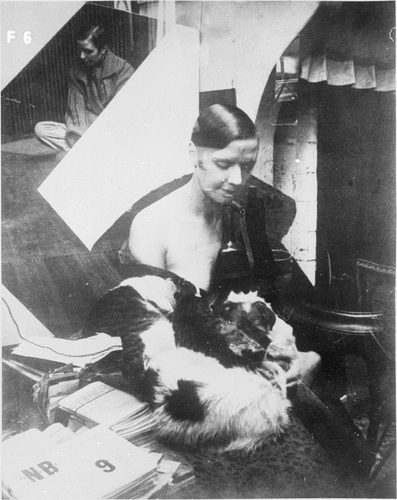
![[Portrait of a gentleman seated holding books on a table] — Photomontage](https://media.arttypes.com/encyclopedia/photomontage/commons-2-thumb.jpg)
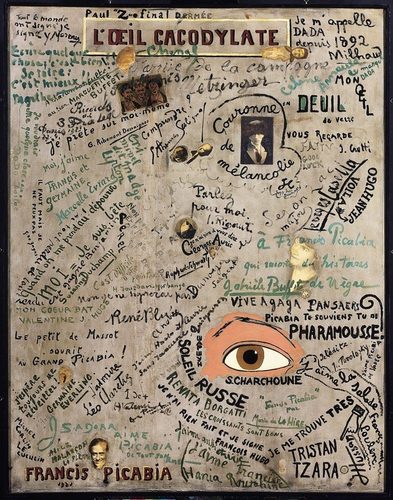
Photomontage builds one image from several photographs cut apart and reassembled, rather than shooting a scene straight through a lens. Practitioners work with scissors or a blade, printed photographs, glue or wax, and a mounting board, cutting figures, objects, or fragments from different sources and layering them together. Some photomontage leaves cut edges and mismatched scale visible, using the seams to unsettle a viewer or sharpen a political point; other work is retouched and rephotographed until the joins disappear and the composite reads as one continuous scene. Darkroom photographers achieved similar effects optically, combining multiple negatives through masked printing rather than physical cutting. Photomontage sits between photography and collage: it borrows the camera's documentary authority but assembles that authority into juxtapositions the camera itself never recorded, and it became closely tied to political satire, advertising, and magazine design through the twentieth century.
What defines the medium
Cut-and-paste assembly
Source photographs are physically cut with scissors or a blade and arranged on a mounting board, with glue or wax fixing fragments in place before the whole composite may be rephotographed for a clean final print.
Scale and perspective manipulation
Figures and objects from different original photographs rarely share a natural scale, so montage artists enlarge, shrink, or tilt fragments deliberately, sometimes for seamless illusion and sometimes to expose the artifice.
Seamless versus visible-seam approach
One tradition retouches and reshoots the composite until joins vanish entirely; the opposing tradition leaves cut edges and abrupt scale shifts visible, using the visible seams as part of the image's meaning.
Found and press source material
Montage artists frequently draw fragments from newspapers, magazines, advertisements, and stock photographs rather than shooting new material, treating existing printed imagery as raw supply.
Political and satirical juxtaposition
Photomontage has a strong tradition of combining photographs of public figures, machinery, and text to make pointed political or satirical statements, especially in interwar European magazine and poster work.
Combination with typography
Many photomontages incorporate cut or printed text and headline fragments directly into the composition, blurring the line between image and printed page and reinforcing a message or caption.
Materials decoder
The toolkit of photomontage
- cut, hard-edged seams
- → abrupt boundaries where one photograph fragment meets another, left visible rather than retouched away
- mismatched scale
- → figures or objects sized inconsistently with their surroundings, signaling they were sourced from separate original photographs
- halftone dot texture
- → the visible dot pattern of source material clipped from printed newspapers or magazines
- collaged text fragments
- → cut headline or caption pieces layered into the image, tying the montage to its printed-page origins
- mounted board edges
- → the physical backing surface where cut photographs were glued, sometimes left visible at the work's border
- combination-printed soft blend
- → seamless darkroom-merged imagery from multiple negatives, showing no cut edges at all
The story
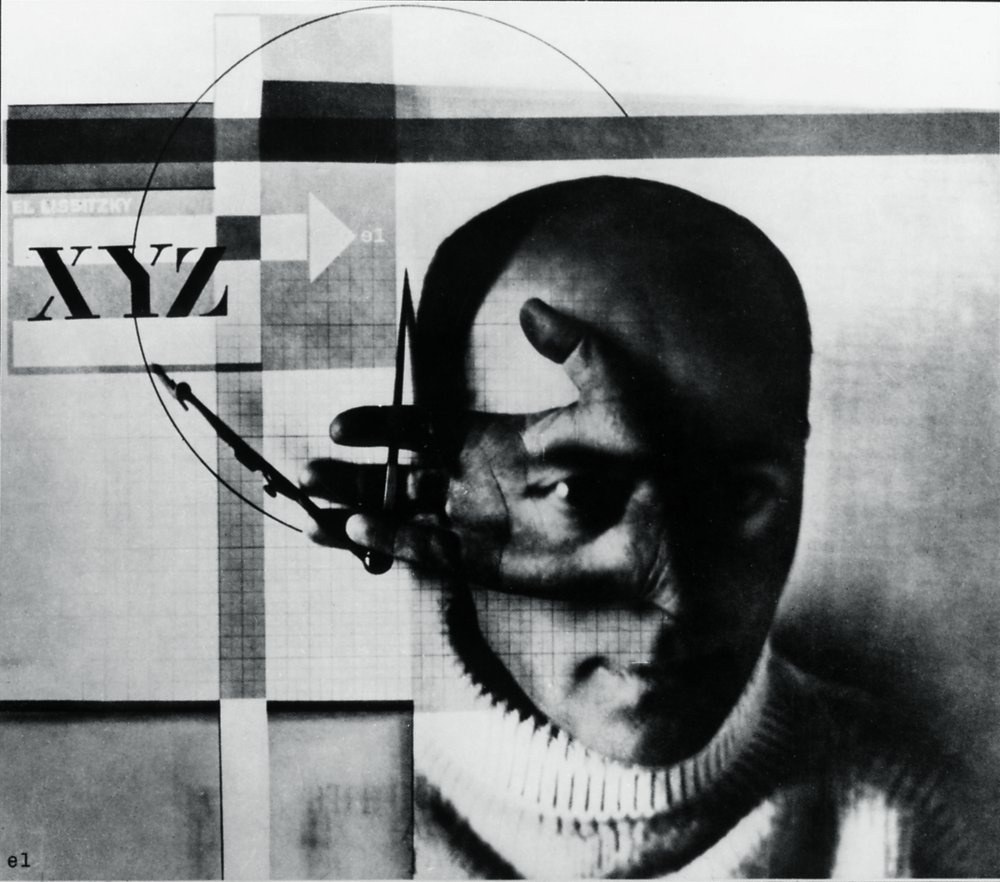
Photomontage emerged among Berlin Dada artists around 1918-1920, who cut and reassembled photographs and printed text to mock authority and machine-age culture; the technique's name is credited to that Berlin circle. Soviet Constructivists including El Lissitzky adopted photomontage for graphic design and propaganda through the 1920s. Through the 1930s, anti-fascist photomontages appeared regularly on the cover of the German magazine Arbeiter-Illustrierte-Zeitung, satirizing Nazi leadership using combined press photographs. Soviet state posters used similar techniques to promote industrial and political campaigns. Advertising and magazine design absorbed combination printing and cut-paper montage through the mid-twentieth century. Digital compositing software from the 1990s onward replaced scissors and glue for most professional work, though physical cut-paper photomontage persists in fine art and zine culture.
Masterpieces of the medium
| Work | Artist | Date | Why it matters |
|---|---|---|---|
| The Constructor | El Lissitzky | 1924 | self-portrait photomontage combining the artist's eye, hand with compass, and geometric text |
| Merz picture assemblages | Kurt Schwitters | 1919-1937 | collaged compositions combining found paper and photographic fragments |
| Berlin Dada photomontage works exhibited 1920 | Unknown | 1919-1920 | large-scale Dada composites combining political figures and machine parts, shown at the First International Dada Fair |
| AIZ magazine anti-fascist cover photomontages | Unknown | 1930-1938 | satirical composites combining press photographs, published in a Berlin illustrated weekly |
| Soviet propaganda poster photomontages | Unknown | 1920s-1930s | worker photographs combined with bold typography for state industrial campaigns |
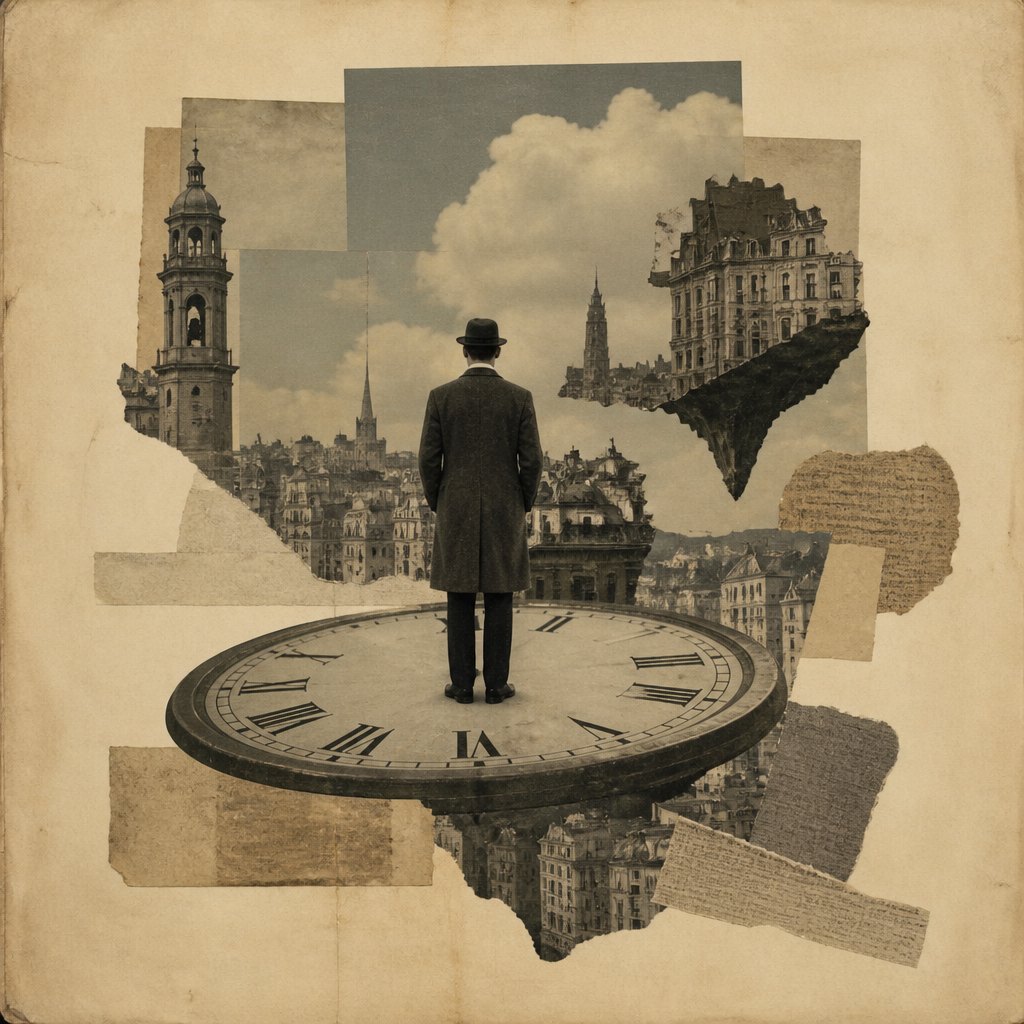 AI-generated
Try the medium
Try photomontage with AI
This example was generated from a prompt like: “A surreal photomontage combining a cut-out figure standing on an oversized clock face, floating cityscape fragments and newspaper headline scraps pasted around it, visible cut edges, muted sepia and gray tones, mounted on aged paper.”
Open the Photomontage Art Style generator →The medium today
Photomontage now happens mostly in digital compositing software, where layering, masking, and blending replace scissors and glue while keeping the same core idea of fusing separate photographs into one scene. The technique remains common in editorial illustration, protest and activist graphics, advertising, and surreal composite art shared online. Physical cut-paper montage survives in zine culture, collage workshops, and fine art practices that value the tactile, visible-seam version of the technique over seamless digital blending.
Compose your own
Begin by gathering source photographs from magazines, printed material, or your own prints, choosing images with a shared light direction or theme to combine convincingly. Cut figures or objects out carefully with scissors or a blade, then arrange them on a mounting board before gluing, testing composition and scale relationships first. Decide early whether you want visible cut seams for a raw, graphic effect or plan to retouch and rephotograph the composite for a seamless result. Add cut text or headlines if the piece has a satirical or editorial point to make.
Frequently asked questions
How is photomontage different from digital photo editing?
Traditional photomontage is physically cut and pasted from printed photographs onto a board; digital photo editing achieves the same layered composite effect using software, without any physical cutting or glue.
Why is photomontage linked to political art?
Because it combines real photographic evidence into new, often satirical arrangements, photomontage was widely used in the 1920s-30s to critique political leaders and propaganda using their own photographic image against them.
Do photomontage artists always leave the cuts visible?
No—some artists retouch and rephotograph a composite until it reads as one continuous photograph, while others deliberately leave scale mismatches and cut edges visible as part of the work's meaning.
What is combination printing?
Combination printing is a darkroom technique that merges multiple negatives into one seamless photographic print using masks, achieving a montage effect optically rather than by physically cutting paper.