
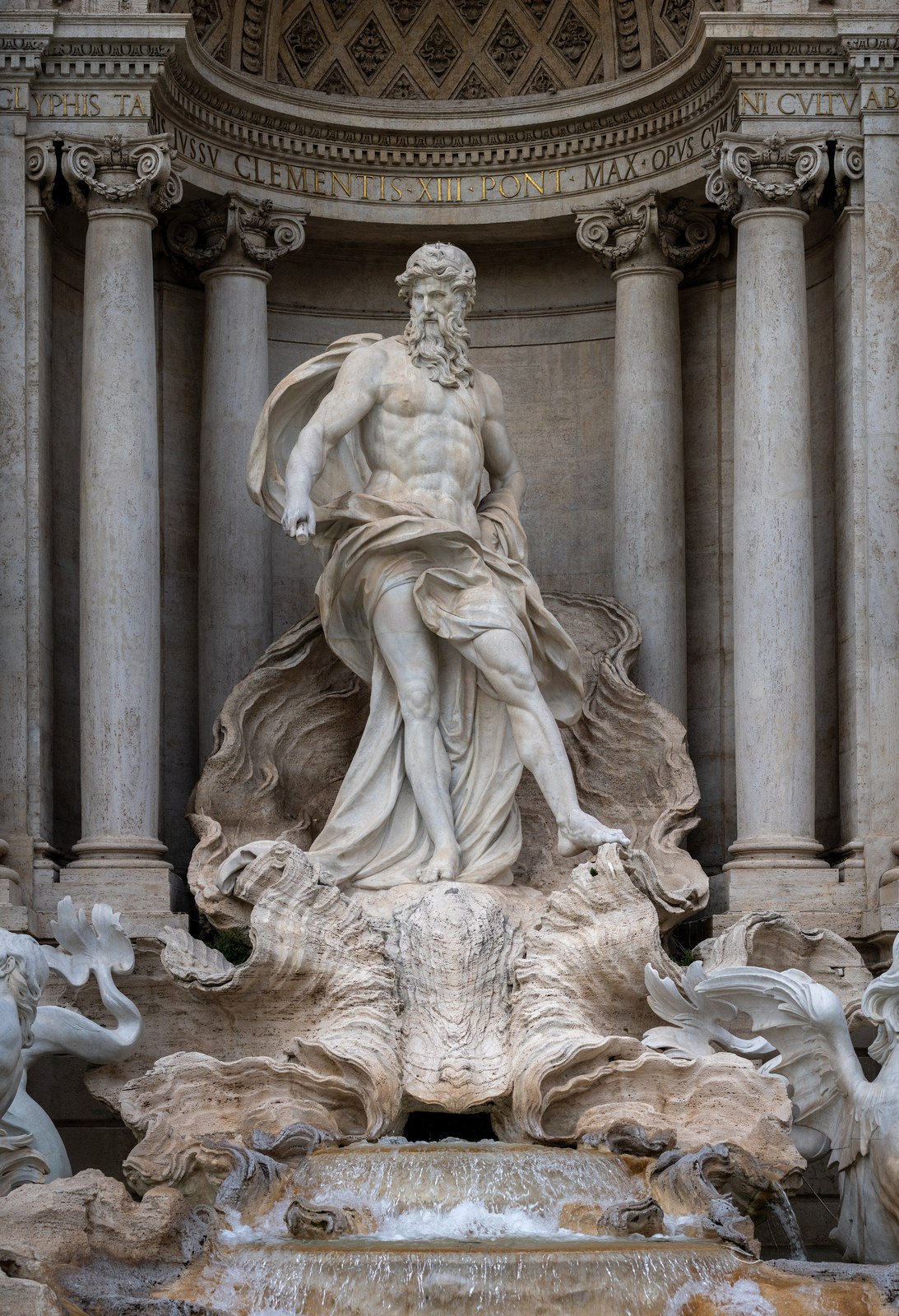
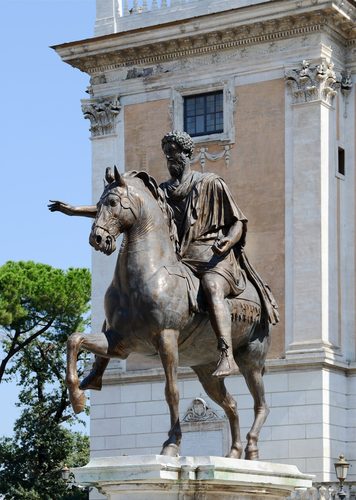
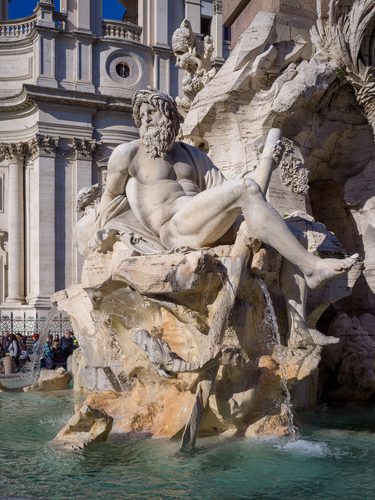
Public art is artwork—sculpture, murals, mosaics, fountains, or installations—made for and sited in shared public space rather than a gallery or private collection. It is usually commissioned by a government agency, developer, or community organization through open calls or juried competitions, often funded through 'percent for art' ordinances that dedicate a portion of construction budgets to art. Materials favor durability and low maintenance: cast bronze, carved granite or marble, welded steel, weatherproof exterior paint, and glass or ceramic mosaic tile all withstand decades of outdoor exposure and public handling. Scale tends toward the monumental, since work must read clearly from a distance and hold its own against buildings, traffic, and crowds. Murals are painted directly onto building facades or fabricated panels; sculptures are cast, carved, or welded off-site and installed on prepared foundations. Community input, accessibility, and long-term upkeep are considered from the planning stage, making public art as much a civic and logistical project as an artistic one.
What defines the medium
Commissioning and selection
Most public art begins with a government agency, developer, or arts council issuing an open call or juried competition. Selection panels weigh artistic merit, site fit, budget, and durability before a proposal is approved and funded.
Site-specific design
A successful public work responds to its exact location—sightlines, foot traffic, surrounding architecture, and scale of the plaza or wall it occupies. Designs are rarely portable; they are built for one place and rarely relocated.
Durable, weatherproof materials
Because works stand outdoors for decades, materials are chosen for weather resistance and low maintenance: cast bronze, carved stone, powder-coated steel, and exterior-grade paints and tiles that resist fading, rust, and vandalism.
Percent-for-art funding
Many cities require a fixed percentage of large construction budgets—often one to two percent—to fund public art, a policy that has financed thousands of civic sculptures and murals since the mid-twentieth century.
Community engagement
Murals and neighborhood installations frequently involve public workshops, resident votes, or local youth participation, especially when the work addresses local history or identity rather than a purely aesthetic statement.
Maintenance and stewardship
Ownership typically passes to the commissioning body, which budgets for cleaning, repair, and eventual conservation or removal. Long-term stewardship plans are now a standard part of any public art commission contract.
Materials decoder
The toolkit of public art
- cast bronze
- → the standard material for durable outdoor figures, identifiable by its dark green-brown patina formed as the metal oxidizes over years outdoors
- carved stone
- → granite or marble shaped for monuments and memorials, its surface softening and lightly weathering over decades of outdoor exposure
- mural paint on masonry
- → large-scale acrylic or exterior-grade paint applied directly to brick or concrete walls, visible from a block away
- mosaic tile cladding
- → small glass or ceramic pieces set into mortar, used for weatherproof, colorful surface decoration on walls or pavement
- welded steel armature
- → a structural steel framework supporting large abstract sculptures, often left exposed as part of the finished design
- dedication plaque
- → an engraved bronze or stone marker naming the artwork, its maker, and its unveiling date, fixed near the piece
The story
Public art has ancient roots in Egyptian obelisks, Roman equestrian statues, and Greek civic monuments meant to be seen by entire populations rather than private patrons. European cities built commemorative statues and fountains through the Renaissance and into the nineteenth century, when war memorials proliferated after major conflicts. In the United States, the Federal Art Project of the 1930s employed artists to create murals and sculptures in post offices and public buildings during the Depression. Philadelphia passed the first American percent-for-art ordinance in 1959, requiring a share of construction budgets to fund public commissions, and hundreds of cities worldwide later adopted similar programs. Postwar abstract sculpture brought modernist forms to plazas outside corporate towers, while the 1980s saw public debate over site-specific works, including the 1989 removal of a contested sculpture from a New York plaza. Today public art spans permanent monuments, temporary installations, and neighborhood murals produced with direct community involvement.
Masterpieces of the medium
| Work | Artist | Date | Why it matters |
|---|---|---|---|
| Statue of Liberty | Frédéric Auguste Bartholdi | 1886 | a colossal copper-clad monument in New York Harbor, one of the world's best-known public sculptures |
| Mount Rushmore | Gutzon Borglum | 1927-1941 | four presidential portraits carved directly into a South Dakota granite mountainside |
| Nelson's Column | Edward Hodges Baily | 1843 | a stone figure atop a tall column in London's Trafalgar Square, marking a naval victory |
| Manneken Pis | Unknown | 1618-1619 | a small bronze fountain figure in Brussels that became one of Europe's most copied civic landmarks |
| Standing Lincoln | Augustus Saint-Gaudens | 1887 | a bronze figure of Abraham Lincoln in Chicago's Lincoln Park, praised for its naturalistic pose |
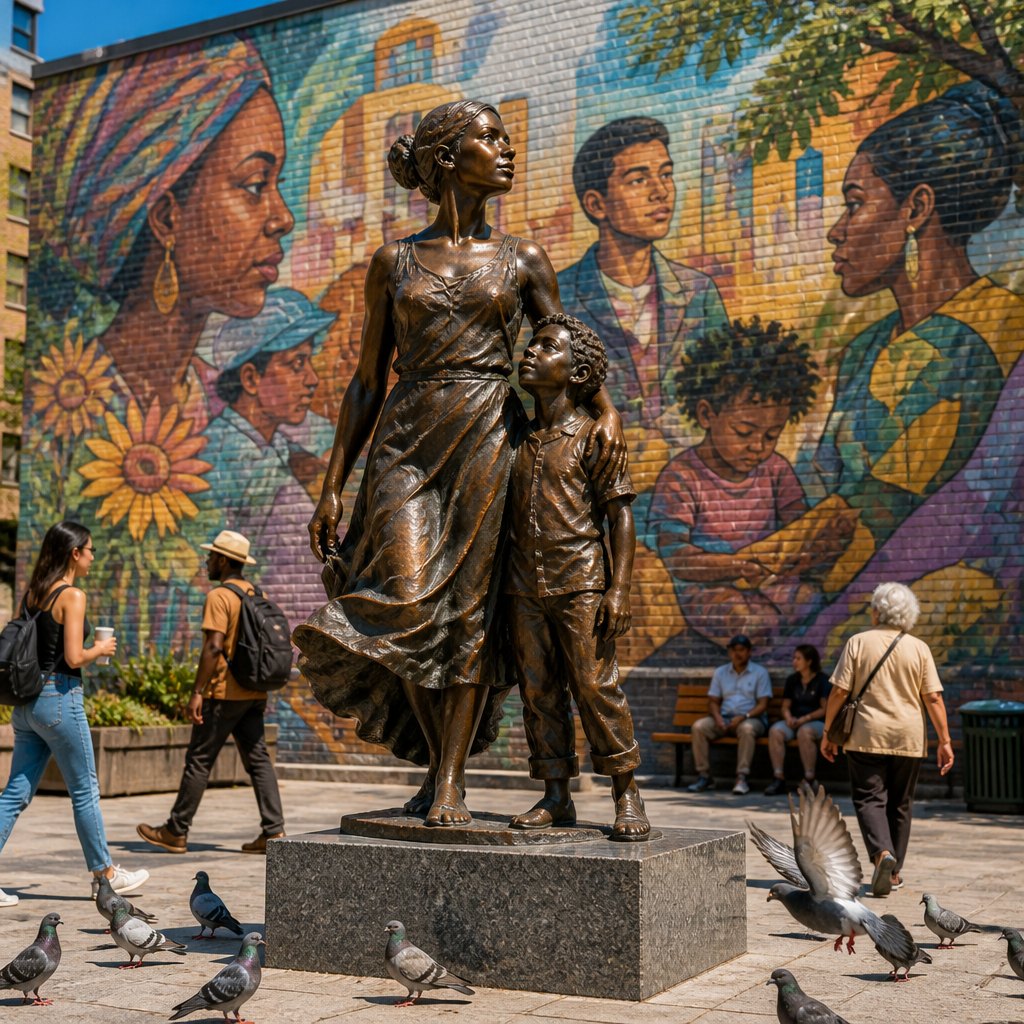 AI-generated
Try the medium
Try public art with AI
This example was generated from a prompt like: “A bronze figurative sculpture standing on a granite plinth in a sunlit city plaza, surrounded by pigeons and pedestrians, with a colorful community mural covering the brick wall behind it.”
Open the Public Art Style generator →The medium today
Contemporary public art ranges from monumental sculpture outside government buildings to community-painted murals addressing local history and identity. Percent-for-art ordinances remain widespread, funding thousands of new commissions each year, while temporary installations and festival-based murals let cities test ideas without permanent commitment. Memorial projects continue to reckon with contested history, sometimes prompting the relocation or reinterpretation of older monuments. Digital projection and light-based elements increasingly supplement traditional bronze and paint, and finished works are widely documented and shared online, extending their audience well beyond the physical site.
Compose your own
Beginners typically start small: painting a mural with a local business's permission, entering a neighborhood beautification grant, or volunteering on an established public art project to learn the permitting and fabrication process. Researching the site—its history, sightlines, and audience—shapes a stronger proposal than a design created in isolation. Learning weatherproof materials and techniques, such as exterior-grade paint or basic mosaic setting, matters as much as drawing skill, since outdoor durability is non-negotiable. Building a portfolio through smaller, low-stakes commissions, mural festivals, or temporary installations helps demonstrate reliability before applying to city or agency-run public art rosters, which often require proof of past outdoor work.
Frequently asked questions
Who pays for public art?
Funding usually comes from government percent-for-art ordinances, private developers, nonprofit arts councils, or a mix of grants and donations, with the commissioning body owning and maintaining the finished work.
What's the difference between public art and street art?
Public art is typically commissioned, permitted, and funded by an institution, while street art—including most graffiti—is created independently, often without official permission, though the two overlap in murals.
Why is bronze so common for public statues?
Bronze resists corrosion, holds fine detail from casting, and develops a stable protective patina outdoors, making it durable enough to survive decades of weather with minimal maintenance.
Can public art be removed once installed?
Yes—commissioning bodies can relocate, restore, or deaccession works, a process that has become more common as communities reassess older monuments' historical context.