
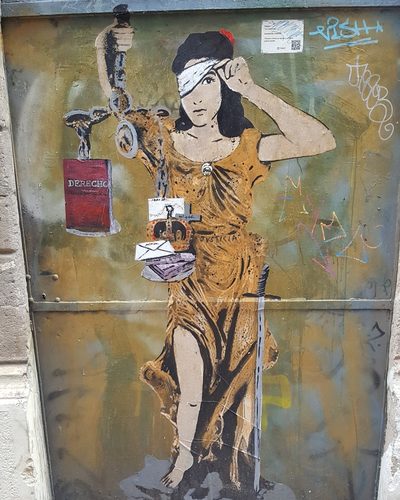
Stencil art is made by cutting a shape out of a stiff material—cardboard, plastic sheet, or metal—so that pigment applied over it only reaches the surface through the open areas. Spray paint is the most common medium today, though brushes, rollers, and dabbers work as well, each producing a different edge quality: spray gives a soft, slightly diffused line, while a brush or roller through the same cutout leaves a crisper, flatter mark. Complex images require multiple stencils, one for each color or tonal layer, aligned in sequence on the same surface. Designers leave small connecting bridges within a stencil so that enclosed shapes, like the center of a letter O, do not fall out of the cut template. Because the same stencil can be reused, the technique naturally produces multiples—identical or near-identical images repeated across a wall, a city, or a print run, reading instantly by sharp silhouette edges and flat color fields.
What defines the medium
Negative space and bridges
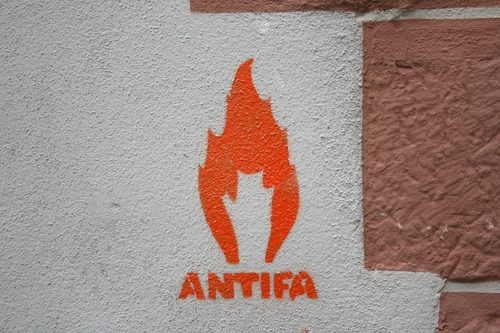
A stencil is designed around what is cut away, not what remains, so enclosed shapes like the center of a letter need small connecting bridges to hold them in place within the surrounding template.
Layering multiple stencils
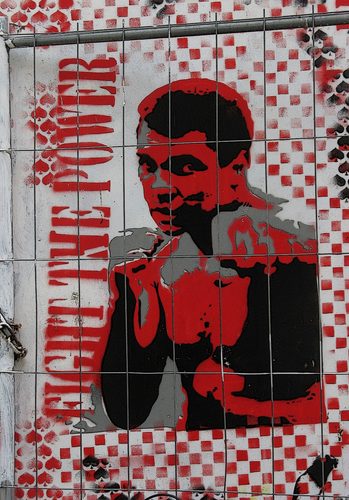
Multi-color stencil work uses a separate cut template for each color or tonal layer, applied in sequence and aligned with registration marks so the layers build into a single coherent image.
Surface choice
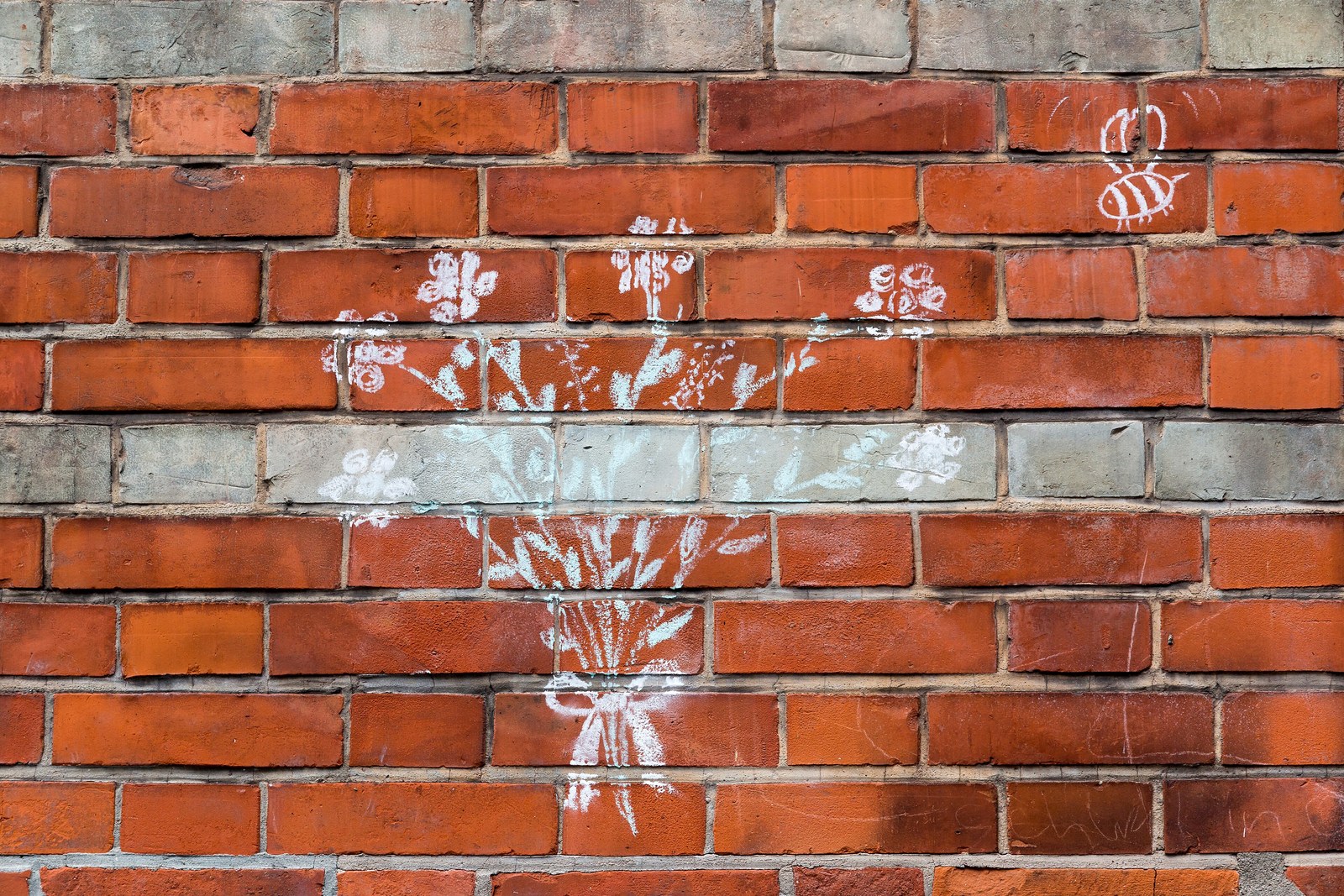
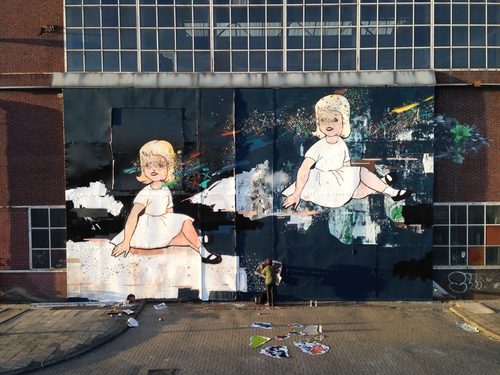
Stencils are applied to walls, canvas, fabric, paper, and street furniture, with porous or textured surfaces like brick or concrete producing rougher, more broken edges than smooth painted walls or paper.
Template material
Cutting material affects durability and detail: cardboard is cheap but wears quickly, while acetate, mylar, or laser-cut vinyl hold finer detail and survive many reuses across multiple applications.
Spray versus brush application
Spray paint pushed through a stencil produces a soft-edged, slightly diffused mark with a visible overspray halo, while a brush, roller, or dabber through the same cutout leaves a flatter, crisper edge.
Repeatable multiples
Because one cut template can be reused many times, stencil art naturally produces identical or near-identical images across multiple locations or copies, unlike freehand painting or drawing.
Materials decoder
The toolkit of stencil art
- stencil bridge
- → a small uncut connector holding an enclosed shape, like the center of a letter, in place within the template
- spray overspray halo
- → a soft, slightly diffused edge and faint mist around a shape, left when spray paint passes through a cut opening
- sharp die-cut edge
- → a crisp, flat-color silhouette line typical of brush or roller application through a stencil
- registration marks
- → small aligned guide marks used to line up multiple color layers cut as separate stencils
- acetate or mylar sheet
- → a durable, semi-transparent cutting material that allows a stencil to be reused many times without warping
- aerosol can nozzle texture
- → fine speckled dot patterns from spray paint pressure, visible up close within a stenciled color field
The story
Hand stencils are among the earliest known images, made by blowing pigment around a hand pressed against cave walls tens of thousands of years ago at sites such as the Maros-Pangkep caves in Sulawesi, and around 9,000 years ago at Cueva de las Manos in Argentina. Japanese katagami, intricately cut paper stencils for dyeing kimono fabric, developed a refined tradition by the Edo period. In early 20th-century Paris, pochoir became a fine hand-coloring technique for fashion plates and limited-edition prints, used by Henri Matisse for his 1947 cut-paper series Jazz, printed as stencil-colored plates. Wartime governments used stencils to mass-produce propaganda and safety notices quickly during the 1940s. Stencils became central to street art from the 1970s onward for their speed and repeatability with spray paint, and by the early 2000s museums and galleries began formally acquiring stencil-based street art as a recognized contemporary form.
Masterpieces of the medium
| Work | Artist | Date | Why it matters |
|---|---|---|---|
| Jazz | Henri Matisse | 1947 | cut-paper compositions reproduced as pochoir stencil-printed plates |
| Katagami dye stencils | Unknown | Edo period | finely cut Japanese paper stencils used to apply repeating patterns to kimono fabric |
| Gazette du Bon Ton fashion plates | Unknown | 1912-1925 | Parisian fashion illustrations hand-colored using the pochoir stencil technique |
| Wartime information stencils | Unknown | 1940s | mass-produced stencil posters and wall notices used for rationing and safety messages |
| First major museum acquisitions of street stencil art | Unknown | early 2000s | institutional collecting that recognized spray-stencil street work as a contemporary art category |
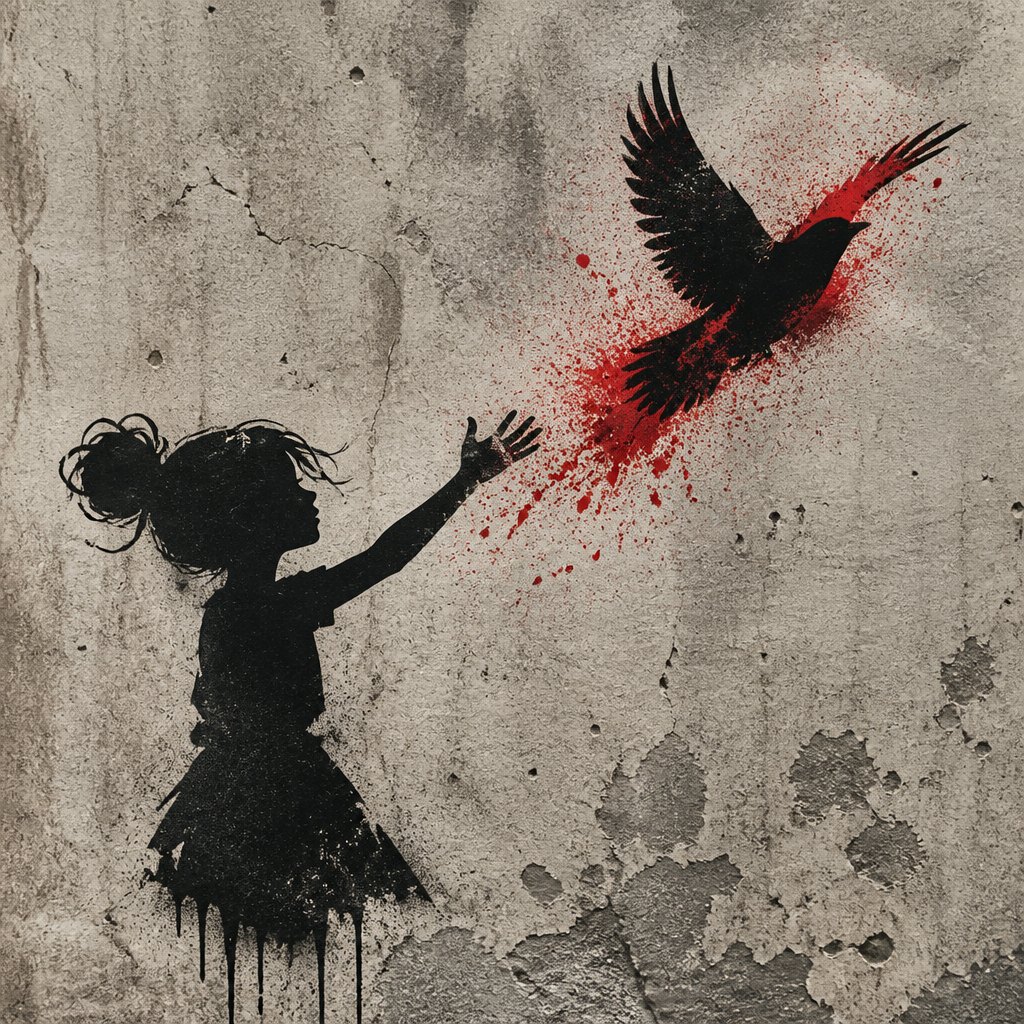 AI-generated
Try the medium
Try stencil art with AI
This example was generated from a prompt like: “A high-contrast stencil-style silhouette on a weathered concrete wall, sprayed in flat black and red paint, sharp die-cut edges with a faint aerosol overspray halo, visible bridge marks within the shapes.”
Open the Stencil Art Style generator →The medium today
Stencil art now spans street murals, screen printing crossover work, and craft applications from laser-cut kits to home decor. Digital design software is often used to convert a photograph into a high-contrast stencil-ready image before cutting. Vinyl cutting machines have replaced hand-cut cardboard for many applications, producing finer detail and more durable, reusable templates. Public street stencil work is increasingly commissioned for murals and festivals, and museums continue to collect and exhibit stencil-based street art as part of contemporary art history.
Compose your own
Starting in stencil art begins with a simple, high-contrast image reduced to solid black-and-white shapes, since fine detail and thin lines are hard to cut cleanly. Convert a photo or drawing to this silhouette form, then transfer it onto stiff card, acetate, or mylar and cut the shapes out with a sharp craft knife, leaving small bridges to hold enclosed areas like the center of a letter in place. Tape the stencil securely to the surface to stop paint bleeding underneath, then apply spray paint in light, even layers, or use a stencil brush with a dabbing motion for a crisper edge. Peel the stencil away carefully once the paint has set, and register a second stencil for any additional colors.
Frequently asked questions
What is a stencil bridge?
A bridge is a small uncut section of a stencil that keeps an enclosed shape, such as the center of a letter O, physically connected to the rest of the template so it does not fall away when cut.
Why do spray-painted stencils have a soft edge?
Spray paint disperses as a fine mist, so some of it drifts slightly under the stencil's edge before settling, creating a faint halo. Brush or roller application through the same stencil produces a much crisper line.
What materials are used to cut a stencil?
Cardboard and stiff paper are cheap and common for single or short-term use, while acetate, mylar, or laser-cut vinyl hold finer detail and can be reused many times without warping or tearing.
How do multi-color stencil pieces work?
Each color is cut as its own separate stencil and applied in sequence on the same surface, using small registration marks to align every layer so the finished image reads as one coherent picture.