
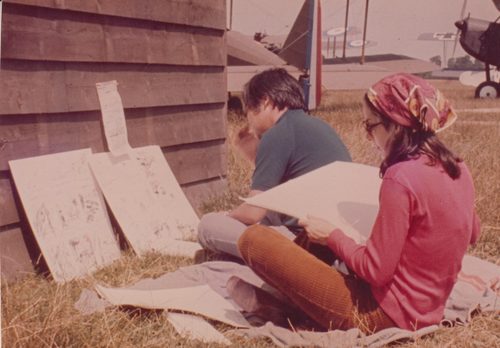
Storyboard art is a sequence of drawn panels, each representing one shot or camera setup, used to plan a film, animated sequence, or commercial before it is filmed or animated. Panels are drawn roughly in the order they will appear on screen, showing character placement, camera angle, and framing, often with a brief line of dialogue or action description written beneath each image. Artists typically work quickly in pencil, pen, or digital line drawing rather than full color rendering, since the goal is to communicate staging and timing, not finished art. Boards are arranged in horizontal rows on a page or pinned to a wall so a director or team can walk through a scene's flow at a glance, moving panels around to test pacing. Some storyboards remain loose gesture sketches; animation studios often produce highly refined storyboards close to the finished shot composition. Digital storyboarding software has largely replaced paper boards, allowing panels to be reordered, timed, and exported directly into an animatic.
What defines the medium
Panel-by-panel shot planning
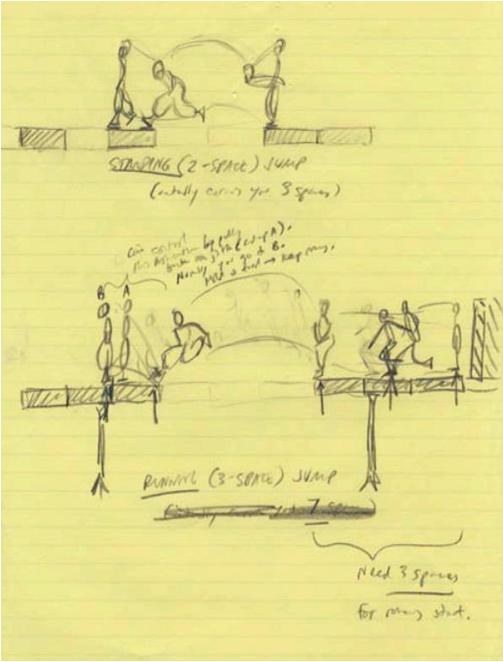
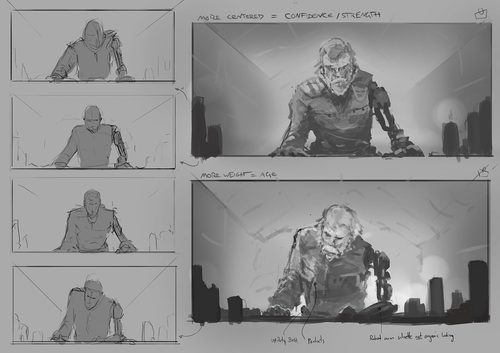
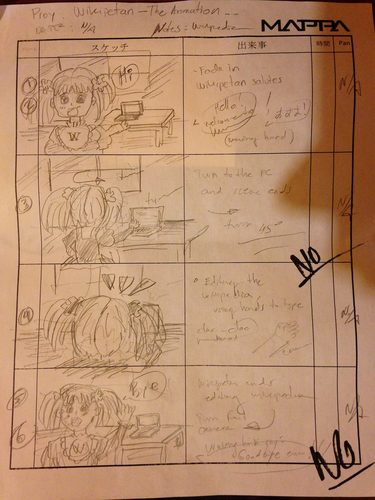
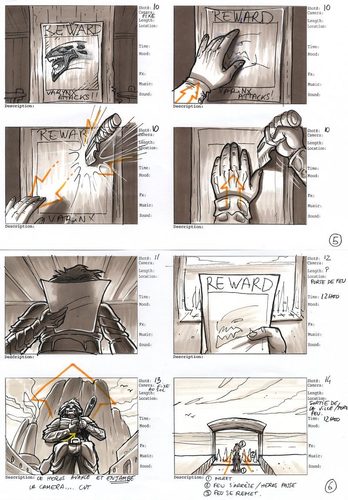
Each panel represents a single camera shot or key moment, drawn in sequence so a director can review staging, blocking, and framing before committing time or budget to filming or animating it.
Arrows and camera notation
Storyboards use simple graphic notation—arrows for camera movement or character motion, dotted lines for eyelines—layered over the sketch to communicate direction without needing extra drawings.
Loose, fast linework
Boards are typically drawn quickly in pencil or pen with minimal shading, since speed and clear staging matter more than finish; detail is added only where it affects the shot's meaning.
Text beneath each panel
A short line of dialogue, sound cue, or action description usually runs beneath each panel, tying the image directly to the script and helping viewers follow the sequence without watching footage.
Animatics and timing
Boards are often photographed or scanned and edited together with rough audio into an animatic, a timed rough cut that tests pacing before any final frame is produced.
Revision through pinning or digital reordering
Because sequences change constantly during planning, boards are traditionally pinned to a corkboard for easy reordering, a habit now mirrored in digital storyboard software's drag-and-drop panel timelines.
Materials decoder
The toolkit of storyboard art
- numbered panel grid
- → a row of small rectangular frames, each numbered in sequence, the basic unit of a storyboard page
- camera-movement arrow
- → a drawn arrow layered over a sketch indicating a pan, tilt, or dolly move planned for that shot
- rough pencil or pen linework
- → quick, unshaded contour drawing used for speed, since storyboards prioritize clear staging over finished rendering
- dialogue and action line
- → a short caption written beneath a panel connecting the sketch directly to the script's dialogue or described action
- corkboard pin layout
- → storyboard panels pinned in rows on a wall so a team can review and physically reorder a scene's flow
- animatic timeline strip
- → boards edited together with timing marks and rough audio, forming a moving rough cut before final production
The story
Storyboarding developed at Walt Disney's animation studio in the early 1930s, where artists pinned sequential sketches to a board to plan short cartoons before animation began, formalizing a practice credited to the studio's story department. Live-action filmmaking adopted the technique through the 1930s and 1940s as directors and art departments used board sequences to plan complex or expensive shots in advance. Storyboards became standard tools across Hollywood studio production by the mid-twentieth century, used for everything from action sequences to advertising. Television and commercial production expanded storyboard use further from the 1950s onward. Digital storyboarding software emerged from the 1990s and 2000s, letting artists draw, time, and edit panels directly into rough digital animatics, a workflow now standard across film, television, animation, and game cinematic production.
Masterpieces of the medium
| Work | Artist | Date | Why it matters |
|---|---|---|---|
| Snow White and the Seven Dwarfs story sketches | Unknown | 1934-1937 | early Disney storyboards that established sequential panel planning for feature animation |
| Psycho shower scene storyboards | Unknown | 1960 | detailed panel sequence planning the famous scene's rapid editing and camera angles |
| Gone with the Wind production storyboards | Unknown | 1939 | boards used to plan several of the film's large-scale set-piece sequences |
| Fantasia story sketches | Unknown | 1940 | sequential sketches planning the film's musical animated segments |
| Academy Film Archive storyboard collections | Unknown | ongoing archive | a public archive preserving original studio storyboard art from classic Hollywood productions |
 AI-generated
Try the medium
Try storyboard art with AI
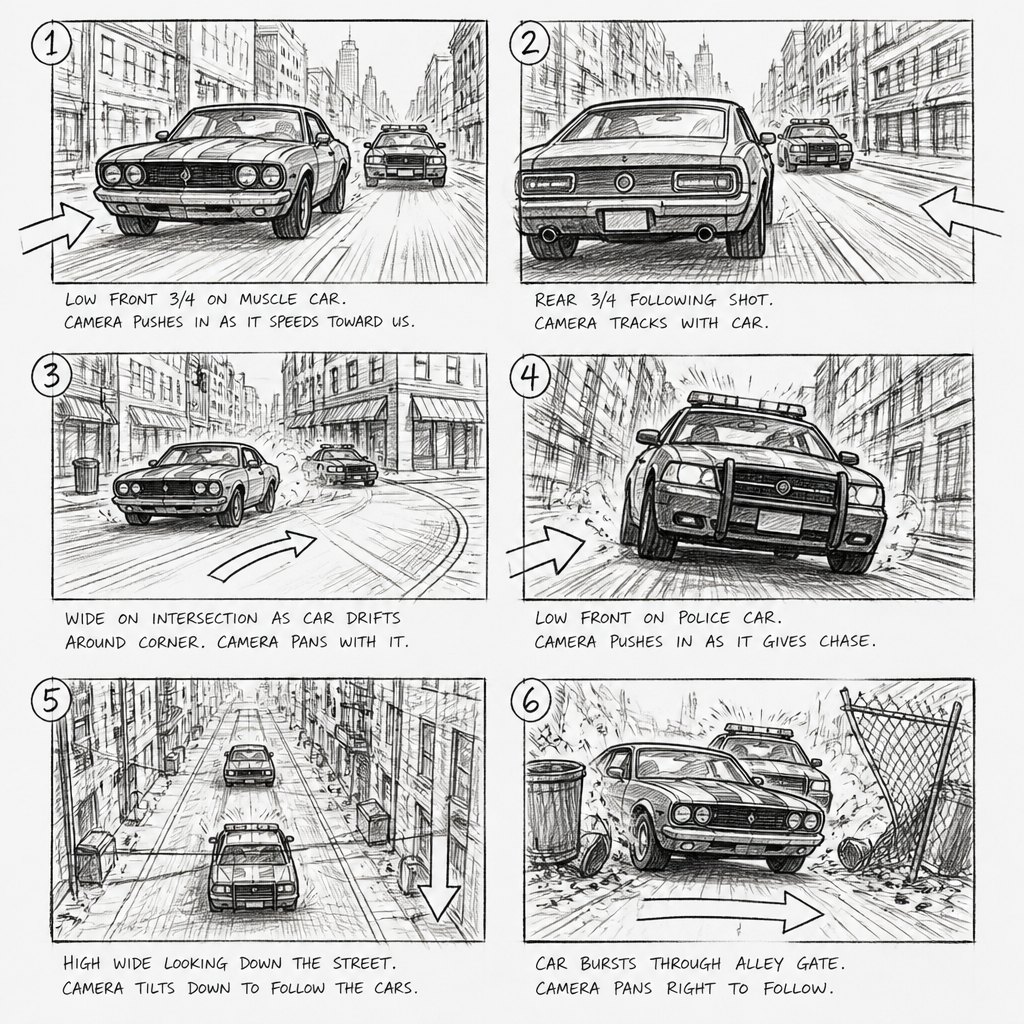
This example was generated from a prompt like: “A sequence of six numbered storyboard panels on a page, rough pencil sketches of a car chase through a city street, simple arrows showing camera movement, short handwritten notes beneath each frame, black and white line art.”
Open the Storyboard Art Style generator →The medium today
Storyboard art today is created mostly in digital drawing software, often timed directly into animatics that combine panels with rough audio and edited pacing before filming or animation begins. Film, television, animation, and game studios all use storyboards, and previsualization has extended the practice into rough 3D blocking for complex action or effects sequences. Freelance storyboard artists work across commercials, music videos, and game cinematics, usually producing boards quickly under tight production deadlines rather than as finished standalone art.
Compose your own
Start by breaking a short scene from a script into individual shots, sketching one simple panel per shot showing where the camera is and what it frames. Keep drawings loose and fast, using basic figures and clear staging rather than detailed rendering, since the goal is communicating action, not finished art. Add a short line of dialogue or action beneath each panel, and use simple arrows to show camera or character movement. Arrange panels in a numbered sequence, then read through them in order to check whether the scene's pacing and spatial logic make sense before adjusting. Free digital storyboard templates and simple drawing apps are a practical way to begin without specialized software.
Frequently asked questions
What's the difference between a storyboard and a comic?
Both use sequential panels, but a storyboard exists purely as a planning tool for camera shots in film or animation, paired with production notes, while a comic is a finished narrative artwork meant to be read as the final product.
Do storyboard artists draw every frame of a film?
No—storyboards show key moments and camera setups within a scene, not every frame. A single panel can represent several seconds of continuous shot, with the finished footage filling in the motion between boards.
What is an animatic?
An animatic is a rough, timed edit of storyboard panels combined with placeholder audio and rough timing, used to test a scene's pacing and length before committing to full filming or animation.
Do live-action films use storyboards too?
Yes, especially for complex, expensive, or effects-heavy sequences, where directors use boards to plan camera angles and blocking in advance, though many simpler dialogue scenes are shot without formal boards.